Focusing Mechanism: Aligning Minds for Shared Decisions
Scientifically Reviewed · Dr. Marwa Abd-Alazim · September 21, 2026
Review Criteria & Clinical Standards
This content undergoes rigorous scientific peer-review and medical editorial standards at Arab Psychology Network to ensure clinical accuracy, validity, and compliance with evidence-based guidelines from leading psychological and healthcare authorities (APA / WHO).
FOCUSING MECHANISM
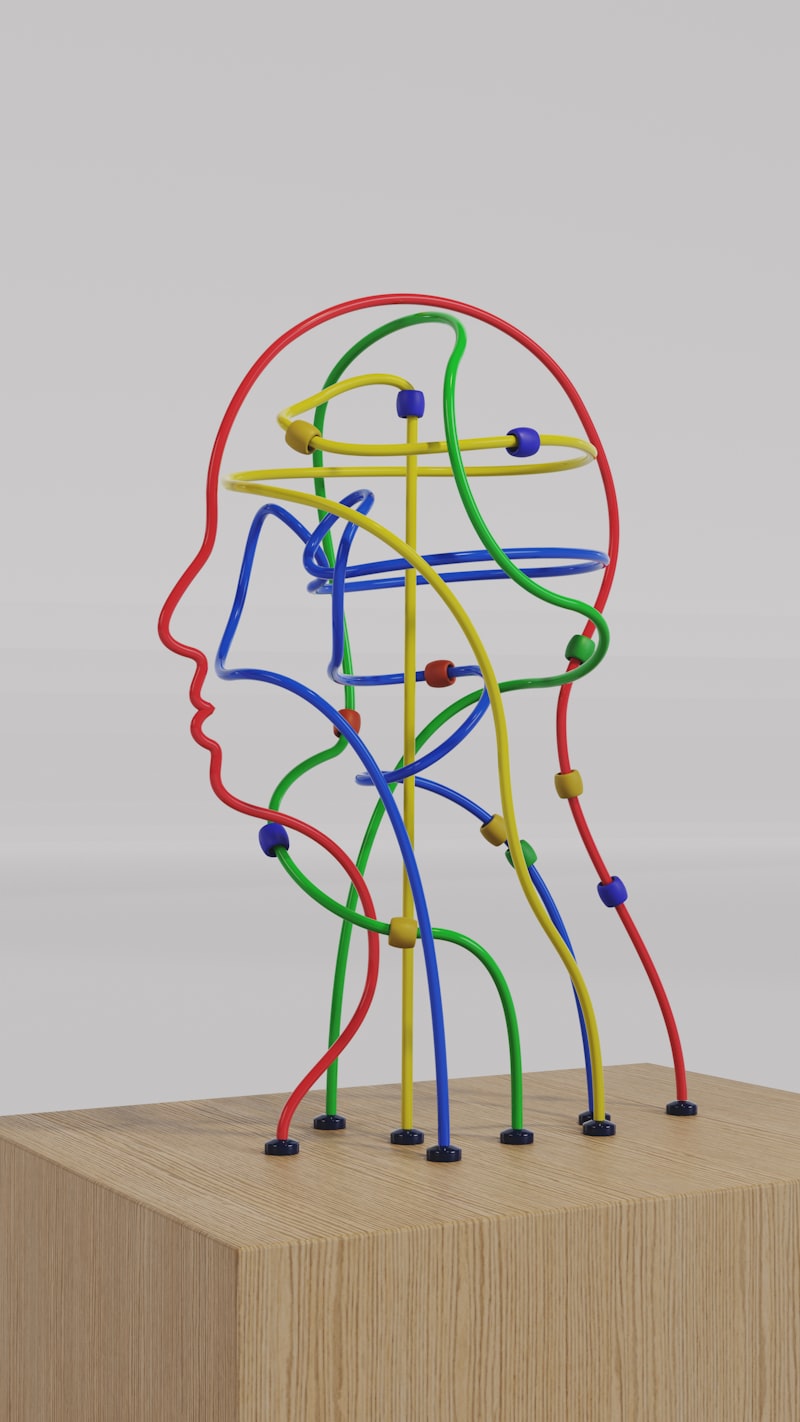
The focusing mechanism is a sophisticated theoretical construct within the fields of behavioral economics and cognitive psychology that explains the processes by which diverse agents, often possessing heterogeneous preferences and conflicting objectives, converge upon a singular consensus. This mechanism serves as a cognitive and social bridge, allowing individuals to navigate the complexities of choice by identifying a specific outcome that stands out from a range of possibilities. By utilizing shared environmental cues, cultural norms, or psychological predispositions, the focusing mechanism facilitates coordination in scenarios where explicit communication might be absent, inefficient, or impossible. It is fundamentally concerned with the reduction of cognitive load, as it provides a streamlined pathway for decision-making that bypasses the need for exhaustive comparative analysis of every available variable.
At its core, the focusing mechanism operates on the principle of salience, where certain features of a decision-making environment become more prominent than others, thereby guiding the collective attention of all involved parties toward a specific resolution. In a psychological context, this involves the filtering of extraneous information to prioritize data points that are most likely to be recognized by others. This shared recognition is vital for social cohesion and economic efficiency, as it minimizes the potential for stalemate or suboptimal outcomes. The study of this mechanism involves an interdisciplinary approach, drawing from the foundational work of game theorists, the cognitive insights of bounded rationality, and the empirical findings of modern behavioral science to understand how human beings simplify the inherent chaos of choice.
The importance of the focusing mechanism extends beyond mere theoretical inquiry; it has profound implications for how markets function, how international treaties are negotiated, and how social norms are established and maintained. By understanding the underlying psychological triggers that cause an outcome to become a “focal point,” researchers can better predict human behavior in strategic environments. This review seeks to synthesize the primary theories contributing to our understanding of the focusing mechanism, ranging from the classical game theory of the mid-20th century to the contemporary frameworks of prospect theory and cognitive heuristics, providing a comprehensive overview of how consensus is achieved in a world of individualistic actors.
The Genesis of Focal Points in Game Theory
The academic formalization of the focusing mechanism can be traced back to the pioneering work of Thomas Schelling, a Nobel Prize-winning economist who introduced the concept of the focal point, also known as the Schelling point, in his seminal 1960 publication, The Strategy of Conflict. Schelling’s primary contribution was the observation that in “games of coordination,” where players benefit from making the same choice as one another but cannot communicate, they often succeed by identifying an outcome that is “prominent” or “conspicuous.” This prominence is not necessarily derived from the mathematical superiority of the choice, but rather from its psychological uniqueness or cultural relevance, which makes it a natural meeting point for the minds of the participants.
Schelling illustrated this concept through various thought experiments, the most famous of which involved asking participants where and when they would meet a stranger in New York City if they could not communicate. A significant majority of participants chose the information booth at Grand Central Terminal at high noon. This choice was not based on the objective “best” location in the city, but on the shared recognition of that location as a symbolic and central landmark. This experiment demonstrated that the focusing mechanism relies heavily on mutual expectations; each person chooses the location they think the other person will choose, based on the assumption that both are looking for the most obvious or “salient” solution.
Furthermore, Schelling argued that the focusing mechanism is essential in resolving conflicts where interests are partially aligned. In bargaining scenarios, a focal point—such as a “50-50 split” or a historical precedent—often serves as the ultimate resolution because it provides a clear, defensible boundary that both parties can accept without feeling they have lost face. The focal point acts as a stabilizer in social interactions, preventing the infinite regress of “I think that he thinks that I think,” by providing a concrete psychological anchor that halts the cycle of strategic speculation. Consequently, the focusing mechanism is viewed as a vital tool for achieving social and economic equilibrium in the face of uncertainty.
Cognitive Heuristics and Bounded Rationality
The evolution of the focusing mechanism was further advanced by the contributions of Herbert A. Simon, who challenged the classical economic assumption of the “rational man” with his theory of bounded rationality. Simon argued that human beings do not have the cognitive capacity, time, or information necessary to make perfectly optimal decisions. Instead, they rely on cognitive heuristics, or mental shortcuts, to simplify complex problems. These heuristics function as internal focusing mechanisms, allowing agents to ignore vast amounts of irrelevant data and concentrate on a few key factors that are most likely to lead to a satisfactory, rather than perfect, outcome—a process Simon termed “satisficing.”
In the context of the focusing mechanism, cognitive heuristics serve as the tools through which individuals identify focal points. When faced with an overwhelming array of choices, the human brain automatically seeks patterns, labels, and categories to reduce the cognitive effort required for evaluation. For example, the availability heuristic might lead a group of decision-makers to focus on a recent event as a reference point for a new policy, simply because it is the most easily recalled information. This reliance on heuristics suggests that the focusing mechanism is not just a strategic choice but a fundamental biological necessity driven by the limitations of human neurology.
Simon’s work emphasizes that the focusing mechanism is inherently linked to the structure of the environment. If the environment provides clear, simplified cues, the cognitive burden on the individual is significantly reduced. By using a focal point as a reference, agents can achieve coordination with minimal mental energy, which is an evolutionary advantage. This perspective shifts the focus from the mathematical properties of the decision to the psychological processes of the decision-maker, highlighting how the focusing mechanism acts as a filter that transforms a complex external world into a manageable internal representation.
The Framework of Prospect Theory
A significant leap in the understanding of the focusing mechanism occurred with the development of prospect theory by Daniel Kahneman and Amos Tversky. This theory provides a descriptive model of how people actually make choices under conditions of risk and uncertainty, rather than how they “should” make them according to traditional utility theory. One of the central tenets of prospect theory is that individuals evaluate outcomes relative to a reference point, which often functions as the primary focusing mechanism in their decision-making process. The way an option is “framed”—either as a potential gain or a potential loss—drastically alters its salience and the likelihood of it being chosen as a consensus outcome.
According to prospect theory, the focusing mechanism is heavily influenced by the psychological phenomenon of loss aversion, where the pain of losing is perceived as more intense than the pleasure of gaining an equivalent amount. This leads agents to focus disproportionately on options that minimize perceived risk or protect the status quo. In a group setting, a focal point that promises to avoid a loss is far more likely to generate a consensus than one that offers a high-risk, high-reward gain. This explains why many collective decisions tend toward conservative or traditional outcomes; the focusing mechanism is biologically tuned to prioritize security and the avoidance of negative deviations from the reference point.
Furthermore, Kahneman and Tversky’s research suggests that the focusing mechanism becomes more pronounced when the perceived rewards or stakes are high. In high-pressure situations, the cognitive resources of an individual are often strained, leading to an even greater reliance on obvious focal points. The prospect theory thus adds a layer of emotional and perceptual nuance to the focusing mechanism, demonstrating that consensus is not merely a product of logic or salience, but is also shaped by the innate human biases regarding risk, reward, and the preservation of current assets. This integration of psychology and economics is crucial for understanding why certain outcomes become “magnetic” in the eyes of a group.
Core Components of the Focusing Mechanism
To understand how the focusing mechanism operates in various contexts, it is helpful to identify the primary factors that contribute to the creation and adoption of a focal point. These components include:
- Salience: The quality of being particularly noticeable or important. A salient feature attracts attention more readily than its counterparts, making it a natural candidate for a focusing mechanism.
- Uniqueness: An outcome that is the only one of its kind in a set—such as the only round number or the only option of a different color—often serves as a focal point because it is the easiest to distinguish.
- Cultural Common Ground: Shared history, language, and social norms provide a set of “default” focal points that members of a specific group can use to coordinate without explicit discussion.
- Precedent: Previous successful coordinations often dictate future ones. If a group has chosen a specific path before, that path becomes the primary focusing mechanism for subsequent decisions.
- Framing: The manner in which information is presented can highlight specific aspects of a choice, effectively “forcing” the focusing mechanism toward a particular conclusion.
These components work in tandem to guide the collective consciousness of a group. For instance, in a legal negotiation, the precedent of previous court rulings acts as a powerful focusing mechanism, while the framing of the case by attorneys can shift the salience of specific evidence. The interaction of these elements ensures that even in the most complex social structures, a path toward consensus remains available.
Psychological Dimensions of Attention and Selection
The focusing mechanism is deeply rooted in the psychological study of attention. Because the human brain is constantly bombarded with more information than it can process, it must employ selective attention to focus on relevant stimuli. In the context of decision-making, the focusing mechanism acts as an externalized version of this internal process. By identifying a focal point, the individual or group effectively “mutes” the noise of alternative options, allowing for a clear and decisive course of action. This selective process is often subconscious, driven by the brain’s desire to minimize cognitive effort and avoid the paralysis of choice.
Research in cognitive psychology suggests that the focusing mechanism is also influenced by the priming effect, where exposure to one stimulus influences the response to another. For example, if a group of negotiators is primed with the concept of “fairness” before a meeting, they are more likely to use an equal split as their focusing mechanism. This indicates that focal points are not static; they can be constructed or manipulated through the strategic management of the decision-making environment. Understanding the psychological triggers of attention allows for a more nuanced application of the focusing mechanism in leadership and organizational management.
Moreover, the focusing mechanism plays a role in the formation of social identity. Groups often coalesce around specific focal points—such as shared symbols, goals, or enemies—to define their boundaries and internal cohesion. In this sense, the focusing mechanism is not just a tool for making decisions, but a fundamental aspect of human sociality. By focusing on the same things, individuals create a shared reality, which is the basis for all collective action. The psychological selection of a focal point is therefore an act of both individual cognition and social alignment, reinforcing the bond between the agent and the group.
Practical Applications in Economics and Policy
The practical utility of the focusing mechanism is evident in numerous economic and social spheres. In the world of retail and marketing, businesses utilize focal points to guide consumer behavior. For instance, “charm pricing” (e.g., $9.99 instead of$10.00) exploits a focusing mechanism where the consumer’s attention is disproportionately fixed on the first digit, leading to a perception of significantly lower cost. Similarly, brands often position themselves as the “default” choice in a category, leveraging salience and precedent to remain the focal point for consumers, thereby reducing the cognitive effort required for a purchase decision.
In public policy and international relations, the focusing mechanism is used to facilitate cooperation between sovereign states. Treaties often center on “round number” targets—such as reducing carbon emissions by 20% by the year 2020—not because these numbers are scientifically perfect, but because they serve as clear, easily understood focal points around which global consensus can be built. These targets provide a shared reference point that simplifies the incredibly complex task of international negotiation, allowing diverse nations to align their efforts toward a singular, visible goal.
Furthermore, the focusing mechanism is instrumental in the functioning of financial markets. “Support” and “resistance” levels in stock trading are essentially focal points created by the collective psychology of traders. When a stock price reaches a psychologically significant round number, many traders use that number as a focusing mechanism to decide whether to buy or sell. This leads to self-fulfilling prophecies where the market reacts to these points simply because everyone expects everyone else to react to them. This demonstrates the immense power of the focusing mechanism to shape objective economic realities through subjective psychological processes.
Implications for Strategic Decision-Making
The implications of the focusing mechanism for strategic decision-making are profound, particularly in terms of efficiency and conflict reduction. By identifying and utilizing focal points, organizations can streamline their internal processes and reduce the time spent in unproductive debate. When a clear focusing mechanism is in place, members of an organization can act with greater autonomy, confident that their choices will align with the collective direction of the group. This reduces the need for constant oversight and communication, allowing for more agile and responsive strategic maneuvers.
- Reduced Transaction Costs: By providing a “natural” solution, the focusing mechanism eliminates the need for lengthy negotiations, thereby saving time and resources.
- Enhanced Coordination: Focal points allow disparate departments or teams to synchronize their efforts without the need for constant direct contact.
- Conflict Mitigation: In situations of disagreement, a neutral or historical focal point can provide a “middle ground” that all parties can accept without a loss of status.
- Improved Predictability: Knowing the common focusing mechanisms of competitors allows a firm to better anticipate market moves and strategic shifts.
However, reliance on the focusing mechanism is not without its risks. If a group focuses too narrowly on a single focal point, they may fall victim to groupthink or ignore critical information that falls outside their immediate area of focus. This is known as the “focusing illusion,” where people place too much importance on one specific factor when predicting future happiness or success. Therefore, while the focusing mechanism is a powerful tool for consensus, it must be balanced with a conscious effort to remain open to alternative perspectives and data points that may not be immediately salient.
Conclusion: The Synthesis of Consensus
In conclusion, the focusing mechanism stands as a cornerstone of human social and economic interaction. By synthesizing the theories of Thomas Schelling, Herbert Simon, and Kahneman and Tversky, we can see a clear picture of how consensus emerges from the chaos of individual preferences. The mechanism relies on the psychological power of salience, the cognitive necessity of heuristics, and the perceptual biases of prospect theory to guide agents toward shared outcomes. It is a testament to the human brain’s ability to adapt to complex environments by seeking simplicity and coordination through shared psychological anchors.
The focusing mechanism suggests that our decisions are rarely made in a vacuum; they are deeply influenced by the cues we receive from our environment and our expectations of others. Whether in the form of a Schelling point in a game of strategy or a reference point in a financial transaction, the focusing mechanism provides the essential structure that allows for collective action. By reducing cognitive effort and providing a pathway for consensus, it enables the high level of social and economic cooperation that characterizes human civilization.
As we move forward into an increasingly complex and data-saturated world, the study of the focusing mechanism will remain more relevant than ever. Understanding how to create, manage, and interpret focal points will be a critical skill for leaders, policymakers, and individuals alike. By mastering the focusing mechanism, we can better navigate the intricacies of human behavior, foster greater cooperation, and reach more effective decisions in every aspect of life. The journey from individual preference to collective consensus is paved with the salient cues and mental shortcuts that define the remarkable focusing mechanism.