Folk Psychology: Decoding the Hidden Logic of Human Minds
Scientifically Reviewed · Dr. Marwa Abd-Alazim · September 27, 2026
Review Criteria & Clinical Standards
This content undergoes rigorous scientific peer-review and medical editorial standards at Arab Psychology Network to ensure clinical accuracy, validity, and compliance with evidence-based guidelines from leading psychological and healthcare authorities (APA / WHO).
The Conceptual Foundations of Folk Psychology
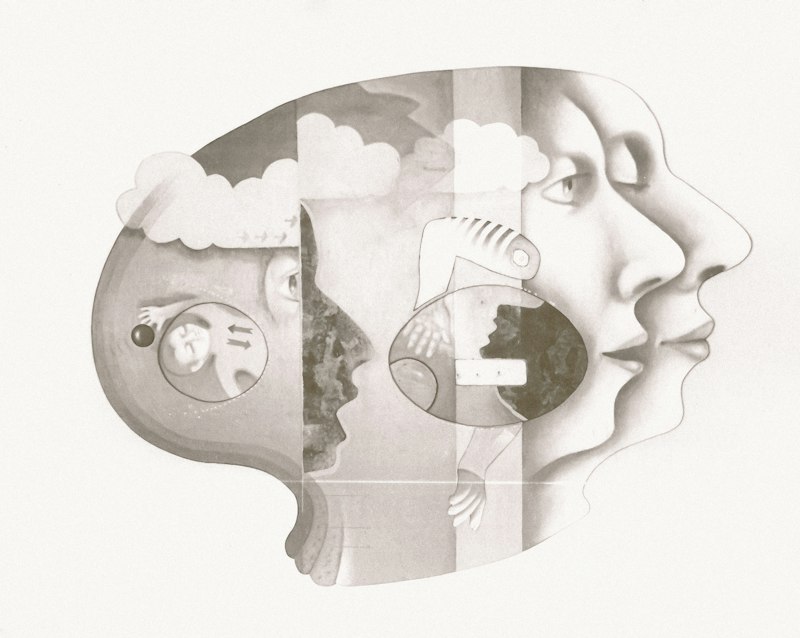
Folk psychology, frequently termed naïve psychology or commonsense psychology, represents the foundational cognitive framework and belief systems utilized by everyday individuals to interpret, explain, and predict human behavior. Unlike the rigorous, empirical methodologies employed by professional psychologists, folk psychology relies on an intuitive understanding of the mind. It is the primary tool through which non-experts navigate the complexities of social life, allowing them to attribute internal mental states—such as beliefs, desires, intentions, and emotions—to those around them. By utilizing this framework, individuals can transform raw sensory data into meaningful narratives about human action, creating a predictable social environment out of what might otherwise be chaotic interactions.
The significance of folk psychology lies in its role as a “social glue” that facilitates human cooperation and communication. It operates on the fundamental assumption that human beings are intentional agents whose actions are driven by internal goals and mental representations. This perspective, often referred to as the “intentional stance,” ensures that we do not merely see physical bodies in motion, but rather individuals with specific purposes. This commonsense reasoning is not necessarily scientifically accurate in a neurological sense, yet it provides a functional heuristic that is remarkably effective for managing daily social encounters. It bridges the gap between the internal, private experience of the mind and the external, observable world of behavior.
Furthermore, folk psychology is deeply embedded in the very structure of human language and culture. The way we describe ourselves and others—using terms like “thinking,” “feeling,” “hoping,” or “regretting”—is rooted in this naïve psychological framework. It shapes our moral judgments, our legal systems, and our interpersonal relationships. Because folk psychology is so pervasive, it often serves as the starting point for scientific psychological inquiry. Researchers often begin by examining these everyday assumptions to determine whether they hold up under the scrutiny of empirical testing and controlled observation, thereby highlighting the interplay between intuitive understanding and scientific rigor.
Historical Evolution and Philosophical Roots
The historical origins of folk psychology can be traced back to the intellectual traditions of the ancient Greeks. Long before psychology emerged as a formal scientific discipline, Greek thinkers attempted to decode the mysteries of human personality and behavior through physical observation. They utilized concepts such as phrenology and physiognomy, which suggested that the physical attributes of the head and face could reveal underlying character traits. While these specific practices have since been debunked as pseudosciences, they represent the earliest recorded efforts of “folk” systems to categorize and understand the internal mental life of the individual based on external cues.
During the Enlightenment, the philosophical development of folk psychology gained significant momentum through the works of John Locke. Locke and his contemporaries proposed that humans possess a natural capacity for social inference, suggesting that people can make relatively accurate judgments about the mental states of others through observation and reflection. This philosophical shift moved the focus away from purely physical traits toward a more sophisticated understanding of mental representation. Locke’s empiricist approach laid the groundwork for the idea that our understanding of others is built through a combination of innate cognitive structures and the accumulation of social experiences.
As the field of philosophy progressed, the debate surrounding folk psychology evolved into a discussion about the “theory-theory” versus “simulation theory.” The former suggests that folk psychology is a quasi-scientific theory that humans use to explain behavior, while the latter suggests that we understand others by mentally “simulating” their situation using our own cognitive machinery. Regardless of the specific philosophical stance, the consensus remains that folk psychology is a sophisticated, albeit informal, system that has been essential to the human condition throughout history. It has transitioned from primitive physical categorizations to a nuanced understanding of cognitive processes.
Anthropological Perspectives and Early Academic Study
The academic formalization of folk psychology as a subject of study gained traction in the early 20th century, particularly through the field of cultural anthropology. One of the most influential figures in this movement was Bronislaw Malinowski, who recognized that every culture possesses its own unique system of psychological interpretation. Malinowski described folk psychology as the “body of ideas which people formulate for themselves in order to interpret their own behavior and that of others.” His work in the 1920s emphasized that these belief systems are not just random thoughts but are structured frameworks essential for cultural survival and social cohesion.
Malinowski’s research provided a critical foundation for understanding folk psychology as a universal human trait that manifests in culturally specific ways. He argued that to understand a society, one must first understand the “commonsense” psychological assumptions that the members of that society hold. This perspective shifted the focus of psychology from the laboratory to the field, encouraging researchers to look at how everyday people conceptualize the mind within their specific social contexts. This approach highlighted the importance of language, myth, and social ritual in shaping the psychological reality of a group.
Following Malinowski, other social scientists began to explore how these naïve psychological theories are transmitted across generations. Folk psychology is not typically taught in a formal classroom; rather, it is absorbed through socialization and cultural participation. This realization led to a broader understanding of folk psychology as a dynamic entity that evolves alongside society. By studying these systems, anthropologists and early psychologists were able to gain insight into the fundamental cognitive tools that humans use to make sense of their existence, providing a bridge between individual cognition and collective culture.
The Theory of Mind and Mental State Attribution
Central to the modern understanding of folk psychology is the Theory of Mind (ToM), a concept that describes the innate human ability to attribute mental states to oneself and others. This theory was prominently introduced by Premack and Woodruff in 1978, who defined it as an “intuitive understanding of the psychological states of others.” Theory of Mind is considered the “engine” of folk psychology, as it allows individuals to recognize that others have beliefs, desires, and intentions that may differ from their own. This cognitive milestone is usually achieved in early childhood and is essential for effective social communication and empathy.
The Theory of Mind suggests that our brains are hardwired to look for the “why” behind the “what.” When we see someone reaching for a glass of water, we do not just see a physical movement; we infer a desire (thirst) and a belief (that the glass contains water). This process of inference happens almost instantaneously and often without conscious effort. It is this high level of automaticity that makes folk psychology so effective in fast-paced social environments. Even when provided with limited information, individuals can use their Theory of Mind to construct a plausible explanation for another person’s actions, allowing for quick decision-making and social adjustment.
Research into Theory of Mind has also highlighted the consequences of its absence or impairment. For example, individuals on the autism spectrum may face challenges in social interaction precisely because the intuitive “folk psychological” mechanisms of ToM operate differently for them. This contrast underscores how vital mental state attribution is for the typical human experience. By studying the mechanics of ToM, psychologists have been able to map out the developmental stages of social cognition, revealing how children move from a basic understanding of agency to a complex understanding of false beliefs and social deception.
Attribution Theory and Causal Reasoning
Another critical component of folk psychology is Attribution Theory, which examines how individuals explain the causes of behavior and events. In the realm of commonsense psychology, people are constantly acting as “amateur scientists,” trying to determine whether a person’s behavior is caused by their internal personality (dispositional attribution) or by external circumstances (situational attribution). This process of causal reasoning is fundamental to how we form impressions of others and how we decide whether to praise, blame, or trust someone based on their actions.
Attribution theory suggests that folk psychology is often biased toward internal explanations. This is known as the “fundamental attribution error,” where people tend to overemphasize personality traits and underemphasize situational factors when judging others. For instance, if a person is late to a meeting, a folk psychological response might be that the person is “lazy” or “disorganized,” rather than considering that they may have been delayed by an unforeseen traffic accident. This tendency illustrates how folk psychological frameworks prioritize simplicity and personal agency over complex environmental variables, providing a quick, albeit sometimes flawed, way to categorize others.
Despite these biases, attributional processes are essential for maintaining social order. They allow us to create a sense of stability and predictability in the world. By attributing behavior to stable traits, we feel we can better predict how someone will act in the future. This predictive power is a primary benefit of folk psychology, as it reduces the cognitive load required to navigate social life. Understanding these attributional patterns helps researchers identify how prejudices and stereotypes are formed, as these are often the result of folk psychological shortcuts applied to entire groups of people.
Social Learning and the Acquisition of Folk Beliefs
The acquisition and refinement of folk psychology are heavily influenced by the principles of Social Learning Theory. This theory suggests that people do not just possess an innate ability to understand others, but they also learn the specific “rules” of their culture’s folk psychology through observation and imitation. From a young age, children observe how adults interpret behavior and how they use psychological language to describe internal states. Through this process, they learn which mental states are considered relevant and how to link specific actions to specific intentions within their social context.
Social learning ensures that folk psychology remains culturally relevant and adaptive. For example, the way an individual in a collectivist culture interprets a peer’s silence might differ significantly from the interpretation offered by someone in an individualistic culture. Folk psychology is thus a dynamic body of knowledge that is constantly being updated through social interaction. By watching others, individuals learn the “scripts” for social behavior, allowing them to participate in the shared psychological reality of their community. This observational learning is crucial for the development of social competence and the ability to navigate cultural norms.
Furthermore, social learning theory highlights the role of reinforcement in folk psychology. When a person makes a correct inference about someone’s mental state and acts accordingly, the positive social outcome reinforces that specific folk psychological belief. Conversely, social misunderstandings can lead to the revision of one’s intuitive theories. This continuous feedback loop ensures that folk psychology remains a functional tool for social survival. It demonstrates that while the capacity for folk psychology may be biological, its specific content and application are profoundly social.
Cognitive Mapping and Mental Representations
Cognitive Mapping Theory offers another perspective on how folk psychology functions, proposing that individuals use internal mental representations to make sense of the world. In the context of understanding others, people create “maps” of the mental states and personalities of those they interact with. These maps are not static; they are constantly updated as new information is gathered. By using these cognitive maps, individuals can simulate different social scenarios and predict how others might respond to various stimuli, which is a sophisticated form of mental modeling.
These internal representations allow for a high degree of social flexibility. If you have a cognitive map of a friend’s temperament, you can adjust your communication style to better suit their current mental state. Folk psychology, through cognitive mapping, enables us to move beyond the “here and now” and engage in prospective social thinking. We can imagine how a person might feel about a future event or how they might react to a piece of news. This ability to manipulate mental symbols is what distinguishes human folk psychology from the simpler associative learning found in other species.
The use of cognitive maps also explains how folk psychology handles complexity and ambiguity. When someone’s behavior is inconsistent with our existing map of their personality, it triggers a state of cognitive dissonance, prompting us to seek new information to update the map. This drive for consistency is a hallmark of folk psychology, as it reflects the human need for a coherent and stable understanding of the social world. Through mental representation, folk psychology transforms a series of isolated social events into a continuous and understandable narrative of human life.
Implications for the Field of Psychology
Folk psychology has profound implications for the scientific study of psychology. It often serves as the “baseline” against which scientific theories are measured. Many psychological researchers aim to either validate or debunk commonsense beliefs about human nature. For example, while folk psychology might suggest that “venting” anger is healthy, scientific research has often shown that this can actually increase aggression. By identifying where naïve psychology fails, scientists can develop more accurate models of human behavior and mental health.
In clinical settings, folk psychology is a critical factor in the therapeutic process. Patients come to therapy with their own folk psychological theories about why they feel or act the way they do. A therapist must navigate these pre-existing beliefs to implement effective interventions. Understanding a patient’s folk psychology can help a clinician build rapport and tailor treatments to the patient’s specific worldview. Furthermore, many cognitive-behavioral therapies aim to help patients identify and correct “faulty” folk psychological reasoning, such as negative attributional styles or distorted mental representations of others.
Moreover, folk psychology plays a role in the development of psychological interventions for the general public. Educational programs that aim to improve emotional intelligence or conflict resolution often build upon folk psychological concepts to make the material accessible. By using the language of commonsense psychology, experts can communicate complex psychological principles in a way that resonates with the average person. This bridge between expert knowledge and lay understanding is essential for the practical application of psychological science in society.
Implications for the Social Sciences
Beyond individual psychology, folk psychology is a vital concept in the social sciences, particularly in sociology and social psychology. It provides a framework for understanding how social norms and collective beliefs are formed and maintained. Since people interact based on their folk psychological assumptions, these assumptions collectively shape the social reality of a group. Researchers use the study of folk psychology to explore how groups reach consensus, how they manage conflict, and how they develop shared identities based on mutual psychological interpretations.
In the study of social interactions, folk psychology helps explain the “self-fulfilling prophecy.” If a group of people shares a folk psychological belief that a certain individual is untrustworthy, they will treat that person with suspicion, which may eventually cause the person to act in untrustworthy ways. This demonstrates how naïve psychological theories can manifest into tangible social outcomes. By analyzing these patterns, social scientists can better understand the dynamics of intergroup relations and the power of collective belief systems in shaping human history.
Furthermore, folk psychology is essential for understanding the formation of attitudes and public opinion. Many political and social movements leverage folk psychological reasoning to appeal to the “commonsense” of the public. By framing issues in terms of intentions, motives, and character, leaders can mobilize people more effectively than by using abstract data. This highlights the importance of folk psychology in the public sphere, where it serves as the primary language for debating moral and social values, making it a cornerstone of study for anyone interested in the mechanics of human society.
Conclusion
In summary, folk psychology is an indispensable and multifaceted concept that serves as the bedrock of human social life. It encompasses the intuitive theories and cognitive processes that allow non-experts to navigate the complexities of the human mind. From its ancient roots in phrenology to the modern study of Theory of Mind and Attribution Theory, folk psychology has remained a constant force in how we define ourselves and our relationships with others. It provides a functional, though sometimes biased, framework for predicting behavior and assigning meaning to the actions of those around us.
The study of folk psychology reveals the remarkable cognitive architecture of the human species, showing how we are biologically and socially prepared to engage in mental state attribution. It bridges the gap between the individual and the collective, shaping culture, language, and social structures. While it may lack the precision of scientific psychology, its practical utility in daily life is unparalleled. By understanding the mechanisms of folk psychology, we gain a deeper appreciation for the intuitive wisdom that allows us to function as social beings in a complex world.
As we look toward the future, the relationship between folk psychology and scientific psychology will continue to evolve. As our scientific understanding of the brain and behavior grows, it will inevitably influence and refine our commonsense beliefs. However, the core of folk psychology—the drive to see others as intentional agents with minds of their own—will likely remain a permanent feature of human nature. This article has explored the history, theories, and vast implications of this fascinating field, highlighting its essential role in both the psychological and social sciences.
References
- Malinowski, B. (1925). The Meaning of Meaning. London: Routledge & Kegan Paul.
- Premack, D., & Woodruff, G. (1978). Does the chimpanzee have a theory of mind? Behavioral and Brain Sciences, 1(4), 515-526.