Form Discrimination: How Your Brain Decodes Reality
Scientifically Reviewed · Dr. Marwa Abd-Alazim · September 4, 2026
Review Criteria & Clinical Standards
This content undergoes rigorous scientific peer-review and medical editorial standards at Arab Psychology Network to ensure clinical accuracy, validity, and compliance with evidence-based guidelines from leading psychological and healthcare authorities (APA / WHO).
Form discrimination is a foundational term used in cognitive psychology and neuroscience to describe the complex perceptual ability of an individual to accurately identify, differentiate, and interpret the intrinsic properties of an object using sensory input. This process relies predominantly on the integration of visual and haptic (touch) senses, allowing the perceiver to precisely judge characteristics such as shape, size, texture, orientation, and other defining spatial features of an entity within the environment. This skill is critical for successful interaction with the physical world, enabling tasks ranging from recognizing alphanumeric characters to manipulating tools effectively.
Definition and Fundamental Concepts
At its core, form discrimination is an active cognitive process that transcends simple sensory detection. While the sensory organs receive raw data—light wavelengths or pressure receptors firing—discrimination involves the brain’s interpretation and categorization of that data into meaningful, stable forms. This ability allows us to perceive an object as consistent and recognizable regardless of changes in viewing angle, distance, or illumination, a phenomenon known as perceptual constancy. For instance, a square remains perceived as a square whether it is viewed head-on or rotated obliquely. The fundamental concept hinges on extracting invariant features—those attributes of the object that do not change despite transformations in the sensory input.
The mechanism requires rapid analysis of various features, including boundaries, edges, and vertices, which the visual system uses to construct a holistic representation of the object’s structure. This structural description is then compared against established memory templates, allowing for classification. Psychologists often distinguish between detecting the presence of a form and discriminating between two or more similar forms; the latter demands a higher degree of precision and detail orientation. Successful form discrimination requires not just the detection of a single feature, but the simultaneous and integrated processing of multiple features across the visual field or across the exploratory surface of the hand.
Crucially, form discrimination is not merely about recognizing a geometric shape but involves spatial processing that informs action. When an individual reaches for a coffee cup, the brain must discriminate its cylindrical form from the background, judge its precise size relative to the hand, and determine its orientation to ensure a successful grasp. This integration of perception and action highlights form discrimination as a key element of ecological perception, supporting our ability to navigate and manipulate the environment efficiently. The capacity to correctly identify a red square to complete a puzzle, as in the classic psychological example, perfectly illustrates the confluence of color identification, shape recognition, and spatial judgment inherent in this ability.
Sensory Modalities Involved
While form discrimination is often associated primarily with vision, it is inherently a multisensory phenomenon that relies heavily on haptic processing. The visual system provides the most immediate and detailed spatial information, utilizing specialized neural pathways to process edges, contours, and depth cues. The eye’s ability to rapidly scan an object and extract high-resolution information about its boundaries makes vision the dominant modality for most discrimination tasks, especially those involving distant or complex forms. Visual acuity and the integrity of the ocular motor system are prerequisite skills that support effective visual form discrimination, ensuring clear input for central processing.
The haptic system, encompassing both touch (tactile input) and proprioception (awareness of body position and movement), offers a complementary and essential avenue for form discrimination, particularly when visual input is unavailable or ambiguous. Haptic discrimination, often referred to as stereognosis, involves actively manipulating an object—feeling its weight, temperature, texture, and contour—to build a mental representation of its form. This active exploration provides dynamic feedback, where motor commands influence the sensory input received. For instance, determining if a key is correctly oriented to fit a lock relies heavily on haptic feedback regarding its shape and spatial alignment, information that is often more reliable through touch than visual estimation in low-light conditions.
The synergy between these two modalities is vital, especially during development. Children learn to correlate the visual appearance of an object (e.g., a bumpy ball) with its tactile feel. This cross-modal integration leads to a more robust and flexible discrimination ability. If visual information is degraded, the brain can rely on haptic input, and vice versa. This sensory redundancy ensures functional reliability, particularly in complex or novel environments where one modality might be insufficient. The continuous cross-referencing between visual and haptic representations solidifies the internal cognitive model of the object’s form, making future recognition faster and more accurate.
Neural Pathways and Cognitive Processing
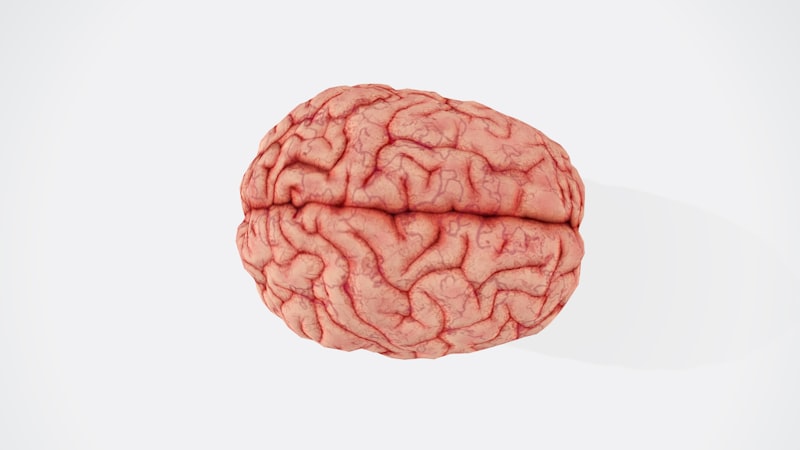
The cognitive processing of form discrimination is primarily governed by the cerebral cortex, specifically involving the visual association areas. Visual input initiates in the primary visual cortex (V1) and is subsequently segregated into two major streams: the dorsal stream (the “Where” pathway, processing location and motion) and the ventral stream (the “What” pathway, specialized for object identification and form discrimination). The ventral stream extends from the occipital lobe forward into the temporal lobe, and it is here that the complex features of form are synthesized into recognizable objects, independent of their precise location in space.
Within the ventral stream, a hierarchical organization exists. Initial areas process simple features like edges and lines. As information progresses through V2, V4, and eventually into the Inferotemporal Cortex (IT), neurons become increasingly specialized, responding to more complex and invariant features, such as specific shapes, faces, or geometric configurations. The IT cortex is crucial for achieving object constancy, allowing the brain to recognize an object even when it is presented at varying scales or orientations. This sophisticated processing overcomes the inherent variability of sensory input by creating stable, canonical representations of forms.
The ability to integrate disparate features—color, texture, and shape—into a single, unified percept relates to the classic problem of feature binding. Form discrimination requires that the brain successfully bind these attributes together in time and space to understand that the “redness,” the “squareness,” and the “smoothness” all belong to the same entity. This binding process relies on coordinated neural activity across specialized regions. Furthermore, memory structures, specifically those in the hippocampus and surrounding medial temporal lobes, interact closely with the ventral stream to allow the perceived form to be matched against long-term memories, leading to the identification and naming of the object.
Developmental Milestones
The capacity for form discrimination is not innate but develops systematically throughout infancy and childhood, influenced heavily by maturation and interaction with the environment. Early in life, infants demonstrate rudimentary form perception, often tracked through preferential looking paradigms where they show a tendency to gaze longer at novel or complex stimuli. By three to six months, infants can typically discriminate simple geometric forms and demonstrate basic shape constancy, recognizing the shape of an object despite changes in its retinal image size due to distance variation.
As motor skills advance, particularly around six months, infants begin to integrate haptic discrimination into their repertoire. Initially, oral exploration (mouthing objects) is the primary method of haptic investigation. This rapidly transitions to manual exploration, where the infant uses active touch, grasping, and manipulation to explore textures, sizes, and contours. The development of fine motor skills directly facilitates more sophisticated haptic discrimination, allowing the child to feel subtle differences in object boundaries. This period is crucial for linking visual and haptic representations, solidifying the child’s understanding of object properties.
During the preschool and early school years, form discrimination abilities refine significantly, supporting crucial cognitive tasks such as reading and writing. Learning to distinguish between visually similar letters (e.g., ‘b’ and ‘d’, or ‘p’ and ‘q’) requires highly precise visual form discrimination combined with spatial orientation judgment. Deficits in this area can manifest as difficulties in recognizing patterns, sequencing, or copying shapes. Experience with drawing, building, and solving puzzles provides the necessary practice for refining both visual and haptic discrimination skills, leading to expert-level performance in complex spatial tasks by middle childhood.
Measurement and Assessment
Form discrimination is assessed across various fields, including developmental psychology, neuropsychology, and occupational therapy, using both standardized and specialized tasks. The goal of assessment is generally to quantify an individual’s ability to accurately perceive and differentiate forms, often isolating visual input from haptic input.
Visual form discrimination is commonly tested using tasks such as the Matching-to-Sample procedure, where the subject is presented with a target form and must choose the identical form from an array of distractors that may vary slightly in shape, orientation, or size. Other standardized tests, such as components of the Developmental Test of Visual Perception (DTVP), require subjects to copy geometric designs or identify a specific shape embedded within a complex background. Performance is measured based on accuracy and reaction time, providing insights into the efficiency of the ventral visual stream processing.
Assessment of haptic discrimination typically utilizes stereognosis tests, which involve blindfolding the subject and asking them to identify common objects (e.g., a coin, a key, a paperclip) placed in their hand solely by touch and manipulation. More controlled haptic tests might use sets of standardized geometric blocks that vary systematically in size or shape, requiring the subject to identify differences or match pairs. Impairment in haptic form discrimination, known as astereognosis, often indicates parietal lobe damage, highlighting the specific neural substrates required for this sensory function.
Clinically, the evaluation of form discrimination is vital for diagnosing specific learning disabilities, tracking recovery following neurological events like stroke, and designing effective rehabilitation protocols. Deficits can be highly specific; a person might retain the ability to discriminate simple shapes but lose the capacity to recognize complex, meaningful objects (agnosia). Therefore, a comprehensive assessment often includes a battery of tests that probe recognition across varying levels of complexity and sensory modalities.
Clinical Significance and Impairments
Impairments in form discrimination carry significant clinical implications, collectively known as agnosia—the inability to recognize objects despite intact sensory functions. When the impairment specifically relates to form recognition through vision, it is termed visual object agnosia. This condition is typically associated with damage to the visual association areas of the temporal and parietal lobes, particularly lesions affecting the ventral stream.
Visual agnosia can be further categorized based on the stage of processing that is compromised. Apperceptive agnosia involves a failure in the initial stages of form perception; the individual cannot properly construct a unified perceptual representation of the object, meaning they cannot copy a drawing or match shapes. They see the individual lines and colors but cannot bind them into a recognizable whole. Conversely, associative agnosia involves intact perception—the individual can accurately perceive and draw the object—but cannot link the perceived form to its stored semantic knowledge or name the object. Both conditions profoundly impact daily living, hindering simple tasks like identifying tools, reading, or recognizing familiar people.
Beyond localized brain injury, deficits in form discrimination are also commonly observed in developmental disorders. Children with non-verbal learning disabilities or specific visual-perceptual disorders often struggle with tasks requiring precise spatial and form judgments. Furthermore, conditions such as Alzheimer’s disease or Parkinson’s disease can degrade the cognitive systems responsible for object recognition over time. Understanding the precise nature of the form discrimination deficit—whether it is visual, haptic, or a failure of cross-modal integration—is essential for targeted therapeutic interventions designed to bypass or rehabilitate the impaired perceptual pathway.
Applications in Daily Life
Form discrimination is not merely a theoretical concept but an essential, continuously active skill underpinning almost every routine interaction we have with the physical environment. Its applications range from highly complex professional tasks to basic survival skills.
Consider the task of reading: Form discrimination is required to distinguish between highly similar graphemes (letters) and recognize them as distinct symbols, regardless of font, size, or slight variations in handwriting. Similarly, navigation relies on discriminating between forms in the distance, recognizing landmarks, and judging the shape and depth of obstacles. In professional fields, such as surgery, engineering, or art, minute differences in form must be accurately perceived and manipulated. An engineer reading a blueprint must discriminate between complex lines and symbols representing different materials and depths, while a surgeon must precisely judge the shape of tissues and instruments.
The initial example—”Joe used form discrimination to choose the red square to complete the puzzle”—perfectly encapsulates the integrated nature of this skill. Joe must first visually discriminate the required vacant slot’s shape (a square) and size, then scan the available pieces and discriminate the correct form among triangles, circles, and rectangles, and finally confirm the necessary associated attribute (the color red). This everyday scenario demonstrates the interplay of spatial judgment, pattern recognition, and attribute association, all foundational to form discrimination. Without this ability, simple tasks requiring spatial reasoning would become insurmountable obstacles, fundamentally limiting an individual’s independence and functional capacity.
Relationship to Perceptual Organization
Form discrimination is inextricably linked to the broader psychological phenomenon of perceptual organization, largely formalized by the Gestalt school of thought. Before an object’s form can be discriminated and identified, the visual system must first organize the raw sensory input into coherent units or figures, separating them from the background. This process, known as figure-ground segregation, is the prerequisite step for form recognition.
The Gestalt principles provide the rules by which the brain groups disparate elements into a meaningful form. Key principles such as Proximity (elements close together are perceived as a unit), Similarity (elements that look alike are grouped), and Closure (the tendency to complete incomplete forms) are mechanisms that aid the initial structural description of an object. Form discrimination operates on the output of this organization; the brain first uses Gestalt laws to construct a boundary-defined figure, and then the ventral stream works to analyze and identify the invariant properties of that figure.
Therefore, a failure in perceptual organization—such as difficulty in achieving figure-ground segregation—will directly impair form discrimination, even if the lower-level sensory input is intact. The ability to recognize complex forms, such as overlapping shapes or ambiguous visual stimuli, relies heavily on the brain’s capacity to impose structure and coherence onto the visual scene. Form discrimination is thus the culmination of organized perception, where fragmented sensory data is successfully aggregated, structured, and compared against stored cognitive representations.
The relationship is cyclical: refined form discrimination allows for more efficient application of perceptual organization principles, enhancing the overall speed and accuracy with which we interpret the visual world. This dynamic interplay ensures that our perception is robust, rapid, and generally veridical, allowing us to interact effectively with the complex array of forms that constitute our reality.
-
Key Attributes Discriminated:
- Shape and Contour
- Size and Scale
- Texture and Surface Quality
- Orientation and Spatial Alignment
-
Primary Sensory Inputs:
Vision (dominant, high resolution)
-
Secondary Sensory Inputs:
Haptics (touch and proprioception, essential for close-range verification)