Form Perception: How Your Brain Maps Reality
Scientifically Reviewed · Dr. Marwa Abd-Alazim · September 27, 2026
Review Criteria & Clinical Standards
This content undergoes rigorous scientific peer-review and medical editorial standards at Arab Psychology Network to ensure clinical accuracy, validity, and compliance with evidence-based guidelines from leading psychological and healthcare authorities (APA / WHO).
Form Perception: An Overview
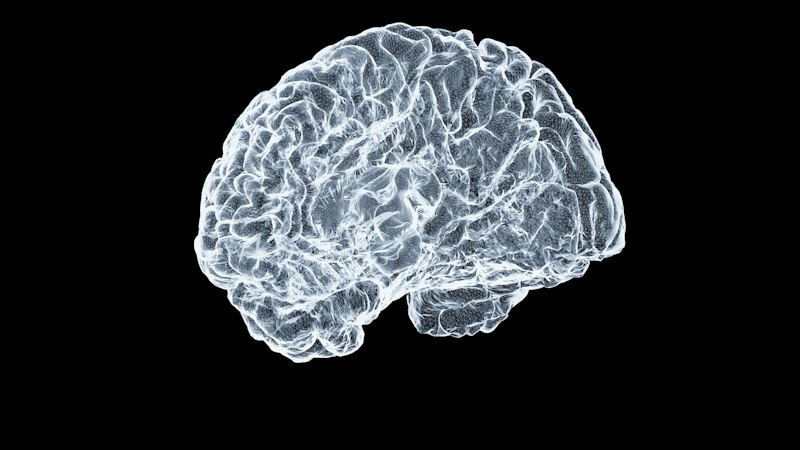
Form perception is the ability to perceive and recognize various shapes and forms. It is an important aspect of visual perception, and is essential for distinguishing objects from one another and for carrying out everyday activities. The ability to perceive form allows us to identify objects, differentiate between them, and make decisions based on their shapes and sizes. This article examines the current understanding of form perception, including its neurological underpinnings, its environmental influences, and its implications for everyday life.
Neural Basis of Form Perception
Form perception is a complex cognitive process that is mediated by the brain. Several areas of the brain are involved in the perception of form, including the primary visual cortex, the parietal cortex, and the occipital cortex. These areas work together to process visual information, recognize shapes, and distinguish between objects. For example, the parietal cortex is responsible for recognizing and distinguishing between various shapes, while the occipital cortex is involved in recognizing and interpreting colors. Additionally, the cerebellum plays an important role in the perception of form, as it is responsible for the coordination of visual information and movement.
Environmental Influences
Form perception is also influenced by environmental factors, such as lighting and background noise. For example, when there is a lack of light, objects appear less distinct and it is harder to perceive their shapes. Additionally, background noise can interfere with the ability to focus on shapes, making them more difficult to recognize. Furthermore, form perception can be affected by the presence of motion, as objects that are moving are more difficult to recognize and differentiate from one another.
Implications for Everyday Life
Form perception is essential for many activities, such as driving, reading, and navigating. Without the ability to perceive and identify objects, it would be difficult to carry out everyday tasks. Additionally, form perception is important for recognizing facial features, as it allows us to differentiate between people and recognize expressions. Form perception is also essential for activities such as art, as it helps us recognize and appreciate different shapes and forms.
Conclusion
Form perception is a complex cognitive process that is mediated by the brain and is influenced by environmental factors. It is essential for carrying out everyday activities, such as driving, reading, and navigating, as well as recognizing facial features and appreciating art. Further research is needed to understand the underlying mechanisms of form perception and its implications for everyday life.
References
Beauchamp, M. S., & Martin, A. (2020). Visual perception and awareness. In A. Martin (Ed.), The Oxford handbook of cognitive neuroscience (2nd ed.). Oxford University Press.
Kanwisher, N., & Wojciulik, E. (2000). Visual object recognition. Annual review of neuroscience, 23(1), 69-95.
Kveraga, K., Boshyan, J., & Bar, M. (2007). Magnocellular projections as the trigger of top-down facilitation in recognition. Journal of Neuroscience, 27(41), 11006-11014.
Li, Y., & Buxbaum, L. J. (2011). Recognition of object shape and object location in parietal cortex. Neuropsychologia, 49(8), 2336-2350.
Tsotsos, J. K. (2011). A computational perspective on visual attention. The Canadian Journal of Experimental Psychology, 65(2), 113-125.