Frequency Judgment: How Your Brain Tracks Your History
Scientifically Reviewed · Dr. Marwa Abd-Alazim · September 4, 2026
Review Criteria & Clinical Standards
This content undergoes rigorous scientific peer-review and medical editorial standards at Arab Psychology Network to ensure clinical accuracy, validity, and compliance with evidence-based guidelines from leading psychological and healthcare authorities (APA / WHO).
Definition and Core Concepts of Frequency Judgment
Frequency judgment refers to a fundamental cognitive process involving an individual’s assessment or estimation of how often a specific stimulus, event, or item has been encountered or presented within a designated time frame or experimental context. This capability is critical for navigating the environment, as accurate estimations of frequency allow individuals to establish expectancies, allocate attention appropriately, and make probabilistic decisions. Unlike recall, which demands the retrieval of specific details associated with each occurrence, frequency judgment typically involves a holistic, quantitative assessment. For example, in a psychological study focusing on memory, a participant might be asked, “How many times did the word ‘serendipity’ appear during the presentation phase?” The resulting numerical response—such as 23 presentations, indicating the subject’s estimation—constitutes the frequency judgment. This process is highly relevant to studies concerning word frequency effects, memory capacity, and the organization of semantic knowledge, confirming its status as a cornerstone concept in cognitive psychology.
The core mechanism underlying frequency judgment is generally considered to be an automatic encoding process, meaning that the mind registers the occurrence rate of stimuli without explicit, conscious intention to memorize this specific data point. This automaticity distinguishes frequency judgment from effortful memory tasks, such as rote memorization or intentional counting. When an individual encounters a stimulus, the brain is thought to simultaneously encode its identity and update its internal tally or trace strength regarding that stimulus’s presence. The accuracy of the resulting judgment is not merely a reflection of sheer counting ability; rather, it reflects the efficiency of the underlying encoding system, the integrity of the memory trace, and the retrieval strategies employed. Researchers posit that deviations from true frequency often reveal crucial insights into cognitive biases, attention deficits, and the limitations of human working memory. Consequently, studying how people judge frequency offers a valuable window into the basic architectural design and operational parameters of human memory systems.
Understanding frequency judgment requires a clear demarcation between direct and indirect assessment methods. Direct assessment involves explicitly asking the subject for a numerical estimate (e.g., “How many times did you see this image?”). Indirect assessment, conversely, relies on comparative judgments (e.g., “Which word appeared more often, A or B?”) or utilizing frequency as a variable to predict performance on other tasks, such as reaction time or recognition accuracy. The complexity of the judgment increases with the heterogeneity of the stimuli, the speed of presentation, and the temporal distance between the encoding phase and the retrieval phase. Furthermore, the concept of subjective frequency—the individual’s internal perception of occurrence—is often contrasted with objective frequency, which is the actual count. Discrepancies between these two measures form the basis for analyzing cognitive errors and biases, demonstrating that while the judgment process is generally accurate for highly frequent stimuli, it becomes prone to systematic errors when dealing with rare events or highly similar items that lead to cognitive interference.
Historical Context and Early Research
The formalized study of frequency judgment gained significant traction in the 1970s, largely catalyzed by the work of psychologists who sought to understand the parameters of automatic memory processes. Prior to this period, most memory research focused predominantly on intentional learning tasks that required explicit effort, rehearsal, and strategic allocation of attentional resources. However, the robustness and often remarkable accuracy of frequency judgments, even under conditions where subjects were not instructed to pay attention to occurrence rates, suggested the existence of an inherent, non-strategic mechanism for tracking environmental input. Early foundational studies demonstrated that people could accurately differentiate between stimuli that occurred five times versus those that occurred ten times, even if the presentation sequences were highly randomized and distracting. This initial evidence challenged the prevailing view that all memory encoding required focused attentional resources, thereby setting the stage for major theoretical shifts concerning the dual nature of memory processing in cognitive science.
One of the most influential theoretical frameworks developed during this early phase was the Automaticity Hypothesis, articulated most prominently by psychologists Lynn Hasher and Rose Zacks in the late 1970s and early 1980s. They proposed that frequency encoding is one of a small set of fundamental cognitive processes, along with spatial and temporal information encoding, that operates largely independently of attentional capacity and intentional effort. According to Hasher and Zacks, these automatic processes meet several stringent criteria: they show minimal developmental change across the lifespan, are not significantly affected by depression or cognitive load, and do not improve substantially with practice or explicit instruction. This hypothesis provided a strong empirical and theoretical basis for separating frequency encoding from controlled, effortful strategic memory processes. Their experiments often involved dual-task paradigms where subjects performed a primary, demanding task (e.g., reading comprehension) while simultaneously being exposed to repeated stimuli, subsequently testing their ability to judge the frequency of the repeated items. The consistent finding that frequency judgment accuracy remained high despite the imposed cognitive load strongly supported the automatic encoding claim.
The significance of this historical research lies in its establishment of frequency judgment as a distinct memory phenomenon, separate from conscious recall and recognition, suggesting an adaptive mechanism crucial for forming stable representations of the environment. Researchers realized that the ability to track how often things happen is not merely a byproduct of episodic memory but rather a dedicated, vital system. For instance, the ability to judge the relative frequency of certain phonemes or grammatical structures is fundamental to rapid language acquisition and mastery. Similarly, judging the frequency of threats or rewards in the environment is crucial for operant learning and survival-based decision-making. Early experiments often manipulated variables such as presentation modality (visual vs. auditory), inter-stimulus interval, and emotional valence to map the boundaries of the frequency encoding mechanism. These manipulations confirmed that the automaticity was robust, though certain factors like extreme speed or high levels of proactive or retroactive interference could marginally impair the resulting judgment, indicating that while automatic, the process still requires minimal cognitive resources for the initial registration of the event.
Theoretical Models of Frequency Judgment
Contemporary cognitive psychology employs several sophisticated models to explain how the brain manages the encoding, storage, and retrieval components of frequency judgment, moving beyond the simple “automatic counter” notion. One prominent category of models is the Strength Theory, which posits that frequency is not explicitly counted but is instead inferred from the perceived strength or fluency of the memory trace associated with the stimulus. According to this view, each exposure to a stimulus increases the strength or accessibility of its memory representation within the semantic network. When asked to judge frequency, the individual assesses the robustness or ease with which the item comes to mind (its processing fluency). Highly frequent items possess stronger traces, leading to greater processing fluency during retrieval, which is then interpreted by the individual as high frequency. This model successfully accounts for certain biases, such as the systematic overestimation of frequency for highly salient or emotionally charged stimuli, as these factors also contribute to increased memory strength independent of the actual objective count.
A second major theoretical approach involves Multiple-Trace Models, which suggest that instead of a single unitary strength index, the memory system maintains multiple distinct episodic traces for each individual occurrence of the stimulus. Frequency judgment, in this context, involves a rapid sampling or counting process of these stored episodic traces. When an individual is queried about frequency, they engage in a memory search process, and the perceived frequency corresponds directly to the number of retrieved episodic representations that are successfully distinguished. These models often incorporate concepts like contextual variability, where differences in the context of each presentation help differentiate the individual traces, thereby improving the accuracy of the subsequent count. If the contexts are highly similar, trace interference occurs, leading to source confusion and an underestimation of the true frequency because the subject struggles to differentiate between the individual occurrences.
Finally, Gist-Based and Heuristic Models offer a perspective rooted in reconstructive memory and probabilistic thinking. These models suggest that frequency judgments are often based not on precise counting or trace strength alone, but rather on high-level cognitive structures, schemas, or learned environmental statistics. When the actual, detailed episodic frequency is difficult or too effortful to retrieve (due to time delay or cognitive load), individuals rely on heuristics and general knowledge about the typical occurrence rates of similar stimuli categories. For instance, judging the frequency of common English words in a novel list is often biased toward the learned distribution of those words in the language (semantic memory) rather than on the specific occurrences in the experimental list (episodic memory). This reliance on mental shortcuts, while cognitively efficient, introduces systematic biases, most notably the availability heuristic, where items that are easily retrieved or imagined are judged as more frequent than they actually are. The convergence of these models highlights that frequency judgment is a complex, multi-faceted process that utilizes both automatic encoding mechanisms and effortful, strategic retrieval processes depending on the specific demands of the task.
Factors Influencing Judgment Accuracy
The accuracy of frequency judgments is modulated by a wide array of internal and external factors, ranging from the inherent characteristics of the stimuli themselves to the current cognitive state of the judging individual. Stimulus characteristics play a crucial role: items that are highly distinctive, unique, or possess high emotional valence are consistently judged more accurately, or sometimes systematically overestimated, compared to neutral or mundane stimuli. This effect is thought to be mediated by the enhanced attention paid to salient items during encoding, leading to a more robust and highly memorable trace. Conversely, if stimuli are highly similar or belong to the same dense semantic category, interference increases significantly, making it difficult to distinguish individual occurrences and generally leading to an underestimation of frequency. Furthermore, presentation parameters, such as the rate of presentation, also significantly impact accuracy; judgments tend to be less precise when stimuli are presented rapidly, potentially overwhelming the capacity of the automatic encoding mechanism.
Internal cognitive factors, particularly the allocation of attention and motivational state, are critical determinants of judgment accuracy. Although the initial encoding of frequency is posited to be automatic, the quality and integrity of this automatic encoding are often reliant on a sufficient baseline level of attentional resources. If the individual is severely distracted, highly stressed, or performing a demanding concurrent task, the initial registration of the stimulus occurrence may be degraded or incomplete, resulting in poorer overall frequency judgments. Moreover, the retrieval phase of the judgment often requires effortful search and comparison processes, particularly when a precise numerical count is required. Motivation affects the thoroughness of this search; individuals highly motivated to be accurate will likely employ more strategic retrieval methods, such as searching for associated contextual cues, whereas those with low motivation may rely quickly on the first fluency signal they perceive, potentially leading to errors. Research involving clinical populations, such as those with attention deficit hyperactivity disorder (ADHD), often shows measurable deficits in frequency judgment accuracy, underscoring the necessity of adequate attentional allocation for optimal performance.
Contextual factors and the presentation structure also introduce systematic variations in judgment accuracy. When a sequence of stimuli is presented in a blocked fashion (e.g., all instances of Stimulus A presented sequentially, followed by Stimulus B), subjects consistently tend to underestimate the frequency compared to a sequence where the stimuli are randomly interleaved. This phenomenon, known as the spacing effect in relation to frequency, suggests that distributed practice or presentation (interleaved items) leads to greater contextual variability, which, according to multiple-trace models, facilitates the retrieval and differentiation of individual occurrences. Moreover, the context of the judgment request itself can introduce bias. If the judgment is requested immediately after presentation, accuracy is generally high. If the request is delayed, reliance shifts more heavily toward strength-based heuristics (fluency), increasing the likelihood of biases related to general knowledge or perceived familiarity, rather than accurate counting of specific episodic instances.
Distinction from Related Constructs
Frequency judgment, while closely related to several other memory constructs, must be distinguished clearly from concepts like recency, familiarity, and explicit recall, as they represent functionally distinct cognitive operations. Recency judgment refers to assessing how recently an item was encountered, typically focusing on its temporal position in the sequence (e.g., Was this word presented in the last five minutes?). While both recency and frequency relate to temporal aspects of memory, frequency focuses on the quantity of occurrences across the entire span, whereas recency focuses on the proximity of the last occurrence to the present moment. It is possible for an item to be highly frequent yet low in recency (if its presentations ceased long ago) or low in frequency yet high in recency (if it was presented only once, very recently). The underlying cognitive mechanisms for these two judgments are often studied separately, although they may interact during complex temporal reasoning tasks that require both quantitative and positional information.
The distinction between frequency judgment and familiarity is also critical, especially within dual-process models of recognition memory. Familiarity is a non-specific feeling of having encountered a stimulus before, often described as a rapid, context-free assessment of mnemonic strength or fluency. Frequency judgment, conversely, requires a quantitative output—a specific numerical estimate. While high frequency typically leads to high familiarity, the relationship is not isomorphic. Individuals often use familiarity as a powerful heuristic cue to infer frequency, particularly when they cannot retrieve the exact count. If an item feels intensely familiar, the individual might infer that it must have occurred frequently. However, misattributions can occur; a single highly distinctive or emotionally charged item might feel intensely familiar, leading to an overestimation of its frequency, even if it occurred only once. Thus, familiarity serves as an input cue that often biases the output of the frequency judgment, rather than being the judgment itself.
Furthermore, frequency judgment differs fundamentally from explicit recall. Explicit recall demands the retrieval of specific contextual details surrounding the stimulus—the “what, where, and when” of the event, requiring effortful access to the episodic memory system. To recall a word, one might need to remember the specific list it was on, the color it was printed in, or the specific instruction given during its presentation. Frequency judgment, however, can often be performed successfully even when detailed episodic recall fails. This supports the idea of frequency being encoded automatically and summarized, independent of the detailed episodic traces. For example, an individual might confidently state that a certain brand name has been seen “hundreds of times” (a frequency judgment) without being able to recall a single specific instance of seeing that advertisement (a failure of explicit recall). This robust separation highlights the adaptive efficiency of the frequency encoding system, which prioritizes quantitative summary over detailed episodic retrieval when assessing environmental regularities.
Biological and Cognitive Mechanisms
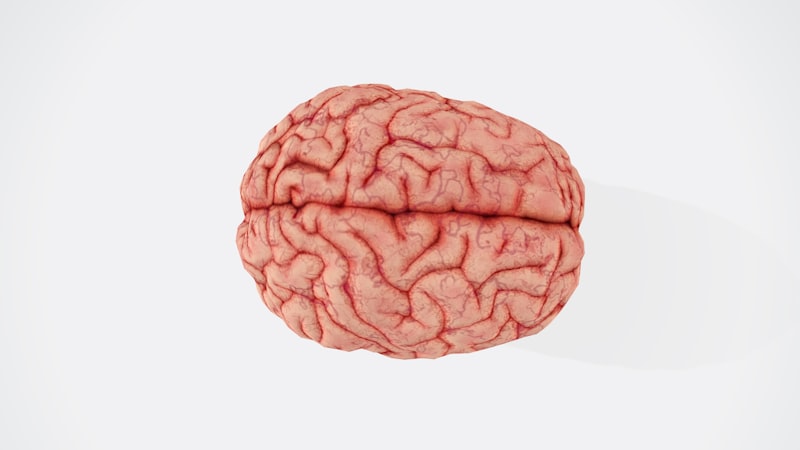
Investigating the underlying neural substrates of frequency judgment suggests that this function relies on a widely distributed cognitive network rather than a single localized area. The frontal lobes, particularly the prefrontal cortex (PFC), are heavily implicated, primarily in the strategic retrieval, monitoring, and decision-making aspects of the judgment process. The PFC is crucial for integrating information, resolving conflict between competing memory traces (e.g., distinguishing one occurrence from another), and selecting the final numerical estimate. Damage to the PFC often results in impaired source monitoring and difficulties in applying corrective strategies, which subsequently degrades the accuracy of frequency judgments, especially for items presented under challenging, high-interference conditions that require deliberate counting or estimation strategies.
The role of the hippocampus is also central, though its exact contribution depends significantly on the theoretical model being applied and the precision required by the task. If frequency encoding is based purely on automatic, non-episodic memory strength (Strength Theory), the hippocampus might play a lesser role. However, if frequency is inferred by retrieving and summing multiple distinct episodic traces (Multiple-Trace Models), the hippocampus, known for its role in binding episodic details and context, becomes essential. Studies using neuroimaging techniques, such as functional magnetic resonance imaging (fMRI), often show significant hippocampal activation during tasks requiring precise frequency judgment, suggesting that when participants strive for high accuracy, they engage episodic memory mechanisms to differentiate and count individual occurrences. Furthermore, the medial temporal lobe structures are critical for the initial registration and maintenance of memory traces necessary for any subsequent quantitative assessment.
The concept of automaticity, central to the Hasher and Zacks theory, suggests a highly efficient, perhaps subcortical, mechanism for rapid tallying. While fully automatic processing is challenging to isolate neurally, the high efficiency of frequency judgment processing is often linked to the basal ganglia and related subcortical loops, which are known to mediate procedural learning and habit formation. The speed and relative effortlessness of basic frequency discrimination (e.g., instantly recognizing that an item presented once is less frequent than an item presented ten times) suggest involvement of neural structures optimized for rapid, continuous monitoring of input streams. The integration of information across these diverse regions—from rapid subcortical tallying to strategic frontal lobe monitoring and hippocampal indexing—is what ultimately allows for the reliable, yet fallible, production of a frequency judgment that adapts to the specific demands of the assessment task.
Applications and Clinical Relevance
The ability to accurately judge frequency has profound implications across various fields of applied psychology, ranging from educational assessment to clinical diagnostics and consumer research. In educational settings, frequency judgment is intrinsically linked to learning and knowledge acquisition. Students implicitly or explicitly judge the frequency of concepts encountered in textbooks or lectures, and this judgment often dictates their allocation of study effort (e.g., prioritizing the rehearsal of less frequent, novel concepts). Researchers utilize frequency judgment tasks to assess the development of automatic information processing in children and adolescents, providing critical insights into cognitive maturation and learning efficiency. Deficits in frequency judgment can signal underlying learning disabilities or attention issues, as the inability to automatically track repetition hinders the formation of robust semantic knowledge and reliable expectations about the learning environment.
In clinical neuropsychology, frequency judgment tasks serve as sensitive tools for assessing the integrity of memory systems, particularly in populations affected by neurological or psychiatric disorders. Patients suffering from conditions such as Korsakoff’s syndrome, Alzheimer’s disease, or schizophrenia often exhibit marked impairments in frequency judgment. This impairment reflects a degradation in the fundamental ability to encode and consolidate basic quantitative information, which can sometimes predate more profound deficits in explicit recall. For instance, assessment of frequency judgment accuracy can help differentiate specific types of amnesia or track the progression of cognitive decline in neurodegenerative diseases. A notable finding is that while patients with severe episodic memory deficits may struggle with tasks requiring high-precision frequency counting, their performance on very low-level, basic frequency discrimination tasks (e.g., simply judging ‘more’ versus ‘less’ frequent) sometimes remains relatively preserved, offering clues about the modularity and resilience of the frequency encoding system.
Beyond clinical assessment, frequency judgment has significant implications for understanding real-world phenomena, such as eyewitness testimony, consumer behavior, and risk assessment. For eyewitnesses, judging the frequency of a certain detail (e.g., how often a suspect was seen near the crime scene) is vital, yet this judgment is highly susceptible to the influence of misleading post-event information and source monitoring errors, often resulting in systemic overestimation due to the availability heuristic. In consumer psychology, the perceived frequency of product exposure directly influences brand familiarity, assumed quality, and ultimately, purchasing decisions; advertisers intentionally manipulate exposure rates to leverage both accurate and heuristic-based frequency judgments. Finally, in risk assessment, individuals frequently misjudge the actual frequency of rare but highly publicized events (e.g., terrorist attacks or specific rare illnesses), leading to significant biases in personal and public decision-making. Studying the systematic errors in frequency judgment provides a necessary foundation for developing interventions aimed at debiasing probabilistic thinking in high-stakes environments.