Behavioral Frequency: Rewire Your Brain and Master Habits
Scientifically Reviewed · Dr. Marwa Abd-Alazim · September 11, 2026
Review Criteria & Clinical Standards
This content undergoes rigorous scientific peer-review and medical editorial standards at Arab Psychology Network to ensure clinical accuracy, validity, and compliance with evidence-based guidelines from leading psychological and healthcare authorities (APA / WHO).
Introduction and Definition of Frequency: The Core Concept
The term frequency is used universally across scientific disciplines to describe the number of repetitions of a periodic signal or event within a specified unit of time. Fundamentally, frequency quantifies the rate at which an oscillatory or cyclic phenomenon occurs, providing a measure of how often a signal repeats itself over a set duration. This foundational concept extends beyond simple physical waves, acting as a crucial metric in fields ranging from acoustics and electromagnetism to statistics, cognitive psychology, and neuroscience. Understanding frequency requires recognizing its intrinsic link to the concept of time; without a defined temporal interval, the measure of repetition is meaningless. In essence, frequency offers a mathematical description of rhythm and periodicity inherent in nature and human experience, allowing researchers to categorize, analyze, and predict dynamic processes.
The initial, fundamental definition of frequency emphasizes its role in characterizing periodic phenomena. Whether analyzing the oscillation of a pendulum, the cycles of an alternating electrical current, or the firing rate of a neural cluster, frequency provides a standardized method for comparison. The reciprocal relationship between frequency and the period ($T$) is essential: frequency ($f$) is defined as $1/T$, where $T$ is the time taken for one complete cycle. A high frequency, therefore, corresponds to a short period, meaning the event repeats rapidly, while a low frequency corresponds to a long period, indicating slow, drawn-out cycles. This inverse relationship is critical not only in technical disciplines but also in understanding natural phenomena, such as the relationship between the perceived pitch of sound (high frequency) and the physical vibration rate.
Within the realm of psychological and behavioral science, the concept of frequency is adapted to describe the rate of occurrence of non-periodic, discrete events, such as the number of times a specific behavior is exhibited, or the prevalence of a memory item in a given population. While the repetition may not follow a perfect wave pattern, the quantitative assessment remains vital. In statistics, frequency becomes the cornerstone of probability theory, determining how often certain outcomes are observed relative to the total number of trials. This generalization highlights the utility of frequency as a measure of density or concentration of events across a defined temporal or experimental space, providing the necessary quantitative data required for empirical validation and hypothesis testing in complex systems.
Units and Measurement of Frequency
The standard International System of Units (SI) unit for measuring frequency is the Hertz (Hz), named after the German physicist Heinrich Hertz. One Hertz is formally defined as one cycle per second (s⁻¹). This unit provides a clear, universally accepted benchmark for describing the rate of oscillation. For instance, a common electrical current in North America operates at 60 Hz, meaning the current completes 60 full cycles of oscillation every second. Depending on the magnitude of the frequency being measured, prefixes are often applied, such as kilohertz (kHz, 10³ Hz), megahertz (MHz, 10⁶ Hz), and gigahertz (GHz, 10⁹ Hz), particularly when dealing with radio waves, computer processors, or high-speed data transmission. The precision afforded by the Hertz unit is crucial for engineering and scientific endeavors where minor variations in timing can lead to catastrophic system failure or erroneous data interpretation.
Beyond the fundamental measure of Hertz, other related units are employed depending on the specific application or domain. In mechanical systems, rotation speed is often measured in revolutions per minute (RPM), which can be converted directly into Hz by dividing by 60. Furthermore, in advanced physics and engineering, the concept of angular frequency ($\omega$) is frequently used. Angular frequency measures the rate of rotation or oscillation in radians per unit time, often seconds, and is related to standard frequency ($f$) by the equation $\omega = 2\pi f$. This distinction is important when analyzing circular motion or phase relationships in waves, as it accounts for the spatial geometry of the oscillation rather than just the temporal repetition rate. Researchers must carefully select the appropriate unit to ensure their measurements accurately reflect the nature of the periodic process under investigation.
The measurement of frequency in empirical research typically relies on sophisticated instrumentation. For continuous, periodic signals, such as acoustic waves or light, devices like frequency counters, spectrum analyzers, or specialized oscilloscopes are employed. These tools often utilize techniques like the Fourier transform, a mathematical method essential for breaking down complex signals into the individual frequencies that compose them. This decomposition is vital in fields like audio processing and neuroimaging (EEG), where a single observed signal is actually a mixture of multiple component frequencies. For discrete events in behavioral science, measurement often involves systematic counting and observation within defined time intervals, leading to measures of response rate or event frequency distributions. Accurate frequency measurement is paramount, as it forms the basis for characterizing the underlying mechanisms driving the observed phenomena.
Frequency in Physics and Wave Mechanics
In classical physics, particularly wave mechanics, frequency plays a defining role in characterizing all forms of wave propagation, including sound waves, water waves, and electromagnetic radiation. The relationship between frequency ($f$), wavelength ($lambda$), and the speed of propagation ($v$) is governed by the fundamental wave equation: $v = flambda$. This relationship dictates that for waves traveling through a specific medium (where the speed $v$ is constant), frequency and wavelength are inversely proportional. If the frequency of a wave increases, its wavelength must decrease proportionally. This principle is fundamental to understanding phenomena across the electromagnetic spectrum, where visible light, radio waves, and X-rays are differentiated solely by their frequency and corresponding wavelength, as they all travel at the constant speed of light ($c$).
The electromagnetic spectrum is an exemplary illustration of the practical application of frequency differentiation. Radio waves utilize low frequencies (kilohertz to megahertz) to carry information over long distances, while visible light occupies a very narrow band of much higher frequencies (around $10^{14}$ Hz). The frequency of light determines its color; red light has a lower frequency than blue light. Furthermore, high-energy radiation, such as gamma rays, possesses extremely high frequencies, which correlates directly with the high energy carried per photon, as defined by Planck’s equation ($E = hf$). The ability of different frequencies to interact uniquely with matter forms the basis for technologies ranging from telecommunications to medical imaging, emphasizing the central role of frequency in describing energy transmission.
A particularly significant concept related to frequency is resonance. Resonance occurs when an external driving force matches the natural frequency of an oscillating system, leading to a dramatic increase in amplitude. This phenomenon can be constructive, such as when tuning a radio receiver to match the broadcast frequency, or destructive, such as when structural elements vibrate violently under certain frequency loads. Understanding the natural frequencies of mechanical, electrical, or even biological systems is critical for stability and function. In acoustics, for example, the natural frequencies of musical instruments define the pitches they produce, illustrating how frequency directly translates physical phenomena into perceptible experience.
The measurement of frequency shifts, known as the Doppler effect, provides crucial information about the movement of sources and observers. If a source emitting waves (e.g., sound or light) is moving towards an observer, the observed frequency appears higher (a blue shift in light, or higher pitch in sound); if it moves away, the frequency appears lower (a red shift or lower pitch). This shift is not due to a change in the source frequency itself, but rather the relative motion compressing or expanding the wavefronts. The Doppler effect is indispensable in astronomy for measuring the velocity of distant galaxies and in medical technology for monitoring blood flow via ultrasound.
Frequency in Statistics and Data Analysis
In statistical analysis, frequency refers to the number of times a particular value or category occurs within a dataset. The organization of this data into a frequency distribution is one of the most fundamental steps in descriptive statistics. A frequency distribution table lists all the possible outcomes in a sample and the corresponding frequency of each occurrence. This allows researchers to quickly identify patterns, central tendencies, and the spread of data. Understanding the distribution of frequencies is essential for calculating key statistical measures, including the mode (the most frequently occurring value) and for visually representing data through histograms or bar charts. Without accurate frequency counts, empirical data analysis would lack the necessary foundation for drawing valid conclusions about populations.
Statisticians distinguish between absolute frequency and relative frequency. Absolute frequency is simply the raw count of occurrences for a specific event or value. Relative frequency, however, converts this raw count into a proportion or percentage by dividing the absolute frequency by the total number of observations. Relative frequency is particularly powerful because it allows for direct comparison between datasets of different sizes. For example, knowing that 50 students chose Option A (absolute frequency) is less informative than knowing that 50% of the students chose Option A (relative frequency), especially when comparing this result to a second sample of a different size. Relative frequency forms the empirical basis for estimating probability, positing that in the long run, the probability of an event tends to converge on its observed relative frequency.
The role of frequency extends deeply into probability theory through the frequentist interpretation of probability. This view defines the probability of an event as the limit of its relative frequency in a large number of trials. This principle, often underpinned by the Law of Large Numbers, suggests that as the sample size increases, the observed relative frequency will stabilize and converge toward the true theoretical probability. In practical research, whether in quality control, social surveys, or psychological experimentation, the analysis of observed frequencies provides the empirical evidence necessary to make probabilistic statements about future occurrences or population characteristics. Misinterpreting frequency data, particularly in small samples, can lead to significant errors in probability estimation and subsequent inference.
Frequency in Cognitive Psychology
In cognitive psychology, the concept of frequency is critical for understanding memory, judgment, and decision-making processes. The frequency with which an event or piece of information is encountered significantly impacts its encoding and retrieval. The word frequency effect is a well-documented phenomenon showing that high-frequency words (those appearing often in language) are recognized faster in lexical decision tasks, yet often recalled less easily than low-frequency words in free recall tasks. This paradoxical effect highlights complex interactions within the semantic network: high-frequency items are highly accessible due to repeated activation, but low-frequency items may create more distinct memory traces because they are novel and less common.
Furthermore, perceived frequency plays a major role in the utilization of cognitive heuristics, particularly the availability heuristic. This heuristic suggests that people estimate the likelihood or frequency of an event based on how easily examples or instances come to mind. If individuals can readily recall many examples of a specific type of event (e.g., plane crashes reported frequently in the news), they tend to overestimate its objective frequency in the real world, even if the actual statistical probability is low. The reliance on easily retrieved information, often influenced by media exposure or personal experience frequency, demonstrates how subjective perception of frequency can deviate dramatically from objective statistical data, leading to systematic biases in risk assessment and judgment.
Attention and learning are also heavily modulated by frequency. Repeated exposure to stimuli, or high frequency of practice, is fundamental to skill acquisition and memory consolidation. This principle is formalized in models of learning where spaced repetition (a specific schedule of frequency) is often shown to be more effective than massed practice, illustrating that the timing and frequency of input are intertwined. Moreover, in visual and auditory perception, the frequency of sensory input dictates how the perceptual system filters and processes information. For example, in audition, the frequency of vibration determines the perceived pitch, a direct mapping from physical frequency to psychological experience.
Frequency in Behavioral Psychology
In behavioral psychology, specifically within the framework of operant conditioning, frequency is a core measurable dimension of behavior and reinforcement. Behavior is often quantified by its response rate, which is the frequency of a target behavior occurring within a specified time period. Changes in the response rate, measured as frequency per minute or hour, serve as the primary dependent variable used to determine the effectiveness of various psychological interventions or environmental manipulations. Consistent, high-frequency measurement is essential for establishing baseline behavior and accurately assessing therapeutic progress or learning curves.
The frequency of reinforcement delivery is arguably the most critical determinant of behavioral strength and persistence, defined by schedules of reinforcement. These schedules dictate how often a desired behavior is followed by a reward.
- Fixed Ratio (FR) Schedules: Reinforcement occurs after a fixed number (frequency) of responses. This typically leads to high, steady response rates followed by brief post-reinforcement pauses.
- Variable Ratio (VR) Schedules: Reinforcement occurs after an unpredictable, but average, number (frequency) of responses. This generates the highest and most stable response rates, as seen in gambling behavior, due to the unpredictability of the reward frequency.
- Fixed Interval (FI) Schedules: Reinforcement is available after a fixed amount of time has passed, provided a response occurs. This results in a scalloped response pattern where behavior frequency increases rapidly just before the reinforcement is due.
The careful manipulation of reinforcement frequency allows behavior analysts to predict and control the rate and persistence of learned behaviors across species.
Beyond direct reinforcement, the frequency of mere exposure to a stimulus significantly influences attitudes and preferences, a concept known as the mere-exposure effect. Studies show that the more frequently an individual is exposed to a novel, neutral stimulus (e.g., a foreign symbol, a musical snippet), the more positive their attitude becomes toward it, provided the initial reaction was not negative. This psychological phenomenon demonstrates that a high frequency of non-reinforced contact can subtly shape emotional and cognitive biases, illustrating a powerful, non-conscious application of frequency in social and consumer psychology.
Applications of Frequency in Neuroscience
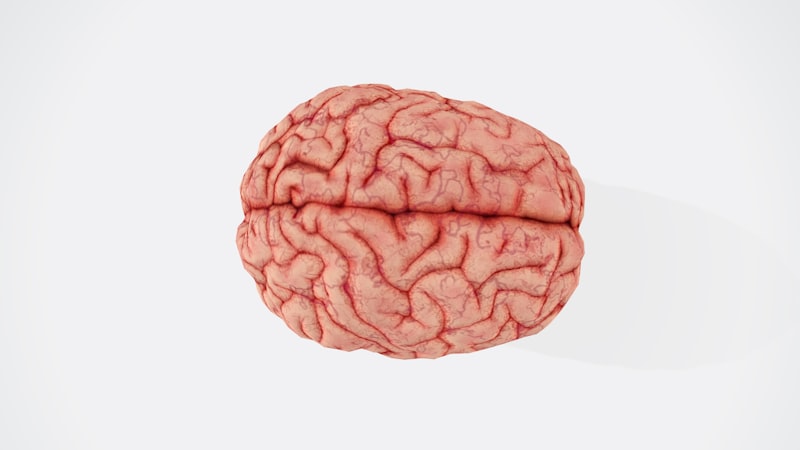
In neuroscience, the analysis of frequency is fundamental to understanding brain activity and functional states. Brain activity, measured using electroencephalography (EEG) or magnetoencephalography (MEG), consists of electrical oscillations that span various frequency bands, each correlated with distinct cognitive states. These rhythmic patterns, often referred to as brain waves, are categorized by their frequency range in Hertz:
- Delta Waves (0.5–4 Hz): Associated primarily with deep, dreamless sleep and certain meditative states.
- Theta Waves (4–8 Hz): Linked to drowsiness, early sleep, memory retrieval, and deep relaxation.
- Alpha Waves (8–13 Hz): Characterize a relaxed, wakeful state, often associated with closed eyes and reduced visual processing.
- Beta Waves (13–30 Hz): Reflect active concentration, alertness, problem-solving, and high-level cognitive processing.
- Gamma Waves (30–100+ Hz): Associated with binding sensory information, conscious perception, and complex motor function; often linked to focused attention.
Analyzing the frequency power spectrum allows researchers to map mental states and diagnose neurological disorders, such as epilepsy, which often involves abnormal, synchronized high-frequency discharges.
The dynamic interaction between these frequency bands is crucial for complex brain functions. For example, memory retrieval often involves the synchronization of theta and gamma rhythms, suggesting that information processing relies on precise frequency coupling between different brain regions. Synchronization, defined as the temporal alignment of oscillations, enhances communication efficiency across neural networks. Disruptions in the normal frequency patterns, such as excessive low-frequency activity in the frontal lobe, have been correlated with various psychological conditions, including depression and ADHD. Thus, frequency analysis provides a powerful non-invasive window into the functional architecture of the central nervous system.
At the level of individual neurons, frequency refers to the firing rate or the rate at which a neuron generates action potentials (spikes) per second. The frequency of firing is the primary method by which neurons communicate information. A higher firing frequency generally indicates a stronger or more salient stimulus being processed. This rate coding mechanism is essential for sensory transduction, allowing the intensity of a stimulus (e.g., loudness of sound, brightness of light) to be encoded into a proportional frequency of neural discharge. Understanding the relationship between stimulus parameters and neural firing frequency is a cornerstone of sensory neuroscience.
Temporal Frequency vs. Spatial Frequency
While the primary definition of frequency focuses on repetition over time (temporal frequency), the concept is also rigorously applied in the spatial domain, leading to the definition of spatial frequency. Temporal frequency measures cycles per second (Hz), quantifying how often something changes at a fixed point in space. Spatial frequency, conversely, measures cycles per unit distance, typically cycles per degree of visual angle or cycles per centimeter. This concept is particularly important in optics, image processing, and visual perception, where patterns repeat across a physical dimension rather than a temporal one.
In visual science, spatial frequency is used to describe the complexity and detail of visual stimuli, such as repeating striped patterns called gratings. A low spatial frequency grating consists of wide bars and represents coarse detail (like the large features of a landscape), while a high spatial frequency grating consists of narrow, closely packed bars and represents fine detail (like texture or fine print). The human visual system processes different spatial frequencies through specialized channels. For instance, high spatial frequencies are essential for detailed object recognition, while low spatial frequencies are critical for rapid detection of large forms and motion.
The distinction between temporal and spatial frequency is crucial for analyzing dynamic visual events. When observing a moving grating, the visual system must process both its spatial frequency (how tight the stripes are) and its temporal frequency (how quickly the stripes move across the field of view). The interaction between these two frequency domains helps define the limits of human perception, such as the contrast sensitivity function, which maps the visibility of visual patterns based on both their spatial frequency and the contrast level. This integrated frequency analysis demonstrates the sophisticated manner in which the brain decomposes complex sensory input into fundamental, measurable components.