Frontal Cortex: The Architect of Your Conscious Mind
Scientifically Reviewed · Dr. Marwa Abd-Alazim · October 23, 2026
Review Criteria & Clinical Standards
This content undergoes rigorous scientific peer-review and medical editorial standards at Arab Psychology Network to ensure clinical accuracy, validity, and compliance with evidence-based guidelines from leading psychological and healthcare authorities (APA / WHO).
The Core Definition of the Frontal Cortex
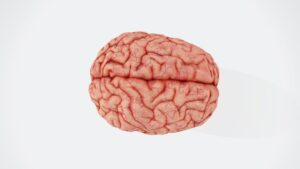
The frontal cortex refers to the most anterior region of the cerebral cortex, encompassing the majority of the frontal lobe. This vast area, situated at the very front of the brain directly behind the forehead, is the epicenter for higher-order cognitive functioning, playing an indispensable role in processes that distinguish human cognition, such as personality expression, social behavior, decision-making, and sophisticated planning. It is the last area of the brain to fully mature, often continuing development into the mid-twenties, reflecting its complex responsibilities in orchestrating behavior and thought.
In its simplest form, the frontal cortex acts as the brain’s primary control system, integrating sensory information from posterior brain regions and using that data to formulate appropriate motor and behavioral responses. While the posterior brain handles perception and input, the frontal cortex handles action and output. The fundamental mechanism driving its function is the ability to maintain and manipulate information over short periods—known as working memory—and to inhibit inappropriate or impulsive responses, allowing for goal-directed behavior rather than purely reflexive reactions. The sheer volume and intricate connectivity of the frontal cortex underscore its centrality in almost every voluntary action and reasoned thought.
Anatomical Divisions and Functional Specialization
The frontal cortex is not a monolithic structure but is functionally and anatomically divided into several critical areas, each contributing specialized roles to overall cognitive architecture. These divisions include the primary motor cortex, the premotor cortex, and the supplementary motor area, which are primarily involved in the planning and execution of voluntary motor control. However, the largest and most complex part of this region is the Prefrontal Cortex (PFC), which is responsible for almost all executive functions and personality attributes.
The Prefrontal Cortex itself is often subdivided into three major areas: the Dorsolateral PFC (DLPFC), the Ventromedial PFC (VMPFC), and the Orbitofrontal Cortex (OFC). The DLPFC is typically associated with “cold” cognitive functions, such as abstract reasoning, working memory, and sustained attention. Conversely, the VMPFC and OFC are considered part of the “hot” cognitive system, specializing in emotional regulation, risk assessment, moral judgment, and the processing of rewards and punishments. The coordinated activity among these regions allows humans to navigate complex social environments, maintain long-term goals, and adapt behavior based on previous outcomes.
Historical Context and Key Discoveries
While the anatomical location of the frontal cortex was known early in neuroanatomy, its true functional significance was largely underestimated until the mid-19th century. Prior to this period, much of brain research focused on sensory and motor mapping. The pivotal moment that irrevocably linked the frontal cortex to personality and higher cognition was the infamous 1848 case of Phineas Gage, an American railroad construction foreman who survived a severe accident where a large iron rod was driven completely through his head, destroying much of his left frontal lobe.
Although Gage retained his intellect, memory, and motor skills, his personality underwent a profound transformation; he became irritable, profane, and impulsive, demonstrating a complete breakdown of social and moral restraint. This accidental lesion provided undeniable evidence that the frontal cortex was the seat of personality and executive control, initiating a new era of psychological research dedicated to understanding the neural basis of human behavior. Later historical developments, though often ethically fraught, included the mid-20th-century practice of lobotomy, championed by figures like Egas Moniz, which attempted to treat severe psychiatric disorders by surgically severing connections within the frontal lobe, further highlighting its critical, yet delicate, role in mental health.
The Central Role in Executive Functions
The most crucial psychological principle associated with the frontal cortex is its command over Executive Functions (EFs). These functions are a set of cognitive processes necessary for controlling and regulating behavior, enabling goal-directed activity, and adapting to novel situations. The frontal cortex, especially the PFC, is essentially the brain’s corporate headquarters, responsible for deciding which actions to take, when to take them, and which behaviors to suppress in favor of a more advantageous outcome.
Executive functions are typically broken down into three core components: Inhibitory Control, which is the ability to suppress inappropriate actions or resist temptation; Working Memory, which involves holding and manipulating information needed to complete a task; and Cognitive Flexibility, the capacity to switch focus or shift strategies in response to changing rules or feedback. These three components work in concert to facilitate complex, higher-level EFs such as planning, problem-solving, and abstract reasoning. Damage or impairment to the frontal cortex leads directly to deficits in these areas, resulting in rigidity, poor planning, impulsivity, and difficulty learning from mistakes.
A Practical Example: Managing a Complex Project
To illustrate the frontal cortex in action, consider the common, real-world scenario of a student who must complete a complex term paper while simultaneously balancing social obligations and a part-time job. This task requires intense frontal lobe activity, moving far beyond simple stimulus-response behavior. The initial decision to prioritize the paper over other activities requires significant inhibitory control to suppress distracting impulses, such as checking social media or attending non-essential gatherings.
The “How-To” application of the frontal cortex in this scenario involves a structured, multi-step process reliant on EFs:
- Goal Setting and Planning: The DLPFC is engaged to break the large task (writing the paper) into smaller, manageable steps (research, outlining, drafting, revision) and to estimate the time required for each step.
- Working Memory Management: During research and writing, the student must hold multiple pieces of information in mind simultaneously—the thesis statement, specific source citations, and structural requirements—all managed by the working memory systems of the PFC.
- Monitoring and Error Correction: As the student writes, the frontal cortex continuously monitors the output against the established goal, identifying inconsistencies or errors and initiating cognitive flexibility to adjust the writing strategy or structure.
- Emotional Regulation: If the student encounters frustration or anxiety (signals from the limbic system), the VMPFC and OFC must regulate these emotions, preventing an emotional shutdown and ensuring sustained motivation toward the long-term academic goal.
This coordinated effort demonstrates how the frontal cortex overrides immediate gratification and emotional responses in favor of long-term strategic success.
Significance and Impact in Modern Psychology
The understanding of the frontal cortex’s functions is arguably the most significant achievement in modern cognitive neuroscience, profoundly impacting various fields within psychology. Its importance lies in providing the neural substrate for consciousness, personality, and morality, transforming psychological theories from purely behavioral explanations to integrated biopsychosocial models. In clinical psychology, knowledge of frontal lobe function is essential for diagnosing and treating numerous psychiatric and neurological conditions.
Today, this concept is applied extensively in several domains. In therapeutic settings, executive function training is a cornerstone intervention for individuals with Attention Deficit Hyperactivity Disorder (ADHD), where deficits in inhibitory control and working memory are prominent. Furthermore, understanding the impact of frontal lobe atrophy is critical in diagnosing and managing neurodegenerative conditions such as Frontotemporal Dementia (FTD), which often manifests first as severe personality changes due to PFC deterioration. In education, curricula are increasingly designed to actively train executive functions, recognizing them as predictive factors for academic and life success that are more malleable than general intelligence.
Connections and Relations to Other Psychological Concepts
The frontal cortex is intrinsically linked to numerous other psychological concepts and belongs primarily to the subfields of Cognitive Neuroscience and Biological Psychology. Its function is often understood in relation to the systems it regulates or interacts with. A key relationship exists between the frontal cortex and the limbic system, which manages emotions, motivation, and memory. The frontal cortex often serves as the inhibitory brake on the impulsive, raw drives generated by the limbic system, allowing for socially appropriate and rational behavior.
Furthermore, the processes mediated by the frontal cortex are central to theories of consciousness and self-awareness. Concepts such as Theory of Mind (the ability to attribute mental states to oneself and others) are heavily dependent on the medial portions of the prefrontal cortex. It also integrates strongly with memory systems housed in the temporal lobe, utilizing long-term memories to inform present decisions and planning future actions. The frontal cortex ensures that behavior is not purely automatic or driven by immediate stimuli, but is instead reflective, planned, and consistent with an individual’s complex self-concept and moral framework.