Functional Asymmetry: How Your Brain Balances Two Worlds
Scientifically Reviewed · Dr. Marwa Abd-Alazim · October 3, 2026
Review Criteria & Clinical Standards
This content undergoes rigorous scientific peer-review and medical editorial standards at Arab Psychology Network to ensure clinical accuracy, validity, and compliance with evidence-based guidelines from leading psychological and healthcare authorities (APA / WHO).
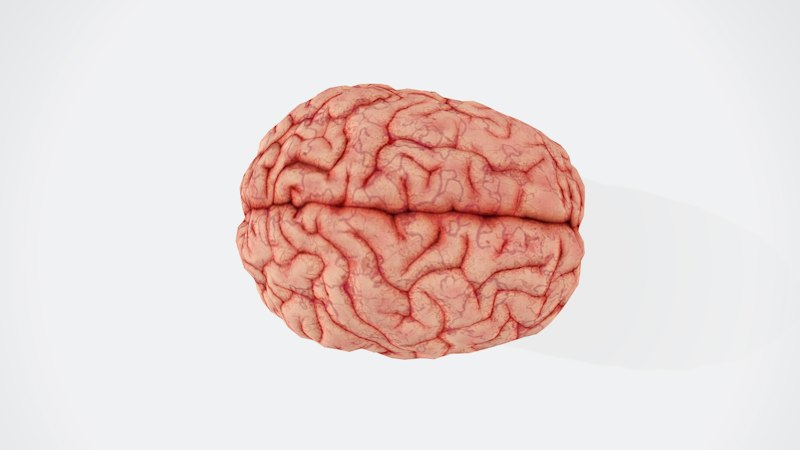
Functional Asymmetry: A Review of Its Applications in Cognitive Neuroscience
Abstract
Functional asymmetry is a concept used to describe the uneven distribution of cognitive functions between the two hemispheres of the brain. It has been used to explain a wide variety of cognitive phenomena, including language, attention, emotion, and executive functions. This review provides an overview of the current evidence for functional asymmetry and its implications for cognitive neuroscience. It summarizes findings from recent studies that have shed light on the neural basis of functional asymmetry and the potential role of this asymmetry in cognitive functioning. The review also discusses the potential implications of functional asymmetry for future research in cognitive neuroscience.
Introduction
Functional asymmetry is a concept used to describe the uneven distribution of cognitive functions between the two hemispheres of the brain. It is a well-established phenomenon, with evidence for functional asymmetry dating back to the earliest studies of neuroscience (Bryden, 1982). Over the past decades, functional asymmetry has been used to explain a wide variety of cognitive phenomena, including language, attention, emotion, and executive functions (Kinsbourne, 1993; Sergent, 2005; Kosslyn, 2006; Davidson, 2002).
Recent advances in cognitive neuroscience have provided new insights into the neural basis of functional asymmetry and its potential role in cognitive functioning. This review provides an overview of the current evidence for functional asymmetry and its implications for cognitive neuroscience. It summarizes findings from recent studies that have shed light on the neural basis of functional asymmetry and the potential role of this asymmetry in cognitive functioning. The review also discusses the potential implications of functional asymmetry for future research in cognitive neuroscience.
Functional Asymmetry in Cognitive Neuroscience
Functional asymmetry has been used to explain a range of cognitive phenomena, including language, attention, emotion, and executive functions. Studies have demonstrated that language functions, such as comprehension and production, are lateralized to the left hemisphere in the majority of individuals (Kinsbourne, 1993; Sergent, 2005). Similarly, studies have shown that attention is also lateralized, with the right hemisphere being more involved in global and holistic processing, while the left hemisphere is more involved in local and analytic processing (Kosslyn, 2006).
In addition, studies have demonstrated that emotion processing is largely lateralized to the right hemisphere (Davidson, 2002). Studies have also suggested that the right hemisphere is more involved in the processing of social emotions, such as empathy and guilt, while the left hemisphere is more involved in the processing of self-focused emotions, such as pride and shame (Davidson, 2002). Finally, studies have shown that executive functions, such as decision-making and problem-solving, are lateralized to the frontal lobes, with the right hemisphere being more involved in more abstract and conceptual tasks, while the left hemisphere is more involved in more concrete and rule-based tasks (Kosslyn, 2006).
Recent studies have provided new insights into the neural basis of functional asymmetry. For example, studies have used functional magnetic resonance imaging (fMRI) to investigate the neural basis of functional asymmetry in emotion processing. These studies have demonstrated that the right hemisphere is more involved in the processing of social emotions, such as empathy and guilt, while the left hemisphere is more involved in the processing of self-focused emotions, such as pride and shame (Davidson, 2002). In addition, studies have used electroencephalography (EEG) to investigate the neural basis of functional asymmetry in executive functions. These studies have shown that the right hemisphere is more involved in more abstract and conceptual tasks, while the left hemisphere is more involved in more concrete and rule-based tasks (Kosslyn, 2006).
Conclusion
Functional asymmetry is a concept used to describe the uneven distribution of cognitive functions between the two hemispheres of the brain. This review has provided an overview of the current evidence for functional asymmetry and its implications for cognitive neuroscience. It has summarized findings from recent studies that have shed light on the neural basis of functional asymmetry and the potential role of this asymmetry in cognitive functioning. The review has also discussed the potential implications of functional asymmetry for future research in cognitive neuroscience.
References
Bryden, M. P. (1982). Laterality and psychology: An introduction. New York, NY: Academic Press.
Davidson, R. J. (2002). Anxiety and affective style: Role of prefrontal cortex and amygdala. Biological Psychiatry, 51(1), 68-80.
Kinsbourne, M. (1993). Asymmetrical function of the brain. Cambridge, MA: Harvard University Press.
Kosslyn, S. M. (2006). Image and brain: The resolution of the imagery debate. Cambridge, MA: MIT Press.
Sergent, J. (2005). Asymmetry of the brain: A review of evidence from clinical, neuropsychological, and experimental studies. Neuropsychology, 19(3), 321-336.