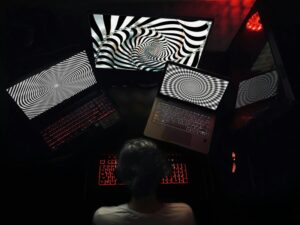
Technophobia: Mastering Your Digital Anxiety
Scientifically Reviewed · Dr. Marwa Abd-Alazim · August 27, 2026
Review Criteria & Clinical Standards
This content undergoes rigorous scientific peer-review and medical editorial standards at Arab Psychology Network to ensure clinical accuracy, validity, and compliance with evidence-based guidelines from leading psychological and healthcare authorities (APA / WHO).

Introduction and Definition of Kilobytophobia
Kilobytophobia represents a specialized manifestation of anxiety characterized by a profound and sometimes debilitating fear of using a computer or engaging with computer technologies. While the term itself is not formally recognized within standard diagnostic manuals, such as the Diagnostic and Statistical Manual of Mental Disorders (DSM), it serves as a descriptor for severe computer anxiety leading to active avoidance behaviors. This condition goes beyond simple dislike or discomfort; it encompasses a genuine psychological apprehension triggered by the presence, necessity, or prospect of interacting with digital interfaces, hardware, or software systems. The core psychological mechanism involves an overwhelming perception of complexity, vulnerability, or loss of control inherent in the computational process, often resulting in physiological stress responses when faced with tasks that others consider routine, such as sending an email or operating specialized professional software.
The defining feature of this phobia is the resulting refusal or reluctance to use computer resources, which can significantly impair an individual’s personal, educational, and professional functioning in the increasingly digitized modern world. This reluctance is not due to a lack of necessity or availability, but rather a compelling emotional deterrent rooted in fear. For some individuals, the anxiety is specifically tied to the fear of causing irreversible damage to the machine or the data it holds, while for others, the apprehension stems from the perceived complexity of the operating system or the fear of being monitored or judged while interacting with the technology. This distinction emphasizes that Kilobytophobia is less about the fear of technology broadly (Technophobia) and more about the specific, tangible interaction with the computer interface itself.
Understanding Kilobytophobia requires acknowledging its gradient nature. It ranges from mild discomfort that causes hesitation to severe, panic-inducing episodes upon forced interaction. In its more intense form, the phobia necessitates complex avoidance strategies, forcing individuals to rely heavily on analog methods or delegate digital tasks entirely to others. This reliance perpetuates the phobic cycle, reinforcing the belief that computer interaction is dangerous or beyond their capabilities, thereby widening the digital divide experienced by the affected individual. The relationship between Kilobytophobia and general computer anxiety is hierarchical; the former is the severe, avoidance-driven behavioral outcome of the latter.
Nomenclature and Historical Context
The nomenclature surrounding the fear of computers is often confusing, involving overlapping terms such as Technophobia, Cyberphobia, and Computer Anxiety. While Kilobytophobia specifically targets the fear of the computer apparatus and its immediate functions (often focusing on the physical interaction or the operating system), its etymological structure links it directly to the fundamental unit of digital information, the kilobyte, metaphorically representing the fear of digital data and systems. Historically, the phenomenon gained prominence following the widespread adoption of personal computers in the late 20th century, particularly as digital literacy transitioned from a specialized skill to a societal prerequisite.
Early research into this area, often focusing on the concept of Computer Anxiety, identified populations resistant to adopting new technologies, particularly in workplace environments undergoing automation. This anxiety was frequently attributed to factors such as age (older workers unfamiliar with new paradigms), educational background, and a lack of proper training. However, as technology became more intuitive, the persistence of severe avoidance behaviors suggested a deeper, underlying psychological component beyond simple unfamiliarity. The rise of graphically intensive operating systems and the perception of computers as complex, unforgiving machines fueled the development of specific phobic responses in susceptible individuals.
The historical context also reveals that initial fears were often practical: the high cost of computing errors, the difficulty of data recovery, and the perceived vulnerability of early computer systems to catastrophic failure. While modern systems are more robust and user-friendly, the psychological residue of these early anxieties persists, manifesting in contemporary Kilobytophobia. This historical relationship highlights that the fear is often deeply ingrained, stemming from societal narratives about technological complexity and the perceived power disparity between the user and the machine. Consequently, the term Kilobytophobia serves as a specific, albeit informal, label for the intense, paralyzing fear of engaging with the machine interface itself, distinguishing it from the broader fear of network security or the internet.
Clinical Manifestations and Symptomology
The clinical presentation of Kilobytophobia involves a range of behavioral, cognitive, and physiological symptoms that emerge when the individual is exposed to or anticipates contact with a computer. Behaviorally, the most immediate manifestation is the pronounced refusal or reluctance to initiate computer use, even when tasks are critical. This avoidance can extend to avoiding environments where computers are prevalent, such as libraries, internet cafes, or certain office spaces. When avoidance is impossible, the individual may exhibit extreme procrastination or delegate tasks, often expending significant effort to circumvent digital requirements.
Cognitive symptoms include catastrophic thinking related to computer use. The individual frequently anticipates worst-case scenarios, such as accidentally deleting critical files, irreversibly damaging the hardware, or exposing private information. There is often a profound feeling of helplessness and a belief that they lack the inherent capability to understand or control the machine. This cognitive distortion is maintained despite evidence of competence in other complex areas of life. They may hyper-focus on minute details, fearing that a single, incorrect keystroke will lead to disaster, contributing to a state of perpetual cognitive overload during interaction.
Physiologically, exposure to a computer or the thought of using one can trigger classic anxiety and panic responses, mirroring symptoms found in other specific phobias. These symptoms include:
- Increased heart rate and palpitations.
- Sweating, particularly in the palms.
- Shallow or rapid breathing (hyperventilation).
- Muscle tension, especially in the neck and shoulders.
- Gastrointestinal distress (nausea or “butterflies”).
- Dizziness or lightheadedness.
These intense physical reactions serve to reinforce the avoidance behavior, solidifying the association between computer use and perceived danger. The severity of these symptoms dictates the level of impairment the phobia imposes on daily life, sometimes rendering employment or advanced education unattainable without significant accommodation.
Etiology: Underlying Causes and Risk Factors
The development of Kilobytophobia is typically multifactorial, stemming from a combination of psychological vulnerabilities, negative learning experiences, and societal pressures. One significant etiological factor is the concept of learned helplessness, where previous negative interactions with technology—such as data loss, virus infections, or public failures while attempting to use a computer—have conditioned the individual to believe that effort is futile and that the machine is inherently unpredictable or hostile. These early traumatic events create a strong negative association that is resistant to subsequent positive experiences.
Furthermore, personality traits play a role. Individuals prone to perfectionism, high levels of generalized anxiety, or those with a low tolerance for ambiguity may be more susceptible to developing the phobia. The inherent complexity and often opaque nature of computing systems challenge the perfectionist’s need for absolute control and predictability. The fear of making an unrecoverable mistake, compounded by the rapid pace of technological change, acts as a potent stressor. This stress is often amplified by a lack of positive early exposure or inadequate foundational training, leading to a profound deficit in digital self-efficacy.
Societal and environmental risk factors also contribute significantly. The rapid acceleration of the digital revolution has created a societal expectation of proficiency, often without providing universal, tailored training. Individuals who feel marginalized by this rapid pace, particularly older adults or those from low socioeconomic backgrounds with limited access to resources, may experience intense shame or embarrassment about their perceived lack of skill. This social pressure can convert generalized computer anxiety into a full-blown phobia as the individual internalizes the belief that their difficulty is a personal failing rather than a systemic issue related to training gaps. Finally, vicarious learning, observing others struggle or fail dramatically with technology, can also instill fear, particularly in children or young adults.
Differential Diagnosis: Distinguishing from Related Phobias
While Kilobytophobia is often used interchangeably with broader terms, precise differentiation is crucial for effective intervention. It must be clearly distinguished from:
- Technophobia: This is a generalized fear of technology and new inventions, encompassing everything from advanced machinery to automation. A Technophobe fears technological progress itself. A Kilobytophobe, conversely, may be comfortable with older technologies (e.g., analog phones) but fears the specific digital interface of a modern PC.
- Cyberphobia: This refers specifically to the fear of the internet, virtual reality, or the online world. The anxiety is focused on issues like privacy invasion, online harassment, network security threats, or the overwhelming nature of online information. A Cyberphobe might be comfortable using a computer for offline tasks (e.g., word processing) but panic when asked to connect to the web.
- Computer Anxiety: This is the most closely related concept and acts as the underlying clinical substrate. Computer anxiety is a general feeling of nervousness, discomfort, or apprehension when using or thinking about using computers. Kilobytophobia is considered the severe, behavioral outcome of computer anxiety, characterized by active, pathological avoidance and meeting the criteria for a specific phobia.
The diagnostic distinction rests on the object of fear. In Kilobytophobia, the object is typically the physical machine, the operating system’s interface, or the fear of inputting data incorrectly. The phobic response is activated by the act of sitting down at the keyboard or powering on the device. This specificity allows clinicians to narrow the focus of therapeutic exposure, targeting the user interface interaction rather than the abstract concept of technology or the vastness of the internet.
Furthermore, it is important to rule out underlying conditions, such as Obsessive-Compulsive Disorder (OCD), where computer-related behaviors might manifest as compulsions (e.g., repeatedly checking security logs) rather than avoidance driven by fear. Similarly, social anxiety might cause discomfort when using a computer in a public setting (e.g., a classroom), but the fear is rooted in social judgment, not the machine itself. Therefore, a comprehensive assessment must confirm that the primary distress and avoidance stem directly from the interaction with the computational device.
Socioeconomic and Personal Impact
The impact of Kilobytophobia extends far beyond personal discomfort, creating significant barriers to socioeconomic mobility and personal integration in a globalized, digital economy. Given that digital literacy is now a baseline requirement for almost all professional fields, the refusal or reluctance to use computer resources can severely limit career opportunities and necessitate accepting lower-paying, less fulfilling analog work. This professional stagnation exacerbates feelings of inadequacy and reinforces the phobic cycle.
In educational settings, the phobia hinders academic progress, particularly at higher levels where research, remote learning, and assignment submission are almost exclusively digital. Students suffering from Kilobytophobia may struggle to complete required coursework, access essential digital library resources, or participate in online collaborative projects, leading to academic underperformance or withdrawal. This educational disadvantage further restricts future opportunities, creating a cycle of technological exclusion.
Personally and socially, the phobia isolates individuals. Access to essential services, such as banking, healthcare scheduling, government applications, and communication with family (especially during periods requiring remote contact), is increasingly mediated by digital platforms. Avoidance mechanisms related to computers therefore directly impede access to critical resources, potentially impacting health and financial stability. The individual may become overly reliant on family members or friends to manage their digital lives, leading to a loss of autonomy and potential strains on personal relationships.
Therapeutic Approaches and Interventions
Treatment for Kilobytophobia follows established protocols for specific phobias, primarily focusing on cognitive restructuring and systematic exposure. The overarching goal is to transform the perception of the computer from a source of danger into a manageable tool, thereby reducing the associated anxiety and eliminating avoidance behaviors.
The primary evidence-based intervention is Cognitive Behavioral Therapy (CBT). CBT targets the core cognitive distortions—the catastrophic thoughts about system failure or personal inadequacy. Therapists help individuals identify and challenge irrational fears (e.g., “If I click the wrong button, the hard drive will erase itself”) and replace them with more realistic, evidence-based assessments of risk. This involves teaching the patient that computers, while complex, are designed with safeguards and that errors are typically reversible.
Crucially, CBT is paired with Systematic Desensitization and Exposure Therapy. This process involves gradual, controlled exposure to the feared object (the computer) in a safe, therapeutic environment. The hierarchy of exposure might look like this:
- Viewing pictures of computers.
- Sitting near an inactive computer.
- Turning the computer on and immediately turning it off.
- Navigating the desktop interface without saving or deleting anything.
- Performing simple, low-stakes tasks (e.g., opening a basic word document).
- Engaging in moderate-stakes activities (e.g., sending a non-critical email).
Each step is managed until anxiety levels decrease significantly, ensuring that the patient learns that the feared outcome does not materialize. Specialized training programs that focus on teaching fundamental digital skills in a non-judgmental, patient manner are also highly effective complements to formal therapy, enhancing the patient’s sense of self-efficacy.
Future Directions and Technological Evolution
The relevance of Kilobytophobia is unlikely to diminish; rather, the complexity of technology continues to evolve, presenting new potential stressors. Future research must address how new technological paradigms—such as the integration of Artificial Intelligence (AI), ubiquitous cloud computing, and advanced virtual reality interfaces—will impact the prevalence and manifestation of computer-related anxieties. While AI promises to simplify many tasks, its opacity and the increasing reliance on algorithmic decision-making may introduce new fears related to loss of human control and understanding.
As interfaces become more seamless (e.g., voice-activated systems, gesture control), the specific fear of the keyboard and monitor might lessen, but the underlying fear of complexity, data loss, and surveillance could shift to these new interaction modalities. Therefore, prevention strategies must focus on enhancing digital literacy education early and continuously throughout the lifespan, emphasizing not just skill acquisition but also conceptual understanding and psychological resilience against perceived technological threat.
Furthermore, hardware and software design should increasingly incorporate principles of anxiety reduction. User interfaces that are highly intuitive, offer robust undo functionalities, and provide clear, reassuring feedback can mitigate the sense of panic associated with potential error. Addressing Kilobytophobia is not just a clinical imperative but a societal one, essential for ensuring equitable participation in the modern economy and preventing further entrenchment of the digital divide. The need for compassionate, specialized training programs will only grow as technology becomes even more deeply woven into the fabric of daily existence.