Laminar Organization: Decoding the Brain’s Hidden Layers
Scientifically Reviewed · Dr. Marwa Abd-Alazim · September 6, 2026
Review Criteria & Clinical Standards
This content undergoes rigorous scientific peer-review and medical editorial standards at Arab Psychology Network to ensure clinical accuracy, validity, and compliance with evidence-based guidelines from leading psychological and healthcare authorities (APA / WHO).
Introduction to Laminar Organization
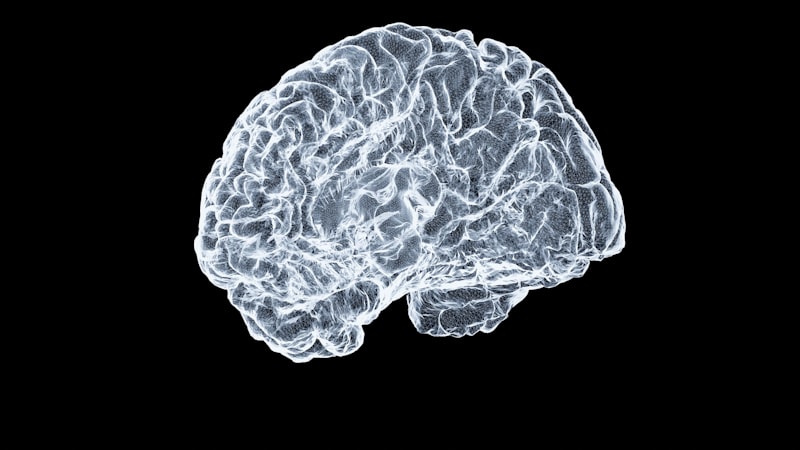
Laminar organization, a fundamental principle of neuroanatomy, describes the characteristic arrangement of neurons and associated glial cells into distinct, horizontal sheets or layers within specific regions of the central nervous system. This structural motif, often referred to as stratification, represents a highly conserved evolutionary strategy for optimizing complex neural computations. Unlike regions exhibiting a more homogeneous or nuclear arrangement of cells, areas displaying laminar organization utilize this layered structure to segregate inputs, process information sequentially, and distribute outputs efficiently. The presence of these layers is inextricably linked to functional specificity, as different laminae often house unique populations of neurons, express specialized molecular markers, and handle distinct components of the overall computational task. Understanding this architectural blueprint is crucial for deciphering the functional circuitry of the brain, particularly in higher-order processing centers where complex integration occurs.
The concept of layering is perhaps most prominently associated with the cerebral cortex, where the six-layered structure, or neocortex, dictates the organizational scheme for sensory, motor, and associative functions. However, laminar architecture is not exclusive to the cortex; it is a pervasive structural theme found in vital components such as the hippocampus, the cerebellum, and the retina, each adapting the basic principle of stratification to meet its specific physiological demands. In every instance where laminar organization is observed, the layers are defined not only by the density and morphology of the neurons but also by the specific connectivity patterns established between them. This precise anatomical arrangement ensures that information flows through a predictable sequence, enabling hierarchical processing and parallel computation necessary for complex cognitive behaviors. The study of these layers allows neuroscientists to map functional specialization down to the level of individual cellular columns and circuits.
Historically, the identification and delineation of these layers relied heavily on cytoarchitectural studies, pioneered by researchers utilizing staining techniques that highlight cell bodies (Nissl stains) or fiber pathways (Weigert stains). These early investigations established the morphological criteria used to distinguish one layer from the next, revealing consistent patterns across individuals and species, underscoring the genetic robustness of this organizational framework. The consistency of laminar organization across vast evolutionary distances suggests its critical role in supporting advanced neurological functions. Modern neuroscience utilizes advanced techniques, including molecular profiling, optogenetics, and high-resolution imaging, to further refine the understanding of these laminae, revealing nuanced differences in gene expression and synaptic profiles that complement the classical morphological distinctions.
Anatomical Basis and Cellular Components
The definition of a specific lamina is rooted in a combination of factors, including cellular morphology, density, molecular markers, and afferent/efferent connectivity. In any given brain region exhibiting laminar organization, each layer is characterized by a specific complement of neuronal cell types, most notably pyramidal neurons, stellate cells, and various interneurons. For example, in the neocortex, pyramidal neurons, which are the principal excitatory output cells, vary significantly in size and dendritic complexity depending on the layer they inhabit. Their apical dendrites are often oriented perpendicularly to the cortical surface, spanning multiple layers and acting as crucial integration points for diverse inputs received across the depth of the cortex. The precise orientation and dendritic arborization of these cells contribute significantly to the overall functional polarity of the laminar structure.
Glial cells, including astrocytes and oligodendrocytes, also exhibit non-uniform distribution across the layers, reflecting the specialized metabolic and structural needs of the local neuronal population. The density of myelinated axons, which form distinct bands often visible in fiber stains, further contributes to the visual and functional segregation of the laminae. These axonal bands, running primarily parallel to the surface, represent major input or output highways connecting different cortical areas or subcortical structures. The intricate relationship between the neuronal bodies (cytoarchitecture) and the fiber pathways (myeloarchitecture) provides the dual criteria used by classical neuroanatomists to map and subdivide the laminated regions, confirming that structure and connectivity are inherently linked within this organizational scheme. Thus, a layer is not merely a collection of cells but a functional module defined by its unique cellular inhabitants and their precise wiring diagram.
Furthermore, molecular markers play an increasingly important role in defining laminar boundaries and cell identities. Specific transcription factors, cell surface receptors, and neurotransmitter phenotypes are expressed in a layer-specific manner, providing a robust molecular signature for each stratum. For instance, specific calcium-binding proteins are differentially expressed by distinct subtypes of inhibitory interneurons, allowing researchers to precisely categorize and study their roles within the microcircuitry of a given layer. This molecular stratification confirms that the functional differences observed between laminae are deeply encoded at the genetic and molecular level. The combination of morphological specialization, distinct connectivity profiles, and unique molecular signatures solidifies the status of each lamina as a specialized processing unit contributing uniquely to the overall function of the region.
The Classic Example: The Cerebral Cortex (Neocortex)
The most widely recognized and extensively studied example of laminar organization is the mammalian neocortex, which is classically divided into six distinct horizontal layers, numbered I through VI from the pial surface inward to the white matter. This six-layered structure, known as the isocortex, governs the highest levels of cognitive function, including perception, language, memory, and executive control. The uniformity of this six-layer template across diverse cortical areas, despite significant variations in thickness and cellular density, highlights the universal importance of this organizational scheme for complex information processing. Each layer is characterized by specific inputs it receives and the outputs it projects, establishing a highly ordered vertical column that acts as the fundamental processing unit of the cortex.
Layer I, the Molecular Layer, is the most superficial and cell-sparse, consisting mainly of axons and dendrites, particularly the apical tufts of pyramidal neurons from deeper layers, along with Cajal-Retzius cells and GABAergic interneurons. This layer is crucial for integrating feedback and modulatory inputs. Layer II, the External Granular Layer, and Layer III, the External Pyramidal Layer, are often grouped together as superficial layers, and they are heavily involved in cortico-cortical communication, projecting to other areas within the same hemisphere or to the contralateral hemisphere. Layer III, in particular, contains large pyramidal neurons that are the main source of association fibers, enabling complex integration across widely separated cortical fields. These layers are critical for learning and memory formation, acting as a major hub for associative processing.
The deeper layers manage output and subcortical interactions. Layer IV, the Internal Granular Layer, is the primary recipient of sensory information arriving from the thalamus. This layer is rich in stellate cells, which perform initial processing and relay sensory data upward to Layers II/III. Layer V, the Internal Pyramidal Layer, is the principal output layer to subcortical structures, including the brainstem, basal ganglia, and spinal cord. It houses the largest pyramidal neurons, such as the Betz cells in the motor cortex, reflecting its role in generating motor commands and regulating descending control. Layer VI, the Multiform Layer, is the deepest layer, projecting back to the thalamus and serving as the major source of cortico-thalamic feedback loops, which are essential for regulating the flow of sensory information. The precise and invariant order of these six laminae ensures the strict hierarchical flow of information: sensory input enters at IV, is processed in II/III, and output is generated via V and VI.
Functional Significance of Cortical Layers
The functional significance of laminar organization lies in its ability to physically separate and specialize computational tasks, allowing for both parallel processing and hierarchical integration within a single cortical column. By dedicating specific layers to receiving input (Layer IV), integrating information across columns (Layers II/III), and generating output (Layers V/VI), the cortex maximizes efficiency and robustness. This vertical organization allows different streams of information—for example, visual input processed by different attributes like motion, color, or depth—to be initially segregated and processed locally within the dedicated circuitry of a specific layer before being combined or transmitted to the next processing stage. The columnar structure, superimposed upon the laminar structure, ensures that all six layers collectively handle information pertaining to the same sensory or motor domain, maintaining functional fidelity across the depth of the cortex.
Furthermore, the layering provides a structural mechanism for modulating and controlling the flow of information. Inhibitory interneurons, which are crucial for regulating neural activity, are distributed differentially across the layers. For instance, basket cells and chandelier cells target specific parts of the pyramidal neurons in a layer-specific manner, allowing for fine-tuned control over excitation and synchronization within the microcircuitry. This precise spatial arrangement of inhibitory control mechanisms is vital for filtering noise, sharpening receptive fields, and preventing runaway excitation. Without such ordered stratification, the complex balance between excitation and inhibition necessary for stable cortical function would be extremely difficult to achieve, underscoring the necessity of the laminar architecture for computational stability.
The distinction between superficial (II/III) and deep (V/VI) layers is also functionally profound. The superficial layers are typically associated with adaptive behavior, learning, and plasticity, acting as the primary substrate for generating internal models and communicating with other cognitive areas. Conversely, the deep layers are primarily concerned with execution and feedback regulation, connecting the cortex to the motor system and the thalamus. This functional dichotomy reflects an evolutionary specialization where high-level abstract thought is managed superficially, while immediate action and fundamental regulatory loops are managed deeply. Consequently, disruptions in specific layers, such as those caused by stroke or disease, often lead to highly specific functional deficits, demonstrating that the functional role of the affected layer cannot easily be compensated for by others.
Laminar Organization in Other Brain Structures
While the neocortex provides the canonical example, laminar organization is a recurring principle in several other critical brain regions, where it is adapted to facilitate specialized functions. The hippocampus, a structure vital for memory formation and spatial navigation, exhibits a pronounced tri-laminar organization in its Cornu Ammonis (CA) fields. Specifically, the CA region is defined by the layers: the stratum oriens, the stratum pyramidale, and the stratum radiatum/lacunosum-moleculare. The stratum pyramidale is the most prominent layer, consisting of densely packed pyramidal neurons whose precise organization is essential for maintaining the integrity of the trisynaptic loop (entorhinal cortex -> dentate gyrus -> CA3 -> CA1), which underlies long-term potentiation and memory consolidation. The strict layering here ensures unidirectional and highly controlled information flow necessary for encoding and retrieving declarative memories.
The cerebellum, although highly complex, also utilizes laminar organization within its cerebellar cortex to process motor coordination and balance. The cerebellar cortex is characterized by three primary layers: the molecular layer, the Purkinje cell layer, and the granular layer. The Purkinje cell layer is particularly striking, consisting of a single, highly regular row of enormous Purkinje neurons, whose dendritic trees extend expansive into the molecular layer. This singular arrangement is critical because Purkinje cells are the sole output of the cerebellar cortex, integrating input from the massive population of granule cells in the granular layer and translating complex sensory-motor information into corrective signals directed towards deep cerebellar nuclei. The meticulous stratification ensures precise temporal control over motor commands.
Beyond centralized structures, the retina, which is technically part of the central nervous system, is perhaps the most perfectly laminated structure, consisting of ten distinct, alternating layers of cell bodies and synaptic processes. These layers are categorized into three nuclear layers (containing cell bodies) and two plexiform layers (containing synapses). For instance, the Outer Nuclear Layer houses photoreceptor cell bodies, while the Inner Plexiform Layer is where bipolar, amacrine, and ganglion cells communicate. This perfect stratification allows for the initial capture of light, transduction into electrical signals, and subsequent complex filtering and processing before the visual information is transmitted via the optic nerve. The retinal lamination demonstrates the principle that where sequential, high-speed processing is required, horizontal segregation of cellular components is the favored architectural solution.
Developmental Processes (Neurogenesis and Migration)
The precise formation of laminar organization is one of the most remarkable feats of developmental neuroscience, relying on highly regulated processes of neurogenesis, neuronal migration, and differential gene expression. In the developing cerebral cortex, neurons are generated primarily in the ventricular and subventricular zones near the ventricle. The subsequent migration of these newly born cells adheres strictly to an inside-out pattern, meaning that the deepest layers (VI and V) are generated and settle first, followed by the successively more superficial layers (IV, III, and II). This intricate layering process is guided by radial glial cells, which serve as scaffolds upon which migrating neurons climb, ensuring that each neuron reaches its correct final destination layer.
Disruptions to this migration process, often involving mutations in genes regulating cytoskeletal dynamics or signaling pathways (like Reelin), can result in severe developmental disorders characterized by inverted or disorganized lamination, collectively known as lissencephaly or subcortical band heterotopia. The success of laminar formation is contingent upon precise temporal control: neurons destined for different layers are born at different times, and molecular cues dictate when they detach from the radial glia and integrate into the appropriate stratum. This temporal and spatial control ensures that the connectivity established later in development is functionally appropriate, as cells in the same layer are often programmed to share specific connectivity targets.
Furthermore, layer identity is intrinsically programmed early in the cell lineage. Progenitor cells in the ventricular zone possess a developmental competence that shifts over time, ensuring that early progenitors produce deep-layer neurons and later progenitors produce superficial-layer neurons. This inherent programming, combined with extrinsic guidance cues, solidifies the robust and reproducible nature of laminar architecture. Once the neurons have settled into their designated layers, subsequent developmental refinement involves extensive dendritic and axonal growth, synapse formation, and programmed cell death, which collectively sculpt the final, mature laminar circuitry. The enduring impact of this developmental scaffolding means that the integrity of adult brain function is deeply dependent upon the initial fidelity of the laminar organization process.
Clinical Relevance and Pathologies
The highly ordered nature of laminar organization makes it particularly vulnerable to disruption, and numerous neurological and psychiatric disorders are associated with defects in layering or layer-specific pathology. Malformations of cortical development (MCDs), such as polymicrogyria or focal cortical dysplasia, involve significant disorganization of the normal six-layered structure, leading to severe epilepsy and cognitive deficits. These conditions often stem from genetic mutations affecting neuronal migration or proliferation, demonstrating that the physical integrity of the laminae is prerequisite for healthy neurological function. In epilepsy, for instance, disorganized layers can lead to aberrant connectivity, promoting hypersynchrony and seizure generation, often necessitating surgical resection of the dysplastic tissue to control the seizures.
Beyond gross structural malformations, many psychiatric conditions are hypothesized to involve subtle, layer-specific functional alterations. Schizophrenia, for example, has been linked to potential abnormalities in the organization and connectivity of Layer II/III pyramidal neurons, particularly those involved in long-range association fibers. While the overall laminar structure may appear macroscopically intact, subtle changes in dendritic spine density, interneuron distribution, or molecular marker expression within specific layers can profoundly impact information processing capacity. Similarly, disorders such as autism spectrum disorder are being investigated for layer-specific differences in synaptic organization and cell density, suggesting that the computational imbalance characteristic of these conditions may originate from selective disruption of laminar microcircuitry.
Finally, neurodegenerative diseases frequently exhibit layer-specific vulnerability. In Alzheimer’s disease, certain layers, particularly Layer III of the entorhinal cortex, are among the first to show accumulation of neurofibrillary tangles, leading to the progressive disconnection of the hippocampus from the rest of the cortex, resulting in memory loss. The differential vulnerability of layers suggests that the distinct metabolic demands, connectivity profiles, or cellular components inherent to each stratum confer differing susceptibilities to pathological insults. Thus, studying laminar organization is not merely an anatomical exercise but a crucial pathway for localizing the fundamental structural defects underlying a broad spectrum of human brain disorders, facilitating the development of targeted, layer-specific therapeutic interventions.