Cognitive Mapping: How Your Brain Navigates Reality
Scientifically Reviewed · Dr. Marwa Abd-Alazim · September 16, 2026
Review Criteria & Clinical Standards
This content undergoes rigorous scientific peer-review and medical editorial standards at Arab Psychology Network to ensure clinical accuracy, validity, and compliance with evidence-based guidelines from leading psychological and healthcare authorities (APA / WHO).
Introduction to the Cognitive Concept of the Landmark
The concept of the landmark, within cognitive psychology and spatial science, refers to any external, salient, and recognizable feature in the environment that an individual uses to establish orientation, define location, or guide navigation. Far exceeding the simple dictionary definition of a conspicuous object, the cognitive landmark acts as a crucial anchor point in the construction and maintenance of an individual’s internal cognitive map. This mental representation of space is not a mere Euclidean projection but rather a complex, often hierarchical structure heavily reliant upon these reference points to integrate egocentric (body-centered) and allocentric (world-centered) spatial information. Effective navigation, therefore, hinges upon the ability of the navigator to detect, encode, store, and retrieve information associated with these specific environmental cues, transforming continuous spatial data into discrete, manageable units that facilitate wayfinding and spatial problem-solving.
The processing of landmarks is fundamental to spatial cognition, distinguishing sophisticated human and animal navigation from simple reactive movement. Research in this domain, spanning fields from psychology and neuroscience to computer science and geography, consistently highlights that successful route planning and environmental learning depend less on precise metric distances and angles, and far more on the sequence and characteristics of the landmarks encountered along a path. These features stabilize memory representations, preventing the accumulation of error inherent in path integration—the continuous updating of position based on self-motion cues. When these external stabilizers are absent or ambiguous, cognitive strain increases, leading to spatial disorientation and impaired navigational performance, underscoring the functional necessity of reliable landmarks for efficient human interaction with complex environments.
Furthermore, the psychological salience of a landmark is determined by a confluence of perceptual, structural, and semantic factors, rather than merely its physical size or proximity. A feature becomes a landmark not only because it is visually prominent (perceptual salience) but also because it is structurally unique (differentiating it from surrounding elements) or, critically, because it possesses high semantic significance (cultural importance, personal relevance, or functional utility, such as a known meeting spot). This multifaceted definition ensures that the cognitive system preferentially selects and attends to the most stable and informative features available, optimizing the memory load required for complex navigational tasks across diverse scales, from walking through a building to navigating a vast urban landscape.
Typologies and Classification of Cognitive Landmarks
Cognitive landmarks are typically categorized based on their function, scale, and intrinsic characteristics, creating a useful framework for understanding their varied roles in spatial memory. One primary distinction is made between point landmarks, linear landmarks, and volumetric landmarks. Point landmarks are discrete, localized features, such as a statue or a distinct building, which serve as crucial decision points or goal locations in a route network. Linear landmarks, conversely, are extended features, like rivers, walls, or major roads, which often define boundaries, constrain movement, or provide continuous orientation references, aiding in the maintenance of one’s heading over long distances. Volumetric landmarks, such as large parks or districts, are area-based references that aid in hierarchical mapping, allowing the navigator to situate themselves within a larger, defined spatial zone.
A second critical classification separates landmarks based on their spatial scope: global (or distal) landmarks versus local (or proximal) landmarks. Global landmarks are features visible from a wide range of vantage points and often serve as fundamental references for large-scale orientation and initial heading decisions; mountain ranges or very tall skyscrapers exemplify this type. These distal cues are essential for forming the overall configuration of the cognitive map. Local landmarks, however, are only visible when the navigator is close to them, typically serving as immediate cues for route execution, such as turning left at a specific storefront. While global landmarks provide the framework, local landmarks provide the necessary detail for executing specific actions, demonstrating a nested hierarchy of spatial information processing essential for successful wayfinding.
Beyond physical attributes, landmarks can also be classified by their sensory modality or permanence. While most studies focus on visual landmarks, auditory cues (e.g., the sound of a marketplace) and olfactory cues (e.g., the smell of a bakery) can also function powerfully as local landmarks, particularly for individuals with visual impairment or in low-visibility environments. Furthermore, some landmarks are transient (e.g., a construction zone or temporary market stall), requiring constant updating in the cognitive map, whereas permanent landmarks (e.g., historical buildings) offer stable, long-term spatial references. The cognitive system must dynamically manage this mixed input, prioritizing the stability and reliability of permanent, multi-sensory cues when constructing robust spatial knowledge.
Functional Roles in Spatial Cognition and Wayfinding
The primary functional role of landmarks is to facilitate wayfinding, the process of planning and executing a route through an unfamiliar or familiar environment. Landmarks serve as key decision points where the navigator must choose an action (e.g., turn left, proceed straight). Without reliable landmarks at these nodes, route knowledge becomes highly fragile, relying solely on sequential memory of turns, which is prone to error and difficult to generalize. By anchoring decision points, landmarks transform a purely procedural sequence of actions into a more robust, declarative form of route knowledge that is easier to recall and describe to others. This transformation is crucial for moving from simple route following to the development of sophisticated survey knowledge, where the spatial relationships between multiple locations are understood simultaneously.
Furthermore, landmarks are integral to the process of orientation, allowing the navigator to determine their current position and heading relative to the environment. When an individual becomes disoriented, they often revert to seeking out known landmarks to re-establish their bearing. The ability to recognize an object as a stored landmark triggers a retrieval process that links the object to its known spatial context within the cognitive map. This process is often instantaneous and highly efficient, demonstrating the priority given to landmark recognition in the spatial processing hierarchy. The configuration of multiple landmarks provides redundancy, enabling accurate orientation even if one or two reference points are obscured or forgotten, thereby stabilizing the cognitive map against environmental noise and memory decay.
Finally, landmarks are essential for spatial communication. When humans describe routes or locations to one another, they overwhelmingly rely on landmarks rather than precise metric coordinates. Phrases like “Go past the library and turn right at the red building” are linguistically efficient because they leverage shared, easily recognizable environmental features. This reliance underscores the social and communicative function of landmarks, suggesting that the cognitive selection process inherently favors features that are likely to be salient and memorable not only to the self but also to others within a shared cultural and physical landscape. The absence of effective, shared landmarks significantly impedes effective spatial communication and collaborative navigation.
The Neural Encoding of Environmental Landmarks
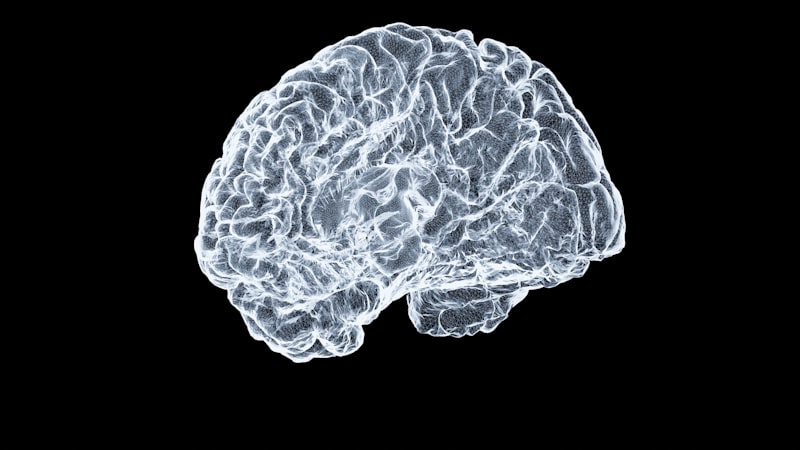
Neuroscientific research, particularly studies involving mammalian spatial behavior, has illuminated the dedicated neural mechanisms responsible for encoding and utilizing environmental landmarks. The hippocampus is the primary brain structure implicated in spatial memory and cognitive map formation, and specific cell types within this region are highly specialized for processing spatial information relative to external cues. Place cells, famously discovered in the hippocampus, fire robustly when an animal is in a specific location (its “place field”) within an environment, but the firing patterns of these cells are critically dependent upon the presence and configuration of stable external landmarks. When landmarks are removed or manipulated, the place fields often “re-map” or rotate, demonstrating that the perceived location is anchored by these visual and structural cues.
Complementing the place cells are the head direction cells, primarily found in the anterior thalamus and other limbic structures, which fire based on the animal’s facing direction, independent of its location. These cells act as an internal compass, but their alignment is frequently calibrated and stabilized by the orientation of prominent distal landmarks. Further specialization is seen in cells like boundary vector cells (BVCs), located in the subiculum and entorhinal cortex, which respond specifically to the distance and direction of environmental boundaries, such as walls or edges. Since large, continuous landmarks often function as boundaries, BVCs play a critical role in establishing the framework within which place cells operate, effectively encoding the geometrical structure provided by the landmark configuration.
The integration of landmark information is believed to occur through complex oscillatory activity between the hippocampus and the entorhinal cortex, which contains grid cells. While grid cells generate an internal, metric-like map independent of specific external features, their overall alignment and scaling are often modulated by the presence of landmarks, ensuring that the self-motion-based metric system remains calibrated to the external world. Damage to the medial temporal lobe structures involved in landmark processing, as observed in conditions like Alzheimer’s disease, often leads to profound spatial disorientation and difficulty recognizing familiar environments, highlighting the neural vulnerability and functional criticality of the landmark recognition system.
Developmental Trajectories of Landmark Use
The ability to effectively utilize landmarks evolves significantly throughout childhood, reflecting the gradual maturation of spatial cognitive abilities. Infants and very young children initially rely heavily on highly simplistic, egocentric strategies, primarily encoding locations relative to their own body position and immediate view. For example, they might remember an object’s location as “to the left of the door” only when facing the same direction they were when they encoded the information. Landmarks during this stage are often treated as mere attachments to the route or boundary, rather than independent points of reference.
As children grow, typically between the ages of three and five, they begin transitioning toward more sophisticated allocentric strategies. This shift involves the realization that landmarks have stable locations relative to other features in the environment, independent of the observer’s viewpoint. The ability to use the geometric configuration of multiple landmarks to define a search space, rather than just using a single proximal cue, becomes prominent. This developmental milestone is crucial, as it marks the beginning of true cognitive map formation, allowing for spatial inference and shortcut planning that bypasses previously learned routes.
During middle childhood and adolescence, landmark use becomes increasingly efficient, characterized by the ability to prioritize and select the most informative landmarks from a cluttered environment. Cognitive maturity allows navigators to integrate semantic knowledge—understanding that a post office is a more stable and reliable feature than a temporary vendor stand—into their selection process. This sophisticated selection and prioritization process demonstrates the fully developed capacity to use landmarks not just as perceptual cues but as elements within a high-level, hierarchical spatial model, which is essential for navigating complex and unfamiliar environments effectively.
Challenges and Sources of Error in Landmark Processing
Despite their utility, the reliance on landmarks introduces specific vulnerabilities and potential errors in spatial memory and navigation. One significant challenge is perceptual ambiguity, where the environment contains too many similar or non-distinct features. If a street is lined with numerous identical structures (e.g., repeating suburban houses), the lack of unique landmark salience hinders effective encoding and differentiation, leading to confusion and difficulty in identifying decision points. This phenomenon illustrates why urban planners emphasize the need for visual diversity and unique architectural elements to aid navigability.
Another major source of error is misidentification or misremembering. A landmark might be correctly recognized, but its associated action or function within the route memory might be confused, leading to errors like turning right instead of left. Furthermore, landmark transience (changes over time, such as demolition or renovation) requires the navigator to update the cognitive map constantly. If the map is not updated, the navigator risks searching for a non-existent feature, resulting in disorientation and route failure. The older the spatial memory, the more vulnerable it is to errors caused by environmental change.
Finally, the cognitive load imposed by landmark processing can lead to errors, particularly when the navigator is performing concurrent tasks. When attention is divided, the encoding of new landmarks or the retrieval of previously stored landmark associations can suffer, resulting in reduced navigational efficiency. This challenge highlights the fact that landmark utilization is not a passive process but an active, attention-demanding task, demonstrating the tight coupling between selective attention, working memory, and spatial mapping abilities during wayfinding.
Applications in Environmental Design and Human-Computer Interaction
The principles derived from cognitive landmark research have profound implications for practical fields, particularly in environmental design and the development of human-computer interaction (HCI) systems. In urban planning and architecture, the deliberate incorporation of visually distinct, highly salient, and semantically meaningful features is essential for creating legible and navigable environments. Good environmental design ensures that necessary decision points are adequately marked by unique structural landmarks, thereby reducing cognitive load and the incidence of spatial confusion, leading to higher perceived comfort and safety for pedestrians and drivers alike.
In the realm of HCI, landmark theory is foundational to the design of modern navigation systems and augmented reality (AR) interfaces. Traditional GPS systems often rely on abstract metric instructions, which are cognitively demanding. However, modern, user-friendly systems now explicitly incorporate real-world landmarks into their instructions (“Turn left at the large pharmacy”), translating abstract spatial data into cognitively resonant, action-oriented cues. This practice significantly improves user performance and preference, particularly in complex or unfamiliar environments, by aligning technological guidance with natural human wayfinding strategies.
Furthermore, in virtual reality (VR) and virtual environments (VEs), landmarks are intentionally placed to aid in spatial learning and task performance. Designing VEs that mimic the hierarchical and configurational structure of real-world landmark environments facilitates faster acquisition of spatial knowledge and better transfer of learned routes back to the real world. By manipulating the salience, permanence, and distribution of virtual landmarks, researchers can explore fundamental questions about cognitive mapping and optimize environments for training, simulation, and rehabilitation purposes.
Conclusion: The Pervasiveness of Landmark Cognition
The landmark is far more than a simple visual marker; it is a fundamental unit of spatial memory and the cornerstone of the human cognitive map. Its effectiveness stems from its ability to condense vast amounts of environmental data into discrete, memorable reference points that stabilize orientation, facilitate wayfinding decisions, and enable spatial communication. From a neural perspective, dedicated cell systems in the hippocampus and associated cortices are specialized to encode the spatial relationships defined by these features, underscoring the evolutionary importance of stable environmental referencing.
Understanding the typology and function of landmarks—whether they are global beacons or local decision cues—is essential for addressing challenges related to disorientation, aging, and the design of navigable space. As our environments become increasingly complex and digital navigation tools proliferate, the principles of landmark cognition remain central to ensuring that both the built world and the virtual world are accessible, legible, and intuitive for human users. The persistent reliance on these stable external features confirms that sophisticated spatial knowledge is invariably structured around the framework provided by recognizable, meaningful landmarks.
The implications of this field of study continue to expand, influencing not only psychology and neuroscience but also architecture, cartography, and the development of intelligent autonomous systems that require robust environmental representations. Future research will likely focus on how semantic and cultural factors further modulate landmark selection and how the cognitive system adapts its landmark reliance in highly dynamic or structurally impoverished environments, solidifying the landmark’s status as a critical subject in the study of mind and space.