Lateral Dominance: Why Your Brain Favors One Side
Scientifically Reviewed · Dr. Marwa Abd-Alazim · September 13, 2026
Review Criteria & Clinical Standards
This content undergoes rigorous scientific peer-review and medical editorial standards at Arab Psychology Network to ensure clinical accuracy, validity, and compliance with evidence-based guidelines from leading psychological and healthcare authorities (APA / WHO).
Introduction to Lateral Dominance (Laterality)
Lateral dominance, frequently referred to as laterality, stands as a fundamental concept within psychology and neuroscience, describing the inherent tendency for an individual to preferentially utilize one side of the body over the other. This preference is most commonly observed in motor activities, such as the use of the hands or feet, but it extends to sensory processing involving the eyes and ears. Laterality reflects a deep-seated asymmetry in the functional organization of the central nervous system, particularly the cerebral hemispheres. While the majority of the human population exhibits a clear preference for the right side—a phenomenon known as right-sided dominance—laterality exists along a spectrum, ranging from strong right-sided preference to strong left-sided preference, and including those who exhibit mixed or ambiguous dominance.
The study of lateral dominance is crucial because it provides insights into how the brain divides and delegates specialized functions between the left and right hemispheres, a process known as cerebral lateralization. For instance, in most right-handed individuals, language processing centers are predominantly localized in the left hemisphere, demonstrating a functional specialization that correlates directly with motor dominance. However, the relationship between handedness and brain function is not absolute, especially in left-handed or ambidextrous individuals, making laterality a complex marker for neurological organization. Understanding laterality requires acknowledging the intricate interplay between biological predispositions, such as genetic inheritance and prenatal developmental factors, and modulating external forces, including environmental demands and cultural learning.
While laterality is a universal characteristic observed across human populations and even in various animal species, its expression is highly variable. The degree of dominance—how strong the preference for one side is—can influence performance efficiency in specific tasks. A well-established, consistent laterality often suggests a highly efficient neural organization for performing complex, asymmetrical actions. Conversely, ambiguous laterality (mixed dominance) sometimes raises questions regarding potential developmental differences, though it is not inherently indicative of pathology. Therefore, lateral dominance serves not merely as a description of behavioral preference but as a key to unlocking the mysteries of functional brain organization and its development across the lifespan.
Historical Context and Early Observations
The recognition of laterality is not a modern scientific discovery; rather, it has permeated human thought and culture for millennia. Ancient civilizations often observed and commented upon the prevalence of right-sided preference, frequently imbuing the right side with positive, auspicious, or powerful connotations, while the left side was often associated with negative or subordinate attributes. The ancient Greeks, for example, documented this asymmetry in their writings and artwork. Their deities and mythological figures were frequently depicted favoring their right arm in actions of strength or command, reinforcing the cultural significance and perceived naturalness of right-sided superiority. This early conceptualization was largely philosophical and cultural, lacking a biological framework.
The shift toward a scientific understanding began in earnest during the 19th century, coinciding with major advancements in neurological studies. Researchers of this era started moving beyond anecdotal observation and focused on the biological underpinnings of laterality. Pioneering work in neuroanatomy, particularly by figures like Paul Broca and Carl Wernicke, established the link between specific brain regions (predominantly in the left hemisphere) and language function. This realization—that the brain itself was functionally asymmetrical—provided the critical theoretical foundation for linking manual preference (handedness) to cerebral asymmetry. Researchers began to theorize that the asymmetry observed in motor output was a direct reflection of underlying structural and functional differences between the two cerebral hemispheres.
During the 20th century, research intensified, moving from simple observation of handedness to detailed explorations of other forms of laterality (foot, eye, ear) and investigating the complex genetics involved. The mid-to-late 20th century saw the development of standardized tools, such as handedness inventories, which allowed researchers to quantify and categorize laterality systematically. This period also introduced sophisticated theories attempting to explain the evolutionary advantage of such widespread asymmetry. While early theories often focused solely on biological causes, later research began to integrate the powerful role of environmental pressure and learning, setting the stage for the modern, multi-factorial view of laterality that dominates contemporary psychological science.
Biological Underpinnings: Cerebral Asymmetry
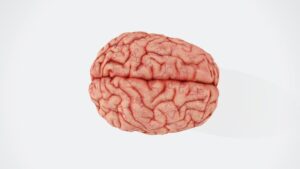
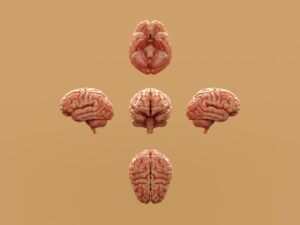
The most critical biological correlate of lateral dominance is the inherent asymmetry of the human brain, or cerebral lateralization. The two hemispheres of the cerebrum are not mirror images; they exhibit structural and functional differences that are intimately linked to laterality. Anatomical studies, often utilizing neuroimaging techniques, have consistently revealed subtle but significant asymmetries. For instance, in most individuals, a region associated with language comprehension, the planum temporale, is structurally larger in the left hemisphere than in the right. This structural difference correlates strongly with the prevalence of left-hemisphere dominance for language and, subsequently, right-handedness.
Genetic factors play a substantial, though not fully deterministic, role in establishing laterality. While specific genes responsible for handedness have proven elusive, twin studies and familial analyses confirm a heritable component. Researchers hypothesize that a complex polygenic system influences the probability of developing either right or left dominance. These genes likely do not dictate handedness directly but rather influence the probability of a developmental bias toward one hemisphere during early prenatal development. This biological bias is then solidified through environmental interaction. Crucially, even though genetics predispose an individual toward a certain laterality, environmental factors can still modulate the final expression, particularly regarding the degree of dominance.
Further biological factors involve prenatal environment and hormonal influences. Hypotheses suggest that variations in prenatal testosterone levels may affect the development rate of the hemispheres, potentially biasing the brain toward left or right specialization. Moreover, the efficiency of inter-hemispheric communication, facilitated primarily by the corpus callosum, is also implicated. The corpus callosum allows the exchange of information between the specialized hemispheres. Differences in the structure or function of this major fiber tract may impact how different aspects of laterality (e.g., manual skills and language) interact and are expressed behaviorally. Understanding laterality therefore requires an examination not only of the specialization within each hemisphere but also the communication pathways connecting them.
Manifestations and Types of Laterality
Lateral dominance is not restricted to the hands; it is a systemic phenomenon that affects various paired sensory and motor systems across the body. The most studied and universally recognized manifestation is manual dominance, or handedness, which describes the preferential use of the right or left hand for fine motor skills, such as writing, eating, or throwing. Handedness is typically categorized as right-handed, left-handed, or ambidextrous (displaying equal skill or preference in both hands). The vast majority of the global population, estimated at around 85-90%, is right-handed, making this the statistical norm.
Beyond manual dominance, laterality manifests in other forms, each contributing to an individual’s overall laterality profile. Pedal dominance (foot preference) refers to the preferred foot used for tasks requiring power or precision, such as kicking a ball or stepping onto a stool. Ocular dominance (eye preference) refers to the eye that provides primary visual input, often determined by sighting tasks. This is significant because the dominant eye projects information primarily to the opposite hemisphere, linking sensory input to cerebral specialization. Similarly, auditory dominance refers to the preferred ear for processing certain sounds, particularly those related to speech, which often aligns with the language-dominant hemisphere.
A key characteristic of laterality is the possibility of mixed lateral dominance (or cross-dominance). This occurs when an individual exhibits a clear preference for the right side in one domain (e.g., right hand) but a preference for the left side in another (e.g., left foot or left eye). For example, someone might be right-handed but left-footed. Mixed dominance indicates that cerebral lateralization is not uniform across all functions. While historically, mixed dominance was sometimes incorrectly associated with learning difficulties, contemporary research recognizes it as a common variation in lateral organization. It is important to assess all forms of laterality—manual, pedal, and ocular—to obtain a complete and accurate profile of an individual’s laterality.
Environmental and Cultural Influences on Laterality
While biological factors establish a propensity for laterality, environmental and cultural forces significantly shape its expression and stability. Societal pressure has historically played a profound role in suppressing left-handedness. In many cultures, the right hand was considered clean, polite, and appropriate for social tasks, whereas the left was designated for less desirable activities. This led to educational and cultural practices throughout history that actively coerced naturally left-handed children to use their right hand for writing and other tasks. Although such explicit coercion has largely diminished in Western societies, the residual preference for right-sided tools, infrastructure, and standardized equipment (e.g., scissors, computer keyboards, musical instruments) continues to favor and reinforce right-sided dominance.
A fascinating area of research concerns the influence of language on laterality, particularly related to script directionality. As noted in some studies, the direction in which a language is written and read (e.g., left-to-right in English versus right-to-left in Arabic or Hebrew) may subtly influence the development and expression of manual preference, especially in the fine motor skills required for writing. For example, individuals who speak English as their first language, requiring consistent left-to-right motion, might demonstrate a slightly stronger prevalence of right-handedness compared to populations using different script directions. This suggests that the continuous practice of culturally specific motor tasks can interact with biological predispositions to fine-tune the motor system’s laterality profile.
Furthermore, early exposure and modeling within the family unit contribute to laterality development. Children frequently imitate the dominant hand usage of their parents or caregivers, reinforcing the handedness observed in their immediate environment. The degree to which a child is exposed to and encouraged to use tools designed for a specific hand can also impact the development of skill and preference. Thus, laterality is best conceptualized as a product of continuous interaction, where genetic blueprints provide a broad range of possibilities, and cultural norms, educational systems, and environmental demands act as powerful selection pressures, shaping the final behavioral outcome of lateral preference.
Developmental Trajectories and Variability
The establishment of lateral dominance is a dynamic process that unfolds over early childhood. While some rudimentary signs of preference may be observed in infancy, such as reaching patterns, a consistent and stable pattern of laterality typically does not fully solidify until around four to six years of age. Before this period, young children often exhibit fluctuating preferences, using either hand interchangeably for certain tasks. This developmental variability reflects the ongoing maturation of the cerebral hemispheres and the strengthening of the neural pathways necessary for consistent motor control and specialization. Consistent practice and environmental demands play a significant role in stabilizing this preference during the preschool and early school years.
It is crucial to recognize that laterality is not an absolute, binary trait; rather, it exists as a continuum. The degree of laterality—how strongly an individual prefers one side—can vary greatly. Some individuals exhibit a very pronounced, consistent preference (strong laterality), demonstrating significantly superior performance with their dominant side across all tasks. Others exhibit a weaker, less pronounced preference (weak laterality), where the performance difference between the dominant and non-dominant sides is minimal, often bordering on ambidexterity. This variability underscores that functional organization is diverse across the human population, and there is no single “correct” degree of lateralization.
Factors such as injury or neurological events can also influence the expression of laterality throughout the lifespan. If a dominant hemisphere is damaged early in life, the developing brain exhibits remarkable plasticity, sometimes shifting critical functions, like language, to the opposite hemisphere. This highlights the brain’s ability to reorganize, although the resultant laterality profile may differ from typical development. Ultimately, the developmental trajectory of laterality reflects the continuous interaction between intrinsic biological maturation, which favors asymmetry, and external forces that reinforce or challenge that inherent bias, leading to a unique, individualized profile of functional dominance.
Measurement and Assessment of Laterality
Accurate assessment of lateral dominance is vital for both clinical and research purposes, allowing for standardized categorization and correlation studies. Because laterality is multi-faceted, researchers employ various methods to measure different components (manual, pedal, ocular) and the strength of the preference. The most common and widely utilized tool for assessing handedness is the Edinburgh Handedness Inventory (EHI). This questionnaire asks individuals to report their preferred hand for a range of everyday tasks, such as writing, drawing, using scissors, and brushing teeth. Responses are aggregated to produce a laterality quotient, which places the individual on the continuum from strong right-handedness to strong left-handedness.
Beyond self-report inventories, behavioral observation and objective performance tests are frequently used. These tests often involve measuring the speed and accuracy of motor tasks performed separately by the left and right sides of the body. For instance, tasks requiring rapid, repetitive tapping or complex coordination can quantify the degree of performance asymmetry. The size of the difference in performance between the two sides provides a quantitative measure of the strength of dominance. Such objective measures are particularly important when studying populations where self-reporting might be unreliable, such as young children or individuals with certain cognitive impairments.
In the field of cognitive neuroscience, laterality is often assessed using techniques that probe cerebral lateralization directly. Functional magnetic resonance imaging (fMRI) and electroencephalography (EEG) are used to observe which hemisphere is preferentially activated during tasks such as language processing or spatial reasoning. For example, a technique called the Dichotic Listening Task assesses auditory laterality by presenting different stimuli to each ear simultaneously, revealing which hemisphere is dominant for processing specific auditory information. Combining self-report, behavioral measures, and neuroimaging provides a comprehensive understanding of both the behavioral output (laterality) and the underlying functional organization (lateralization).
Clinical Significance and Related Conditions
The study of lateral dominance holds significant clinical relevance, as atypical patterns of laterality have been frequently, though complexly, associated with various neurodevelopmental and psychological conditions. It is essential to stress that laterality itself is not a cause of these conditions, but rather, atypical laterality patterns—such as non-right-handedness or ambiguous dominance—may sometimes serve as subtle markers reflecting different organizational pathways in the brain that also predispose an individual to certain disorders.
For instance, research has explored the relationship between laterality and language-based learning difficulties, such as dyslexia. While the vast majority of individuals with dyslexia are right-handed, the incidence of non-right-handedness or mixed dominance is statistically higher in dyslexic populations compared to the general population. This suggests that the underlying atypical cerebral lateralization patterns sometimes observed in these individuals may contribute to, or co-occur with, difficulties in establishing typical language processing specialization, leading to reading challenges.
Furthermore, laterality has been studied extensively in relation to severe mental illnesses. Elevated rates of left-handedness have consistently been reported in populations diagnosed with schizophrenia, although the exact nature of this correlation remains a subject of intense research. Hypotheses suggest that developmental disturbances affecting the establishment of typical cerebral asymmetry during early life might be a shared risk factor for both non-right-handedness and subsequent neurodevelopmental vulnerabilities associated with psychosis. Similarly, links have been investigated, though less consistently, with autism spectrum disorders and mood disorders, underscoring that laterality research provides critical clues about the complex architecture of the human brain’s functional development.
Conclusion: Synthesis of Laterality
Lateral dominance, or laterality, is a ubiquitous phenomenon reflecting the fundamental asymmetry of human and animal nervous systems. Defined as the preferential use of one side of the body over the other, it is most commonly observed as right-handedness in the human population, reflecting the dominant role of the left cerebral hemisphere in controlling fine motor function and language processing. However, laterality is a complex trait, manifesting across multiple domains including manual, pedal, and ocular preferences, and existing on a spectrum that accommodates varying degrees of dominance and mixed profiles.
The etiology of laterality is demonstrably multi-factorial. It arises from a delicate and continuous interaction between powerful biological determinants—including genetic predispositions, hormonal influences, and the inherent structural asymmetries of the brain (such as the planum temporale)—and environmental modulators. Environmental factors, ranging from cultural practices that favor right-hand use to the directionality of written language, significantly shape and stabilize the expression of lateral preference throughout development. This dual influence explains why laterality is neither strictly genetic nor purely learned.
Ultimately, the study of lateral dominance provides a vital window into the functional organization of the brain. Through standardized measurement techniques, including inventories and neuroimaging, researchers continue to refine our understanding of how laterality correlates with cerebral lateralization. While atypical laterality profiles may be associated with certain neurodevelopmental conditions, laterality remains a spectrum of normal variation. Continued research promises to further delineate the precise mechanisms by which genetic, developmental, and environmental factors converge to determine the unique lateral organization of each individual.
References
-
Chapman, C., & Chapman, L. (1980). Laterality and language. Psychological Bulletin, 88(3), 507-521.
-
Hugdahl, K., & Westerhausen, R. (2010). Laterality and psychopathology: A neurodevelopmental perspective. Neuroscience & Biobehavioral Reviews, 34(1), 52-68.
-
Hummel, J. E., & Whitaker, H. A. (2003). The effects of language directionality and handedness on the prevalence of right-handedness. Cortex, 39(5), 895-902.
-
Kalat, J. W. (2015). Biological psychology (12th ed.). London, UK: Cengage Learning.
-
Kozhevnikov, M., & Hegarty, M. (2001). Mental rotation and frames of reference: Effects of language and handedness. Memory & Cognition, 29(3), 463-472.
-
Ramus, F., & Spencer, J. P. (2009). Lateralization of language and its neural basis. Current Opinion in Neurobiology, 19(3), 279-287.