Brain Lateralization: How Your Hemispheres Shape You
Scientifically Reviewed · Dr. Marwa Abd-Alazim · September 14, 2026
Review Criteria & Clinical Standards
This content undergoes rigorous scientific peer-review and medical editorial standards at Arab Psychology Network to ensure clinical accuracy, validity, and compliance with evidence-based guidelines from leading psychological and healthcare authorities (APA / WHO).
Definition and Foundational Concepts
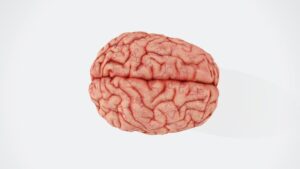
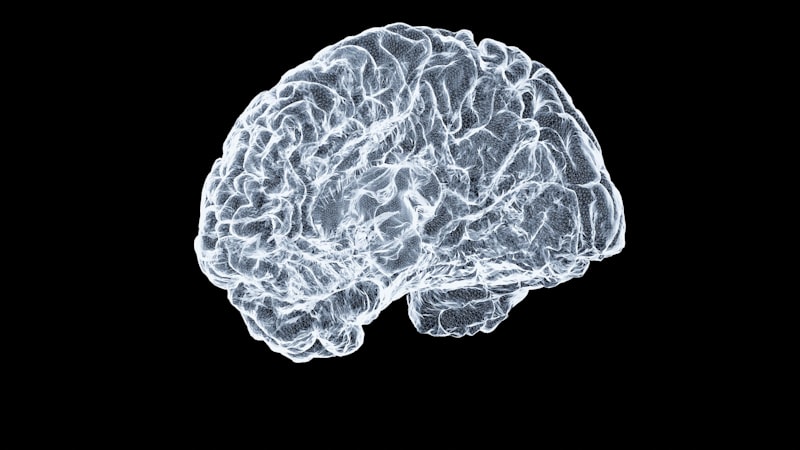
Lateralization is a fundamental organizational principle in neuropsychology describing the phenomenon where certain cognitive functions, processes, or abilities are predominantly controlled by or localized to either the left or the right hemisphere of the brain. While the human brain is anatomically bilateral, appearing largely symmetrical, this functional asymmetry is critical for efficient processing of complex stimuli and execution of complex behaviors. Lateralization moves beyond simple localization—the idea that specific functions reside in specific brain regions—to specify that these functions are distributed asymmetrically across the two cerebral halves. This division of labor suggests an evolutionary optimization, allowing the two hemispheres to develop specialized processing modes, thereby maximizing the brain’s overall cognitive capacity and speed when dealing with varied inputs.
The core concept underpinning lateralization is hemispheric specialization, which assumes that the two hemispheres are adapted for different types of cognitive tasks. Traditionally, the left hemisphere has been associated with processing information sequentially, analytically, and symbolically, making it dominant for language and detailed motor control. Conversely, the right hemisphere is often characterized by its holistic processing style, excelling at integrating information globally, perceiving spatial relationships, and interpreting non-verbal cues. Although modern research acknowledges that most complex tasks require continuous, integrated activity between both sides, the initial framework of specialization remains essential. For instance, while both hemispheres contribute to auditory processing, the left side is superior at rapid temporal sequencing needed for phonemes, while the right side is more attuned to the slower, spectral changes needed for musical pitch and emotional prosody.
It is important to recognize that lateralization exists on a continuum and is not rigidly fixed. Functions can be strongly lateralized, such as language production, or weakly lateralized, such as basic visual perception. Furthermore, the term dominance often specifically refers to the control of handedness and language. Approximately 90% of the population is right-handed, and an overwhelming majority of these individuals (around 95%) exhibit left-hemisphere dominance for language. Even among left-handed individuals, a significant percentage retains left-hemisphere language dominance, demonstrating the robustness of this specific functional asymmetry. The degree and direction of lateralization can be subtle, influenced by factors including genetics, age, and early experience, emphasizing that the system is plastic and dynamically organized rather than static.
Historical Discoveries and Early Localization Theory
The understanding of lateralization began in earnest during the mid-19th century, challenging the previously held belief that the cerebral cortex functioned as a homogeneous, equipotential mass. The seminal discovery came in 1861 from French physician and anthropologist Paul Broca. Broca studied several patients suffering from a profound inability to articulate speech, most famously a man known as ‘Tan.’ Following Tan’s death, Broca performed an autopsy and identified a consistent lesion in the posterior inferior frontal gyrus of the left hemisphere. Broca concluded that this specific region was the dedicated center for the production of speech, thereby establishing the first concrete evidence not only for localization of function but also for functional asymmetry between the hemispheres. This area, now universally known as Broca’s area, cemented the left hemisphere’s early reputation as the critical seat of human language.
Further solidifying the lateralization of language was the work of German neurologist Carl Wernicke, who, in the 1870s, identified a different type of language deficit. Wernicke observed patients who could speak fluently but whose language lacked meaningful content, and who critically struggled with language comprehension. Post-mortem examinations consistently pointed to damage in the posterior superior temporal gyrus, also located in the left hemisphere. This region, now called Wernicke’s area, was defined as the primary center for understanding language. The collective findings of Broca and Wernicke demonstrated that language was a complex faculty composed of specialized, distinct components (production and comprehension) that were both strongly lateralized to the left side of the brain. This two-part model, often referred to as the Wernicke-Geschwind model, provided the foundational neuroanatomical framework for understanding language lateralization.
While the initial focus heavily favored the left hemisphere due to its clear involvement in language, subsequent clinical observation gradually revealed the specialized contributions of the right hemisphere. Throughout the late 19th and early 20th centuries, researchers noted that patients with lesions in the right parietal or temporal lobes, while retaining core linguistic abilities, exhibited severe deficits in non-verbal domains. These included difficulties recognizing faces (prosopagnosia), interpreting spatial maps, and understanding the emotional context of conversations. Perhaps the most striking evidence was the emergence of hemispatial neglect, where damage to the right side of the brain caused patients to ignore the entire left side of space. These observations broadened the concept of lateralization, confirming that the right hemisphere possessed its own unique set of skills, primarily focused on holistic, contextual, and visuospatial functions, thereby establishing the brain’s bilateral specialization.
The Role of the Corpus Callosum
The functional specialization of the two hemispheres necessitates a robust communication pathway to ensure coordinated cognition and behavior. This pathway is the corpus callosum, a massive commissural tract composed of hundreds of millions of myelinated nerve fibers connecting corresponding cortical areas. The corpus callosum serves as a crucial neural bridge, facilitating the rapid and continuous transfer of sensory, motor, and cognitive information between the left and right sides of the brain. Without this interhemispheric transfer, the specialized outputs of one hemisphere—such as the left hemisphere’s precise instructions for speech—could not be informed by the contextual information processed by the right hemisphere, resulting in fragmented or incoherent behavior. Thus, the callosum enables the human brain to operate as a single, unified cognitive system despite its inherent functional asymmetry.
The essential role of this structure was dramatically illuminated by clinical research involving patients who had undergone a surgical procedure known as callosotomy, or split-brain surgery, primarily used to mitigate severe, uncontrollable epilepsy by preventing the spread of seizure activity between hemispheres. The pioneering work of neuroscientist Roger Sperry and his colleagues, studying these split-brain patients, provided unprecedented insights into hemispheric independence. By carefully controlling sensory input so that information reached only one hemisphere (e.g., flashing an image into the left visual field, which projects exclusively to the right hemisphere), researchers demonstrated that the specialized functions of the two halves could operate in isolation. Crucially, in these patients, information processed by the right hemisphere could not be accessed by the language centers residing in the left hemisphere, dramatically confirming the functional lateralization observed in intact brains.
Sperry’s experiments revealed distinct functional limitations when interhemispheric communication was blocked. For instance, if a split-brain patient was presented with an image of a key in their left visual field (right hemisphere processing), they could not verbally name the object (as the information failed to reach the left hemisphere’s language centers). However, they could accurately select the key from a group of objects using their left hand (controlled by the right hemisphere). Conversely, tasks requiring strong spatial integration, such as drawing three-dimensional figures, were often performed more competently by the left hand (right hemisphere control) than the right hand (left hemisphere control). This body of research strongly confirmed that lateralization is a genuine structural organization principle, and that the corpus callosum is the primary mechanism ensuring the necessary integration of the hemispheres’ specialized contributions for coherent, holistic behavior.
Functional Specialization: Left Hemisphere Dominance
The left cerebral hemisphere is overwhelmingly dominant for functions that demand analytical thought, sequential organization, and high-speed temporal resolution. Its most prominent specialization is language, encompassing the mechanics of speech production (Broca’s area), the interpretation of linguistic meaning (Wernicke’s area), and the mastery of complex grammar, syntax, and semantics. The left hemisphere excels at breaking down auditory and visual linguistic inputs into discrete, ordered elements—such as phonemes in speech or letters in text—and organizing them into meaningful sequences. This superior ability to handle structured, symbolic information extends beyond language to other domains, including arithmetic and mathematical reasoning, particularly tasks involving step-by-step algorithms and logical deduction, solidifying its role as the primary analytical processor.
A critical, highly lateralized function of the left hemisphere is the control of motor movement, particularly fine motor dexterity. Due to the contralateral organization of the motor system, the left hemisphere controls the voluntary movements of the right side of the body, which is the dominant side for the majority of the population. This control involves the planning, initiation, and execution of complex, learned motor sequences necessary for skills like writing, using tools, and playing musical instruments. The precise temporal sequencing required for fluent speech mirrors the exacting sequential control needed for these complex manual skills. Damage to the left hemisphere often leads to various forms of apraxia, demonstrating that the hemisphere is not merely sending motor signals but is actively responsible for generating the internalized motor plans and sequences themselves, independent of muscle strength.
Furthermore, the left hemisphere contributes uniquely to certain aspects of attention and memory. In terms of memory, it is particularly adept at encoding and retrieving verbal and factual information, consistent with its specialization in symbolic processing. Regarding attention, the left hemisphere plays a vital role in maintaining sustained, selective focus on local details and specific targets within a visual field. Research utilizing visual tasks where participants must identify small elements within a larger figure consistently shows left hemisphere advantage for local feature processing. The left hemisphere essentially operates as the brain’s detailed technician, managing structured data and executing highly detailed, time-sensitive operations that require linearity and adherence to rules, making it indispensable for structured communication and technical skill application.
Functional Specialization: Right Hemisphere Contributions
In marked contrast to the left hemisphere’s analytical focus, the right cerebral hemisphere is functionally specialized for holistic processing, spatial awareness, and integrating contextual information. The right hemisphere excels at synthesizing complex inputs into a unified whole, enabling the perception of overall patterns rather than individual components. This holistic strength is paramount in visuospatial cognition, encompassing tasks such as geographical orientation, understanding complex maps, mentally rotating objects, and appreciating the global organization of visual scenes. The right hemisphere’s capacity to process and represent spatial relationships ensures accurate navigation and the creation of coherent mental representations of the physical environment, making it the primary seat of spatial intelligence.
Another robust area of right hemisphere specialization is the processing of emotion and non-verbal social cues. While the left hemisphere decodes the literal meaning of words, the right hemisphere is dominant for interpreting the emotional characteristics of communication. This includes recognizing and interpreting facial expressions, decoding body language, and processing prosody—the rhythm, pitch, and inflection of speech that conveys emotional state (e.g., sarcasm, excitement). Moreover, the right hemisphere is deeply involved in generating appropriate emotional responses and modulating social behavior. Damage to right-hemisphere regions often results in emotional blunting, difficulty recognizing humor or irony, and deficits in understanding social context, underscoring its essential role in effective, nuanced social interaction and emotional intelligence.
The right hemisphere is also dominant for controlling the attentional network that monitors both the internal representation of the body and the entire external visual space. This function is vividly demonstrated when the right hemisphere is damaged, leading to the condition known as hemispatial neglect. Patients with right parietal lesions frequently ignore stimuli, objects, or even their own limbs on the left side of space, behaving as if that half of the world does not exist. Crucially, comparable damage to the left hemisphere rarely produces such a severe, encompassing neglect of the right side, indicating that the right hemisphere possesses a broader, more globally encompassing attentional mechanism. The right hemisphere therefore ensures that the individual is comprehensively aware of their environment, capable of interpreting subtle emotional signals, and prepared to respond to contextual changes.
Methods of Studying Lateralization
Investigating the asymmetries of function requires a diverse toolkit of research methodologies, ranging from invasive clinical procedures to high-resolution non-invasive imaging. Historically, one of the most definitive methods for determining language lateralization in clinical settings is the Wada test, or intracarotid amobarbital procedure. In this procedure, a short-acting anesthetic is injected into one of the carotid arteries, temporarily shutting down the function of one hemisphere. If the injection into the left carotid artery causes immediate and temporary speech arrest, it confirms that the left hemisphere is dominant for language. Although invasive, the Wada test remains a critical technique for pre-surgical mapping in patients with epilepsy or brain tumors, ensuring that critical, highly lateralized functions like speech are not compromised during surgical intervention.
Modern neuroimaging techniques have allowed researchers to non-invasively map lateralization in healthy individuals. Functional Magnetic Resonance Imaging (fMRI) measures cerebral activity by detecting changes in blood flow and oxygenation (the BOLD signal). By comparing activation patterns in the two hemispheres while participants engage in specialized tasks—such as generating verbs (left-lateralized) or matching faces (right-lateralized)—fMRI provides detailed spatial maps of functional asymmetry. Similarly, Positron Emission Tomography (PET) monitors regional cerebral blood flow or glucose metabolism, also indicating which areas, and thus which hemisphere, are more metabolically active during specific cognitive processes. These imaging methods consistently confirm that the degree of lateralization is specific to the cognitive task, with some functions showing near-absolute asymmetry, while others are more bilaterally distributed.
Beyond structural and metabolic imaging, behavioral and electrophysiological methods offer unique insights into the speed and efficiency of hemispheric processing. The dichotic listening task is a classic behavioral paradigm where different verbal stimuli are presented simultaneously to each ear. Because auditory pathways are predominantly contralateral, the hemisphere receiving the stronger input often processes the information more effectively. The consistent observation of a right-ear advantage for verbal material strongly supports the left hemisphere’s superior processing capacity for language. Furthermore, Electroencephalography (EEG) and Event-Related Potentials (ERP) measure electrical activity with high temporal precision. Analyzing asymmetries in specific ERP components allows researchers to track the millisecond-by-millisecond time course of processing, revealing that hemispheric differences may emerge at later cognitive stages rather than during initial sensory registration, providing a dynamic view of how lateralization develops during task execution.
Synthesis, Developmental Aspects, and References
In summary, lateralization is an essential organizing principle of the human cerebrum, characterized by the asymmetric specialization of the left and right hemispheres, which allows for maximum cognitive efficiency. The left hemisphere generally governs analytical, sequential processing, vital for language and fine motor control, while the right hemisphere manages holistic, visuospatial, and socio-emotional contextual processing. This functional division, mediated and integrated by the massive corpus callosum, ensures that human cognition benefits from both highly detailed analysis and broad contextual awareness. While individual variation exists, the consistent pattern of lateralization across diverse populations underscores its fundamental importance to human cognitive architecture.
The development of functional lateralization is a lengthy and dynamic process, commencing prenatally with subtle anatomical asymmetries but maturing functionally throughout childhood and adolescence. Language lateralization, for instance, typically becomes more strongly defined as linguistic skills develop. Crucially, the developing brain exhibits remarkable plasticity. In cases of early damage to a dominant hemisphere, the other hemisphere often demonstrates a significant capacity to reorganize and assume the impaired function, though this compensatory potential diminishes substantially with age as the lateralized functions become more entrenched. Understanding the temporal dynamics and limits of this plasticity is vital for guiding rehabilitation and educational strategies following early neurological injury.
Ongoing research continues to explore the genetic and environmental factors that modulate lateralization, investigating atypical patterns observed in certain neurodevelopmental and psychiatric conditions, such as dyslexia, autism spectrum disorder, and schizophrenia. As technological advancements in neuroimaging allow for increasingly detailed mapping, the focus is shifting from broad hemispheric distinctions to the interconnected functional networks within and between the two sides. Ultimately, the study of lateralization provides critical insight into the structural basis of cognitive specialization, efficiency, and the complex mechanisms that allow the brain to integrate segregated functions into a unified conscious experience.
References
-
Brown, S. (2015). Lateralization: Exploring the hemispheric specialization of the brain. Neuropsychology Review, 25(2), 131-144.
-
Kringelbach, M. L., & Ellis, A. W. (2016). Hemispheric lateralization of emotion: Biological and psychological implications. Neuropsychologia, 84, 17-26.
-
Peretz, I., & Gervais, H. (2013). The biological foundations of music and its lateralization. Neuropsychologia, 51(4), 718-735.
-
Schnell, K., & Friederici, A. D. (2015). The lateralization of language in the brain. Current Biology, 25(19), R882-R892.