Learning Theory: How Experience Rewires Your Brain
Scientifically Reviewed · Dr. Marwa Abd-Alazim · September 8, 2026
Review Criteria & Clinical Standards
This content undergoes rigorous scientific peer-review and medical editorial standards at Arab Psychology Network to ensure clinical accuracy, validity, and compliance with evidence-based guidelines from leading psychological and healthcare authorities (APA / WHO).
Introduction and Definition of Learning Theory
Learning theory represents a broad, foundational area within psychology dedicated to explaining the complex processes by which experience leads to relatively enduring changes in an organism’s potential for behavior. It functions as an umbrella term encompassing numerous distinct theoretical frameworks, each attempting to delineate the mechanisms, principles, and conditions necessary for the acquisition, modification, and retention of knowledge, skills, or responses. Historically, the fundamental pathways involved in the learning process have been widely misunderstood, lacking a unified consensus among researchers. Consequently, the development of diverse learning theories has been essential to provide structure, prediction, and explanation for these ubiquitous phenomena, ranging from simple reflexive adjustments to complex problem-solving.
The central goal of any learning theory is twofold: first, to establish generalizable laws that govern learning across various species and contexts; and second, to identify the internal or external variables that modulate the efficiency and permanence of these changes. These variables might include motivation, attention, reinforcement schedules, biological constraints, or cognitive structures. Because learning underpins nearly all aspects of adaptive behavior—from language acquisition to navigating social environments—these theories are crucial not only for academic psychology but also for applied fields such as education, clinical therapy, and organizational management. The sheer variety of approaches, spanning from strictly mechanistic behaviorism to highly abstract constructivism, reflects the multifaceted nature of the learning challenge itself.
The initial search for a comprehensive explanation led to highly formalized approaches, such as Hull’s Mathematico-Deductive Theory of Learning, which aimed to define the basic assumptions of learning through rigorous, quantitative postulates. While such attempts at absolute precision often proved too rigid to capture the diversity of real-world learning, they established a critical precedent: that any viable learning theory must be testable, falsifiable, and capable of generating predictions about future behavior. Modern learning theories, while often less purely formalized than their early 20th-century counterparts, continue to build upon these foundational principles, seeking integration across behavioral observation, cognitive modeling, and neurological evidence.
Historical Context and Early Behavioral Models
The formal study of learning gained significant traction in the early 20th century with the rise of Behaviorism. Rejecting the reliance on subjective introspection, behaviorists insisted that psychology should focus exclusively on observable behavior and environmental stimuli. This movement provided the first systematic learning theories, emphasizing the direct relationship between input (stimulus) and output (response). These early models were characterized by their parsimony and their ambition to develop universal laws of behavior based on controlled laboratory experimentation, primarily utilizing animal subjects, assuming continuity between species in basic learning mechanisms.
The seminal contribution in this era was Classical Conditioning, pioneered by Ivan Pavlov. This theory explains how involuntary or reflexive responses become associated with new, neutral stimuli. The mechanism relies on repeated pairing: an Unconditioned Stimulus (US), which naturally elicits an Unconditioned Response (UR), is presented alongside a neutral Conditioned Stimulus (CS). Over time, the CS alone gains the power to elicit a response similar to the UR, now termed the Conditioned Response (CR). Key processes within classical conditioning include acquisition (the initial stage of learning), extinction (the weakening of the CR when the CS is repeatedly presented without the US), and spontaneous recovery (the reappearance of the CR after a rest period).
While classical conditioning provided a powerful explanation for basic associative learning, especially regarding emotional and physiological responses, its scope was limited to reflexive behaviors. Psychologists like John B. Watson extended these principles to human emotional learning, demonstrating how fears and phobias could be conditioned. This early success solidified the behaviorist view that the environment was the dominant determinant of behavior, suggesting that complex psychological phenomena could be reduced to chains of basic stimulus-response connections. However, the limitations of this model soon became apparent when researchers attempted to explain more complex, goal-directed, or voluntary actions.
Operant Conditioning and Reinforcement Schedules
A necessary evolution from classical conditioning was Operant Conditioning, primarily developed by B. F. Skinner. Operant theory focuses on voluntary behaviors, known as operants, which are controlled by the consequences that follow them. The central premise is the Law of Effect, refined by Skinner, stating that behaviors followed by satisfying consequences are more likely to be repeated, while behaviors followed by unpleasant consequences are less likely to occur. This framework shifted the focus of research from the stimulus preceding the response (as in classical conditioning) to the events following the response (the contingencies).
The mechanisms governing operant behavior are systematically organized around the concepts of reinforcement and punishment, which either increase or decrease the likelihood of a behavior occurring in the future. These consequences are categorized based on whether something is added or removed from the environment:
- Positive Reinforcement: Adding a desirable stimulus following a behavior to increase its frequency.
- Negative Reinforcement: Removing an aversive stimulus following a behavior to increase its frequency (e.g., taking an umbrella to avoid rain).
- Positive Punishment: Adding an aversive stimulus following a behavior to decrease its frequency.
- Negative Punishment: Removing a desirable stimulus following a behavior to decrease its frequency.
Crucially, the effectiveness and stability of operant learning depend heavily on the **Schedules of Reinforcement**. Continuous reinforcement leads to rapid learning but poor resistance to extinction, whereas partial (intermittent) reinforcement produces slower acquisition but highly resistant responding. Skinner identified four primary partial schedules: Fixed Ratio (FR), Variable Ratio (VR), Fixed Interval (FI), and Variable Interval (VI). The Variable Ratio schedule, characterized by unpredictable rewards based on the number of responses, is known to generate the highest and most persistent rates of responding, a principle widely applied in gambling and behavioral modification programs.
Cognitive Learning Theories
The mid-20th century witnessed the Cognitive Revolution, marking a significant departure from strict behaviorism. Cognitive learning theories reject the notion that learning can be fully explained solely by external stimuli and observable responses. Instead, they emphasize the critical role of internal mental processes—such as perception, memory, problem-solving, and information processing—in mediating between experience and behavioral change. Learning is viewed not merely as the formation of S-R bonds, but as the active construction or restructuring of mental representations.
One important early cognitive school was Gestalt Psychology, which focused on “insight learning.” Theorists like Wolfgang Köhler demonstrated that learning sometimes occurs suddenly, through a flash of understanding, rather than through incremental trial-and-error. Köhler’s experiments with chimpanzees showed that they could solve complex problems by perceiving the relationships between elements in the environment and restructuring their perceptual field to find a solution. This suggested that learning involves the discovery of meaningful patterns and underlying principles, emphasizing the holistic nature of experience over reductionist S-R analysis.
A highly influential theory bridging the gap between behaviorism and cognitivism is Social Learning Theory (later Social Cognitive Theory), primarily developed by Albert Bandura. This framework introduced the concept of observational learning (or modeling), asserting that individuals learn by observing the behavior of others (models) and the consequences they experience, even without direct reinforcement. Bandura emphasized that cognitive processes such as attention, retention, motor reproduction, and motivation are essential for modeling to occur. Furthermore, he introduced the concept of reciprocal determinism, where behavior, environment, and internal cognitive factors all interact and influence each other, moving beyond the simple unidirectional causality proposed by pure behaviorism. The concept of self-efficacy—an individual’s belief in their capacity to execute behaviors necessary to produce specific performance attainments—became a cornerstone of this theory.
Key Theoretical Divergences and Debates
The history of learning theory is marked by significant theoretical divergences, primarily centering on the nature of the mechanisms underlying behavior change. The most profound divergence exists between the radical behaviorist perspective, which seeks to establish universal, environmentally driven laws applicable across all organisms, and the cognitive perspective, which insists that unobservable internal states and mediation processes are essential for a complete explanation of human learning, particularly complex tasks like language and abstract reasoning. This debate often pits the scientific value of parsimony (simplicity of explanation) against explanatory power (ability to account for all observed phenomena).
A persistent and critical debate within the field concerns the influence of biological constraints, often framed in terms of the Nature versus Nurture spectrum. Early behaviorists often treated organisms as tabulae rasae, assuming that the laws of conditioning were universally applicable. However, later research revealed strong evidence of preparedness: organisms are biologically predisposed to learn certain associations more easily than others (e.g., taste aversion learning is remarkably rapid and resistant to extinction because of evolutionary pressures). These findings demonstrated that biological history imposes constraints on what and how quickly an organism can learn, undermining the idea of completely generalized learning laws.
Additionally, the field grapples with the question of whether learning is governed by general mechanisms or by domain-specific processes. For instance, is the mechanism governing the acquisition of a motor skill the same as the mechanism governing syntactic knowledge? Domain-specific theories, particularly prominent in language acquisition (e.g., Chomsky’s innate language acquisition device), argue that unique neural and cognitive structures are dedicated to processing specific types of input. Conversely, general learning theorists argue that complex learning emerges from the combinatorial power of fundamental associative laws applied repeatedly, maintaining that the core psychological mechanisms remain constant regardless of the domain.
Mathematical Models of Learning
In the mid-20th century, a highly rigorous approach to learning theory emerged, focusing on the creation of Mathematical Models of Learning. The primary objective of these models was to move psychology toward a truly predictive, quantitative science by translating psychological constructs—such as drive, motivation, and habit—into formal mathematical equations. This required operational definitions and precise postulates that could be tested using statistical methods, allowing researchers to quantify the relationship between stimulus parameters and response probabilities with unprecedented precision.
The most famous and ambitious exponent of this approach was Clark Hull. His Mathematico-Deductive Theory of Learning sought to establish a comprehensive, axiomatic system where behavior could be predicted from a set of formal postulates. Hull posited that behavior was the result of combining several intervening variables, such as Habit Strength (sHr), which represented the permanence of the S-R connection established through reinforcement; Drive (D), representing the organism’s motivational state; and Inhibitory Potential (sIr). These variables were combined multiplicatively to determine the Excitatory Potential (sEr), which predicted the probability and speed of the observed response. Hull’s model explicitly attempted to account for the basic assumptions of learning through a mechanical, deductive framework.
While Hull’s work was highly influential in driving methodological rigor, the complexity and rigidity of his detailed equations ultimately proved challenging. Mathematical models like Hull’s often struggled to account for phenomena that implied cognitive mediation, such as latent learning (Tolman), where learning occurs without explicit reinforcement but is only demonstrated later. The decline of strictly formal mathematical behaviorism was largely due to the difficulty in assigning precise numerical values to internal states and the realization that the sheer variability of behavior required more flexible, probabilistic, and often less purely quantitative models, paving the way for the statistical and computational models used in modern cognitive science.
Applications and Implications of Learning Theory
The principles derived from learning theories have profound and practical implications across various domains, providing the foundation for effective intervention and design. In the field of Education, theories inform instructional design, curriculum sequencing, and classroom management. For instance, operant principles are applied in classroom behavior modification, while cognitive theories emphasize the importance of meaningful organization of material, scaffolding knowledge based on prior understanding, and promoting metacognition (learning how to learn).
In Clinical Psychology, learning theories form the bedrock of behavior therapies. The application of classical conditioning principles is central to treating anxiety disorders and phobias through techniques designed to extinguish maladaptive conditioned responses. Operant principles guide behavior modification programs, such as parent training or the use of token economies in institutional settings to shape desirable conduct.
The integration of cognitive and behavioral principles led directly to Cognitive Behavioral Therapy (CBT), one of the most empirically supported forms of psychotherapy today. CBT uses learning principles to help individuals identify and change dysfunctional patterns of thinking and behavior. Specific therapeutic techniques rooted in various learning theories include:
- Systematic Desensitization: Uses classical conditioning (counter-conditioning) to gradually replace fear responses with relaxation.
- Token Economies: Uses operant conditioning (positive reinforcement) to motivate behavior change in groups.
- Exposure and Response Prevention (ERP): Uses extinction principles to reduce compulsive behaviors and fears.
Furthermore, learning theories are highly relevant in Organizational Behavior and human factors engineering, guiding the design of effective training protocols, performance feedback systems, and mechanisms for fostering employee motivation. By understanding reinforcement schedules and the power of modeling, organizations can structure environments that promote desired professional skills and ethical conduct.
Current Challenges and Future Directions in Research
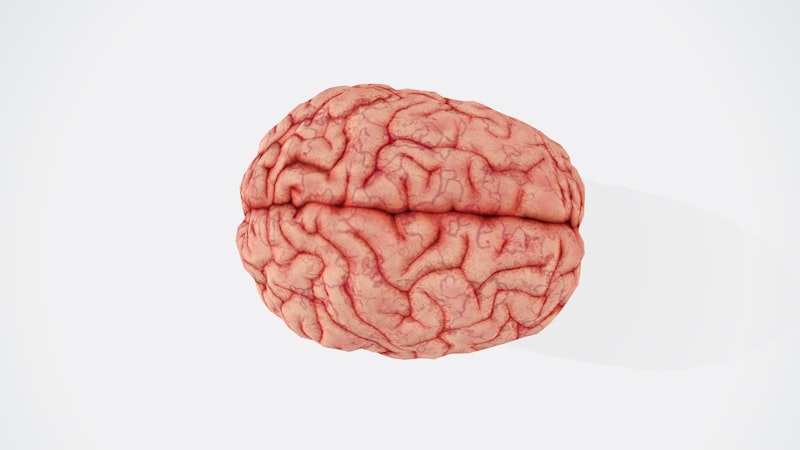
Contemporary research in learning theory faces the challenge of integrating knowledge from disparate fields, particularly the explosive growth in Cognitive Neuroscience. The future direction involves moving beyond purely psychological descriptions of behavior to understanding the biological instantiation of learning—how experiences alter neural connectivity (synaptic plasticity), gene expression, and the physical architecture of the brain. Researchers are now focused on identifying the specific molecular and cellular mechanisms responsible for memory consolidation and long-term potentiation, seeking to unify behavioral laws with their underlying neural code.
A significant ongoing challenge is developing unified theories capable of explaining complex, higher-order human learning that goes beyond simple associative or motor skills. Current models often struggle to fully account for abstract processes such as creativity, moral reasoning, and the transfer of knowledge across vastly different contexts. The development of robust computational models, which simulate cognitive architecture and test hypotheses about information processing efficiency, represents a critical avenue for tackling these intricate problems.
Finally, future research aims to address the limitations of traditional laboratory settings by incorporating ecological validity and utilizing large-scale data analysis (Big Data). This involves studying learning as it occurs naturally in complex, dynamic environments, such as social networks or digital learning platforms. The ultimate goal remains the refinement of comprehensive learning theories that successfully bridge the gaps between classical behavioral observation, modern cognitive modeling, and the precise biological mechanisms identified by neuroscience, leading to a truly holistic understanding of how experience shapes the mind.