Deception: Unmasking the Psychology of the Fabricated Truth
Scientifically Reviewed · Dr. Marwa Abd-Alazim · September 12, 2026
Review Criteria & Clinical Standards
This content undergoes rigorous scientific peer-review and medical editorial standards at Arab Psychology Network to ensure clinical accuracy, validity, and compliance with evidence-based guidelines from leading psychological and healthcare authorities (APA / WHO).
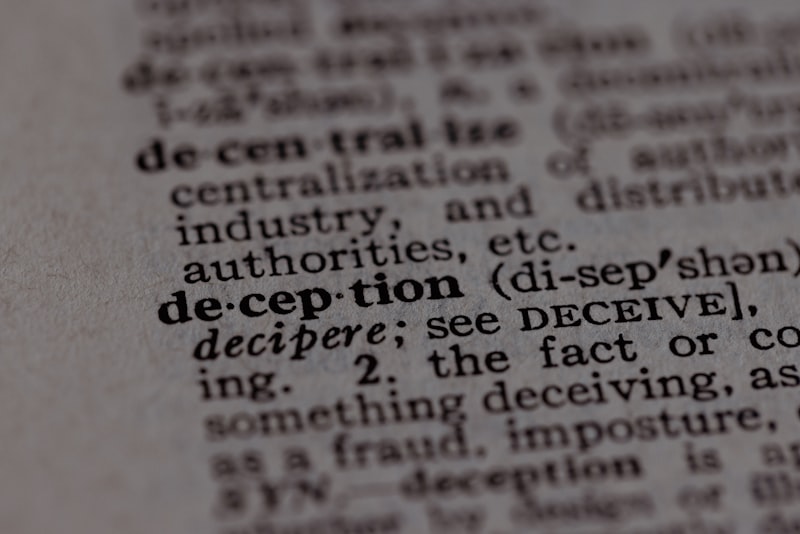
Definition and Taxonomy of Deception
Lying is fundamentally defined in psychology and ethics as the intentional deception of information, communicated through a statement or action, where the deceiver believes the information to be untrue and seeks to induce a false belief in the recipient. This behavior transcends simple error or misunderstanding; intentionality is the cornerstone distinguishing a lie from an honest mistake. It is a universal and pervasive aspect of human interaction, observed across all cultures and age groups, serving various functions from the mundane to the highly consequential.
The forms that deceptive behavior takes are highly varied, moving beyond the simple fabrication of facts. A critical distinction exists between commission and omission. Deception by commission involves actively providing false information or telling an outright lie, often through explicit verbal statements. Conversely, deception by omission involves intentionally withholding or concealing crucial information that would otherwise reveal the truth. Both forms are considered lies when the intent is to mislead the recipient. Furthermore, deception can manifest as exaggeration, minimization, or providing information that is technically true but designed to create a misleading impression, often referred to as ‘paltering.’
Psychologists categorize lies based on their scope and nature. Common typologies include white lies, which are typically small, inconsequential deceptions intended to avoid conflict or protect feelings; malicious lies, which are intended to cause harm or gain unfair advantage; and pathological lying (mythomania), which refers to chronic, compulsive deception often occurring without clear external motivation. Understanding this taxonomy is crucial because the cognitive effort, social impact, and moral evaluation associated with each type of lie can vary dramatically, influencing subsequent research design and therapeutic intervention.
Cognitive and Neurological Mechanisms of Lying
Lying is not merely the inverse of telling the truth; it is a significantly more complex cognitive task requiring substantial executive function resources. While truth-telling often relies on automatic retrieval of stored memories, deception necessitates a multi-stage process. The liar must first inhibit the truthful response (which is often the dominant, automatic response), construct a plausible falsehood, monitor the consistency of the fabricated information, and simultaneously track the recipient’s reaction to maintain credibility. This requirement for inhibition and fabrication places a considerable load on working memory.
Neurologically, the cognitive load associated with deception strongly implicates the prefrontal cortex (PFC), particularly areas associated with decision making, planning, and inhibitory control. Functional neuroimaging studies (such as fMRI) consistently show increased activity in regions like the ventrolateral and dorsolateral PFC when individuals engage in deceptive acts compared to truthful statements. This heightened neural activity reflects the effort required to suppress the truth and manage the cognitive interference caused by holding two conflicting narratives (the truth and the lie) simultaneously in consciousness. The PFC’s role in inhibiting automatic responses is central to the successful execution of a lie.
Beyond executive control, lying involves sophisticated processes related to language production and social cognition, specifically Theory of Mind (ToM). To successfully deceive, the liar must accurately model the mental state of the target—understanding what the target knows, what they expect, and how the lie will be interpreted. This ability to anticipate the recipient’s perspective allows the liar to tailor the deception for maximum effectiveness. If the liar fails to adequately gauge the target’s existing knowledge or emotional state, or if they are unable to control their physiological and behavioral responses, the attempt at deception is far more likely to fail, regardless of the verbal skill employed.
Motivations and Functions of Deceptive Behavior
The reasons underlying deceptive behavior are manifold, ranging from immediate self-preservation to long-term social maneuvering. Motivations are broadly classified as either self-serving or other-oriented (altruistic). Self-serving lies are instrumental in nature, designed to gain personal advantages (e.g., financial profit, avoiding punishment, enhancing reputation) or to protect the self from negative consequences (e.g., maintaining employment, avoiding embarrassment). These lies are often driven by immediate self-interest and can lead to significant ethical and social costs if discovered, yet they represent a significant portion of daily deceptive acts.
In contrast, other-oriented lies are primarily motivated by a desire to benefit or protect another person, often referred to as pro-social deception. A common example is the white lie told to spare someone’s feelings or maintain social harmony. While seemingly benign, these altruistic lies present a unique ethical dilemma, balancing the immediate benefit of emotional protection against the long-term cost of truth and trust. Research suggests that altruistic motives often increase the perceived moral acceptability of deception, though they still require the same level of cognitive effort as self-serving lies, particularly in formulating a believable narrative that aligns with the target’s expectations.
Furthermore, lying serves important functions in managing social relationships and identity presentation. People frequently lie to manage their image, exaggerating achievements or minimizing failures to fit social norms or expectations. This impression management is key to navigating complex social hierarchies and establishing desirable identities. The decision to lie is also heavily influenced by perceived risk; people are more likely to lie when the potential gain is high, the probability of detection is low, and the perceived consequences of being caught are manageable, indicating a rational cost-benefit analysis often underlies the decision to deceive.
The Development of Lying Across the Lifespan
The capacity for strategic deception is a developmental milestone closely tied to the maturation of cognitive abilities, particularly the development of Theory of Mind. Very young children (under the age of two) lack the cognitive tools necessary for intentional lying. However, by age three, children begin to exhibit simple forms of deception, typically involving denial of wrongdoing. This initial lying often reflects a rudimentary understanding of cause and effect but lacks sophisticated mental manipulation, as they often fail to appreciate what the recipient already knows.
Between the ages of four and six, children’s lies become increasingly complex and strategic as their ToM skills advance. They realize that others hold beliefs that may differ from their own, allowing them to plant false information intentionally. The ability to maintain a consistent lie—remembering the original falsehood and sticking to it—improves markedly during early school years. This developmental trajectory is crucial, as the ability to inhibit the truth and construct a coherent alternative narrative is viewed by some researchers as an indicator of advanced cognitive flexibility and executive functioning maturity, skills that predict later academic and social success.
Lying continues to evolve in adolescence and adulthood. Adolescent deception often centers on autonomy, privacy, and negotiation of parental boundaries, reflecting the crucial developmental task of separating identity. In adulthood, lying tends to decrease in frequency but increases in sophistication and potential impact. Adult lies are often embedded within complex professional or intimate relational structures, requiring high levels of emotional control and nonverbal leakage suppression. Studies examining age differences in deception highlight how developmental changes in cognitive control and social experience shape both the motivation and the execution of deceptive acts across the lifespan.
Social and Interpersonal Dynamics of Deception
Lying is fundamentally an interpersonal act, heavily shaped by the relationship between the deceiver and the target. Research suggests that while people tell relatively few “big” lies, they engage in numerous small deceptions daily, particularly with intimate partners, close friends, and family. These common lies often function as social lubricants, intended to maintain comfort, avoid unnecessary conflict, or protect the relational status quo. The frequency of lying is often inversely correlated with the perceived closeness of the relationship, meaning we tend to lie most to those we interact with daily, though the stakes of lies told to strangers or distant acquaintances may be higher due to the potential for legal or financial consequences.
A key dynamic in deception is the concept of deception leakage. Although liars may consciously control verbal content, cognitive overload often leads to subtle, involuntary changes in nonverbal behavior, known as leakage cues. These cues include changes in speech patterns (e.g., increased pitch, longer response latencies), reduced blinking, greater reliance on speech fillers, and inconsistencies between verbal statements and body language. Successful deception requires the liar to effectively control their emotions, facial expressions, and body language to minimize these leakage signals, a skill that varies significantly among individuals and is often correlated with practiced deception.
The effectiveness of a lie is often less dependent on the liar’s skill than on the target’s truth bias. In most interpersonal contexts, people operate under the assumption that others are telling the truth, a default heuristic that promotes social functioning. This truth bias means that even poor liars can often succeed because targets are generally poor and unmotivated lie detectors. Furthermore, the effectiveness of deception is highly context-dependent, with specific professional environments (e.g., negotiation, law enforcement) often exhibiting different baseline expectations for honesty compared to casual social interactions, requiring liars to adjust their strategies accordingly.
Consequences and Ethical Dimensions of Lying
The consequences of deceptive behavior are far-reaching, impacting not only the deceived individual but also the deceiver and the broader social fabric. The most immediate and profound impact of discovered deception is the severe erosion of trust. Trust is foundational to all social, economic, and political interactions, and its violation through lying can lead to relationship dissolution, professional failure, and societal instability. Rebuilding trust after a significant deception is a difficult, often protracted process that requires consistent honesty and accountability, making the initial decision to lie a high-stakes calculus.
From the perspective of the liar, maintaining a deception can incur significant psychological costs. The sustained effort required to suppress the truth, manage memory, and monitor behavior can lead to increased stress, anxiety, and cognitive fatigue. Furthermore, engaging in frequent deception can lead to a shift in self-perception, potentially normalizing dishonesty and impacting the individual’s moral identity. Research suggests that the initial neural and physiological response (e.g., amygdala activity) to lying may lessen with repetition, indicating a neuroplastic desensitization to dishonest behavior, which can contribute to the escalation of deceptive acts.
Ethically, lying is almost universally condemned, though specific philosophical frameworks offer nuanced interpretations. Utilitarian ethics might permit a lie if it results in the greatest good for the greatest number (e.g., an altruistic lie saving a life). Conversely, deontological ethics, particularly Kantian theory, often views lying as inherently wrong because it violates the categorical imperative—the duty to treat humanity always as an end and never merely as a means. The ethical evaluation of a lie, therefore, often depends on balancing the intent of the deceiver against the measurable harm caused by the deception, creating complex moral landscapes in applied psychology.
Scientific Approaches to Lie Detection
The pursuit of accurate and reliable methods for lie detection has been a major area of psychological and forensic research for over a century. Traditional methods rely primarily on measuring physiological arousal, based on the theory that the stress and cognitive effort involved in lying manifest in measurable bodily changes. The most well-known instrument is the polygraph (or “lie detector”), which measures autonomic nervous system responses such as heart rate, blood pressure, respiration rate, and skin conductance (GSR).
Despite its widespread use in certain contexts, the scientific validity and accuracy of the polygraph remain highly contested. Critics argue that the polygraph does not detect lying directly but rather measures general emotional and physiological arousal, which can be triggered by anxiety, fear, or deliberate countermeasures, leading to high rates of both false positives and false negatives. Consequently, polygraph results are often inadmissible as evidence in courtrooms in many jurisdictions. Other behavioral detection techniques, such as Voice Stress Analysis and analysis of subtle facial expressions and behavioral cues, similarly suffer from reliability challenges and a lack of robust scientific consensus regarding their effectiveness in controlled studies.
Emerging research focuses on cognitive and neurological markers of deception. Techniques such as functional Magnetic Resonance Imaging (fMRI) and Event-Related Potentials (ERP) attempt to localize the heightened cognitive activity associated with suppression and fabrication in the brain. While fMRI studies have successfully shown differential brain activity during controlled laboratory lying tasks, these technologies are currently too impractical, costly, and sensitive to environmental variables to be reliable tools for real-world forensic application. The scientific community generally maintains that no perfect, foolproof method for detecting deception currently exists, emphasizing the need for continued research into reliable, objective cognitive indicators that are less susceptible to countermeasures than physiological arousal.
Further Reading and Key Research
Lying remains a central topic in social psychology, cognitive neuroscience, and moral philosophy, prompting continuous investigation into its mechanisms and implications. The research base highlights the necessity of viewing deception not as a single behavior but as a complex interplay of motivation, cognitive demands, and social context. Future research directions are likely to focus on refining objective measures of deception, understanding the neuroplasticity associated with chronic lying, and developing ethical frameworks for managing deception in digital and mediated communication environments.
The following foundational studies and reviews provide essential context and empirical data regarding the prevalence, motivation, and psychological mechanisms of lying in everyday life and controlled settings. These works represent seminal contributions to the field of deception research, offering robust methodologies and critical insights into this universal human behavior.
- DePaulo, B. M., Kashy, D. A., Kirkendol, S. E., Wyer, M. M., & Epstein, J. A. (1996). Lying in everyday life. Journal of Personality and Social Psychology, 70(5), 979-995. https://doi.org/10.1037/0022-3514.70.5.979
- Epp, S. R., & Gibson, B. (2010). Motivations for lying: Examining the roles of gender and self-monitoring. Personality and Individual Differences, 48(3), 286-290. https://doi.org/10.1016/j.paid.2009.10.028
- DePaulo, B. M., Jordan, A. M., Irvine, A., & Laser, J. S. (1982). Age differences in deception. Developmental Psychology, 18(6), 899-906. https://doi.org/10.1037/0012-1649.18.6.899
- Schumann, K., & Sander, D. (2015). The social psychology of lying: From everyday life to the courtroom. Annual Review of Psychology, 66(1), 641-665. https://doi.org/10.1146/annurev-psych-010213-115050