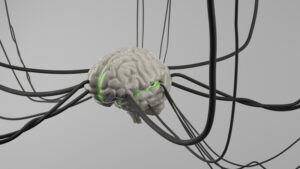
Maintenance Rehearsal: Lock Information Into Your Mind
Scientifically Reviewed · Dr. Marwa Abd-Alazim · October 18, 2026
Review Criteria & Clinical Standards
This content undergoes rigorous scientific peer-review and medical editorial standards at Arab Psychology Network to ensure clinical accuracy, validity, and compliance with evidence-based guidelines from leading psychological and healthcare authorities (APA / WHO).

The Core Definition and Mechanism
Maintenance Rehearsal is a fundamental cognitive process, categorized as a type of rote memorization technique, which involves the simple, repetitive recycling of information within the confines of short-term memory (STM) or working memory. The primary objective of this technique is not necessarily to achieve deep, permanent encoding, but rather to sustain the availability of the information for immediate use, preventing its rapid decay or displacement by new incoming stimuli. This mechanism acts like a mental loop, where a piece of data—such as a phone number, a short list of items, or a temporary instruction—is repeated vocally or subvocally until it is either utilized or replaced. While highly effective for retaining information over brief periods, it inherently lacks the complexity required for robust, meaningful consolidation into long-term memory (LTM), distinguishing it significantly from more elaborate encoding strategies.
The fundamental principle underpinning Maintenance Rehearsal is the direct consequence of the limited capacity and duration characteristic of short-term memory. STM is typically constrained to holding approximately seven (plus or minus two) chunks of information for a duration rarely exceeding 30 seconds without active intervention. Therefore, the consistent, active repetition serves as a cognitive lifeline, restarting the retention clock for the information with each cycle of rehearsal. This process does not involve processing the meaning, relating the material to existing knowledge structures, or engaging in deep semantic analysis; instead, it focuses purely on phonological or visual repetition. The success of this technique is thus measured by the temporal extension of memory availability, allowing the individual time to write down the number, complete the immediate task, or transition to a more permanent encoding method, highlighting its role as a necessary, yet temporary, cognitive utility.
Although simple repetition is the core mechanism, the effectiveness of Maintenance Rehearsal can vary based on individual focus and the complexity of the material being retained. It is crucial to understand that this technique primarily operates on the superficial level of memory processing; it ensures the item stays “online” in the immediate workspace of the mind. Research has demonstrated that while repeating a fact multiple times ensures its temporary survival in STM, the probability of that fact successfully transferring to the vast and structured network of LTM remains relatively low compared to encoding methods that require deeper cognitive engagement. This limitation underscores why, in academic settings where durable, transferable knowledge is the goal, educators often caution against relying solely on rote repetition and instead encourage strategies that foster meaningful connection and conceptual understanding.
Historical Foundations of Memory Research
The understanding of Maintenance Rehearsal as a distinct memory operation is deeply intertwined with the development of formal models of human memory, particularly those emerging during the mid-20th century. While basic repetition has always been an intuitive method of temporary retention, its formal psychological study gained prominence with the rise of cognitive psychology, moving away from purely behaviorist explanations. The key period for its theoretical conceptualization was the late 1960s and early 1970s, as researchers began to map the functional architecture of the mind, particularly how information flows between different memory storage systems.
The most significant theoretical framework that cemented the role of rehearsal was the renowned Multi-Store Model of memory, proposed by Richard Atkinson and Richard Shiffrin in 1968. This influential model posited three sequential memory stages: the sensory registers, short-term memory, and long-term memory. Within this structure, rehearsal was explicitly identified as a control process—a mechanism controlled by the individual to manage the flow of information. Atkinson and Shiffrin distinguished between two types of rehearsal: one that merely maintains information (Maintenance Rehearsal) and one that transfers it to LTM (a concept later refined and named Elaborative rehearsal). The historical significance of this model lies in its ability to provide a clear, testable framework for how temporary repetition served the function of sustaining items within the fragile STM store, thereby providing empirical grounding for the distinction between merely repeating and actively understanding information.
Subsequent research, particularly the work leading to the Levels of Processing framework proposed by Craik and Lockhart in 1972, further clarified the limitations of Maintenance Rehearsal. While the Atkinson-Shiffrin model viewed rehearsal primarily as the gateway to LTM, the Levels of Processing approach argued that the *depth* of processing, rather than mere duration in STM, determined the likelihood of long-term retention. This research validated the observation that simple maintenance, which constitutes shallow processing, usually results in fragile memory traces, whereas processing the semantic meaning or relational connections (deep processing) yields much more durable memories. Thus, the historical context reveals a scientific progression that first identified repetition as a critical control process, and then precisely defined its limitations in the context of achieving permanent learning outcomes.
Differentiating Maintenance and Elaborative Rehearsal
A critical distinction in cognitive psychology centers on the difference between Maintenance Rehearsal and Elaborative rehearsal, two distinct encoding strategies that lead to vastly different memory outcomes. Maintenance rehearsal, as established, is characterized by its passive nature and focus on repeating the physical or acoustic properties of the information. Its goal is temporary storage; it is a shallow form of processing that keeps the memory trace active but does not fundamentally alter the way the information is structured or connected within existing knowledge networks. For example, if a student repeats the definition of a term verbatim twenty times without understanding its context, they are engaging in maintenance rehearsal, which often results in recall failure shortly after the immediate task is completed.
In sharp contrast, Elaborative rehearsal is an active, deep form of cognitive processing that involves linking new information to knowledge already stored in long-term memory. This might involve creating mental images, forming analogies, generating examples, or relating the new material to personal experiences. The mechanism is focused on meaning and connectivity, ensuring that the new concept is integrated into a richer, more accessible semantic network. When a student not only repeats a term’s definition but also discusses how it applies to a real-world scenario, compares it to a similar concept, or maps it onto a personal framework, they are utilizing elaboration. The outcome of elaborative rehearsal is typically a robust, durable, and highly retrievable memory trace, making it the preferred method for complex learning and academic mastery.
The literature on memory strongly supports the idea that while maintenance rehearsal is sufficient for momentary retention and preventing decay in short-term memory, it is elaborative processing that serves as the necessary, though not always sufficient, condition for meaningful transfer to long-term memory. Studies comparing the two methods consistently show that subjects who utilize deep processing (elaboration) perform significantly better on delayed recall and recognition tests than those who rely predominantly on rote repetition (maintenance). Therefore, while maintenance rehearsal prevents immediate forgetting, elaborative rehearsal facilitates true learning and knowledge retention, highlighting why effective study strategies often combine the temporary storage provided by maintenance rehearsal with the deep encoding fostered by elaboration.
Practical Application: A Real-World Scenario
To illustrate the function and limitations of Maintenance Rehearsal, consider the common real-world scenario of trying to remember a newly encountered Wi-Fi password while setting up a new device in a coffee shop. Imagine the password is a non-semantic string of characters: “B9f&4Kw3.” Since the string is arbitrary and lacks inherent meaning, relating it to existing knowledge (elaboration) is difficult, making it an ideal candidate for maintenance rehearsal. The immediate goal is simply to retain the eight characters long enough to type them accurately into the required field on the computer screen, a task that typically lasts less than 30 seconds.
The “How-To” of applying this principle involves several key steps that demonstrate the core mechanism:
- Information Intake: The individual reads the password (“B9f&4Kw3”) from a sign or a written note, encoding it visually into sensory memory and subsequently transferring it to the phonological loop component of working memory.
- Initial Repetition Cycle: Immediately, the individual begins repeating the characters subvocally, perhaps chunking them into smaller groups (“B9f… and 4Kw3”). This repetition sustains the information within the limited capacity of short-term memory, preventing the decay that would occur if attention were shifted elsewhere.
- Task Execution: While continuing the subvocal repetition loop, the individual shifts their visual attention to the keyboard and begins typing the sequence. The repetition must continue during the typing process to hold the remaining characters in memory, as the mental effort of typing consumes cognitive resources.
- Memory Failure Point (If Interrupted): If, mid-typing, a friend interrupts the individual with a complex question about their weekend, the individual must allocate cognitive resources away from the rehearsal loop to process the new conversational input. Because the password was only held via shallow, maintenance rehearsal, the interruption often leads to the immediate decay of the memory trace, requiring the individual to look back at the password source to restart the process.
This example clearly shows that maintenance rehearsal is perfectly suited for temporary, utilitarian tasks. The successful entry of the password concludes the need for the information, and since no deep encoding occurred, the password is forgotten almost immediately thereafter, demonstrating the technique’s fundamental limitation in transferring information to permanent storage.
Significance and Impact
The concept of Maintenance Rehearsal holds significant theoretical importance within the field of cognitive psychology because it provides empirical support for the structural differentiation of memory systems. By identifying a control process that explicitly serves to delay forgetting within short-term memory without guaranteeing transfer to long-term memory, researchers were able to confirm that memory storage is not a monolithic entity but a series of interconnected stages with distinct capacities and mechanisms. This concept was instrumental in validating the functional models of memory that dominated the late 20th century and continues to inform modern research into working memory capacity and attentional control.
In terms of practical application, maintenance rehearsal is widely discussed and utilized, particularly in educational settings and cognitive training, though often with caveats. Educators use the principles of repetition to help students master fundamental, often non-semantic, material such as multiplication tables, foreign language vocabulary lists, or chemical formulas. The technique is particularly effective when used in combination with other, deeper strategies, such as elaborative rehearsal and spaced practice, as noted in the research by Brown, Roediger, and McDaniel (2014). For instance, students might use maintenance rehearsal to ensure temporary recall of a fact, but they must then use elaborative strategies to integrate that fact into a larger conceptual framework, ensuring it sticks long-term. Maintenance rehearsal, therefore, serves as a cognitive scaffold, holding the raw material in place until deeper processing can occur.
However, the impact of this concept also involves understanding its limitations, which guides modern pedagogical approaches. Over-reliance on rote memorization through maintenance rehearsal is recognized as a potential barrier to deep learning. While it can produce high scores on immediate recall assessments, it often fails to equip students with the durable, transferable knowledge required for complex problem-solving. Consequently, research emphasizes that educational applications should prioritize techniques that encourage students to look beyond mere repetition and engage with the material critically, ensuring that maintenance rehearsal is viewed as a supportive, immediate-retention tool rather than the primary method for constructing lasting expertise.
Effectiveness and Limitations in Learning
Research consistently affirms that Maintenance Rehearsal is an effective approach for managing the immediate flow of information and preventing the decay of memory traces within the constraints of short-term memory. Studies, including those cited by Kirschenbaum and Hirsh (2005), have shown that simply repeating a piece of information, such as a list of digits, significantly increases the likelihood that it will be recalled seconds later compared to items that received no rehearsal. This effectiveness is maximized when the material is simple, non-conceptual, and required only for a very brief duration. It provides a reliable mechanism for sustaining cognitive focus on the immediate task at hand, whether it involves dialing a number or following a short sequence of instructions.
Despite its utility for temporary retention, the primary limitation of maintenance rehearsal is its poor efficacy in promoting the transfer of information to long-term memory. Since the process involves shallow encoding—focusing on sound or appearance rather than meaning—it fails to create the strong, associative links necessary for durable storage and retrieval. This limitation means that relying exclusively on repetition for learning complex concepts, abstract ideas, or highly related facts is generally unproductive for mastery. Furthermore, the process of maintenance rehearsal can be resource-intensive; it consumes cognitive energy and attention, and since it is often time-consuming due to the need for multiple repetitions, it can potentially detract from the time available for more effective, deeper encoding strategies like elaboration or retrieval practice, thereby leading to potential “over-learning” of superficial details at the expense of conceptual integration.
The most successful application of maintenance rehearsal occurs when it is strategically combined with other, more powerful memory techniques. For instance, the source material highlights that maintenance rehearsal is particularly effective when used in conjunction with elaborative rehearsal and spaced practice. Spaced practice—the repetition of material over increasing intervals—requires some degree of temporary maintenance rehearsal to keep the information accessible until the next review session. Similarly, maintenance rehearsal can initially hold a new term in mind while the learner simultaneously searches their LTM for relevant concepts to facilitate elaboration. Thus, while weak as a standalone tool for permanent learning, its strength lies in its ability to support and facilitate the application of superior encoding strategies, making it a critical, albeit auxiliary, component of a comprehensive learning strategy.
Connections to Working Memory and Cognitive Load
Maintenance Rehearsal is intimately connected to the modern conceptualization of working memory, which views temporary storage not just as a passive bin (like the old STM model) but as an active workspace where information is manipulated and maintained. The mechanism of maintenance rehearsal corresponds closely to the function of the phonological loop, one of the key components of Baddeley and Hitch’s Working Memory Model. The phonological loop is specialized for holding and manipulating speech-based information. Maintenance rehearsal essentially utilizes the articulatory control process—the “inner voice”—to refresh the memory trace in the phonological store, thereby preventing its decay within the short time frame allowed by the system.
Understanding maintenance rehearsal is also crucial for managing cognitive load, a concept central to instructional design and learning theory. Cognitive load refers to the total amount of mental effort being used in the working memory. When learners are required to memorize new, complex information, the use of simple maintenance rehearsal may contribute to high intrinsic cognitive load, especially if the material is long or non-meaningful, as the constant repetition ties up valuable working memory resources. If too much cognitive energy is spent on merely keeping the information active (maintenance), less capacity remains for processing its meaning and integrating it with existing knowledge (elaboration and germane load).
Therefore, effective teaching strategies often focus on minimizing the need for maintenance rehearsal by structuring information in ways that promote instant elaboration and reduce the extraneous cognitive load. Techniques such as chunking, where individual items are grouped into meaningful units, serve as a bridge, allowing the limited capacity of the working memory to handle larger amounts of information. While maintenance rehearsal is a natural and necessary response to temporary retention needs, cognitive research suggests that instructional materials should ideally be designed to encourage learners to move past simple repetition quickly and engage in deep processing to ensure the efficient and effective transfer of knowledge to long-term memory.
Broader Category and Related Concepts
Maintenance Rehearsal fundamentally belongs to the broad subfield of Cognitive Psychology, specifically within the domain of memory and learning processes. Cognitive psychology is concerned with internal mental processes such as perception, attention, language, memory, and problem-solving, making the study of how information is temporarily held and manipulated a central concern. More narrowly, it is a key concept within the study of Human Memory Systems and Information Processing Theory, serving as a primary control mechanism within early memory models.
Several concepts are closely related to maintenance rehearsal, often defined in contrast to it or as necessary components for its execution:
- Elaborative rehearsal: The most significant contrast, where information is processed deeply by linking it to existing knowledge, resulting in superior LTM encoding, unlike the shallow processing of maintenance rehearsal.
- Short-Term Memory (STM) / Working Memory: Maintenance rehearsal is the control process required to keep information alive within these temporary storage systems. Its limitations define the boundaries of STM capacity and duration.
- Serial Position Effect: The tendency to remember items at the beginning (primacy effect) and end (recency effect) of a list better than those in the middle. The primacy effect is often attributed to the fact that early items receive more time for rehearsal (potentially maintenance or early elaboration), increasing their chance of entering LTM, whereas the recency effect reflects the temporary availability of the last items still held in short-term memory, often via maintenance rehearsal.
- Retrieval Practice: While maintenance rehearsal focuses on input and temporary retention, retrieval practice (or the testing effect) focuses on output—actively recalling information. Research suggests retrieval practice is vastly superior to simple repetition (maintenance rehearsal) for long-term retention, providing a superior method for testing and strengthening memory traces.
These connections demonstrate that while maintenance rehearsal is a simple, straightforward concept, its place within cognitive theory is foundational, serving as a baseline mechanism against which all deeper, more effective learning strategies are compared and contrasted.