Mass Action: How Your Brain Stores Memories as a Whole
Scientifically Reviewed · Dr. Marwa Abd-Alazim · September 8, 2026
Review Criteria & Clinical Standards
This content undergoes rigorous scientific peer-review and medical editorial standards at Arab Psychology Network to ensure clinical accuracy, validity, and compliance with evidence-based guidelines from leading psychological and healthcare authorities (APA / WHO).

Introduction to the Principle of Mass Action
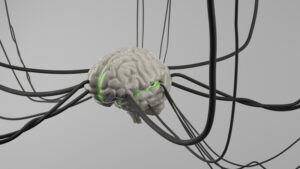
The principle of Mass Action represents a foundational, yet historically debated, concept in the field of physiological psychology, primarily associated with the pioneering work of American psychologist and neuroscientist Karl Lashley during the early to mid-twentieth century. Broadly defined, Mass Action posits that the efficiency of complex psychological functions, particularly learning and memory (often termed the engram), is dependent not upon a specific, localized area of the cerebral cortex, but rather upon the total mass of cortical tissue available. This means that when an organism is engaged in the process of acquiring new behaviors or knowledge, the entire cortical sheet, or a substantial portion thereof, participates in a coordinated, aggregate manner. The efficiency of performance subsequently correlates directly with the extent of cortical damage: the greater the extent of the ablation, the more severe the resulting deficit, irrespective of the precise location of the lesion within the functional area.
Lashley’s formulation of Mass Action arose from rigorous experimental investigations designed to locate the physical basis of memory, a search he famously summarized by stating, “I have learned that the engram is not localized.” The traditional view prior to his work often emphasized strict localization of function, suggesting that specific mental capacities resided in discrete, segregated cortical regions. Mass Action fundamentally challenged this perspective by arguing that complex behavioral tasks, such as navigating a maze, required the integrated operation of wide swaths of the cerebral cortex. The concept thus highlights the brain’s inherent plasticity and redundancy, suggesting that while individual neurons or small assemblies may process specific details, the overall representation of learned behavior is distributed across the cortical landscape. This initial understanding provides a critical lens through which to examine how the brain manages complex, adaptable processes like skill acquisition and retention.
It is crucial to differentiate Mass Action from generalized brain activity; it is specifically applied to the cortical involvement in the learning process. The original insight correctly identifies the cerebral cortex as the area involved in learning, and Lashley’s research centered on demonstrating that the degree of impairment in maze learning in rats was proportional to the amount of cortical tissue removed, rather than which specific part was removed. Therefore, the concept serves as a general descriptor for the phenomenon wherein the entire cortical area devoted to a function works as a unified field, emphasizing quantitative rather than qualitative loss of function following widespread tissue damage. This macroscopic view of cortical processing laid the groundwork for later theories emphasizing neural networks and distributed processing, bridging the gap between early structuralist neuroscience and modern connectionist models of cognition.
Historical Context and the Localization Debate
The emergence of the Mass Action principle must be understood within the historical context of the fierce nineteenth-century debate regarding cerebral organization. Proponents of strict localization, influenced by early findings such as Paul Broca’s discovery of the speech production area (Broca’s area) and Carl Wernicke’s identification of the language comprehension area, argued convincingly that mental functions were modular and spatially constrained. This view gained significant traction, providing a compelling framework for understanding neurological deficits arising from specific focal injuries. However, an alternative perspective, often termed the holistic or field view, posited that the brain operated as an integrated whole, especially concerning higher cognitive functions. Mass Action provided empirical ammunition for this holistic perspective, specifically challenging the idea that memory traces could be isolated to single, permanent locations.
Before Lashley, influential figures like Marie-Jean-Pierre Flourens had already conducted ablation studies, particularly in pigeons, suggesting that complex functions like perception and volition were not rigidly confined. Flourens observed that removal of specific cortical areas resulted in general deficits, and often, remaining tissue could compensate for the loss, supporting a unified view of cortical function. However, these studies lacked the methodological rigor applied to complex learning tasks characteristic of Lashley’s subsequent work. Lashley’s motivation was precisely to resolve this century-long debate using sophisticated behavioral measures and precisely controlled lesions in mammals, seeking to definitively prove or disprove the existence of a specific memory center. His inability to find this specific center, regardless of the lesion site, propelled the Mass Action theory into prominence as a major counterpoint to the prevailing localized model.
The intellectual environment of the early 20th century, particularly the rise of behaviorism, also influenced the acceptance of Mass Action. Behaviorists focused heavily on observable input-output relationships and minimized the need to understand specific internal neurological mechanisms. While Lashley himself was deeply interested in neurobiology, his findings—that the extent of damage mattered more than the location—aligned with a functional perspective that prioritized the overall capacity of the organism to adapt and perform. This emphasis shifted the focus from static anatomical maps to the dynamic, interconnected nature of neural processing, suggesting that the functional outcomes of learning were too complex to be housed in single cortical addresses, thus requiring widespread cortical involvement.
Karl Lashley and Pioneering Experimental Evidence
Karl Lashley’s foundational experiments leading to the formulation of Mass Action were characterized by meticulous methodology and systematic investigation, primarily utilizing the common laboratory rat as a model organism. His primary goal was to trace the engram—the physical manifestation of a memory—by training rats on complex tasks, most notably navigating intricate mazes, and subsequently removing specific portions of their cerebral cortex. The hypothesis guiding these studies was straightforward: if memory was localized, ablating the specific region where the memory trace resided should completely abolish the learned behavior, while ablating other areas should leave the memory intact. Lashley systematically varied both the location and the size (mass) of the induced lesions.
Lashley employed a variety of learning tasks, including visual discrimination, tactile discrimination, and complex spatial navigation tasks. These tasks required sophisticated integration of sensory input, motor planning, and retention of spatial memory, representing functions that theorists often assumed were highly localized. Following the training phase, surgical procedures were performed to remove varying percentages of the cortical surface, ranging from small, precise cuts to large, significant excisions. The rats were then re-tested to assess the degree of retention loss, measured by the number of errors or trials needed to re-learn the task. The precision of Lashley’s methods allowed him to create detailed maps correlating the extent of tissue removal with the resulting behavioral deficits, providing robust quantitative data regarding the impact of cortical loss on complex learned behaviors.
The resulting evidence consistently contradicted the localization hypothesis for complex learning. Regardless of whether Lashley removed tissue from the frontal, parietal, or occipital lobes (provided the removal did not target primary sensory or motor areas essential for the task execution itself), the critical variable predicting the deficit was the amount of tissue destroyed. A rat with a small lesion in the posterior cortex showed minimal impairment, while a rat with a large lesion distributed across the cortex showed profound impairment, even if the specific location of the large lesion differed significantly from that of another impaired rat. This proportionality between the mass of remaining cortical tissue and the residual functional capacity became the bedrock of the Mass Action principle.
Experimental Methodology and Key Findings
Lashley’s methodology centered on carefully controlled lesion experiments, often involving sequential ablations to observe cumulative effects. His primary quantitative finding was the strict mathematical relationship between the percentage of cortex removed and the decrement in performance on learned tasks. For instance, if a rat lost 20% of its cortex, its performance on maze navigation would decrease by a predictable percentage, irrespective of the precise coordinates of the removed tissue within the cortex. This finding was particularly powerful because it demonstrated a general principle of cortical organization rather than a specific anatomical rule. The implication was that the memory trace, or engram, was not stored in a single node but was distributed throughout the cortical area responsible for that specific class of learning, allowing other parts of the network to compensate partially for localized loss.
A critical aspect of these findings was the observation that while primary sensory and motor functions exhibited relatively clear localization (e.g., removing the primary visual cortex severely impaired visual discrimination), associative learning tasks, which require complex integration, showed the effects of Mass Action. This distinction suggested that that the degree of functional localization might be inversely related to the complexity of the task. Simple, reflexive functions might be localized, but higher-order cognitive processes, which rely on synthesizing information across multiple brain regions, necessitated a distributed encoding mechanism. The cortex, in this view, functions less like a map of discrete centers and more like a dynamic field where information is redundantly encoded and processed.
Lashley summarized his findings by emphasizing two derived concepts: Mass Action and Equipotentiality. Mass Action describes the quantitative relationship between the extent of cortical damage and functional loss, focusing on the total mass of tissue. Equipotentiality, conversely, describes the qualitative finding that, within a functional area, any part of the area can perform the function previously managed by the destroyed tissue, provided that the required sensory and motor pathways remain intact. Though closely related, Mass Action emphasizes the required quantity of tissue, while Equipotentiality emphasizes the capacity of the remaining tissue to take over the function. Together, these principles provided a unified theory explaining why targeted lesions failed to obliterate complex memories entirely, instead leading to a graded loss proportional to the amount of tissue removed.
The Intertwined Concept of Equipotentiality
The principle of Equipotentiality is inextricably linked to Mass Action and is often considered its functional corollary. Equipotentiality proposes that all parts of the associative cortex are functionally equivalent, or potentially capable, of performing the duties of other parts, particularly concerning the storage and retrieval of complex memories. When one section of the cortex involved in a specific learning task is damaged, the remaining intact parts of the cortex can step in to assume the function, albeit often with reduced efficiency. This inherent redundancy and capacity for functional reorganization is what prevents focal cortical lesions from completely destroying a complex memory trace, which would be expected if memory were stored in a single, highly localized neuron or center.
This concept has profound implications for understanding brain plasticity and recovery from injury. Equipotentiality suggests that the brain possesses a substantial degree of functional flexibility, allowing for compensatory mechanisms to engage following damage. However, Lashley was careful to specify limits to this principle. Equipotentiality applies primarily within the confines of a specific functional system (e.g., within the associative cortex related to maze learning) and only if the total amount of damage is not overwhelming. Once the cortical mass available falls below a certain threshold, the deficit becomes irreparable, which brings us back to the quantitative constraints of Mass Action. The concept is highly relevant to understanding how the brain utilizes multiple pathways and parallel processing mechanisms to encode and maintain cognitive maps and learned associations.
The combined force of Equipotentiality and Mass Action provides a powerful argument against radical modularity for complex cognitive functions. Instead of viewing the cortex as a collection of specialized, isolated microprocessors, Lashley’s work encouraged viewing it as a highly interconnected, resilient network. If the cerebral cortex is indeed involved in the learning process primarily through distributed networks, then the loss of any single node diminishes the overall processing power (Mass Action) but does not necessarily extinguish the entire function, as the remaining nodes retain the potential (Equipotentiality) to carry on the necessary computations, thereby ensuring remarkable resilience in the face of partial injury.
Critiques and Limitations of the Theory
Despite its revolutionary impact, the principle of Mass Action faced significant critiques and was eventually revised by subsequent neuroscientific discoveries. One major limitation stemmed from the complexity of the behavioral tasks Lashley employed. Maze learning in rats is a highly integrated task involving visual, olfactory, tactile, and vestibular cues, along with motor planning and motivation. Critics argued that the very nature of such a generalized task meant that the memory trace was inherently diffuse. If Lashley had used simpler, more defined tasks, the localization might have been clearer. Indeed, subsequent research confirmed that simpler forms of memory, such as classical conditioning of fear responses, often relied heavily on highly localized structures like the amygdala, outside the association cortex.
A second major critique focused on the interpretation of the lesions themselves. While Lashley meticulously removed cortical tissue, critics argued that the resulting deficits might not reflect the loss of the memory trace itself, but rather the disruption of access pathways or the generalized cognitive impairment resulting from widespread injury. Removing large portions of the cortex inevitably affects processing speed, attention, and general cognitive vigor, which would understandably impair performance on complex tasks like maze navigation, regardless of whether the memory was truly destroyed. This distinction—between the storage location of the engram and the necessary mechanisms for its retrieval and execution—was a crucial point of contention that demanded further empirical separation.
Furthermore, later investigations utilizing more precise histological techniques and focusing on subcortical structures demonstrated that certain aspects of learning and memory are indeed highly localized. For example, the hippocampus was later identified as absolutely critical for the formation of new declarative memories, contradicting the most extreme interpretations of Mass Action. Mass Action was most accurate when applied specifically to the associative cortex and the highly integrated functions it supports; it failed to account for specialized functions carried out by dedicated subcortical nuclei or primary sensory/motor cortices. Therefore, modern neuroscience views Mass Action not as a universal law of cortical function, but as a description of how distributed storage mechanisms operate for certain complex, highly redundant cognitive functions.
Modern Neuroscience Perspectives on Distributed Processing
Modern neuroscience has largely moved beyond the strict dichotomy of localization versus holistic processing, integrating elements of both perspectives. The legacy of Mass Action is seen in the contemporary understanding of the brain as a system of highly specialized, yet massively interconnected, networks. While individual cortical areas possess functional specialization (localization), complex cognitive functions, including advanced learning and memory, are achieved through the synchronized activity of widely distributed neural networks (distributed processing), often spanning multiple lobes and engaging both cortical and subcortical structures.
The concept of neural networks, or connectomics, provides the current framework that best reconciles Lashley’s findings with subsequent research. In this model, the engram is not a single point but a pattern of altered connectivity and synaptic strength distributed across a large population of neurons. Damage to a small portion of this network reduces the efficiency and clarity of the stored information, leading to degraded performance (consistent with Mass Action), but does not erase the memory entirely, as the pattern is redundantly encoded across the remaining network (consistent with Equipotentiality). Functional magnetic resonance imaging (fMRI) studies consistently show that complex tasks activate large, overlapping networks rather than single, isolated centers, reinforcing the idea of cooperative cortical function crucial for higher cognition.
Contemporary research also emphasizes the role of parallel processing, where multiple brain regions simultaneously contribute to different aspects of a single task. For instance, in maze learning, the hippocampus handles spatial mapping, the prefrontal cortex manages working memory and planning, and the motor cortex executes the movements. While removing the hippocampus destroys the ability to form new spatial memories, removing a small area of the associative cortex may only slightly impede the overall efficiency of planning or association, demonstrating the quantitative dependency described by Mass Action. Thus, Mass Action remains relevant as a descriptor of the resilience and distributed nature of complex cognitive encoding, particularly emphasizing the role of the total available processing power within the cerebral cortex during the learning process.
Legacy and Influence on Cognitive Psychology
Despite the subsequent refinement and limitation of the theory, the principle of Mass Action holds an undeniable and crucial place in the history of neuroscience and cognitive psychology. Lashley’s meticulous empirical work decisively shattered the rigid, simplistic view of strict localization for all functions, forcing researchers to adopt a more nuanced, systemic perspective on brain organization. His findings inaugurated an era of thinking about the brain in terms of dynamic fields, integration, and redundancy, paving the way for the development of modern computational theories of mind and distributed memory models.
The influence of Mass Action extends directly into modern concepts of holographic memory storage and connectionist modeling, particularly in the study of artificial neural networks. Connectionist models, which use distributed representations where information is encoded across many nodes simultaneously, exhibit behavior strikingly similar to Mass Action: damaging a small percentage of the network leads to a proportional degradation in performance, but not total failure. These models demonstrate mathematically how robust, complex learning can be maintained through redundancy, mirroring the biological resilience observed by Lashley decades ago and validating his macroscopic view of cortical processing.
In conclusion, Mass Action remains a general name for the area of the brain, specifically the cerebral cortex, which is involved in the learning process, asserting that the effectiveness of this involvement is proportional to the total mass of functional tissue. While neuroscientific understanding has evolved to detail the specialized roles of sub-regions, the fundamental insight—that complex learning requires the integrated, distributed engagement of vast cortical areas—is a permanent and essential contribution to understanding how the brain learns, adapts, and recovers from injury. The principle serves as a powerful reminder that the most sophisticated cognitive processes are emergent properties of the brain working as a massive, unified action system.
MASS ACTION: “Mass action typically occurs in the brain during the process of learning, where the efficiency of the learned behavior is dependent upon the total mass of cortical tissue available rather than the specific location of the tissue.”