Maternal Aggression: The Fierce Science of Protective Love
Scientifically Reviewed · Dr. Marwa Abd-Alazim · August 24, 2026
Review Criteria & Clinical Standards
This content undergoes rigorous scientific peer-review and medical editorial standards at Arab Psychology Network to ensure clinical accuracy, validity, and compliance with evidence-based guidelines from leading psychological and healthcare authorities (APA / WHO).

Definition and Scope of Maternal Aggression
Maternal Aggression is defined as a specific, highly conserved behavioral complex exhibited by a female parent in response to a perceived or actual threat directed toward her offspring. This process is fundamentally rooted in the imperative of reproductive success, ensuring the survival and subsequent propagation of the female’s genetic lineage. Unlike generalized forms of aggression, this behavior is context-specific and temporally constrained, primarily manifesting during the period when the young are vulnerable and dependent. The protective instinct drives the female to employ a variety of defensive tactics, which often begin with sophisticated threat displays designed to deter intruders without necessitating physical violence. This initial, non-contact display is critical, serving as a warning signal calibrated to the immediacy and magnitude of the perceived danger, reflecting an adaptive strategy to conserve energy while maximizing defensive efficacy.
The core function of Maternal Aggression (MA) is the immediate and forceful defense of the nest, den, or proximity of the young. This aggression threshold is typically lowered significantly during the peripartum and lactation phases, meaning that stimuli that would normally elicit a neutral or avoidant response suddenly trigger intense defensive posturing. The intensity of the aggression is directly proportional to the perceived threat level and the vulnerability of the offspring; for instance, altricial young (born helpless) often elicit a more extreme maternal response than precocial young (born relatively developed). Furthermore, the definition of the ‘threat’ can encompass a wide range of stimuli, including conspecifics (members of the same species), heterospecific predators, or even seemingly benign environmental changes that might endanger the neonates. This specialized aggression ensures that the enormous energetic investment placed into gestation and rearing is not negated by external factors.
The study of MA crosses various disciplines, including ethology, behavioral neuroscience, and endocrinology, highlighting its complex integration within the mammalian reproductive strategy. Researchers view MA not merely as an impulsive reaction but as a highly regulated system involving rapid neurochemical changes that modulate fear, motivation, and motor output. Understanding the regulatory mechanisms of MA is essential because it represents one of the strongest forms of instinctual drive observed in nature, often overriding the female’s natural self-preservation instincts. The transition into this aggressive state is a hallmark of successful parental bonding and is inextricably linked to hormonal shifts necessary for lactation and nurturing, positioning MA as a critical component of the overall parental care package.
Evolutionary and Biological Basis
From an evolutionary perspective, Maternal Aggression is a prime example of a fitness-enhancing trait maintained through natural selection. The foundational theory underpinning this phenomenon is inclusive fitness, which posits that an individual’s evolutionary success is measured not only by their own survival but also by the survival of their genetic relatives, especially their immediate offspring. Any behavioral mechanism that increases the survival probability of the young directly contributes to the perpetuation of the mother’s genes. Therefore, the costs associated with aggression—such as potential injury, energy expenditure, or exposure to risk—are outweighed by the benefits of ensuring the young reach reproductive maturity. This principle explains the widespread occurrence of MA across diverse taxa, from insects and fish to highly complex mammals, suggesting a deep evolutionary conservation of this protective mechanism.
The mechanism of parental investment further clarifies the intensity and duration of MA. According to parental investment theory, the sex that invests more resources (time, energy, risk) in offspring production and rearing is generally the choosier sex and the one most likely to exhibit strong defensive behaviors. Since mammalian females carry the primary burden of gestation, parturition, and often lactation, their investment is immense, creating a powerful selective pressure to defend that investment vigorously. The evolutionary trade-off dictates that once resources have been allocated to offspring, the female must maximize the return on that investment, making aggressive defense a mandatory strategy. This imperative shifts the female’s internal calculus, prioritizing offspring survival over personal safety during critical developmental windows.
The specific biological hardware for MA is genetically encoded, though its expression is highly dependent on environmental and hormonal triggers. Studies utilizing comparative biology reveal that the neural circuits responsible for maternal behavior are ancient and highly integrated with basic survival systems. The presence of young fundamentally alters the female’s perception of risk and reward, creating a specialized motivational state. This state ensures that the female is primed to recognize subtle cues of danger and respond instantaneously, an adaptation critical in environments where predation pressure is high. The transition to this aggressive phenotype is temporary, demonstrating nature’s efficiency: the aggression is only activated when it serves the specific evolutionary goal of defense, minimizing unnecessary risk during non-reproductive periods.
Neuroendocrine Mechanisms and Regulation
The transition into a state of heightened protective aggression is mediated by profound shifts in the maternal neuroendocrine system, primarily involving reproductive hormones and neuropeptides acting upon specific brain structures. Key hormones such as prolactin, oxytocin, and fluctuating levels of estrogen and progesterone are central to priming the neural circuits for maternal behavior, including aggression. During late pregnancy and immediately postpartum, high levels of prolactin, typically associated with milk production, also act centrally to lower the threshold for aggressive responses. Similarly, oxytocin, often dubbed the “bonding hormone,” plays a dual role: while fostering affiliative behaviors toward the infant, it also modulates the activity of the amygdala, reducing fear and anxiety in the presence of the young while simultaneously increasing defensive reactivity toward external threats.
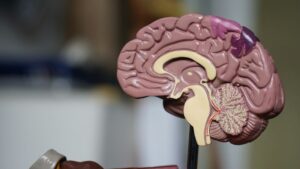
The neural circuitry for MA involves intricate interplay among several critical brain regions. The medial preoptic area (MPOA) of the hypothalamus is considered the central hub for organizing maternal behaviors, integrating sensory input from the young with hormonal status. The MPOA projects to regions that control motor output necessary for fighting or threat displays, as well as to the periaqueductal gray (PAG), which is crucial for coordinating species-typical defensive behaviors. Crucially, the amygdala, the brain’s primary threat detection center, undergoes significant functional restructuring during the postpartum period. This restructuring allows the maternal brain to differentiate rapidly between non-threatening stimuli and those posing a risk to the offspring, ensuring an appropriate and swift defensive response. Dopaminergic pathways, particularly those involving the ventral tegmental area (VTA) and nucleus accumbens, also reinforce MA, associating the successful defense of the young with reward, which helps maintain the protective behavior throughout the dependency period.
The temporary nature of Maternal Aggression is a reflection of the precise hormonal control exerted over these neural circuits. Once weaning occurs and hormonal levels return to baseline (e.g., prolactin drops significantly), the elevated threshold for aggression typically dissipates. This decline demonstrates that MA is not a permanent personality trait but a highly flexible, adaptive state triggered by specific physiological conditions—namely, the presence of vulnerable, dependent offspring and the hormonal milieu supporting lactation. Research into these mechanisms, often utilizing rodent models, provides vital insights into how complex, instinctual behaviors are regulated chemically, offering potential therapeutic targets for understanding dysregulated parental behaviors in clinical populations.
Behavioral Manifestations and Threat Hierarchies
The execution of Maternal Aggression follows a predictable hierarchy of behaviors designed to achieve the goal of repelling a threat with the minimum necessary expenditure of energy and risk of injury. The initial and most common manifestation is the threat display, which serves as a clear warning to the intruder regarding the female’s defensive commitment. These displays are often ritualized and species-specific, involving postural changes, piloerection (raising of fur/hair), vocalizations (hissing, growling, screaming), and specialized movements such as rapid tail-lashing or stamping. The efficacy of the threat display is paramount; if the display successfully deters the intruder, the female avoids a costly physical confrontation.
Should the initial threat display fail to repel the intruder, the female’s behavior typically escalates rapidly through defined stages. The next stage often involves mock charges or lunges designed to intimidate and test the intruder’s resolve, usually stopping just short of physical contact. This phase is followed by direct engagement only if the threat persists or moves closer to the offspring. Overt physical violence is reserved for the most serious threats or for intruders who ignore all previous warnings. When physical aggression does occur, it is often focused on driving the threat away rather than causing fatal injury, though the defense can be vicious, especially in species where the mother is significantly larger or better armed than the potential predator or rival conspecific.
The behavioral response is also highly modulated by the female’s previous experience (parity) and the identity of the intruder. Primiparous females (first-time mothers) may exhibit less organized or less effective aggressive displays compared to multiparous females, who have learned which tactics are most effective. Furthermore, females often distinguish between types of threats:
- Predators: Elicit immediate, high-intensity defense often involving physical attack.
- Conspecifics (Rivals): Elicit threat displays and boundary maintenance (chasing away).
- Familiar Non-Threats (e.g., mates): Typically results in inhibited aggression or tolerance, though tolerance can be context-dependent.
This nuanced differentiation highlights the adaptive intelligence underlying maternal behavior, ensuring that aggression is precisely targeted and proportional to the risk posed to the vulnerable young.
Distinction from Other Forms of Aggression
It is crucial to distinguish Maternal Aggression from other major categories of aggressive behavior, such as territorial, predatory, dominance, or irritable aggression, as MA possesses unique motivational drivers and neurological substrates. Unlike territorial aggression, which is centered on resource defense (space, food), MA is singularly focused on the defense of a specific biological resource—the offspring—and is not necessarily tied to a fixed geographic boundary outside the immediate vicinity of the young. A mother may exhibit extreme aggression in the presence of her pups but show no defensive tendencies outside that context, whereas a territorial animal maintains defense regardless of reproductive status.
Furthermore, MA is mechanistically distinct from predatory aggression. Predatory aggression is typically characterized by a lack of emotional arousal, low sympathetic nervous system activation, and focused, goal-directed movements aimed at securing food; it is neurologically similar to hunting behavior. Conversely, MA is marked by high arousal, intense emotional display, and strong sympathetic activation (fight-or-flight response), designed to repel or injure an opponent rather than secure it as sustenance. The defensive nature of MA means that the female is acting in defense of her own genetic material, whereas predatory behavior is self-serving in a nutritional context.
Finally, MA differs from dominance aggression, which is focused on establishing or maintaining social hierarchies within a group. Dominance interactions are often ritualized and involve specific submission signals. Maternal aggression, however, can be directed at individuals regardless of their rank or status, and its primary goal is not hierarchy establishment but the absolute removal of a perceived danger. This specialized nature means that a typically subordinate female may display extreme, high-intensity aggression when defending her young, behavior she would never exhibit in a normal dominance contest. The temporary nature of MA is perhaps its defining contrast; once the young are self-sufficient, this specialized form of aggression typically ceases, whereas other forms of aggression may persist indefinitely.
Factors Influencing Intensity and Threshold
The intensity and threshold for triggering Maternal Aggression are not static but are dynamically influenced by a confluence of internal and external factors. Among the primary internal influences is the female’s parity and experience. Multiparous females, having successfully navigated prior reproductive cycles, often exhibit more rapid and decisive aggressive responses, suggesting a learning component that optimizes defensive strategy. Additionally, the age and developmental stage of the offspring significantly impact MA; aggression is typically highest when the young are newborns and most vulnerable, gradually declining as they become more mobile and capable of evasion or defense themselves. The nutritional status of the mother is also critical; females experiencing stress or nutritional deprivation may exhibit increased irritability and heightened aggressive tendencies, or conversely, in extreme cases, may abandon or fail to defend offspring due to resource limitations.
External environmental variables play a major role in modulating MA intensity. Resource availability, including food and secure nesting sites, can directly influence a mother’s defensive posture. In resource-scarce environments, competition is higher, leading to an elevated baseline of aggression toward conspecifics. Conversely, environmental stressors such as high population density, frequent human disturbance, or persistent exposure to predators can push the mother’s aggressive response to extremes. Social context is another critical factor; in solitary species, the mother shoulders the entire defensive burden, resulting in high individual MA. In cooperative breeding species, the presence of alloparents (helpers) may dilute the mother’s need for intense aggression, though she often remains the primary defender.
Furthermore, subtle shifts in the offspring’s cues can affect the mother’s response. The release of specific pheromones or distress vocalizations by the young acts as a potent activating signal for MA. Failure to perceive these cues, or the perception of abnormal cues, can sometimes lead to dysregulated maternal behavior, including neglect or, rarely, infanticide, though this latter behavior is usually associated with severe stress or pathological conditions. The complexity of these modulating factors underscores that MA is a highly adaptable behavioral phenotype, calibrated precisely to maximize offspring survival under prevailing ecological constraints.
Maternal Aggression in Human Contexts
While the neurobiological underpinnings of Maternal Aggression are shared across mammalian species, its expression in human mothers is profoundly shaped and constrained by complex social norms, ethical considerations, and legal frameworks. Overt physical aggression directed toward threats is significantly less common in human society than in wild animal populations, yet the underlying motivational drive—fierce protectiveness—remains powerful. In humans, MA frequently manifests through psychological, social, and institutional defense mechanisms. This includes intense advocacy for a child’s safety, health, and educational needs, particularly when facing systemic threats such as bullying, medical negligence, or bureaucratic hurdles.
The concept of the “Mama Bear” syndrome reflects this instinctual shift, where a mother’s willingness to confront authority figures or challenge social norms is dramatically increased when her child’s welfare is at stake. Examples of human MA expression include a mother aggressively confronting a school administrator over a safety concern, engaging in prolonged legal battles to ensure a child’s custody or protection from an abusive partner, or rapidly mobilizing community support to safeguard a child facing external danger. These behaviors, though non-violent in the traditional sense, require significant courage, resource allocation, and a willingness to engage in conflict, driven by the same imperative seen in other mammals: the non-negotiable defense of the vulnerable offspring.
However, the study of human MA must also address instances of its dysregulation or misalignment. In rare clinical cases, extreme protective instincts can manifest pathologically, such as in certain forms of psychosis or heightened anxiety disorders, where the mother perceives non-existent threats, leading to excessive or inappropriate defensive actions. Furthermore, societal structures, including access to resources and support systems, greatly influence how a mother expresses MA; mothers facing extreme socio-economic stress may find their protective instincts compromised by overwhelming environmental pressures, demonstrating how the environment interacts with biology to determine behavioral output. Research in human attachment and parenting styles continues to explore how this fundamental aggressive drive translates into effective, socially acceptable, and healthy protective behavior.
Clinical and Research Implications
The robust study of Maternal Aggression holds significant implications for both fundamental neuroscience and clinical psychology. Animal models, particularly those involving mice and rats, have been indispensable for mapping the precise neural circuits and hormonal pathways that mediate MA. These models allow researchers to manipulate genes, hormones (e.g., using oxytocin antagonists), and neural activity (e.g., optogenetics) to isolate the causal components of protective behavior. Insights gained from these models contribute broadly to our understanding of social motivation, fear circuitry, and the biological bases of attachment.
In the clinical domain, understanding the neurobiology of MA is crucial for addressing postpartum mood and anxiety disorders. A failure to exhibit appropriate MA—or conversely, an exaggerated or misdirected MA—can be indicative of underlying dysregulation. For example, some forms of postpartum depression or anxiety may involve a decoupling of the normal protective drive, where the mother feels emotionally detached or unable to defend her child effectively, potentially indicating issues within the MPOA-amygdala circuitry. Conversely, conditions like postpartum psychosis may involve severe hypervigilance and inappropriate MA directed at perceived, non-existent threats.
Future research aims to utilize this knowledge to develop targeted interventions. By understanding the normal mechanism by which hormones like oxytocin prime the maternal brain for defense, researchers may develop therapies to assist mothers struggling with bonding or protective deficits. Furthermore, the study of MA provides a unique window into the broader functioning of the mammalian brain under conditions of extreme motivation, helping to refine theories on how conflict resolution, risk assessment, and intense emotional states are managed and executed by the central nervous system.
- Maternal Aggression is distinct from other aggressive forms due to its singular focus on offspring defense.
- The behavior is highly regulated by reproductive hormones, notably Prolactin and Oxytocin.
- Evolutionarily, MA is maintained due to its direct contribution to the mother’s inclusive fitness.
- Behavioral manifestation follows an escalation hierarchy, prioritizing threat displays over overt physical contact.