Matriarchy: Reclaiming Influence and Social Power
Scientifically Reviewed · Dr. Marwa Abd-Alazim · October 8, 2026
Review Criteria & Clinical Standards
This content undergoes rigorous scientific peer-review and medical editorial standards at Arab Psychology Network to ensure clinical accuracy, validity, and compliance with evidence-based guidelines from leading psychological and healthcare authorities (APA / WHO).
Introduction to Matriarchy
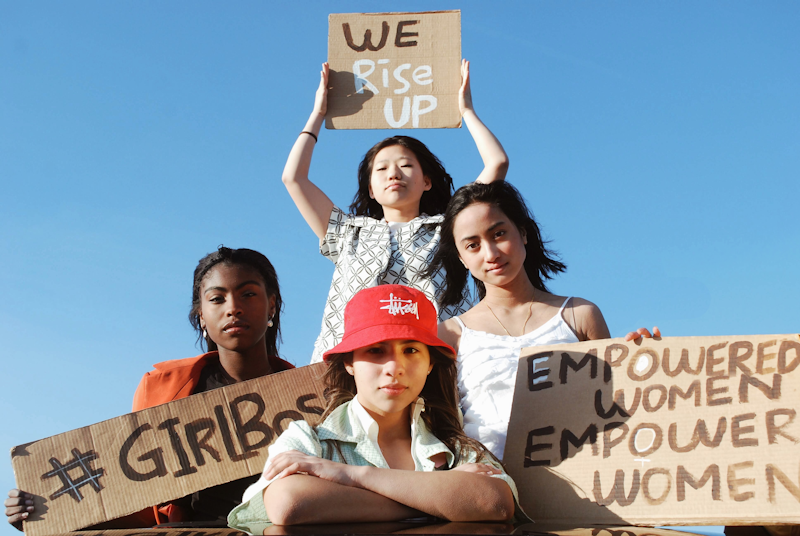
Matriarchy is a complex and often debated concept in the social sciences, primarily understood as a social system in which women hold the primary power and authority. This authority can manifest in various domains, including political leadership, moral influence, control over property, and decision-making within the household and community. While the term is sometimes colloquially used to describe societies with strong female figures, its scientific definition emphasizes a structural arrangement where women, collectively or individually, are the principal authority figures, either through birthright, marriage, or other societal mechanisms. Such systems challenge conventional assumptions about universal male dominance and offer alternative models for understanding human social organization, representing a significant area of inquiry in anthropology, sociology, and gender studies.
The fundamental mechanism behind a matriarchal society centers on the institutionalized empowerment of women across key societal structures. This often involves women being the heads of households, controlling lineage and inheritance, and holding significant positions in governance or religious life. Unlike merely influential women in a patriarchal system, in a matriarchy, female authority is normative and systemic. This arrangement frequently correlates with specific economic and kinship patterns, distinguishing it from societies where women merely enjoy high status or respect without ultimate decision-making power. The presence of such systems, though relatively rare in recorded history and modern times, provides crucial insights into the diverse possibilities of human social structuring and the plasticity of gender roles.
Historical and Anthropological Perspectives
The study of matriarchal societies has a rich, albeit controversial, history within anthropology and sociology, tracing back to 19th-century theories of social evolution. Early scholars like Johann Jakob Bachofen and Lewis Henry Morgan proposed stages of human development that included a primeval matriarchal phase, a hypothesis largely discredited due to lack of empirical evidence for a universal matriarchal stage. However, contemporary research, particularly from scholars like Sandra Harding (1991), focuses on existing or historically documented societies that exhibit pronounced matriarchal characteristics, rather than positing a global historical progression. These studies identify examples predominantly within hunter-gatherer societies, agrarian societies, and horticultural societies, where specific environmental, economic, and social conditions may have fostered such arrangements.
The origin of matriarchal ideas often stems from anthropological observations of societies where women hold significant economic power, especially in subsistence economies where female labor in cultivation or foraging is central to survival. This economic centrality can translate into social and political authority. For instance, in many horticultural societies, women are the primary cultivators, controlling food production and distribution, which provides them with considerable social leverage. The development of matriarchal or strongly matrifocal systems is frequently linked to specific kinship structures, particularly matrilineal kinship, where lineage and inheritance are traced through the mother’s line, rather than the father’s. This emphasis on the maternal line often elevates the status and authority of women within the family and broader community, shaping the overall social fabric.
Defining Characteristics of Matriarchal Systems
Matriarchal societies are fundamentally distinguished by a pervasive matrilineal kinship system, where family lines and inheritance are traced exclusively through females. This means that children belong to their mother’s clan, and property, names, and titles are typically passed down from mother to daughter. This contrasts sharply with patrilineal systems, where descent is traced through the male line, and succession passes from father to son. In a matrilineal context, the mother’s brothers often play a significant role in the upbringing and social guidance of children, sometimes even more so than the biological father, who may belong to a different lineage. This structural emphasis on the female line underpins much of the social organization, influencing everything from marriage patterns to residential arrangements and the distribution of power and resources within the community.
Beyond kinship, matriarchal societies often exhibit a distinct set of values that prioritize communal well-being, cooperation, sharing, and egalitarianism. These values frequently contrast with the hierarchical and individualistic tendencies sometimes associated with patriarchal systems. Female-centered values tend to foster social cohesion and mutual support, which are crucial for the survival and prosperity of the community. Decision-making processes in such societies might be more consensual and inclusive, with women playing a central role in mediating disputes, organizing communal activities, and ensuring the equitable distribution of resources. This emphasis on collective welfare and shared responsibility contributes to a social environment where the needs of all members, particularly women and children, are highly valued.
In these societies, women typically occupy the primary decision-making roles, wielding significant authority in both domestic and public spheres. This often means that women are the heads of households, controlling household budgets, managing communal resources, and making critical decisions about family matters, including marriage arrangements and the upbringing of children. In a broader societal context, women may hold positions of political, judicial, or spiritual leadership, shaping the laws, customs, and moral framework of the community. Men, while still contributing significantly to society, are often relegated to a secondary or supportive role in terms of ultimate authority and decision-making power. This distinction in roles creates a social dynamic that is markedly different from patriarchy, offering a unique lens through which to examine gender relations and power structures.
Illustrative Real-World Examples
One prominent example of a society exhibiting strong matriarchal characteristics is the Iroquois Confederacy of North America. In this indigenous society, clan mothers held immense political power, selecting the male chiefs who represented their clans in council. These clan mothers also had the authority to veto decisions made by the chiefs and could initiate their removal if they were deemed unfit. Property and lineage were strictly matrilineal, meaning homes, land, and children belonged to the mother’s clan. Women were central to agricultural production, controlling the cultivation and distribution of food, which provided them with significant economic leverage. Their roles were not merely symbolic but translated into tangible political and economic authority, demonstrating a sophisticated system of female-centered governance that ensured communal welfare and stability.
Another compelling case is the Minangkabau people of West Sumatra, Indonesia, who constitute the world’s largest matrilineal society. Their customary law, known as “adat,” dictates that land and houses are inherited by women, passing from mother to daughter. This system grants women significant economic security and social standing. While men typically hold formal political and religious leadership roles, women are the custodians of communal property and hold immense influence over family and village affairs, often operating through consensus. The traditional Minangkabau house, or “rumah gadang,” is owned by the female line, and it is the women who decide on its maintenance and use. This complex interplay of formal male leadership and foundational female authority illustrates a unique form of social organization where women’s economic power is paramount.
The Mosuo people of Yunnan and Sichuan provinces in China provide a fascinating contemporary example, often described as a society practicing “walking marriage.” In this system, men and women live in separate households, and romantic relationships are formed through consensual visits, without formal marriage or cohabitation. Children are raised in the mother’s household, belonging to her lineage, and are cared for by the women and their maternal male relatives (uncles). Women are the primary decision-makers within the household, controlling property, finances, and the upbringing of children. They are also central to economic production, particularly in agriculture and tourism. This unique social structure highlights a system where women’s autonomy and authority in both domestic and economic spheres are deeply embedded, offering a vivid illustration of how a female-centered social order can function distinctively from patriarchal norms.
Significance and Broader Impact
The study of matriarchal societies holds profound significance for the field of psychology and the broader social sciences, particularly in challenging deeply entrenched assumptions about the universality of patriarchy. By demonstrating that alternative social organizations are不仅 possible but have existed, these studies provide critical empirical evidence that human social structures are not predetermined by biological sex but are largely shaped by cultural, economic, and historical factors. This understanding helps to deconstruct essentialist views of gender roles and power dynamics, broadening our perspectives on human potential for diverse and equitable societies. The existence of matriarchal systems underscores the adaptability of human social organization and the capacity for cultures to develop models that prioritize different forms of authority and cooperation.
The insights gained from studying matriarchy are highly applicable today, especially in fields such as gender studies, feminist theory, and discussions surrounding social inequality. These concepts help in understanding how power is constructed and maintained in different societies, offering models for analyzing and potentially reforming existing social hierarchies. For instance, the emphasis on communal values, cooperation, and egalitarianism observed in some matriarchal societies can inspire new approaches to leadership, conflict resolution, and community building in contemporary contexts. Furthermore, by providing concrete examples of societies where women hold primary authority, these studies contribute to ongoing efforts to promote gender equality and challenge gender-based discrimination globally, illustrating that female leadership and decision-making can be foundational to a society’s well-being and stability.
Debates and Nuances in Matriarchal Research
Despite the compelling examples, the concept of matriarchy remains a subject of intense academic debate and scrutiny. A significant point of contention revolves around the strict definition of “matriarchy” as meaning “rule by mothers” or “female dominance.” Many scholars argue that while societies with strong matrilineal or matrifocal characteristics exist, there is little historical or anthropological evidence for widespread, direct female political and economic dominance that mirrors the oppressive nature of historical patriarchy. Instead, many so-called matriarchal societies often exhibit more egalitarian structures where power is shared or diffuse, rather than being concentrated solely in the hands of women in a way that subjugates men. This nuance is crucial to avoid simply reversing patriarchal assumptions about power dynamics.
Researchers often distinguish between matriarchy (female rule), matrilineality (descent through the mother’s line), and matrifocality (mother-centered households or families where the mother is the primary authority figure, but not necessarily extended to societal rule). While these terms are related, they describe distinct phenomena. Many societies that are labeled “matriarchal” are, more precisely, matrilineal and matrifocal, where women hold significant social, economic, and domestic power without necessarily exercising explicit political dominance over men at a state level. Understanding these distinctions is vital for accurate anthropological analysis and to prevent the romanticization or misrepresentation of these complex social systems, ensuring that discussions are grounded in empirical evidence rather than ideological projections.
The rarity of societies that unequivocally fit a strict definition of “matriarchy” also fuels scholarly caution. This rarity prompts questions about the conditions under which such systems can emerge and be sustained, as well as their long-term stability. Some theories suggest that matriarchal systems might be more prevalent in smaller-scale, less stratified societies, where economic power is more evenly distributed and kinship ties are paramount. As societies grow in complexity and stratification, there may be systemic pressures that favor patriarchal forms of organization. Therefore, ongoing research seeks to understand the specific historical, ecological, and social factors that contribute to the development and maintenance of these diverse social formations, rather than assuming a universal trajectory for gender relations.
Connections to Related Concepts and Fields
The study of matriarchy is intrinsically linked to several other core concepts within the social sciences. It stands in direct conceptual contrast to patriarchy, which describes a social system where men hold primary power and predominate in roles of political leadership, moral authority, social privilege, and control of property. The comparative analysis of these two systems is fundamental to understanding the breadth of human social structure and the varying ways societies organize power. Furthermore, matriarchy is deeply intertwined with concepts like matrilineality, which defines how descent and inheritance are traced, and gender roles, examining the culturally prescribed behaviors and responsibilities assigned to men and women. These connections highlight how societal organization profoundly influences individual lives and collective identities.
This area of study is primarily situated within the broader fields of Anthropology and Sociology, which systematically examine human societies, cultures, and social behavior. Anthropologists, particularly cultural anthropologists and ethnographers, conduct fieldwork to document and analyze the specific characteristics of societies, including their kinship systems, power structures, and gender relations. Sociologists, on the other hand, often focus on the broader societal implications, patterns of inequality, and the dynamics of social change. Additionally, Gender Studies provides a critical interdisciplinary lens, using insights from matriarchal societies to deconstruct normative assumptions about gender, power, and hierarchy, contributing to a more nuanced understanding of human social diversity and potential for equitable social arrangements.
Conclusion: The Enduring Relevance of Matriarchy
In conclusion, matriarchy, understood as a social system where women hold primary authority and decision-making power, represents a significant, albeit rare, form of human social organization. While not a universal historical stage, its existence in various hunter-gatherer societies, agrarian societies, and horticultural societies, exemplified by the Iroquois, Minangkabau, and Mosuo, provides crucial insights into the diversity and adaptability of human cultures. These societies are typically characterized by matrilineal kinship, female-centered values such as cooperation and egalitarianism, and women’s central roles in economic and social governance.
The implications of studying matriarchal systems are profound, challenging the pervasive notion of universal patriarchy and offering alternative frameworks for understanding gender roles, power distribution, and social inequality. While debates persist regarding the precise definition and prevalence of matriarchy versus matrilineal or matrifocal systems, these studies remain vital for enriching our understanding of human social potential. They underscore that societal structures are not immutable but are products of cultural choices and historical circumstances, inspiring ongoing efforts in anthropology and sociology to explore and appreciate the full spectrum of human social experience.