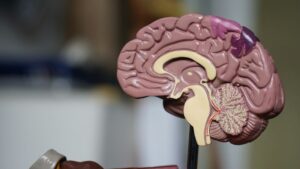
Psychometrics: Decoding the Human Mind
Scientifically Reviewed · Dr. Marwa Abd-Alazim · September 29, 2026
Review Criteria & Clinical Standards
This content undergoes rigorous scientific peer-review and medical editorial standards at Arab Psychology Network to ensure clinical accuracy, validity, and compliance with evidence-based guidelines from leading psychological and healthcare authorities (APA / WHO).

Historical Foundations and the Genesis of Psychometric Assessment
The scientific pursuit of measuring human intelligence began in the late 19th century, rooted in the burgeoning field of psychometrics. Early pioneers such as Sir Francis Galton were among the first to hypothesize that intellectual capacity could be quantified through rigorous empirical observation. Galton’s initial attempts focused on sensory-motor tasks, such as reaction time and physical acuity, under the assumption that a highly functioning nervous system would manifest as superior intelligence. While his specific methodology was later found to be insufficient for capturing the complexities of human cognition, his insistence on statistical analysis and the application of the normal distribution to human traits laid the essential groundwork for all subsequent psychological measurement. This era established the belief that intelligence was a measurable, innate characteristic that varied across the population in a predictable manner.
As the limitations of sensory-motor testing became apparent, the focus shifted toward higher-order mental processes. The transition from physical measurement to cognitive assessment was catalyzed by the social needs of the early 20th century, particularly within the educational systems of Europe. Researchers began to recognize that “intelligence” encompassed more than just rapid reflexes; it involved judgment, comprehension, and reasoning. This conceptual shift allowed for the development of tasks that required abstract thinking and problem-solving, moving away from the laboratory-bound experiments of the early psychophysicists. The formalization of these ideas required a standardized framework that could differentiate between various levels of cognitive ability among children of the same age.
The culmination of these early efforts led to the realization that intelligence testing required a balance of theoretical rigor and practical utility. The historical trajectory of intelligence measurement is characterized by a continuous refinement of what constitutes “general ability.” Scholars began to debate whether intelligence was a single, monolithic entity or a collection of distinct, independent faculties. This debate spurred the creation of diverse testing batteries designed to sample a wide array of mental activities. Consequently, the foundation of modern intelligence testing is built upon a century of evolving statistical techniques and a deepening understanding of the human mind’s capacity to process complex information.
The Binet-Simon Scale and the Evolution of the Stanford-Binet
In 1905, Alfred Binet and Théodore Simon introduced the first practical intelligence test, commissioned by the French government to identify students in need of alternative educational support. Unlike previous sensory-based tests, the Binet-Simon Scale utilized a series of tasks related to everyday life, such as naming objects, defining words, and following simple commands. Binet introduced the crucial concept of mental age, which allowed educators to compare a child’s actual performance against the average performance of children in specific age groups. This was a revolutionary development, as it provided a quantitative metric for assessing developmental progress and cognitive standing relative to one’s peers.
The Binet-Simon Scale was later adapted and expanded by Lewis Terman at Stanford University, resulting in the Stanford-Binet Intelligence Scales in 1916. Terman incorporated the Intelligence Quotient (IQ) formula, originally proposed by William Stern, which calculated IQ as the ratio of mental age to chronological age multiplied by 100. This modification standardized the scoring system and allowed for the comparison of individuals across different age groups. The Stanford-Binet became the gold standard for intelligence testing in the United States for decades, undergoing multiple revisions to improve its normative data and ensure that the test items remained relevant to contemporary society. It emphasized verbal reasoning and memory, reflecting the prevailing educational values of the time.
Modern iterations of the Stanford-Binet have moved beyond the simple ratio IQ to a more sophisticated point scale format. These versions assess five primary factors of cognitive ability, which include:
- Fluid Reasoning: The ability to solve novel problems without prior knowledge.
- Knowledge: The accumulation of general information and vocabulary.
- Quantitative Reasoning: The capacity to work with numbers and mathematical concepts.
- Visual-Spatial Processing: The ability to perceive and manipulate patterns and shapes.
- Working Memory: The short-term retention and manipulation of information.
The continued relevance of the Stanford-Binet lies in its high reliability and its ability to provide a comprehensive profile of an individual’s cognitive strengths and weaknesses. By utilizing a hierarchical model of intelligence, the test accounts for both a general factor of intelligence and specific cognitive domains, making it a versatile tool for clinical, educational, and research purposes.
The Wechsler Scales and the Shift to Deviation IQ
While the Stanford-Binet dominated the early 20th century, David Wechsler identified significant limitations in its application to adult populations. Wechsler argued that the concept of mental age became meaningless in adulthood and that the Stanford-Binet placed too much emphasis on verbal skills. In 1939, he released the Wechsler-Bellevue Intelligence Scale, which introduced the deviation IQ. This method replaced the ratio formula with a statistical comparison of an individual’s score against the mean score of their own age group. This innovation ensured that IQ scores remained stable across the lifespan, with a mean of 100 and a standard deviation of 15, providing a more accurate reflection of an individual’s relative standing in the population.
Wechsler’s approach also introduced a more balanced assessment of cognitive abilities by dividing the test into Verbal and Performance scales. This allowed clinicians to observe discrepancies between a subject’s linguistic capabilities and their non-verbal, manipulative abilities. For instance, a high performance score paired with a low verbal score might indicate a language-based learning disability or a cultural barrier rather than a lack of general intelligence. This multi-dimensional view of intelligence transformed psychological assessment into a diagnostic process that could identify specific neurological impairments or cognitive patterns. Today, the Wechsler family of tests includes the WAIS (for adults), the WISC (for children), and the WPPSI (for preschool-aged children).
The current versions of the Wechsler scales are organized into four primary indices that provide a nuanced view of the subject’s intellectual functioning. These indices are essential for a detailed clinical interpretation:
- Verbal Comprehension Index: Measures the ability to access and apply acquired word knowledge.
- Perceptual Reasoning Index: Measures non-verbal fluid reasoning and visual-spatial integration.
- Working Memory Index: Measures the ability to sustain attention and perform mental operations.
- Processing Speed Index: Measures the ability to perform simple clerical tasks quickly and accurately.
By analyzing the scores across these four indices, psychologists can derive a Full Scale IQ (FSIQ) while also noting significant variations that may suggest underlying psychological or physiological conditions. The Wechsler scales are currently the most widely used intelligence measures in the world, valued for their clinical utility and robust psychometric properties.
Theoretical Frameworks: From Spearman’s G to CHC Theory
The development of intelligence measures has been deeply influenced by theoretical debates regarding the structure of the human mind. Charles Spearman was a central figure in this debate, proposing the two-factor theory of intelligence. Through the use of factor analysis, Spearman observed that individuals who performed well on one type of cognitive task tended to perform well on others. He concluded that there is a single underlying trait, which he termed the general intelligence factor or g. According to Spearman, while specific tasks require specific abilities (s), the “g” factor represents the core mental energy that powers all intellectual activities. Most modern IQ tests are designed to capture this “g” factor as the primary indicator of cognitive potential.
In contrast to Spearman’s monolithic view, Raymond Cattell and John Horn proposed a more differentiated model, distinguishing between fluid intelligence (Gf) and crystallized intelligence (Gc). Fluid intelligence refers to the capacity to think logically and solve problems in novel situations, independent of acquired knowledge. It is often associated with physiological integrity and tends to decline with age. Crystallized intelligence, on the other hand, involves the use of skills, knowledge, and experience. It is the product of education and cultural exposure and typically remains stable or increases throughout the adult lifespan. This distinction has become fundamental in understanding how cognitive profiles change over time and how different environmental factors influence test scores.
The contemporary synthesis of these ideas is known as the Cattell-Horn-Carroll (CHC) theory, which is widely regarded as the most influential framework for current intelligence test construction. The CHC theory posits a hierarchical structure with “g” at the top, followed by several broad abilities (such as visual perception, auditory processing, and processing speed), and finally many narrow, specific abilities at the bottom. This model allows for a highly detailed assessment of intelligence, recognizing that while a general factor exists, human cognition is composed of diverse and specialized systems. Intelligence tests that align with CHC theory are better equipped to identify specific learning disabilities and giftedness by pinpointing exactly where an individual’s strengths and weaknesses lie within the hierarchy.
Group Testing and Large-Scale Cognitive Assessment
While individual intelligence tests like the WAIS and Stanford-Binet provide deep clinical insights, they are time-consuming and require highly trained administrators. To address the need for rapid assessment of large numbers of people, group intelligence tests were developed. The most famous early examples were the Army Alpha and Army Beta tests, created during World War I to assist the U.S. military in assigning recruits to appropriate roles. The Army Alpha was a written test for literate recruits, while the Army Beta used non-verbal tasks for those who were illiterate or non-English speaking. These tests demonstrated that intelligence testing could be scaled for mass application, influencing the subsequent use of standardized testing in schools and workplaces.
Group tests typically rely on multiple-choice formats and are designed for objective scoring. They are often used in educational settings to screen for students who may require special education services or to identify candidates for gifted programs. Examples of modern group tests include the Cognitive Abilities Test (CogAT) and various college entrance exams like the SAT and ACT, which, although categorized as aptitude tests, correlate highly with measures of general intelligence. The primary advantage of group testing is efficiency; however, it lacks the qualitative observation of the testing process that an individual assessment provides. A group test cannot account for a student’s anxiety, lack of motivation, or temporary distractions as effectively as a one-on-one session with a psychologist.
The reliance on group testing has sparked significant debate regarding the standardization of education and the potential for cultural bias. Critics argue that these tests often measure exposure to specific cultural knowledge rather than innate ability. Despite these criticisms, group tests remain a staple of institutional decision-making because of their predictive validity regarding academic and professional success. When used responsibly, they provide a cost-effective way to gather data on large populations, though most experts recommend that any high-stakes decision should be supplemented by an individual evaluation to ensure a comprehensive understanding of the person’s capabilities.
Psychometric Properties: Reliability, Validity, and Norming
For any measure of intelligence to be considered scientifically sound, it must possess strong psychometric properties, specifically reliability and validity. Reliability refers to the consistency of the test results. A reliable test will yield similar scores for an individual across different testing sessions, provided there have been no major changes in the individual’s status. This is often measured through test-retest reliability or internal consistency, where different parts of the same test are compared to see if they yield similar results. Without high reliability, an IQ score is essentially meaningless, as it would represent a random fluctuation rather than a stable trait.
Validity, perhaps the more critical component, refers to whether the test actually measures what it claims to measure. Construct validity ensures that the test items are theoretically aligned with the definition of intelligence. Predictive validity is the degree to which test scores can forecast real-world outcomes, such as academic achievement, job performance, or socioeconomic status. Decades of research have shown that IQ scores are among the strongest predictors of long-term success in Western societies, though they do not account for all variables, such as personality, motivation, or “grit.” Ensuring that a test is valid requires constant revision and the removal of items that may be biased or irrelevant to the construct of intelligence.
The process of norming is also vital to the accuracy of intelligence measures. Norming involves administering the test to a large, representative sample of the population to establish the average performance levels for different age groups. This normative sample must reflect the diversity of the population in terms of ethnicity, socioeconomic status, and geographic location. Because societal knowledge and environmental factors change over time, tests must be re-normed every few years. This ensures that a score of 100 always represents the current average of the population, maintaining the integrity of the IQ scale and allowing for accurate comparisons between individuals.
Socio-Cultural Considerations and the Flynn Effect
One of the most intriguing phenomena in the history of intelligence testing is the Flynn Effect, named after researcher James Flynn. This effect describes the substantial and long-sustained increase in intelligence test scores measured in many parts of the world over the 20th century. When older versions of IQ tests are given to modern samples, the modern subjects consistently score significantly higher. This suggests that “intelligence” as measured by these tests is not a fixed, biological constant but is heavily influenced by environmental factors. Potential causes for the Flynn Effect include improved nutrition, better healthcare, smaller family sizes, and the increasing complexity of the modern environment, which demands more abstract reasoning from an early age.
The Flynn Effect highlights the ongoing debate regarding cultural bias in intelligence testing. Critics argue that IQ tests are often designed by and for the dominant culture, potentially disadvantaging individuals from different backgrounds. For example, a test item that assumes familiarity with certain classical music or specific social customs may measure cultural capital rather than cognitive ability. To combat this, psychologists have developed “culture-fair” tests, such as the Raven’s Progressive Matrices, which use non-verbal, abstract patterns to assess fluid intelligence. These tests aim to minimize the influence of language and formal education, providing a more equitable measure of potential across diverse groups.
Despite these improvements, the interpretation of intelligence scores must always be done within a socio-cultural context. A low IQ score may not necessarily reflect a lack of innate ability but could be the result of systemic inequities, such as poor schooling, language barriers, or “stereotype threat”—a phenomenon where individuals perform worse on tests when they are at risk of confirming negative stereotypes about their social group. Therefore, modern practitioners are trained to view IQ scores as a single piece of a larger diagnostic puzzle, incorporating qualitative data and social history to provide a fair and accurate assessment of an individual’s true potential.
Modern Developments and the Future of Intelligence Testing
The field of intelligence measurement is currently undergoing a transformation driven by advances in neuroscience and technology. Researchers are increasingly looking for biological correlates of intelligence, such as brain volume, cortical thickness, and the efficiency of neural pathways. Neuroimaging techniques like fMRI and PET scans allow scientists to observe the brain in action as it performs cognitive tasks, providing a more direct view of the physiological basis of “g.” While we are not yet at a point where a brain scan can replace a standard IQ test, these biological measures offer a promising supplement that may eventually help to bypass the cultural and linguistic biases inherent in traditional paper-and-pencil assessments.
Furthermore, the integration of computerized adaptive testing (CAT) is changing how intelligence is measured in clinical and educational settings. Adaptive tests use algorithms to adjust the difficulty of questions based on the examinee’s previous answers. If a subject answers a question correctly, the next question is more challenging; if they answer incorrectly, the next question is easier. This method allows for a more precise estimation of ability in a shorter amount of time and reduces the frustration or boredom associated with tests that are too easy or too difficult. Additionally, virtual reality (VR) is being explored as a tool for measuring “real-world” problem-solving and executive function in a controlled, simulated environment.
As we look toward the future, the definition of intelligence continues to expand. There is growing interest in measuring emotional intelligence (EI), practical intelligence, and creativity—constructs that are not fully captured by traditional IQ scales. While the “g” factor remains the cornerstone of psychometrics, the next generation of intelligence measures will likely be more holistic, incorporating both cognitive and non-cognitive domains. The goal of these advancements is not just to rank individuals, but to provide a comprehensive map of the human mind that can be used to foster individual growth, optimize educational strategies, and deepen our understanding of the most complex phenomenon in the known universe.