Mechanical Intelligence: Mastering the Physics of Thought
Scientifically Reviewed · Dr. Marwa Abd-Alazim · August 25, 2026
Review Criteria & Clinical Standards
This content undergoes rigorous scientific peer-review and medical editorial standards at Arab Psychology Network to ensure clinical accuracy, validity, and compliance with evidence-based guidelines from leading psychological and healthcare authorities (APA / WHO).

Definition and Scope of Mechanical Intelligence
Mechanical Intelligence (MI) is defined fundamentally as the ability to understand and internalize mechanical relationships, enabling an individual to predict the behavior of physical systems, tools, and mechanisms. This cognitive aptitude involves a complex interplay of spatial reasoning, causal inference, and the application of implicit or explicit knowledge regarding fundamental physical laws, such as gravity, friction, leverage, and momentum. Unlike purely abstract reasoning, Mechanical Intelligence is inherently grounded in the tangible world, requiring the visualization of how parts interact under various forces and constraints. It represents a specialized form of intelligence crucial for navigating and manipulating the physical environment effectively.
The scope of Mechanical Intelligence extends far beyond complex machinery. While it is clearly necessary for designing jet engines or intricate robotics, it is equally vital for everyday tasks requiring spatial manipulation and prediction, such as assembling furniture, determining the correct orientation of a common tool, or understanding how a pulley system reduces the effort needed to lift a heavy object. This intelligence allows the individual to mentally model the operational process of a device, anticipating failures or successes without the need for physical experimentation. This mental simulation capacity is what differentiates high mechanical aptitude from mere familiarity with specific tools.
Furthermore, MI is often distinguished by its reliance on non-verbal problem-solving. Individuals with high mechanical aptitude frequently excel at interpreting blueprints, schematic diagrams, and three-dimensional representations of structures or systems. Their understanding bypasses linguistic description; they grasp the function intuitively by visualizing the transmission of energy and motion through interconnected components. This specific ability to translate visual input into dynamic conceptual models highlights MI as a distinct cognitive factor, essential for technical proficiency across a vast array of industrial and technical vocations.
Historical Context and Theoretical Foundations
The concept of Mechanical Intelligence began to emerge as a quantifiable factor during the early 20th century with the rise of psychometrics and the need to categorize aptitudes relevant to the industrial revolution. Early researchers recognized that success in technical trades and engineering roles was not solely predicted by measures of general intelligence (g) or verbal ability. Pioneers like Charles Spearman noted specialized factors, and eventually, researchers sought to isolate the specific cognitive functions related to the comprehension of physical apparatus. This led to the development of specialized tests designed to measure practical, non-academic problem-solving capabilities.
In later theoretical frameworks, Mechanical Intelligence found its place, often overlapping or being subsumed within broader constructs. For example, some models treat MI as a highly specialized application of Spatial Intelligence, emphasizing the ability to mentally rotate objects and maintain spatial orientation. Alternatively, MI aligns with elements of Howard Gardner’s Multiple Intelligences theory, specifically relating to logical-mathematical intelligence (in terms of applying physical laws) and potentially bodily-kinesthetic intelligence (in terms of the implicit understanding of manipulation and force). However, MI maintains its unique classification due to its specific focus on inanimate systems and their functional relationships, rather than abstract geometry or pure motor skill.
The theoretical foundation of MI rests heavily on the concept of perceptual-motor integration and schema formation. Individuals with high MI possess highly refined mental schemas—internal representations—of common mechanical principles (e.g., how levers work, the inverse relationship between gear size and speed). These schemas allow for rapid assimilation of new mechanical information and efficient troubleshooting. The theoretical shift in MI research moved from simply measuring the ability to identify tools (a knowledge test) to measuring the capacity for novel prediction and problem resolution based on visualizing the interactions within a system (a true intelligence test).
Components and Dimensions of Mechanical Reasoning
Mechanical reasoning is not a monolithic skill but rather a synthesis of several interlocking cognitive components. The primary dimension is Spatial Visualization, which allows the individual to mentally construct and manipulate three-dimensional objects and systems. This is critical for interpreting technical drawings and anticipating the results of changes in component layout. A second core component is the comprehension of physical principles, often referred to as implicit physics knowledge. This involves understanding fundamental concepts such as force transmission, torque, fluid dynamics, and thermodynamics, even if the individual cannot articulate the specific mathematical equations governing them.
A crucial and higher-level dimension of MI is Causal Inference. This component allows the individual to look beyond the immediate appearance of a mechanism and infer the operational sequence, determine the cause of a malfunction, or predict the effect of a specific intervention. For instance, when presented with a complex linkage system, high MI enables the rapid deduction of which initial movement leads to which final outcome. This requires linking the visual representation of the mechanism with established physical schemas, allowing for rapid and accurate diagnosis and problem-solving.
Furthermore, mechanical reasoning incorporates elements of System Analysis and pattern recognition. Effective mechanical intelligence requires the ability to break down a complex system into its constituent parts (gears, belts, levers, wires) and understand the isolated function of each part, while simultaneously maintaining a holistic view of how these parts integrate to achieve the system’s objective. This systemic approach is essential in fields where efficiency and failure prevention are paramount, ensuring that interventions are targeted and do not inadvertently compromise other parts of the mechanism.
Assessment and Measurement Tools
The measurement of Mechanical Intelligence is standardized using psychometric tests designed to assess the capacity for mechanical comprehension and reasoning. Perhaps the most widely recognized instrument is the Bennett Mechanical Comprehension Test (BMCT), which presents individuals with diagrams illustrating mechanical or physical principles and requires them to choose the correct outcome or effect. These tests typically focus on practical scenarios involving tools, motion, liquids, and structural stability, often requiring prediction regarding which object will be heavier, which gear will turn faster, or which system requires less force.
Effective measurement tools for MI rely heavily on visual stimuli rather than verbal instructions, minimizing the confounding effects of linguistic skill. Test items usually involve multiple-choice questions based on detailed schematics of systems such as pulleys, inclined planes, levers, and electrical circuits. The success of these assessments lies in their predictive validity: scores on established mechanical comprehension tests correlate strongly with success in technical training programs, skilled trades, and various engineering disciplines. They measure the inherent aptitude for mechanical problem-solving, distinguishing it from mere acquired vocational knowledge.
Other specialized instruments, such as the Differential Aptitude Tests (DAT) Mechanical Reasoning subtest, also contribute to the psychometric landscape of MI. These tests confirm that MI is a relatively stable trait, meaning that while training and experience can improve performance, a foundational level of mechanical aptitude is identifiable early in an individual’s development. The consistent performance across different standardized tests reinforces the view that Mechanical Intelligence represents a genuine and measurable cognitive factor distinct from general intelligence or verbal fluency.
Neurological Basis and Cognitive Processing
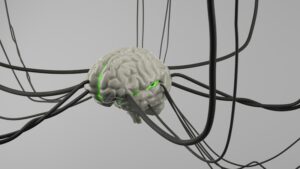
The cognitive processing underlying Mechanical Intelligence is distributed across several key areas of the brain, predominantly involving regions associated with spatial awareness, motor planning, and visualization. Research suggests a strong reliance on the Parietal Lobe, specifically areas dedicated to spatial mapping and the integration of sensory information. This region is critical for mental rotation and visualizing how objects move in three-dimensional space, skills fundamental to mechanical comprehension.
Central to high mechanical aptitude is the function of Mental Simulation. When confronted with a mechanical problem, the brain does not calculate forces mathematically but instead runs a rapid, internalized, quasi-physical model of the system. This simulation allows the individual to dynamically predict the result of an action (e.g., pulling a rope, turning a crank) by engaging motor planning areas, even without physical movement. This predictive capacity is highly efficient and minimizes the cognitive load associated with complex mechanical interactions.
Furthermore, the successful execution of mechanical reasoning requires robust connectivity between visual processing centers in the occipital lobe and conceptual knowledge centers in the temporal lobe. The brain must quickly match the visual input (the diagram or mechanism) with stored conceptual knowledge about how physical laws operate. Damage or deficits in these integrated networks can severely impair mechanical intelligence, even if general intelligence remains high, illustrating the specialized nature of this aptitude.
Relationship to Other Forms of Intelligence
While Mechanical Intelligence is often treated as a distinct construct, it shares significant relationships with, and overlaps substantially with, other established forms of intelligence. Its closest relative is Spatial Intelligence, the ability to perceive the visual world accurately and to perform transformations and modifications upon one’s initial spatial perceptions. MI is essentially spatial intelligence applied specifically to systems of force, motion, and function. While a person might have high spatial intelligence for art or navigation, high MI requires the additional layer of understanding physical causality.
The relationship to General Intelligence (g) is moderate. Studies consistently show that individuals with higher general cognitive abilities tend to score higher on mechanical aptitude tests, but the correlation is far from perfect. This moderate correlation validates the existence of MI as a specialized factor; if it were merely a reflection of ‘g,’ specialized testing would be unnecessary. This distinction is vital for vocational assessment, as an individual with moderate ‘g’ but high MI might outperform an individual with high ‘g’ but low MI in complex technical troubleshooting roles.
Moreover, MI interacts closely with Practical Intelligence and psychomotor skills. While MI is purely cognitive (the ability to understand), successful application often requires motor execution (the ability to fix). Engineers and skilled tradespeople require both a high degree of cognitive mechanical intelligence to diagnose the problem and refined psychomotor skills to execute the repair or construction accurately. Thus, MI serves as the cognitive foundation upon which practical, hands-on mechanical competency is built.
Developmental Trajectories and Training
The development of Mechanical Intelligence begins early in childhood through interaction with the physical environment. Activities such as playing with construction blocks, assembling simple toys, manipulating tools, and engaging with levers and pulleys lay the foundational cognitive schemas necessary for advanced mechanical reasoning. Early exposure to tangible problem-solving is crucial, allowing the brain to calibrate its internal physics engine through repeated feedback and experimentation. Children who are encouraged to dismantle and reassemble objects often show accelerated development in this area.
Formal training methods specifically target the enhancement of MI, particularly in educational pathways related to Science, Technology, Engineering, and Mathematics (STEM). Effective training often employs hands-on laboratory work, case studies involving complex mechanical failure analysis, and the use of computer simulations. Virtual reality and computer-aided design (CAD) environments are increasingly utilized to allow students to manipulate mechanical systems without the physical constraints or dangers of real-world equipment, accelerating the rate at which they internalize mechanical principles.
While some degree of mechanical aptitude may be innate—perhaps linked to inherent spatial processing capabilities—research indicates that Mechanical Intelligence is highly trainable. Targeted instruction that focuses on explicit teaching of physical laws, coupled with practical application and visualization exercises, demonstrably improves performance on standardized mechanical comprehension tests. This suggests that MI is not fixed but is rather a cognitive skill that can be significantly refined and expanded through systematic educational intervention and sustained engagement with mechanical tasks.
Practical Applications and Vocational Relevance
The vocational relevance of Mechanical Intelligence is profound, serving as a cornerstone aptitude for a wide spectrum of technical and professional careers. Individuals possessing a high level of MI are naturally drawn to, and excel in, fields requiring constant interaction with, and manipulation of, physical systems. Engineers typically have a high level of mechanical intelligence, which is essential for designing efficient structures, developing complex machinery, and solving unforeseen technical challenges during prototyping and manufacturing. This high aptitude allows them to mentally stress-test their designs before they are physically built.
Beyond traditional engineering disciplines (e.g., mechanical, aerospace, electrical engineering), MI is critical across skilled trades such as automotive mechanics, plumbing, welding, carpentry, and HVAC repair. In these vocations, the ability to quickly diagnose a fault based on limited sensory information—a specific sound, a vibration, or a visual distortion—requires the underlying cognitive ability to infer the internal mechanical relationships that led to the symptom. High MI significantly reduces diagnostic time and ensures that repairs are effective and permanent.
The economic importance of MI continues to grow, even in the age of automation. While robots perform the repetitive manual labor, the task of programming, maintaining, and troubleshooting these sophisticated automated systems still requires human oversight with exceptional mechanical aptitude. Robotics engineers, automation specialists, and advanced manufacturing technicians must possess a deep, intuitive understanding of force, linkage, and motion, ensuring that Mechanical Intelligence remains a highly valued and economically crucial cognitive asset in the modern workforce.
Criticisms and Future Research Directions
Despite the proven utility of MI testing, the field faces certain criticisms, primarily concerning the cultural fairness of traditional assessment methods. Critics argue that many standardized tests, such as the BMCT, rely on familiarity with Western industrial artifacts and mechanisms (e.g., specific types of pulleys, gears, or tools), potentially disadvantaging individuals from backgrounds with limited exposure to such machinery. Future test development must prioritize culturally neutral designs that measure inherent aptitude for understanding physical principles rather than specific, learned knowledge about industrialized tools.
Another area requiring future research involves the integration of MI assessment with modern technology. Traditional paper-and-pencil tests, while reliable, may not fully capture the dynamic nature of mechanical reasoning in real-time, interactive environments. Research is moving toward developing dynamic, computer-based assessments that require test-takers to actively manipulate virtual mechanisms and respond to feedback, providing a more comprehensive measure of their mental simulation capabilities and troubleshooting effectiveness.
Finally, future neurocognitive research will focus on isolating the precise neural networks responsible for the intuitive application of physics knowledge. Understanding how the brain develops and refines its internal “physics engine” could lead to highly targeted educational interventions designed to maximize mechanical aptitude in students. This research will also explore the interaction between haptic feedback and visualization, determining how the sense of touch contributes to the cognitive internalization of mechanical relationships and principles.