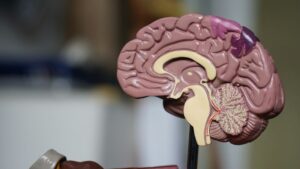
Medial Orientation: Finding Your Internal Center
Scientifically Reviewed · Dr. Marwa Abd-Alazim · September 8, 2026
Review Criteria & Clinical Standards
This content undergoes rigorous scientific peer-review and medical editorial standards at Arab Psychology Network to ensure clinical accuracy, validity, and compliance with evidence-based guidelines from leading psychological and healthcare authorities (APA / WHO).
Introduction to Medial Terminology
The term medial serves as a foundational directional descriptor within anatomy and physiology, indispensable for accurately mapping and communicating the locations of structures within the body or any specific organ system. Fundamentally, the use of medial implies a position or movement that is toward the middle or midline of the body, distinguishing it from peripheral or external positions. This concept is derived directly from the body’s established reference point, known as the anatomical position, where the individual stands upright, facing forward, with arms at the sides and palms facing forward. Without this standardized language, clinical descriptions of anatomical relationships, surgical planning, and physiological reporting would suffer from dangerous ambiguity, making the precise application of terms like medial critical for effective medical communication and scientific rigor.
Understanding medial requires an appreciation for the conceptual division of the body into symmetrical halves. When a structure is described as medial to another, it means that the first structure is closer to this imaginary central dividing line than the second. For example, the nose is medial to the ears, as it lies closer to the center of the head. This comparative nature of the term is crucial; medial is not an absolute location but a relative description, used in tandem with other directional terms to precisely triangulate the position of nerves, vessels, muscles, or cortical regions. The reliance on relative positioning ensures that the description remains accurate regardless of the body’s posture or orientation, consistently referencing the inherent midline axis established by the skeletal structure.
In the context of specialized fields like neuroanatomy, where structures are highly compact and intricately connected, the precise use of medial becomes even more paramount for psychological research and clinical neuroscience. Identifying whether a lesion, activation site, or pathway is positioned medially or laterally can define the resulting functional deficits or behaviors observed. For instance, damage to the medial temporal lobe involves structures critical for memory consolidation, whereas damage to more lateral aspects might affect auditory processing or language comprehension. Therefore, medial functions not merely as a simple geographical indicator but as a key determinant in classifying the functional organization of complex biological systems, ensuring clarity when discussing the central nervous system’s organization and pathology.
The Central Role of the Median Plane
The definition of medial is inextricably linked to the concept of the median plane, also known as the midsagittal plane. This specific anatomical plane is a conceptual vertical slice that divides the body precisely into equal left and right halves, running directly through the center of the skull, the vertebral column, and the navel. The median plane establishes the definitive reference point for the midline, against which all other structures are measured when using medial terminology. Any structure that lies directly on this plane, such as the nasal septum or the spinal cord, is considered median, and any structure moving toward this plane is moving in a medial direction.
While the median plane provides the absolute midline, it is often grouped under the broader category of sagittal planes, which are any planes parallel to the median plane. However, only the midsagittal plane dictates the true center necessary for defining medial relationships accurately. When comparing two structures within the same body segment, the structure closer to this central axis is designated as medial. This directional framework ensures consistency across all anatomical studies, allowing professionals globally to interpret spatial descriptions identically, whether they are discussing the position of a tumor relative to the aorta or the placement of an electrode relative to the corpus callosum. The strict reliance on this central axis prevents misinterpretation arising from natural variations in body morphology or size.
The conceptual importance of the median plane extends beyond simple description; it underlies the functional symmetry and often the bilateral organization inherent in human and animal anatomy. Most major organ systems, including the nervous system and musculature, display bilateral symmetry relative to this plane. Even in structures that cross the midline, such as nerve tracts, their trajectory is often defined by their relationship to the median axis. Thus, describing a structure as medial is simultaneously defining its proximity to this axis of symmetry, implying functional and structural relationships that are fundamental to human biology and the study of psychology, particularly in areas dealing with hemispheric specialization and the integration of sensory information across the midline.
Application in Gross Anatomy
In the study of gross anatomy, the term medial is routinely applied to describe the relative positions of components within the torso and the appendages. For example, when examining the upper limb, the ulna bone, located on the little finger side of the forearm, is described as medial relative to the radius bone, which is on the thumb side, assuming the arm is in the standard anatomical position. This is because the ulna is closer to the imaginary midline running down the body when the palms are facing forward. Similarly, in the lower limb, the tibia (shin bone) is medial to the fibula, as it bears the weight and is positioned closer to the central axis of the body. These descriptors are essential for identifying bones, tracking muscle origins and insertions, and locating major vascular and nervous pathways.
When discussing musculature and fascial compartments, medial descriptions define functional groups. For instance, the adductor muscles of the thigh are often grouped into the medial compartment because their collective function is to draw the limb medially toward the midline, a movement known as adduction. Conversely, muscles positioned more laterally perform abduction, moving the limb away from the midline. This organizational principle based on directional terminology provides a clear mnemonic framework for students and practitioners alike, linking location directly to function. Furthermore, when describing the location of specific nerves or arteries, such as the medial cutaneous nerve, the name itself signifies its course or distribution relative to the central axis of the body part it supplies, providing immediate locational context crucial for diagnosis of nerve entrapments or vascular injuries.
The consistency of medial application is vital when transitioning from one segment of the body to another. For example, while describing structures in the thorax, the heart is situated medial to the lungs, occupying the central compartment known as the mediastinum, which itself is defined by its position near the median plane. Even within large, complex organs, such as the kidney, the hilum—the entry and exit point for vessels and the ureter—is typically located on the medial side, facing the vertebral column. This consistent usage across macroscopic structures ensures that the positional language remains universally applicable, providing a robust system for detailing the complex spatial relationships necessary for comprehending the body’s structure and predicting the physiological consequences of structural deviations or pathological changes.
Medial Structures in Neuroanatomy
In the intricate domain of neuroanatomy, the term medial is used extensively to delineate critical structures within the central nervous system, many of which are deeply involved in complex cognitive and emotional processes studied in psychology. A prime example is the medial prefrontal cortex (mPFC), a region essential for executive functions, self-referential processing, and social cognition. Its medial position, lying closest to the longitudinal fissure that divides the cerebral hemispheres, distinguishes it functionally and structurally from the lateral prefrontal areas, which are typically involved in object-based working memory. Understanding the precise medial location allows researchers to accurately target these areas using functional magnetic resonance imaging (fMRI) or transcranial magnetic stimulation (TMS) during psychological experiments.
Another profoundly significant medial structure is the medial temporal lobe (MTL), which houses the hippocampus and the amygdala, core components of the limbic system. The hippocampus, crucial for forming new long-term memories, is situated deeply within the temporal lobe, close to the midline axis of the brain. The profound psychological implications of this medial positioning were highlighted by classic case studies in amnesia, demonstrating that localized damage to these deep, medial structures results in severe deficits in declarative memory. Similarly, the amygdala’s role in emotional processing and fear conditioning underscores the importance of precisely mapping these medial regions when investigating affective disorders and anxiety, as their function is intimately tied to their central location.
Furthermore, throughout the brainstem and spinal cord, nuclei and fiber tracts are consistently described using medial and lateral coordinates to identify pathways responsible for motor control and sensory relay. For instance, the medial lemniscus is a large ascending sensory tract that carries touch and proprioceptive information, maintaining a distinct position relative to other tracts. The precision afforded by medial terminology is vital in clinical neurology for localizing lesions. If a patient presents with specific sensory or motor deficits, knowing which tracts run medially versus laterally within the brainstem allows clinicians to pinpoint the exact location of stroke or trauma, thereby connecting anatomical location directly to predicted functional deficits based on established neuroanatomical maps.
Medial Versus Lateral: A Crucial Distinction
The concept of medial is most effectively understood when contrasted directly with its directional opposite: lateral. While medial describes a position closer to the midline, lateral describes a position farther away from the midline, or toward the side of the body. These two terms form an indispensable pair in anatomical description, allowing for the definition of a clear axis of movement and spatial relationship in three dimensions. For example, the eye is lateral to the nose, and conversely, the nose is medial to the eye. This necessary duality ensures that all structures can be positioned accurately relative to the central axis of symmetry.
The distinction between medial and lateral compartments often defines functional specialization in both musculoskeletal and neurological systems. In the leg, the medial compartment generally handles adduction, pulling the limb in, whereas the lateral compartment handles abduction, pushing the limb out. This organizational principle is mirrored in the peripheral nervous system, where nerves often follow specific medial or lateral paths. For example, the medial plantar nerve supplies structures closer to the arch of the foot, while the lateral plantar nerve supplies structures closer to the outer edge of the foot. Misidentification of these paths can lead to incorrect surgical interventions or diagnostic errors related to nerve impingement syndromes.
In psychological and neurological contexts, the medial-lateral axis is critical for defining hemispheric specialization and the functional dissociation of cortical areas. Many cognitive processes are distributed along this axis. For instance, while certain aspects of language processing are often lateralized (found predominantly on one side), regions critical for theory of mind and self-referential thought often cluster in medial cortical areas. This structural separation suggests divergent evolutionary pressures and functional roles for medial versus lateral regions. Accurate reporting of whether activation patterns are medial or lateral within brain imaging studies is essential for replicating research and advancing theories regarding the structural basis of human cognition and emotion.
Clinical Significance of Medial Positioning
The precise understanding of medial positioning holds profound clinical significance, particularly in diagnostics, surgical planning, and the prediction of symptomology. When pathology occurs, its location relative to the midline often dictates the severity and type of functional impairment. For example, a medial disc herniation in the spine, meaning the ruptured disc material is pushing toward the center of the spinal canal, is often more dangerous than a lateral herniation because it can compress the central components of the spinal cord or cauda equina, leading to bilateral motor and sensory deficits or even paralysis, whereas lateral herniations typically affect only a single nerve root.
In cardiovascular medicine, the location of major vessels relative to the midline is critical. The aorta, being the largest artery, runs medially down the posterior abdominal cavity, making its integrity central to overall systemic circulation. Surgical procedures involving the mediastinum (the medial thoracic compartment) require meticulous knowledge of the medial relationships of the heart, great vessels, and trachea to avoid catastrophic injury. Furthermore, in trauma cases, determining the trajectory of penetrating injuries based on entry and exit points requires constant reference to the body’s medial axis to predict which deep, medial structures might have been compromised, such as the vena cava or the spinal cord itself.
The concept of medial positioning is also fundamental in orthopedics and physical therapy. Injuries to ligaments and tendons are often classified based on their location relative to the midline of a joint. A common example is the medial collateral ligament (MCL) of the knee, which stabilizes the joint against forces pushing it from the lateral side. Knowledge of the MCL’s precise medial attachment points guides the diagnosis of tears and dictates the specific rehabilitation exercises designed to strengthen the surrounding muscles that provide medial support, ensuring targeted and effective treatment protocols aimed at restoring functional stability.
Related Directional Terminology
While medial and lateral define the relationship along the central-peripheral axis, they are part of a larger, integrated lexicon of anatomical directional terms that provide a comprehensive spatial map of the body. These terms are often used in conjunction with medial to provide a complete three-dimensional description. Essential complementary terms include superior (toward the head or upper part) and inferior (toward the feet or lower part), which define the vertical axis, and anterior (toward the front) and posterior (toward the back), which define the front-to-back axis. A structure may be simultaneously medial, superior, and anterior to another, requiring the combined use of these terms for accurate localization.
Another critical pair of terms, especially when discussing appendages, are proximal and distal. Proximal means closer to the point of attachment or the trunk of the body, while distal means farther away from the point of attachment. Although these terms describe distance along the limb axis, they often interact with medial descriptions. For example, the elbow is proximal to the wrist, but within the forearm, the ulna is the medial bone. The integration of all these terms ensures that complex relationships, such as the course of nerves or blood vessels winding around bones, can be described with unambiguous clarity, irrespective of the scale of the structure being examined, from microscopic cellular layers to macroscopic organ systems.
The standardized use of medial and its counterparts eliminates the ambiguity of everyday language, which might vary depending on context or observer perspective. Terms like “above,” “below,” “inside,” and “outside” are inherently relative to the environment, whereas medial, lateral, superior, and inferior are fixed relative to the body’s own internal anatomical axes. This formal, systematic terminology is a cornerstone of medical education and practice, ensuring that a description generated in one hospital or research lab is instantly and accurately comprehensible in any other, thereby maintaining the highest standards of scientific and clinical communication across all disciplines dealing with biological structure.