Memory Traces: How Your Brain Maps Every Experience
Scientifically Reviewed · Dr. Marwa Abd-Alazim · October 18, 2026
Review Criteria & Clinical Standards
This content undergoes rigorous scientific peer-review and medical editorial standards at Arab Psychology Network to ensure clinical accuracy, validity, and compliance with evidence-based guidelines from leading psychological and healthcare authorities (APA / WHO).
The Core Definition of Memory Trace
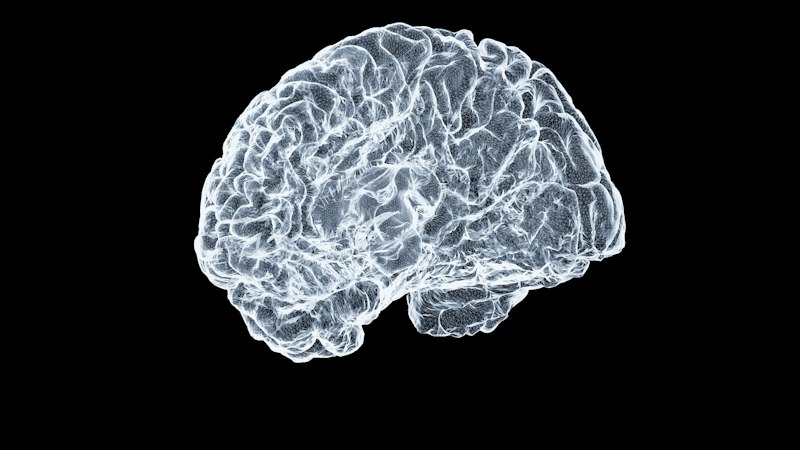
The concept of the memory trace, often referred to by the technical term engram, represents the hypothetical physical or biochemical change that occurs in the nervous system when a memory is formed or stored. In its simplest form, it is the fundamental mechanism underlying the retention and recall of information, experiences, and learned behaviors. While the term may seem abstract, it is deeply rooted in neuroscience, suggesting that every new piece of information converts external environmental stimuli into a persistent internal code within the brain structure. This code is not a single location but rather a distributed network of interconnected neurons that collectively store the memory, a principle essential for understanding how human beings learn and adapt over time.
The fundamental principle driving the establishment and maintenance of the memory trace is neuronal plasticity. This refers to the brain’s remarkable ability to reorganize itself by forming new synaptic connections or strengthening existing ones throughout life. When a particular experience is encoded, specific neuronal pathways are repeatedly activated. This repeated activation leads to long-lasting functional changes at the synaptic level, making it easier for the signal to travel along that same pathway in the future. The strength and resilience of the memory trace are directly proportional to the degree of these physical changes, explaining why frequently accessed or emotionally significant memories are often easier to retrieve than fleeting, trivial ones.
Memory trace applies equally to both short-term and long-term memory systems, although the physical substrates for each differ significantly. Short-term memory relies on temporary electrical activity and chemical signaling, essentially a transient activation of a neural circuit. Conversely, a true, durable memory trace—the long-term engram—requires structural changes, including alterations in protein synthesis and gene expression, which physically anchor the information in the neural architecture. Therefore, the memory trace is not a static entity but a dynamic process that evolves from immediate sensory input into a consolidated, long-lasting neural configuration, constantly subject to processes of reinforcement, modification, or decay.
Historical and Conceptual Origins
The search for the physical location of memory is one of the oldest quests in psychology and neuroscience. The modern concept of the memory trace originated with German zoologist and memory researcher Richard Semon in the early 20th century (1904), who formally coined the term “engram” to describe the permanent change wrought by an excitation event in the nervous system. Semon posited that when a stimulus creates a memory, it leaves a lasting physical trace, though he lacked the technological means to identify this trace at a cellular level. His work provided the initial theoretical framework, distinguishing the experience itself from the physical remnant left behind in the biological system.
Following Semon, the influential American psychologist Karl Lashley dedicated decades (mid-20th century) to experimentally finding the engram. Lashley conducted extensive lesion studies on rats, systematically removing parts of their cerebral cortex after they had learned complex tasks, such as navigating mazes. His surprising conclusion was that no single area of the cortex could be permanently identified as the locus of a specific memory. He proposed the principles of “mass action” and “equipotentiality,” suggesting that memory was distributed across the cortex, and the severity of memory deficit was correlated with the amount of tissue removed, not its specific location. While Lashley failed to pinpoint a discrete trace, his work profoundly shaped subsequent research by forcing scientists to consider memory storage as a distributed network phenomenon rather than localized storage.
The theoretical gap left by Lashley was brilliantly filled by Donald Hebb in 1949, who proposed a mechanism for how the trace might be formed at the cellular level. Hebbian theory, famously summarized as “neurons that fire together wire together,” provided the crucial explanatory link between experience and structural change. Hebb proposed that simultaneous activity in presynaptic and postsynaptic neurons strengthens the synaptic connection between them. This strengthening—the process now known as Long-Term Potentiation (LTP)—is widely accepted as the physiological mechanism by which temporary associations become durable components of the memory trace (2). Thus, the history of the memory trace moved from philosophical speculation (Semon) to macroscopic localization failure (Lashley) to microscopic cellular explanation (Hebb’s rule).
The Tripartite Process of Memory Trace
The complete life cycle of a memory trace involves three critical processes: encoding, storage (or consolidation), and retrieval. Encoding is the initial conversion phase, where information from the external environment is transformed into a neural code that the brain can process and store. This is not a passive recording; it is an active, selective process involving attention and interpretation. Effective encoding determines the initial quality and strength of the trace, involving the activation and organization of vast neuronal populations. Factors such as depth of processing, relevance, and emotional context significantly modulate how well the initial trace is laid down. Poor encoding often results in a weak trace that cannot survive the subsequent stages.
Storage, or consolidation, is the process during which the newly formed neural trace is stabilized and integrated into the long-term memory network. This process involves structural changes, often occurring during periods of rest or sleep, where the temporary neural activity in the hippocampus is gradually transferred and permanently stored across distributed regions of the cerebral cortex. The durability of the memory trace (3) is established during consolidation, where the synaptic changes are physically maintained through molecular mechanisms, making the memory resistant to disruption. Without successful consolidation, the trace remains fragile and is quickly lost.
The final stage is retrieval, the conscious or unconscious process of recalling previously stored information. Retrieval involves reactivating the specific neural pathways that constitute the memory trace. This phase demonstrates the utility of the trace; if retrieval is successful, the information is brought back into conscious awareness. However, retrieval is highly susceptible to interference, which is a major cause of forgetting. Interference occurs when the retrieval cue activates competing memories or when the stored information is obscured by the presence of other, similar memory traces, leading to errors or complete failure to recall. This can be either proactive (old memories hindering new ones) or retroactive (new memories hindering old ones).
Neural Basis and Physical Substrate
The physical reality of the memory trace is fundamentally linked to the intricate architecture of the brain, particularly the medial temporal lobe structures. The hippocampus plays a critical, time-limited role in encoding and consolidating new declarative (explicit) memories. It acts as an index, binding together the various cortical components of a memory—the visual elements, auditory sensations, and emotional details—which are distributed across different cortical areas. Damage to the hippocampus typically prevents the formation of new long-term traces (anterograde amnesia) but leaves established, older traces intact, suggesting its role is temporary and instructional rather than permanent storage.
The actual long-term storage of the memory trace is believed to reside in the cerebral cortex, distributed across areas relevant to the sensory modality of the information (e.g., visual memories in the visual cortex). The physical change that makes storage possible is known as Long-Term Potentiation (LTP), a long-lasting enhancement of synaptic transmission between two neurons resulting from synchronized stimulation. LTP involves molecular cascades, including the movement of specific receptors (like NMDA and AMPA receptors) to the synaptic membrane and changes in dendritic spine morphology. These lasting molecular and structural modifications embody the physical memory trace, allowing the neural circuit to fire more efficiently and permanently.
Modern research employing techniques such as optogenetics has begun to physically isolate and manipulate specific memory traces in animal models. Scientists can now tag the specific neurons activated during learning and subsequently reactivate or suppress those same neurons using light, effectively turning the memory trace on or off. This work confirms that the memory trace is indeed a definable, biologically specific population of neurons—often referred to as a “memory ensemble”—distributed across interconnected brain regions, validating Semon’s century-old hypothesis about the existence of the engram.
Real-World Manifestation: A Practical Example
To illustrate the complete process of the memory trace, consider the scenario of a student studying complex material for a history exam, specifically focusing on the causes of a major historical event. This process requires creating a robust declarative memory trace that is resistant to forgetting.
-
Encoding and Initial Trace Formation: The student reads the textbook and lecture notes (external information). To create a strong initial trace, they use deep processing techniques, such as relating the new information to existing knowledge or creating mental images (elaboration). The sensory input (words on the page) is converted into neural codes in the sensory cortex, and the hippocampus binds these codes together into a temporary, integrated trace. If the student is distracted by their phone or music, the selective attention required for strong encoding is compromised, resulting in a fractured or weak initial memory trace.
-
Consolidation and Strengthening: The student sleeps after studying. During slow-wave sleep, the hippocampus “replays” the encoded patterns, communicating them to the neocortex. This repeated activation strengthens the synaptic connections (LTP) in the cortical areas, stabilizing the trace and making it independent of the hippocampus. This consolidation transforms the temporary neural activation into a durable physical change—the memory trace is successfully anchored.
-
Retrieval and Interference Management: The student takes the exam the following day. When presented with a question, their brain attempts to reactivate the specific neural ensemble that constitutes the memory trace. Successful retrieval means the pathway is activated efficiently. However, if the student also studied material from a conflicting, previous history course (proactive interference), or if they were highly stressed before the test, the retrieval process is hindered. The stress hormones may temporarily impair hippocampal function, reducing the efficiency of trace reactivation, leading to a “blanking” experience despite the trace being physically present. The successful application of the memory trace depends entirely on the integrity of all three stages.
Factors Affecting Trace Integrity
The integrity and accessibility of the memory trace are highly sensitive to various internal and external factors. As indicated by research, the interplay between cognitive processes and physiological states is crucial. For instance, a study by Kline and colleagues (2019) highlighted that stress significantly impacts the memory trace, particularly impairing the processes of consolidation and retrieval. When an individual experiences acute stress, the release of hormones like cortisol acts directly on the brain, especially the hippocampus (2), disrupting the precise molecular mechanisms necessary for stabilizing synaptic changes and increasing susceptibility to interference.
External factors, such as environmental noise and distraction, primarily affect the initial encoding phase. When attention is divided, the depth of processing is reduced, resulting in a shallow, poorly defined initial trace that is prone to rapid decay. Conversely, internal factors like strong emotions can either enhance or impair the trace. Moderate emotional arousal can lead to flashbulb memories, where the trace is powerfully enhanced by adrenaline and amygdala activity. However, overwhelming negative emotions, such as those associated with trauma, can sometimes lead to disorganized or fragmented traces, complicating later retrieval, a pattern often observed in conditions like PTSD.
Furthermore, physiological factors such as fatigue, lack of sleep, and poor nutrition directly undermine the biological processes required for trace maintenance. Sleep deprivation specifically impairs the consolidation phase, preventing the essential transfer of information from the temporary hippocampal index to long-term cortical storage, thus leaving the trace vulnerable. The practical implication derived from this research is that trace integrity can be actively managed. Strategies such as ensuring a calming environment during learning and employing physiological regulation techniques, like deep breathing and visualization, can minimize the disruptive effects of stress on the encoding and memory trace (4) retrieval processes.
Clinical Significance and Applications
The concept of the memory trace is central to understanding and treating numerous neurological and psychological disorders. In clinical neuropsychology, deficits in trace formation or retrieval are key features of various forms of amnesia. For example, damage to the medial temporal lobe prevents the creation of new memory traces, while certain neurodegenerative diseases like Alzheimer’s may involve the gradual degradation and eventual loss of established traces due to amyloid plaque buildup and resulting synaptic failure.
In therapeutic settings, the understanding of the memory trace is leveraged to modify problematic memories. Techniques used in cognitive behavioral therapy (CBT) and specialized trauma treatments aim to retrieve and then actively reconsolidate negative memory traces. When a trace is retrieved, it temporarily becomes labile (unstable) again. Therapists use this window of instability to introduce new information or emotional context, potentially altering the trace before it is stored again. This process is crucial for reducing the emotional intensity associated with traumatic memories, offering a direct mechanism for recovery from disorders like PTSD.
Beyond clinical applications, the memory trace principle informs educational strategies. Techniques that necessitate active retrieval, such as quizzing or flashcards, strengthen the trace by forcing the neural pathways to be repeatedly reactivated. Spaced repetition, where review sessions are intentionally spread out over time, is effective because it forces the trace to be recalled just before it naturally decays, requiring a stronger, more effortful reactivation that enhances synaptic strengthening and long-term retention.
Related Concepts and Theoretical Context
The memory trace exists within the broader theoretical framework of Cognitive Psychology and Cognitive Neuroscience. It is intricately linked to several related concepts:
-
Consolidation: This is the process that converts the initial transient neural activity into the long-lasting memory trace. Consolidation is the necessary biological activity that establishes the physical reality of the engram.
-
Working Memory (Short-Term Memory): Unlike the memory trace, which refers to stored, long-term structural changes, working memory involves the temporary, active manipulation of information. Working memory relies on transient electrical activity and synchronized firing in neural ensembles, but it does not require the permanent synaptic changes that define the true memory trace.
-
Priming: This phenomenon, often studied in cognitive experiments, demonstrates the unconscious activation of a memory trace. If a person is exposed to a stimulus (e.g., the word “doctor”), their response time to a related stimulus (e.g., “nurse”) will be faster, indicating that the initial exposure subtly activated or pre-sensitized the corresponding neural trace without full conscious awareness.
Ultimately, the study of the memory trace bridges the gap between the psychological experience of remembering and the underlying biological machinery. It is a fundamental concept for cognitive neuroscientists seeking to understand how mental processes are physically implemented in the brain, validating the idea that every piece of knowledge we possess corresponds to a specific, measurable alteration in our biological structure.