Mesopic Vision: The Bridge Between Light and Dark
Scientifically Reviewed · Dr. Marwa Abd-Alazim · September 30, 2026
Review Criteria & Clinical Standards
This content undergoes rigorous scientific peer-review and medical editorial standards at Arab Psychology Network to ensure clinical accuracy, validity, and compliance with evidence-based guidelines from leading psychological and healthcare authorities (APA / WHO).
The Fundamental Nature of Mesopic Vision
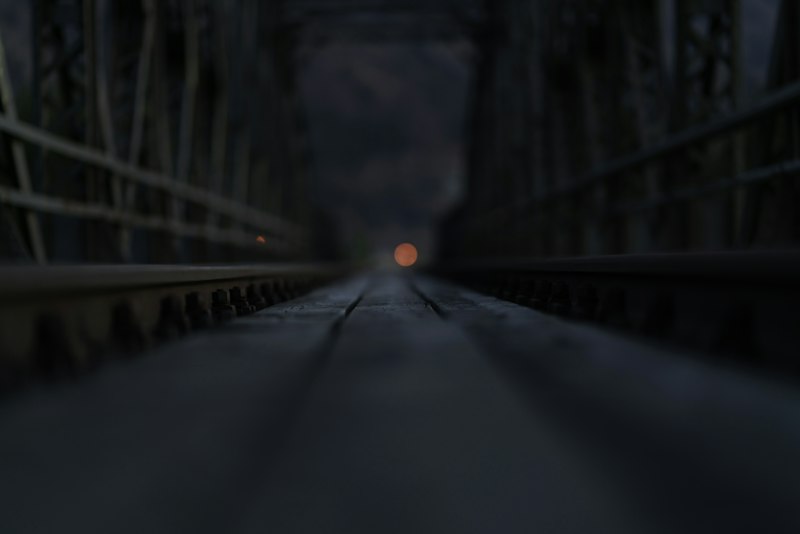
Mesopic vision represents a unique and complex intermediate state of human visual perception that occurs under lighting conditions neither fully dark nor fully bright. In the hierarchy of visual systems, it occupies the transition zone between scotopic vision, which is mediated by rods in near-total darkness, and photopic vision, which is driven by cones in well-lit environments. This transitional phase typically corresponds to luminance levels ranging from approximately 0.001 to 3.0 candelas per square meter. Such conditions are frequently encountered in natural settings during twilight hours—specifically at dawn and dusk—and in modern artificial environments, such as street lighting on urban roadways and dimly lit interior spaces like cinemas or restaurants.
The complexity of the mesopic range arises from the simultaneous activity of both rod and cone photoreceptors. Unlike the photopic state where rods are saturated and non-functional, or the scotopic state where cones lack sufficient photons to trigger a response, the mesopic state requires the central nervous system to integrate signals from two distinct physiological pathways. This integration is not a simple linear summation; rather, it involves intricate neural interactions that change dynamically as the ambient light level fluctuates within the mesopic boundaries. Consequently, visual performance in this range is highly variable, characterized by shifts in color perception, spatial resolution, and motion detection that do not align perfectly with either the day or night visual systems.
Understanding mesopic vision is critical for various fields, including ophthalmology, psychology, and lighting engineering. Because most outdoor human activity at night occurs within this luminance range, the limitations of the mesopic system have profound implications for public safety and design. Traditional photometric measurements have historically struggled to accurately represent human visual efficacy in this range, as standard models were often based solely on the photopic response. Recent research has focused on developing more accurate mesopic luminous efficiency functions to better predict how the human eye perceives brightness and detail when both photoreceptor types are competing for dominance in the visual cortex.
Physiological Mechanisms and Photoreceptor Interaction
The physiological basis of mesopic vision lies in the duplex retina, which contains roughly 120 million rods and 6 million cones. During the mesopic transition, the metabolic and electrical activity of these two cell types overlaps, creating a unique signal processing challenge for the retinal ganglion cells. Rods are characterized by high sensitivity but low spatial resolution and a lack of chromatic discrimination, whereas cones provide high-definition detail and color perception but require significantly more light to function. In the mesopic state, the cones begin to lose their signal-to-noise ratio while the rods begin to emerge from their saturated state, leading to a period of photoreceptor competition where neither system is operating at its peak efficiency.
Neural interaction between rods and cones occurs at several levels within the retina, including the horizontal cells and amacrine cells, which modulate the signals before they reach the optic nerve. Research suggests that rod signals can inhibit cone pathways and vice-versa, depending on the specific light level and the eccentricity of the stimulus on the retina. For instance, in the fovea—the central part of the retina—cones are densely packed and rods are absent, meaning central vision remains primarily cone-driven even as light levels drop. However, in the peripheral retina, the high density of rods begins to dominate the visual field, leading to a situation where an observer might see an object more clearly by looking slightly to the side of it rather than directly at it.
The temporal dynamics of the mesopic state are also distinct. Dark adaptation, the process by which the eye increases its sensitivity in response to decreasing light, involves a biphasic curve where the cones adapt relatively quickly (within 5 to 10 minutes) while the rods take significantly longer (up to 30 or 40 minutes) to reach maximum sensitivity. Mesopic vision occurs during the overlap of these adaptation phases. This means that an individual’s visual capability in a mesopic environment is heavily dependent on their immediate light history. A person moving from a bright room into a dimly lit street will experience a different level of mesopic efficiency than someone who has been sitting in the dark for an hour, highlighting the temporal instability of this visual mode.
The Purkinje Shift and Spectral Sensitivity
One of the most remarkable phenomena associated with mesopic vision is the Purkinje shift, named after the Czech physiologist Jan Evangelista Purkinje. This effect describes the tendency for the peak sensitivity of the human eye to shift toward the shorter wavelength (blue) end of the spectrum as lighting levels transition from photopic to scotopic levels. Under bright light, the eye is most sensitive to yellow-green light (approximately 555 nanometers). However, as the mesopic transition progresses and rods begin to contribute more to the visual signal, the peak sensitivity moves toward green-blue light (approximately 507 nanometers). This shift has significant consequences for how colors are perceived in low-light environments.
The practical result of the Purkinje shift is that red objects appear to darken much faster than blue or green objects as twilight approaches. For example, a red flower that appears bright and vibrant in the afternoon sun may appear almost black in the deep twilight, while the green leaves surrounding it maintain a level of perceived brightness. This occurs because rhodopsin, the photopigment in rods, is highly insensitive to long-wavelength red light. As the cone system loses its dominance, the lack of rod response to red light causes those wavelengths to “drop out” of the visual experience first. This shift is a hallmark of the mesopic state and serves as a primary indicator that the visual system is moving away from purely photopic processing.
This spectral sensitivity change complicates the measurement of light in public spaces. Traditional lumen measurements are based on the photopic V(lambda) curve, which heavily weights the yellow and red portions of the spectrum. In mesopic conditions, such as under streetlights, these measurements can be misleading. A light source that appears bright according to a standard light meter may actually provide poor visibility if its spectral output does not align with the mesopic sensitivity of the eye. This has led to the adoption of “S/P ratios” (scotopic to photopic ratios) in lighting design, which help engineers choose light sources—such as certain LEDs—that better support the human eye’s shifted sensitivity in the mesopic range.
Visual Acuity and Spatial Resolution Challenges
Visual acuity, or the ability to discern fine detail, suffers significantly within the mesopic range. In photopic conditions, the high density of cones in the fovea allows for “20/20” vision or better. However, as light levels drop into the mesopic zone, the neural integration of rod signals—which are pooled together across many receptors to increase sensitivity—results in a loss of spatial resolution. The brain essentially sacrifices detail in exchange for the ability to detect the presence of light at all. This results in a “grainier” visual experience where edges become blurred and small text or fine textures become impossible to distinguish, even if the observer is focusing directly on them.
Furthermore, the foveal scotoma begins to manifest in the lower reaches of the mesopic range. Since the center of the macula contains no rods, it becomes a functional “blind spot” when light levels are too low for cones to operate but high enough for rods to see. In the mesopic state, an observer may find that an object disappears when they look directly at it and reappears when they shift their gaze. This creates a challenging environment for tasks requiring central fixation, such as reading or identifying distant road signs. The visual system is caught in a tug-of-war between the high-resolution, light-hungry cones and the low-resolution, light-sensitive rods.
The degradation of contrast sensitivity further compounds the loss of acuity in mesopic vision. Contrast sensitivity is the ability to distinguish an object from its background, which is often more critical for safety than acuity alone. In mesopic conditions, the threshold for detecting low-contrast objects—such as a pedestrian in dark clothing against a grey asphalt road—increases dramatically. Because the signal-to-noise ratio in the retina is lower in dim light, the visual system requires a much higher degree of contrast to successfully identify a hazard. This loss of contrast is one of the primary reasons why nighttime driving is statistically more dangerous than daytime driving, despite lower traffic volumes.
Color Perception and the Loss of Chromaticity
Color perception in the mesopic range is characterized by a gradual desaturation of hues. The human ability to perceive color is dependent on the comparison of signals from three types of cones (short, medium, and long wavelength). As the number of photons hitting the retina decreases, the signals from these cones become weaker and more inconsistent. At the same time, the rods—which provide only a monochromatic signal—begin to contribute to the overall brightness perception. The result is a “washed out” appearance of the world, where colors lose their intensity and eventually fade into shades of grey as the scotopic threshold is approached.
The interaction between the trichromatic cone system and the monochromatic rod system leads to unique color distortions. Because rods are most sensitive to blue-green light, they can “contaminate” the color signals sent to the brain. In some mesopic conditions, this can lead to an effect where neutral grey objects take on a bluish tint, or where colors are misidentified entirely. This loss of color constancy—the ability of the brain to perceive the “true” color of an object despite changes in lighting—makes it difficult to use color-coded information in low-light settings. For example, navigational markers or safety signs that rely on color may lose their effectiveness if they are not properly illuminated.
Research into mesopic color appearance models has attempted to quantify exactly how much color is lost at various luminance levels. These models suggest that while some color perception remains throughout most of the mesopic range, it is not reliable for critical tasks. The transition is not uniform across the spectrum; as mentioned with the Purkinje shift, blues and greens tend to retain their perceived “colorfulness” longer than reds and oranges. This chromatic asymmetry is a vital consideration for designers of user interfaces in cockpits, emergency vehicles, and industrial control rooms where operators must function in dim environments.
Impact of Age and Individual Variability
Mesopic vision is not a universal experience; it varies significantly based on age-related physiological changes. As the human eye ages, several factors conspire to reduce mesopic efficiency. The first is senile miosis, a condition where the resting diameter of the pupil decreases, allowing less light to reach the retina. Furthermore, the crystalline lens of the eye naturally yellows and becomes more opaque over time, a process that specifically filters out the shorter blue wavelengths that the mesopic system relies upon most heavily. Consequently, an older adult may require significantly more ambient light to achieve the same level of mesopic visual performance as a younger person.
Beyond the optics of the eye, there are cellular changes in the aging retina that impact low-light performance. Studies have shown that rod density can decrease with age, particularly in the parafoveal regions, and the recovery time for photopigments can slow down. This means that older individuals often experience a prolonged period of “blindness” when moving between different light levels and have a much harder time detecting motion or hazards in their peripheral vision. For the elderly, the mesopic range is effectively narrower, and the transition into scotopic “night blindness” occurs much sooner and more abruptly than in youth.
Individual health and nutritional status also play a role in mesopic capability. Deficiencies in Vitamin A, which is essential for the synthesis of rhodopsin, can severely impair rod function and degrade mesopic vision long before they cause total night blindness. Additionally, common pathologies such as glaucoma or early-stage macular degeneration can manifest first as a loss of contrast sensitivity in mesopic conditions. Because the mesopic state pushes the visual system to its limits, it often acts as a “stress test” that reveals underlying weaknesses in ocular health that might not be apparent under bright, photopic conditions.
Practical Implications for Public Safety and Design
The study of mesopic vision has its most significant real-world application in lighting engineering and road safety. Most nighttime driving occurs in the mesopic range, where drivers must identify obstacles, read signs, and maintain lane position while dealing with the glare of oncoming headlights. Because the peripheral retina is more sensitive to the “cool” blue-rich light favored by the mesopic system, there has been a significant shift in recent years from high-pressure sodium lamps (which produce a warm, yellow glow) to LED lighting (which can be tuned to provide a more balanced spectral output). This change is intended to improve “off-axis” visibility, allowing drivers to detect pedestrians or animals entering the road from the side more quickly.
However, the transition to blue-rich LED lighting is not without controversy. While it may improve mesopic detection thresholds, it can also increase discomfort glare and contribute to light pollution. The human eye is particularly sensitive to glare in the mesopic state because the pupils are partially dilated and the scattering of light within the eye is more pronounced. Designers must therefore balance the need for high-contrast visibility with the need to minimize the blinding effects of intense, point-source lights. This balance is achieved through careful shielding of fixtures and the use of “smart” lighting systems that can adjust luminance levels based on traffic density and atmospheric conditions.
Finally, the understanding of mesopic vision influences the design of emergency equipment and signage. High-visibility clothing and emergency vehicle markings often utilize fluorescent materials that “convert” ultraviolet or short-wavelength light into visible colors, effectively “cheating” the mesopic limit by appearing brighter than their surroundings. By aligning the spectral properties of these materials with the peak sensitivities of the mesopic eye, designers can ensure that critical information remains visible even as light levels fail. As our urban environments continue to grow and nighttime activity increases, the science of mesopic vision will remain a cornerstone of creating safe, navigable, and efficient public spaces.
Measurement Standards and Future Directions
The history of photometry has been dominated by the photopic standard, but the modern era is seeing a shift toward a more integrated approach. The Commission Internationale de l’Éclairage (CIE) has worked extensively to establish a unified system of photometry that accounts for the mesopic range. This system, known as the CIE mesopic photometry system, provides a mathematical framework for calculating the “effective” brightness of a light source based on the specific luminance level and the spectral power distribution of the lamp. This allows engineers to move beyond the limitations of the V(lambda) curve and design lighting that is optimized for human perception rather than just raw energy output.
Looking toward the future, research into mesopic vision is expanding into the realms of virtual reality (VR) and augmented reality (AR). As these technologies are increasingly used in professional settings—such as for night-vision training for pilots or surgeons—understanding how the eye processes digital overlays in low-light environments is crucial. If an AR display is too bright, it may “bleach” the rods and destroy the user’s mesopic adaptation to the real world; if it is too dim, it may be lost in the visual noise of the scotopic transition. Finding the “sweet spot” for digital-to-analog visual integration is a major focus of current human-factors engineering.
In conclusion, mesopic vision is a testament to the remarkable adaptability of the human visual system. It represents a bridge between two worlds—the high-definition, colorful world of the day and the sensitive, monochromatic world of the night. While it is a state of compromised performance compared to photopic vision, it is the state in which many of our most critical modern tasks are performed. Continued exploration of the physiological, psychological, and technological aspects of mesopic vision will not only deepen our understanding of the brain but also continue to yield practical benefits for safety, health, and the design of the human environment.