Behavioral Mimicry: Why We Copy Those We Like
Scientifically Reviewed · Dr. Marwa Abd-Alazim · August 26, 2026
Review Criteria & Clinical Standards
This content undergoes rigorous scientific peer-review and medical editorial standards at Arab Psychology Network to ensure clinical accuracy, validity, and compliance with evidence-based guidelines from leading psychological and healthcare authorities (APA / WHO).

Introduction to Behavioral Mimicry in Psychology
Mimicry, in the context of behavioral science and psychology, is defined as the process by which an individual unconsciously or consciously copies the actions, mannerisms, or vocalizations of another individual or group. While the term originates largely from evolutionary biology, describing how one species adopts the survival characteristics of another—such as a non-venomous snake adopting the coloration of a venomous one for protection—its psychological application focuses on the interpersonal and cognitive mechanisms underlying the observed behavior. Fundamentally, psychological mimicry involves an organism internalizing or learning an observed behavior, often because that behavior has demonstrated a clear evolutionary or social benefit, such as facilitating quicker access to resources or ensuring better survival within a social structure. This complex mechanism serves not merely as simple imitation but acts as a foundational element of social cognition, learning, and the establishment of interpersonal rapport, demonstrating a profound link between observation and the subsequent integration of perceived actions into one’s own behavioral repertoire.
The core distinction between simple imitation and true psychological mimicry lies in the degree of automaticity and the underlying goal structure. Imitation often suggests a deliberate, goal-oriented replication of a specific action, such as learning a complex physical skill or reproducing an artistic style. In contrast, mimicry often refers to the spontaneous, non-conscious adoption of subtle motor behaviors, including shifts in posture, vocal tone, gait, or the precise timing of gestures. This automatic adoption is deeply tied to theories of embodied cognition, suggesting that observing an action activates the neural pathways responsible for executing that same action, thereby bridging the perceptual and motor systems. This involuntary alignment process is critical because it highlights how deeply interconnected human social interaction is, operating far below the threshold of conscious awareness to regulate group cohesion and emotional synchrony.
Early behavioral approaches posited that copying or mimicking another’s actions was a direct pathway to internalizing or learning that behavior as inherently correct or advantageous. This perspective aligns with classic learning theories, where observation of successful outcomes, especially in resource acquisition or threat avoidance, reinforces the mimicked behavior. For instance, if an individual observes a peer performing an action that results in a positive social reward—such as gaining acceptance or minimizing conflict—the observer’s brain registers the behavior as effective and subsequently integrates it, increasing the likelihood of future deployment. Thus, psychological mimicry transcends mere surface-level resemblance; it is a vital mechanism for cultural transmission, skill acquisition, and, most importantly, the development of empathy and social understanding, enabling individuals to predict and respond appropriately to the emotional states of those around them.
Foundational Theories of Behavioral Mimicry
Several foundational psychological theories attempt to explain the prevalence and function of behavioral mimicry. One dominant perspective is the Perception-Action Model (PAM), which posits a direct, shared representational system between the processes involved in perceiving an action and the processes involved in executing that action. According to PAM, the mere perception of a behavior automatically activates the corresponding motor program in the observer’s brain, leading to a default tendency towards mimicry unless that response is actively inhibited. This model provides an elegant explanation for why mimicry is often rapid, effortless, and unconscious, serving as the neural basis for mirroring behaviors like yawning or adopting the facial expressions of distress seen in others. The efficiency of this system is considered highly adaptive, allowing for immediate understanding and prediction of another person’s intent without the need for complex, conscious cognitive deliberation.
The concept of the “Chameleon Effect,” coined by Chartrand and Bargh, provides another crucial theoretical framework, specifically highlighting the social dimension of automatic mimicry. This theory suggests that non-conscious mimicry of the postures, mannerisms, and facial expressions of one’s interaction partners significantly increases liking and the smoothness of social interactions. Research supporting the Chameleon Effect consistently demonstrates that individuals who are subtly mimicked by a confederate report feeling a greater sense of rapport and connectedness with that individual, even when they remain unaware that they were being copied. This unconscious behavioral synchronization acts as a potent social lubricant, signaling affiliation and promoting group cohesion, thereby reinforcing the idea that mimicry is not solely about cognitive processing but is fundamentally rooted in the human drive for social bonding and acceptance.
Furthermore, mimicry is central to Social Learning Theory, particularly the work of Albert Bandura. While Bandura focused heavily on observational learning and modeling, mimicry serves as the initial, observable manifestation of the learning process. The theory emphasizes that complex human behaviors are acquired through observing models and subsequently reproducing those actions. Crucially, the process involves four stages: attention, retention, motor reproduction, and motivation. Mimicry relates directly to the motor reproduction stage, where the observer attempts to translate the retained memory of the observed behavior into action. When the mimicked action is reinforced—either intrinsically (e.g., feeling competent) or extrinsically (e.g., social praise)—the behavior is solidified and internalized, transforming a temporary imitation into a durable behavioral pattern essential for navigating complex social environments and acquiring critical life skills.
The Adaptive and Evolutionary Significance
From an evolutionary viewpoint, the capacity for behavioral mimicry is highly adaptive, serving multiple functions that enhance both individual survival and group fitness. The most direct benefit is the rapid acquisition of survival skills. In ancestral environments, observing and mimicking successful hunting techniques, tool use, or effective foraging strategies provided a faster, safer alternative to trial-and-error learning, significantly increasing the probability of resource acquisition and survival into reproductive age. This mechanism suggests that the neural systems supporting mimicry were selected for because they drastically accelerated the transmission of adaptive knowledge across generations, ensuring that crucial behavioral information was not lost.
Beyond individual skill acquisition, mimicry is critical for the maintenance of cooperative social groups. Cohesion within a group offers distinct evolutionary advantages, including enhanced defense against predators and improved collective resource gathering. Behavioral synchrony, achieved through shared mimicry, is a powerful indicator of in-group status and trustworthiness. When individuals unconsciously mirror the actions of others within their group, they are signaling a willingness to cooperate and submit to the group’s norms, reducing internal conflict and promoting efficient collaboration. This signaling function is so vital that a lack of typical mirroring behavior can sometimes be interpreted as a sign of detachment, hostility, or even social pathology, potentially leading to social exclusion, which historically carried severe survival penalties.
The role of mimicry extends into emotional regulation and the development of empathy. By mimicking the facial expressions or physiological responses (e.g., rapid breathing) of a distressed peer, the observer’s body generates sensory feedback that simulates the peer’s internal emotional state. This “feeling into” the emotional experience of another, known as embodied simulation, is believed to be the fundamental mechanism underlying empathy. The ability to accurately perceive and share the emotional states of others is paramount for complex social coordination, allowing groups to anticipate dangers, share burdens, and provide necessary support, thereby elevating the overall fitness of the collective. Thus, mimicry serves as an evolutionary bridge, translating observed behavior into felt understanding, which is indispensable for sophisticated social living.
Neural and Cognitive Mechanisms: Mirror Neurons
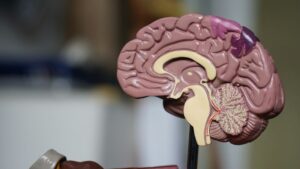
The discovery of mirror neurons in the 1990s revolutionized the understanding of the neurological basis of mimicry and observational learning. Mirror neurons are a class of visuomotor neurons originally found in the premotor cortex of primates that fire both when an animal performs a specific action (e.g., grasping an object) and when the animal observes another individual performing the same action. This unique property suggests that the brain possesses a dedicated system for mapping observed actions onto the observer’s own motor system, establishing a direct link between perception and action production. This system is widely believed to be the primary cognitive engine driving spontaneous behavioral mimicry in humans.
The human mirror neuron system (MNS) is not confined to simple motor replication; it is implicated in higher-level cognitive functions, including intention recognition and language processing. When we observe someone performing an action, the MNS doesn’t just register the movement; it simulates the goal of that movement. For instance, observing a hand reaching for a cup activates motor neurons associated with reaching, but crucially, it also activates areas associated with the *intent* of the reach—whether the person intends to drink or merely move the cup. This capacity for internal simulation allows individuals to understand the motives and goals underlying the observable behavior, making social interactions far more predictive and nuanced than simple behavioral matching.
Furthermore, the MNS supports the concept of motor simulation, which suggests that observing an action is akin to mentally rehearsing it. This cognitive process is crucial for skilled learning and motor refinement. When athletes, musicians, or surgeons observe experts in their field, their mirror systems are actively engaged in simulating the observed actions, refining their internal motor models without physical execution. This neural rehearsal demonstrates that mimicry is not limited to overt, physical replication but involves deep, internal cognitive processing that facilitates the efficient and precise integration of complex motor sequences, confirming its role as a powerful tool for skill acquisition.
Social Functions of Mimicry: Rapport and Affiliation
One of the most robust findings in social psychology regarding mimicry is its powerful role in establishing and maintaining positive social relationships. The unconscious adoption of another’s posture, gestures, or speaking patterns acts as a nonverbal signal of agreement, attentiveness, and positive regard. This synchronization promotes rapport, a feeling of mutual understanding and connection, which is essential for effective communication and collaboration in any social setting, from a casual conversation to high-stakes business negotiations.
Research consistently shows that being mimicked increases the mimickee’s pro-social behavior toward the mimicker. Individuals who have been subtly copied are more likely to donate to charity, help a stranger pick up dropped items, or express favorable attitudes toward the mimicker, demonstrating that mimicry creates a generalized state of social benevolence. This effect operates because the act of being mirrored validates the individual’s presence and behavior, leading to a temporary boost in self-esteem and a heightened sense of social inclusion. The subtle nature of this process ensures its efficacy; if the mimicry becomes too deliberate or obvious, it is often perceived as mockery or manipulation, which immediately breaks rapport.
The influence of mimicry on persuasion is also highly significant. When individuals are subtly synchronized with a communicator, they are generally more receptive to the communicator’s message and more likely to adopt the proposed attitudes or actions. This link suggests that mimicry operates as a precursor to cognitive openness; by establishing a foundation of non-verbal trust and affiliation, the mimicker lowers the recipient’s psychological defenses against influence. Therefore, behavioral synchronization acts as a critical gateway, not only smoothing social interactions but also subtly shaping attitudes and behavioral conformity within a group.
Types and Manifestations of Behavioral Mimicry
Mimicry manifests in various forms, which can generally be categorized along a continuum from fully automatic and non-conscious to deliberate and highly strategic. Understanding these distinctions is crucial for analyzing the specific function a mimicked behavior serves in a given social context.
- Automatic Mimicry: This is the most common form, often referred to as the Chameleon Effect. It is non-conscious, instantaneous, and involves subtle behaviors like foot tapping, arm folding, or adjusting vocal pitch. Its primary function is the promotion of affiliation and rapport. It is generally unavoidable unless actively suppressed, reflecting the default setting of the Perception-Action Model. The mechanisms underlying automatic mimicry are heavily tied to the mirror neuron system and the immediate demands of social synchronization.
- Facial Mimicry and Emotional Contagion: This specific type involves the rapid, often sub-second, imitation of observed facial expressions, such as a subtle frown or a slight upturn of the lips. This is highly linked to emotional contagion, where observing an emotion in another person rapidly elicits the same emotion in the observer. This mechanism is crucial for rapid threat assessment and is a core component of empathy, allowing individuals to quickly gauge and share the emotional climate of their environment.
- Deliberate Imitation: Unlike automatic mimicry, deliberate imitation is conscious, goal-directed, and effortful. This is typically observed when learning a complex skill (e.g., learning a specific dance move or replicating a foreign accent). While it utilizes the same basic neural circuitry as automatic mimicry, the cognitive control system is heavily involved in monitoring performance, correcting errors, and strategically utilizing the observed model to achieve a specific, pre-determined outcome.
- Strategic Mimicry: This form involves the conscious, strategic deployment of mimicking behaviors to achieve a specific social outcome, such as gaining an advantage in a negotiation, increasing one’s perceived status, or deception. A salesperson might consciously mirror a client’s body language to increase trust and facilitate a sale. This type requires high levels of social awareness and cognitive control to ensure the mimicry remains subtle enough to be effective without being detected.
The differentiation between these types is important because the social consequences vary dramatically. While automatic mimicry is generally perceived positively, leading to increased liking, strategic or deliberate mimicry, if perceived, often results in negative judgments, including accusations of insincerity or manipulation, thus undermining the very rapport it intended to build.
Developmental Psychology and Imitation
Mimicry and imitation are fundamental processes in early human development, serving as the primary mechanisms through which infants and young children acquire language, social norms, and motor skills. Neonatal imitation, the ability of newborns to replicate simple facial gestures (like tongue protrusion) observed shortly after birth, suggests that the basic link between perception and action is innate, rather than entirely learned. This early capacity underscores the evolutionary preparedness of the human brain for social learning.
As children mature, imitation shifts from simple motor replication to more complex behaviors, including deferred imitation—the ability to reproduce an observed behavior after a significant time delay—which is crucial for the development of memory and symbolic thought. Through imitation, children begin to understand the concept of intentionality. When a child observes an adult struggling to complete an action (e.g., failing to put a bead in a jar), the child will often skip the erroneous steps and perform the intended, successful action. This demonstrates that children are not merely copying movements but are actively inferring and reproducing the goals behind the observed behaviors.
The role of mimicry is also central to the development of Theory of Mind (ToM), the capacity to attribute mental states—beliefs, desires, intentions—to oneself and others. By mimicking the emotional expressions of caregivers, children begin to connect external behaviors with internal feelings. This process of “trying on” another’s emotional state through behavioral mirroring is a critical precursor to understanding that others have internal worlds separate from their own, forming the basis of advanced social cognition and complex interactive behavior necessary for navigating peer relationships and conforming to cultural expectations.
The Dark Side: Maladaptive Mimicry and Deception
While mimicry is overwhelmingly beneficial for social life, its mechanisms can be employed in maladaptive or deceptive ways, or can fail to develop correctly in certain populations. Strategic, deliberate mimicry employed to mislead or manipulate falls into the domain of deception, where the goal is to feign affiliation to exploit the inherent trust generated by behavioral synchronization. Individuals skilled in social manipulation often use subtle mirroring techniques to rapidly build false rapport, which they then leverage for personal gain, highlighting the vulnerability inherent in the automatic trust response triggered by being mimicked.
Furthermore, a notable absence or impairment of typical mimicry behaviors is often observed in individuals with certain neurodevelopmental differences, most notably those on the Autism Spectrum. Difficulties in spontaneous, non-conscious mimicry—particularly of emotional expressions—may contribute to challenges in emotional recognition, empathy, and the formation of reciprocal social relationships. The reduced automatic mirroring capability may disrupt the embodied simulation process, making it harder for these individuals to automatically share and understand the internal states of others, underscoring the vital role mimicry plays in typical social processing.
Finally, highly pathological forms of mimicry, such as those observed in certain dissociative or psychotic disorders, including *echopraxia* (the pathological, involuntary repetition of the actions of another person) and *echolalia* (the involuntary repetition of vocalizations), represent a breakdown of the normal inhibitory control mechanisms. In these instances, the automatic activation of the motor system by perceived actions is not appropriately modulated by the frontal lobes, leading to uncontrolled, clinically significant copying that disrupts functional behavior and autonomy, demonstrating that the efficient functioning of the mimicry system relies critically on sophisticated cognitive regulation.