The Mirror Sign: Deciphering Hidden Clues in Schizophrenia
Scientifically Reviewed · Dr. Marwa Abd-Alazim · August 26, 2026
Review Criteria & Clinical Standards
This content undergoes rigorous scientific peer-review and medical editorial standards at Arab Psychology Network to ensure clinical accuracy, validity, and compliance with evidence-based guidelines from leading psychological and healthcare authorities (APA / WHO).
The Genesis of the Mirror Sign Concept
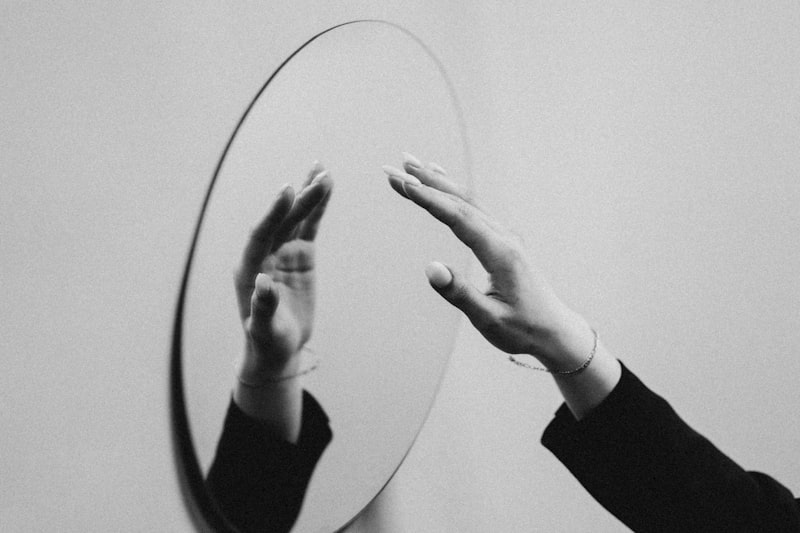
The concept known as the Mirror Sign originates from the work of the French psychiatrist Paul Abely, who first posited this behavioral observation in 1927. Abely introduced this phenomenon as a potential, albeit non-specific, symptom primarily associated with the complex psychopathology of Schizophrenia. His initial formulation centered on the highly specific and unusual behavior demonstrated by certain patients: the act of fixating upon their own image in a reflective surface for an extended and often seemingly unmotivated period of time. This observation provided early 20th-century psychiatry with a tangible, measurable behavior that appeared to reflect profound internal disorientation and psychic withdrawal, a hallmark often attributed to severe psychotic disorders.
Abely’s theory emerged during a critical period in the understanding of psychosis, following the groundbreaking work of Eugen Bleuler, who had recently coined the term Schizophrenia, focusing on the splitting of psychic functions. The Mirror Sign, therefore, was not merely a description of staring; it was interpreted as a clinical window into the patient’s disintegrating sense of self and reality. The prolonged nature of this specular contemplation distinguished it sharply from typical self-scrutiny or vanity. Clinicians noted that the patients exhibiting this sign appeared detached, often lacking any discernible emotional expression or critical self-assessment while engaged in the behavior, suggesting a fundamental breakdown in the integration of visual perception and personal identity.
The initial theoretical framework suggested that this fixation stemmed from an internal struggle related to self-recognition or a distorted body image, issues frequently encountered in severe forms of Schizophrenia, particularly those characterized by catatonic or hebephrenic features. It was hypothesized that the reflective surface provided a point of external reference, which, paradoxically, the disordered psyche attempted to utilize or integrate, resulting in a repetitive, almost ritualistic, yet ultimately fruitless engagement with the self. This behavior, observed frequently in institutional settings where patients had limited external stimuli, became a distinct marker for clinicians attempting to categorize and understand the varied manifestations of profound mental illness.
The precise definition, as initially utilized by Abely and his contemporaries, stipulated that patients diagnosed with Schizophrenia were thought to display the Mirror Sign regularly by sitting in front of a reflective surface and staring into it. This definition underscores the behavioral nature of the symptom, emphasizing the duration and the apparent lack of functional purpose. Unlike a person checking their appearance, the schizophrenic patient engaging in the Mirror Sign seemed to be observing a foreign object or attempting to make sense of a fragmented reality reflected back at them, positioning the sign as a key element in the phenomenology of self-disorder.
Defining Characteristics and Clinical Presentation
The clinical presentation of the Mirror Sign is characterized by several key features that differentiate it from ordinary reflection or even pathological preoccupation with appearance. Foremost among these is the extraordinary duration of the fixation. Observations often recorded patients remaining motionless before the mirror for periods spanning several minutes to over an hour, indicating a profound engrossment that overrides normal inhibitory and attentional processes. This prolonged duration is coupled with a strikingly passive or affectless demeanor. The patient typically displays a flat affect, lacking the emotional responses—such as curiosity, distress, or satisfaction—that usually accompany self-observation. The gaze is often described as vacant, intense, or penetrating, suggesting that the internal psychic experience during this period is far removed from typical self-awareness.
Furthermore, the nature of the interaction with the reflection lacks conventional engagement. The patient may not necessarily be grooming or adjusting their clothes; rather, the focus is purely on the reflected image itself, sometimes concentrating intensely on specific facial features, or perhaps staring blankly at the entire configuration. This lack of interaction supports the interpretation that the behavior stems from an internal perceptual or identity disturbance rather than an external, reality-based concern. In some historical accounts, clinicians noted that attempts to interrupt the patient often met with minimal resistance, or conversely, a sudden, explosive burst of distress, highlighting the fragile internal state that the fixation might be temporarily stabilizing or masking.
The Mirror Sign frequently co-occurs with other symptoms indicative of severe psychic regression and depersonalization. Patients who exhibit this sign often concurrently report or display signs of feeling detached from their own bodies, perceiving their reflection as belonging to a stranger, or struggling with the boundary between self and non-self. This experience of depersonalization is thought to be a driving mechanism, where the reflection serves as a painful external verification of an internally felt alienation. The reflective surface forces the patient to confront an image that their mind simultaneously recognizes as ‘self’ but experiences as ‘other,’ leading to the prolonged, confused, and repetitive scrutiny that defines the sign.
Specific observable behaviors associated with the Mirror Sign include:
- Rigid posture maintained throughout the period of fixation.
- Absence of blinking or reduced eye movement, indicative of a highly focused, almost trance-like state.
- Occasional subtle motor abnormalities, such as minor facial grimacing or slight shifts in head position, often interpreted as responses to internal hallucinations or delusional content projected onto the reflection.
- A general unresponsiveness to environmental stimuli or verbal commands while absorbed in the reflection, strongly suggesting a withdrawal into an internal, psychological space.
These characteristics combine to form a distinctive clinical picture that, while no longer formally recognized as a primary diagnostic criterion, remains an important historical marker for severe disruptions in self-perception and reality testing common in profound psychotic states.
Historical Context: Schizophrenia and Early 20th-Century Psychiatry
The introduction of the Mirror Sign in 1927 must be understood within the rapidly evolving landscape of psychiatric thought concerning Schizophrenia. Prior to the widespread acceptance of standardized diagnostic manuals, the discipline heavily relied on detailed phenomenology—the systematic description and classification of observable symptoms and subjective experiences. Paul Abely’s observation aligned perfectly with this methodology, providing a concrete behavioral manifestation of the internal chaos and autistic withdrawal that clinicians like Bleuler had described as central to the illness. The focus was on identifying idiosyncratic behaviors that seemed to defy rational explanation, thereby offering clues to the underlying organic or psychic disturbance.
During the 1920s, psychiatric institutions housed many patients with severe, chronic forms of Schizophrenia, often characterized by profound catatonia and disintegration of personality. In these environments, patients frequently engaged in repetitive or purposeless behaviors. The Mirror Sign was differentiated from simple repetitive habits because it involved a highly specific interaction with the concept of self, mediated through external reflection. This placed it within the theoretical domain of identity formation and ego boundaries, concepts heavily influenced by emerging psychodynamic theories, even if Abely’s initial framing was more descriptive and clinical.
The emphasis on the sign’s link to Schizophrenia reflected the prevailing belief that the disease represented a fundamental break with reality and a regression to earlier, more primitive forms of psychic organization. Prolonged staring at one’s reflection was interpreted not as narcissism, but as a failure of the ego to maintain cohesive self-representation. If the self was fragmented, the reflection could either be terrifyingly foreign or an object of intense, yet meaningless, scrutiny. This historical context allowed the sign to serve as a specific observational indicator of the severity of ego fragmentation and the depth of the patient’s withdrawal from social and external reality into an internal world governed by delusion and hallucination.
Furthermore, the environment of early institutional psychiatry likely amplified the expression of the sign. Lacking therapeutic engagement, structured activities, and environmental novelty, patients often turned inward. A reflective surface—even a polished floor or a window pane—could become a focal point for intense internal preoccupation. Therefore, while Abely documented the phenomenon as a clinical sign of the disorder itself, its prevalence might have also been partially maintained by the confined and withdrawn existence imposed upon chronic patients, making the sign a marker of both pathology and profound institutional isolation.
Theoretical Mechanisms Underlying Reflective Fixation
The theoretical mechanisms proposed to explain the Mirror Sign span several psychological and neurological domains, although none have achieved definitive consensus. One prominent theory links the behavior to disturbances in self-recognition and body schema integration. Schizophrenic patients frequently experience distortions in how they perceive their own physical form and location in space. When confronted with a mirror, the visual feedback conflicts drastically with the disturbed internal sense of self. The prolonged staring, in this view, represents a desperate attempt by the cognitive system to reconcile the visually accurate external image with the subjectively distorted internal map, leading to a frustrating and protracted perceptual loop that cannot be resolved.
Another major theoretical stream connects the Mirror Sign to profound states of depersonalization and identity confusion. If a patient feels fundamentally alienated from their own thoughts and body—the hallmark of depersonalization—the reflection may be perceived as an object separate from the self, perhaps even an intruder or a manifestation of a delusion. This phenomenon aligns with historical descriptions where patients reported seeing a hostile or unknown face looking back at them. The fixation then becomes an act of vigilance or confrontation against this perceived ‘other,’ which is simultaneously known to be the self. This mechanism suggests that the behavior is driven by psychotic content projected onto the neutral stimulus of the reflection.
From a neurocognitive perspective, the Mirror Sign may reflect disruptions in the brain’s executive functions, particularly those related to attention and inhibition. The inability to disengage from the stimulus—the prolonged fixation—could be an expression of dysfunctional attentional filtering. Furthermore, if the patient is experiencing visual or somatic hallucinations, the mirror might serve as an anchor or a visual screen upon which these internal experiences are projected and observed, leading to a state of sustained, internalized attention. The observed behavior, therefore, is a byproduct of complex underlying neurological misfiring that prevents normal processing of self-referential visual information.
More complex psychodynamic interpretations, though developed after Abely, suggest a failure or regression related to the developmental mirror stage. Normally, infants integrate the mirror image into a cohesive sense of self. In psychosis, this integration may break down, causing the patient to regress to an earlier, fragmented stage of self-perception. The mirror no longer confirms the ego but threatens it, forcing the patient into a repetitive, unsuccessful re-attempt at identity formation. This persistent engagement with the reflection is thus seen as a manifestation of the severe struggle to maintain a coherent sense of ego boundaries in the face of overwhelming internal disintegration.
Differential Diagnosis and Related Phenomenon
While the Mirror Sign was historically linked almost exclusively to Schizophrenia, it is crucial to differentiate this behavior from other forms of reflective scrutiny found in various psychiatric conditions. The key distinction lies in the patient’s affect and motivation. In conditions such as Body Dysmorphic Disorder (BDD), a patient spends excessive time examining their reflection, but this scrutiny is driven by intense anxiety, dissatisfaction, and a compulsive desire to check or fix perceived flaws. The BDD patient is fully engaged and distressed by their appearance; the Schizophrenic patient exhibiting the Mirror Sign is typically affectless and detached from the typical emotional response to self-image.
Another important differential consideration involves obsessive-compulsive phenomena. Patients with Obsessive-Compulsive Disorder (OCD) may engage in prolonged checking rituals involving mirrors, often related to symmetry, contamination, or safety. However, these rituals are usually performed with high levels of distress (ego-dystonic) and are clearly aimed at reducing immediate anxiety associated with an obsessive thought. The Mirror Sign, conversely, is typically ego-syntonic in the moment, reflecting a state of withdrawn absorption rather than an active, anxiety-driven compulsion. The subjective experience and internal motivation of the patient provide the critical distinction between these behaviors.
The Mirror Sign must also be distinguished from prolonged self-scrutiny seen in some individuals experiencing severe Major Depressive Disorder (MDD) or certain Cluster B personality disorders characterized by identity instability. While depressed individuals may stare at their reflections, this is usually accompanied by intense self-loathing, shame, or deep sadness. In personality disorders, the scrutiny is often linked to transient identity crises or attempts to manage social presentation. The Schizophrenic patient’s fixation, as documented by Abely, stands apart due to the specific combination of profound duration, vacant affect, and association with severe depersonalization and psychotic withdrawal.
The broader category of specular scrutiny encompasses all forms of prolonged interaction with one’s reflection. The Mirror Sign is a sub-type of specular scrutiny defined by its specific association with profound psychotic withdrawal and identity fragmentation. Related phenomena that require careful distinction include:
- Mirror Gazing Rituals: Conscious, often therapeutic, attempts to induce altered states of consciousness or introspection.
- Narcissistic Fixation: Driven by vanity, self-admiration, and ego inflation, contrasting sharply with the ego-fragmentation seen in the Mirror Sign.
- Pharmacologically Induced Specular Behavior: Certain psychoactive substances can induce altered self-perception leading to prolonged mirror viewing, which is transient and dose-dependent.
Understanding these differences is crucial for accurate historical interpretation and modern clinical assessment of unusual self-referential behaviors.
Clinical Observations and Case Studies (Historical Perspective)
The original clinical observations surrounding the Mirror Sign, though lacking the rigorous documentation standards of modern research, painted a compelling picture of severe psychiatric illness within the asylum setting. Clinicians noted that the sign was most frequently observed in patients diagnosed with chronic, deterioration-heavy Schizophrenia, particularly those exhibiting features of catatonia or marked psychic poverty. The environment of the asylum often provided ample reflective surfaces—windows, polished floors, or small hand mirrors—which became unintentional stages for this behavior. The patients would often position themselves deliberately in front of these surfaces, sometimes remaining immobile for hours until staff intervened or their attention was finally broken.
Reports emphasized the stark contrast between the patient’s inner experience (as inferred or reported) and their external presentation. While the patient was physically static and apparently passive, the internal world seemed highly activated. For instance, some historical case notes described patients who, upon being questioned during their reflective fixation, articulated complex delusions concerning the image, stating that the reflection was mocking them, transmitting thoughts, or was inhabited by a separate, hostile entity. This suggested that the prolonged staring was not merely a blank withdrawal but an intense, often delusional, interaction with a perceived externalized self-object.
One common observation involved the patient’s reaction to external interference. If a nurse or doctor attempted to move the patient or block the mirror, responses ranged from profound confusion, as if waking from a deep sleep, to violent outbursts directed at the staff or the mirror itself. These aggressive reactions were interpreted as defensive measures aimed at protecting a fragile internal equilibrium that the reflective fixation was somehow maintaining. The intensity of the reaction underscored the psychological significance of the mirror for the patient, suggesting that the act was serving a critical, albeit pathological, functional role in managing internal distress or perceptual disturbance.
The significance of the Mirror Sign in early psychiatry was magnified because it was a visible, unambiguous behavior that correlated strongly with poor prognosis and severe illness trajectory. It became a practical clinical shorthand for documenting profound ego pathology. The frequent reporting of the sign in historical records allowed clinicians to categorize groups of patients exhibiting severe detachment from reality, thereby reinforcing the theoretical link between reflective fixation and the core symptoms of Schizophrenia, including thought disorder and severe affective flattening. These historical accounts, though anecdotal by contemporary standards, form the foundational evidence for Abely’s initial hypothesis.
Modern Psychiatric Relevance and Limitations
In contemporary psychiatry, the specific term Mirror Sign has largely faded from prominence and is not included as a formal diagnostic criterion in modern nosological systems like the DSM-5 or ICD-11. This shift reflects several factors, including the increasing emphasis on operationalized symptom definitions, the move away from descriptive phenomenology toward empirically validated constructs, and the recognition that prolonged self-scrutiny, while indicative of psychopathology, is not exclusive or pathognomonic to Schizophrenia. The behavior itself has been subsumed under broader categories of behavioral disturbances, such as self-referential behavior, catatonic symptoms, or severe depersonalization phenomena.
Despite its historical marginalization, the behavior underlying the Mirror Sign retains clinical relevance as a non-specific behavioral marker of severe psychic distress and identity disturbance. When a patient exhibits prolonged, vacant, or affectless fixation on their reflection, it signals an urgent need for assessment regarding underlying psychotic processes, particularly disorders involving profound depersonalization, derealization, or structural disturbances of the self. The observation remains a highly suggestive indicator of disorganized thought and severe withdrawal, even if it is no longer given a dedicated diagnostic label.
The limitations of the original concept are rooted primarily in its lack of specificity. While historically linked to Schizophrenia, prolonged mirror gazing can occur transiently in response to various stressors, neurological conditions, or substance intoxication. Furthermore, the subjective experience associated with the staring (is it hostile, confused, or merely vacant?) is critical for differential diagnosis, yet the original definition focused only on the external, observable duration. Modern psychiatry requires a more nuanced understanding of the patient’s internal experience to accurately categorize the behavior.
In conclusion, the legacy of the Mirror Sign serves as an important reminder of the historical evolution of psychiatric observation. Paul Abely’s 1927 theory identified a striking behavioral phenomenon that encapsulated the profound struggle with self-identity and reality boundaries central to severe psychosis. While the term itself has become historical, the observation of prolonged, detached specular scrutiny remains a powerful, though non-specific, indicator of significant psychological regression and disruption, necessitating careful clinical investigation into the patient’s internal world and structural integrity of the self.