Mnemonic Strategies: Unlock Your Brain’s Hidden Potential
Scientifically Reviewed · Dr. Marwa Abd-Alazim · August 26, 2026
Review Criteria & Clinical Standards
This content undergoes rigorous scientific peer-review and medical editorial standards at Arab Psychology Network to ensure clinical accuracy, validity, and compliance with evidence-based guidelines from leading psychological and healthcare authorities (APA / WHO).
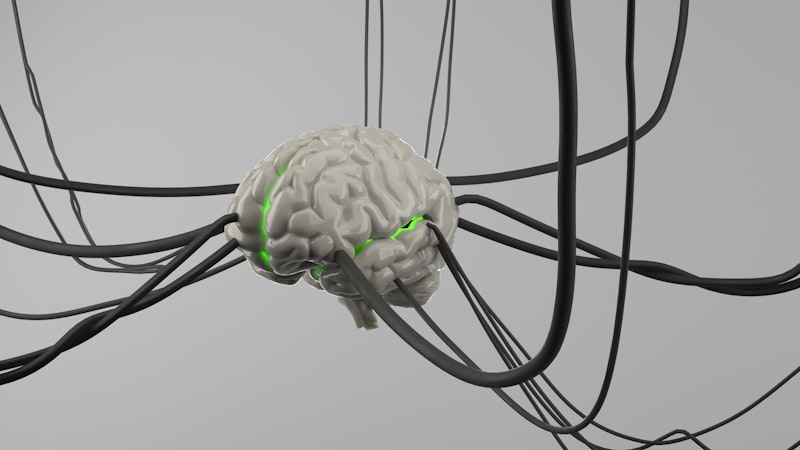
A mnemonic strategy is an umbrella term used within cognitive psychology and memory research to describe any systematic method or technique designed specifically to improve the encoding, storage, and subsequent retrieval of information. These strategies fundamentally rely upon the principle of elaborative rehearsal, where new, often abstract or meaningless data is associated with previously encoded, familiar information or structured frameworks already residing robustly within long-term memory. Unlike simple rote repetition, which merely focuses on frequency, mnemonic techniques increase the meaningfulness and distinctiveness of the material, thereby creating multiple retrieval pathways that bypass the typical limitations of working memory capacity and enhance the likelihood of successful recall. The efficacy of a mnemonic strategy is directly linked to the novelty, imagery, and emotional valence of the created association, often transforming passive learning into an active, creative process.
The core mechanism of these strategies involves the transformation of raw data—such as lists, numbers, or foreign vocabulary—into more memorable formats, frequently utilizing visual imagery, spatial organization, or rhythmic patterns. For instance, the original content suggests that assigning images to data allows them to be recalled or internalized easier, a process that taps directly into the brain’s strong affinity for visual and spatial cues. By establishing these vivid linkages, the learner constructs a highly organized internal retrieval structure. This structure ensures that when one part of the mnemonic cue is accessed, the associated target information is simultaneously activated, significantly reducing cognitive load and mitigating the effects of interference that often plague simple memorization techniques. Therefore, mnemonic strategies are not just tools for remembering, but sophisticated cognitive architectures for information management.
Definition and Conceptual Framework
Mnemonic strategies represent a highly specialized form of metacognitive skill, involving conscious executive control over the memory processes. They operate under the principle that memory retrieval is most successful when the context and cues used during encoding are available or recreated during retrieval, a concept known as the encoding specificity principle. The conceptual framework differentiates mnemonic devices from general study habits by focusing on the deliberate creation of highly specific, unusual, or personally relevant associations. A key characteristic is the systematic nature of their application; they are not spontaneous flashes of insight but learned, repeatable methodologies that structure chaotic information into manageable, memorable units. This structuring often involves imposing an artificial order onto unordered material, a process that greatly facilitates chunking and retrieval efficiency.
Psychologically, the power of mnemonics is largely attributed to the robust activation of both the left and right hemispheres of the brain. Linguistic mnemonics (like acronyms) engage language centers, while spatial and visual mnemonics (like the Method of Loci) heavily recruit areas associated with spatial navigation and visual processing, such as the hippocampus and surrounding parietal lobes. This dual coding approach, where information is stored simultaneously in both verbal and imaginal formats, significantly increases the redundancy and accessibility of the memory trace. Furthermore, the act of constructing a mnemonic requires deep processing—or elaborative encoding—which ensures the information is linked to existing knowledge structures, making it resistant to decay and proactive or retroactive interference that often compromises superficial learning.
It is crucial to understand that mnemonic strategies function as scaffolds for memory, providing temporary but robust support until the information is either integrated into permanent long-term knowledge through repeated use or until the immediate retrieval need is satisfied. While they are often associated with the ability to recall long lists or sequences, their fundamental utility lies in enhancing the quality of the memory trace itself. The techniques achieve this by leveraging innate human tendencies, such as the preference for concrete imagery over abstract concepts, the effectiveness of novelty in capturing attention, and the ease of remembering spatially organized information. In essence, mnemonics transform the difficult task of memory storage into the comparatively simpler task of remembering a story, a location, or an absurd image.
Historical Context and Significance
The application of mnemonic strategies is far from a modern development; their importance dates back to antiquity, particularly within Greek and Roman cultures where advanced memory skills were considered essential for orators and scholars. The historical roots of mnemonics are often traced to the Greek poet Simonides of Ceos in the 5th century BCE, who is credited with inventing the Method of Loci, or the ‘memory palace.’ According to legend, after surviving a building collapse, Simonides was able to identify the victims by recalling where each person had been sitting, thus establishing the profound link between memory and spatial location. For ancient rhetoricians like Cicero and Quintilian, mastering mnemonic arts was synonymous with intellectual prowess, enabling them to deliver lengthy speeches without notes, cementing the connection between memory training and elite education.
During the Middle Ages and the Renaissance, mnemonic systems continued to thrive, evolving from mere tools for rhetoric into complex, philosophical systems aimed at organizing all human knowledge. Thinkers such as Ramon Llull developed intricate memory wheels and diagrams intended not only to aid recall but also to facilitate invention and logical reasoning. These systems often merged religious iconography, astronomical symbols, and classical architecture to create vast, internal, and highly structured memory theaters. This period highlights the significance of mnemonics not just as aids to individual recall, but as foundational frameworks for understanding and manipulating large volumes of information, viewing memory as an art form rather than a passive storage unit.
The significance of mnemonic strategies waned somewhat with the advent of the printing press and the shift towards external storage of information, but they maintained a presence in popular culture and specialized fields. In modern psychology, their study was revitalized in the mid-20th century, particularly after breakthroughs in cognitive science illuminated the mechanisms of encoding and retrieval. Today, the historical techniques are validated by empirical evidence that confirms the brain’s preference for spatial and visual information processing. The enduring legacy of mnemonics underscores a perennial human concern: the desire to overcome the limitations of natural memory through systematic, strategic application of cognitive resources.
Underlying Cognitive Principles
The effectiveness of mnemonic strategies rests upon several fundamental cognitive principles. Firstly, they heavily exploit Dual Coding Theory, proposed by Allan Paivio, which posits that information is better remembered if it is encoded using both verbal (linguistic) and non-verbal (imaginal or sensory) codes. When a learner uses the Keyword Method, for example, they link a foreign word (verbal code) to a vivid image representing its sound and meaning (imaginal code). If one code fails during retrieval, the other serves as a backup, dramatically increasing the probability of successful recall. This redundancy is a powerful mechanism for stabilizing memory traces.
Secondly, mnemonics leverage the principle of Distinctiveness. Highly unique, bizarre, or emotionally charged memories are far easier to recall than mundane, common ones. Mnemonic techniques deliberately encourage the creation of unusual and often exaggerated mental images—a giant, smoking teapot dancing on a bookshelf, for instance. This distinctiveness makes the memory trace stand out against the background noise of other stored information, preventing the confusion and interference that arises when multiple items share similar retrieval cues. The more absurd the image or association, often the more memorable it becomes, due to the increased cognitive attention it demands during the encoding phase.
Finally, the strategies maximize the efficiency of Elaborative Rehearsal. Simple maintenance rehearsal (repetition) keeps information in working memory briefly but rarely transfers it efficiently to long-term storage. Elaborative rehearsal, conversely, involves linking new information to existing semantic networks. Mnemonics mandate this deep processing: the learner must actively generate a connection, a story, or a rhyme, which necessitates analyzing the new material and relating it meaningfully to established knowledge. This active construction process solidifies the synaptic connections, ensuring that the information is stored within a rich context that offers numerous access points for retrieval, thereby fulfilling the requirements of the encoding specificity principle.
Major Categories of Mnemonic Strategies
Mnemonic strategies can be broadly categorized based on the primary mechanism they employ: linguistic, visual/spatial, and organizational. Linguistic mnemonics are those that utilize language features, such as sound, rhyme, or sequence. This category includes acronyms (using the first letter of a list of words to form a new, pronounceable word) and acrostics (creating a sentence where the first letter of each word corresponds to the items to be remembered). For example, the sentence “My Very Educated Mother Just Served Us Nine Pizzas” was traditionally used to remember the order of the planets. These techniques are highly effective for remembering sequential lists or categorical information where the order is critical, relying on the rhythm and structure of language for organization.
Visual and Spatial mnemonics constitute arguably the most powerful category, leveraging the brain’s highly developed systems for mapping and navigation. The Method of Loci is the prime example, where items are mentally placed along a familiar physical route or within a building (the memory palace). Retrieving the information simply involves a mental walk-through of the location, recalling the associated item at each designated spot. Other visual strategies include the Keyword Method, which is vital for foreign language acquisition, pairing the sound of a new word with a visual image, and the Pegword System, which links numbers to rhymes (e.g., One is a bun, Two is a shoe) and then visually associates the item to be remembered with the rhyming image.
Organizational mnemonics involve structuring information into coherent, meaningful groups to reduce the total number of items that must be individually remembered. This category includes chunking, where large amounts of data (like long strings of digits) are broken down into smaller, familiar units. It also encompasses techniques like Mind Mapping, which visually structures complex relationships and hierarchies, creating a tree-like diagram that shows how different concepts interconnect. Organizational strategies are particularly useful when dealing with complex conceptual material or large bodies of text, as they reduce the overall cognitive load and emphasize relational understanding rather than rote recall of discrete facts.
The Method of Loci: Detailed Examination
The Method of Loci (MoL), often called the memory palace technique, is the oldest and perhaps most researched mnemonic strategy. It harnesses the highly efficient spatial memory system of the hippocampus, which evolved to aid in navigation and foraging. The technique requires the user to first select a highly familiar location—a house, a route through a city, or a specific classroom—and mentally designate a series of specific, ordered locations (loci) within that space. These loci serve as mental storage bins. When encoding information, each item to be remembered is visually associated with one of these pre-determined loci. The association must be vivid, interactive, and often absurd to maximize distinctiveness.
For example, if a user needs to remember a list of five historical figures, they might mentally place the first figure, Queen Victoria, standing prominently on their front porch, perhaps wearing a silly hat made of roses. The second figure, Albert Einstein, might be balancing precariously on the kitchen sink, solving equations with spaghetti. The retrieval process is then simplified to a mental journey: the user mentally walks through the familiar space, and upon arriving at the front porch (locus 1), the image of Queen Victoria immediately triggers the desired information. This method is incredibly powerful because the spatial sequence provides a natural, pre-existing organizational structure that eliminates the need to remember the order of the items independently.
Empirical evidence strongly supports the effectiveness of MoL, demonstrating that practitioners can achieve exceptional recall rates for long lists and complex textual materials. Research has shown that training in MoL leads to measurable structural and functional changes in the brain, particularly enhancing connectivity in areas crucial for spatial processing and memory retrieval. The technique’s success lies in its ability to transform abstract verbal material into concrete, navigable, and highly memorable spatial representations, thereby converting a taxing short-term memory task into an efficient long-term spatial navigation exercise.
Application in Education and Real-World Settings
Mnemonic strategies have profound practical applications across numerous fields, particularly in education, where the demand for rapid acquisition of complex information is high. In academic settings, mnemonics are invaluable tools for mastering foreign language vocabulary, memorizing scientific classifications (e.g., taxonomy), learning mathematical formulas, and recalling historical dates and sequential events. The use of acronyms and acrostics, for instance, significantly reduces the cognitive burden on students attempting to internalize sets of facts for examinations. By providing a structure for organization, mnemonics enable students to move beyond surface-level rote learning toward deeper, more meaningful engagement with the material.
Beyond the classroom, professionals utilize mnemonic techniques for high-stakes tasks requiring flawless recall. Medical students frequently use complex mnemonic systems to memorize anatomical structures, pharmacological interactions, and diagnostic criteria, where errors can have severe consequences. Lawyers and paralegals employ mnemonics to internalize complex sequences of legal statutes or case precedents. Even in everyday life, people use simple mnemonics, such as associating a name with a visual trait, to enhance social recall. The strategic application of these techniques provides a distinct advantage in environments that reward rapid, accurate, and structured access to large databases of knowledge.
For adult learners, especially those facing age-related memory decline, mnemonic strategies offer a cognitive compensatory mechanism. Training programs focused on teaching techniques like the Method of Loci have demonstrated significant improvements in episodic memory performance among older adults. By actively engaging the brain in the creation of novel and distinctive associations, these strategies help maintain cognitive flexibility and reinforce the mechanisms responsible for long-term storage and retrieval. Thus, mnemonics are not merely student aids but lifelong tools for cognitive enhancement and knowledge management in high-demand environments.
Limitations and Efficacy Research
While highly effective, mnemonic strategies are not without limitations. A primary drawback is the initial investment of time and cognitive effort required to construct and practice the association. Creating a vivid, unique image or a complex memory palace requires significantly more mental energy than simple repetition. If the material is needed immediately and briefly, the overhead cost of creating a sophisticated mnemonic may outweigh the benefit. Furthermore, the effectiveness of the strategy is highly dependent on the learner’s ability to generate strong, non-interfering associations; poorly constructed mnemonics can lead to confusion where the retrieval cue triggers the wrong piece of data.
Research into the efficacy of mnemonics consistently shows strong results for structured recall tasks, particularly those involving lists, sequences, and paired associates (e.g., vocabulary). Studies comparing mnemonic training groups with control groups often demonstrate superior short-term and intermediate recall rates for the mnemonic groups. However, longitudinal research sometimes presents a more nuanced picture regarding long-term retention of semantic knowledge. While the initial recall is excellent, if the underlying information is not integrated into a broader conceptual framework, the memory may still fade once the mnemonic cue itself is forgotten or if it is not continually practiced. The mnemonic serves as a retrieval hook, but it does not replace the necessity for understanding the underlying concepts.
Another limitation arises when the mnemonic technique itself is over-generalized. Certain techniques, like the Pegword system, are excellent for ordered lists but are cumbersome for abstract conceptual learning. Learners must develop metacognitive awareness to select the appropriate strategy for the specific type of material they are encoding. Despite these limitations, the consensus in cognitive psychology is that when applied correctly and systematically, mnemonic strategies represent some of the most powerful and reliable methods available for enhancing targeted memory performance, offering a verifiable pathway to superior recall abilities.