Auditory Perception: Finding Your Perfect Volume Balance
Scientifically Reviewed · Dr. Marwa Abd-Alazim · October 23, 2026
Review Criteria & Clinical Standards
This content undergoes rigorous scientific peer-review and medical editorial standards at Arab Psychology Network to ensure clinical accuracy, validity, and compliance with evidence-based guidelines from leading psychological and healthcare authorities (APA / WHO).
The Core Definition of MCL
The concept of Most Comfortable Loudness (MCL) defines the sound intensity level that an individual perceives as the most pleasant, natural, or comfortable for sustained listening. It is a highly subjective metric, representing the central tendency within a range of acceptable sound pressure levels (SPLs) that are neither too quiet to be heard clearly nor too loud to cause discomfort or strain. Crucially, MCL is distinct from two other fundamental psychoacoustic thresholds: the minimum audible level (hearing threshold) and the Uncomfortable Loudness Level (UCL), which marks the upper limit of tolerable sound.
The fundamental mechanism underlying MCL relates directly to the individual’s auditory processing system and the required signal-to-noise ratio necessary for optimal understanding and enjoyment. For speech, MCL is often the level at which communication requires the least cognitive effort, maximizing clarity without overstimulating the auditory system. In clinical audiology, determining MCL is essential because it provides a critical anchor point for programming amplification devices, ensuring that sounds are delivered at levels that maximize benefit while preserving comfort. A deviation in MCL measurements, particularly a narrowing of the acceptable listening range, can be highly indicative of specific types of sensorineural hearing loss.
While the physical measure of sound is recorded in decibels (dB SPL or dB HL), the experience of comfort is purely perceptual, falling under the domain of Psychoacoustics. MCL is often measured using pure tones or calibrated speech stimuli, but the resulting level is an average derived from the listener’s immediate feedback. This measurement helps map out the individual’s dynamic range, which is the total span between the softest sound they can hear and the loudest sound they can comfortably tolerate. A robust MCL is central to functional hearing, influencing everything from daily conversation success to the appreciation of musical complexity.
Historical and Clinical Origins
The systematic study of loudness preference developed predominantly in the mid-20th century, coinciding with the rapid evolution of objective audiological testing and the standardization of hearing aid technology. Prior to effective amplification, the primary focus was simply determining the threshold of hearing. However, once researchers and clinicians began fitting electronic hearing aids, they immediately recognized that simply making sounds audible was insufficient; the user also needed to perceive those amplified sounds as comfortable and non-distorting. Key figures and early audiological research institutions focused on finding a reliable, objective measure for prescribing gain across different frequencies.
Researchers in the 1940s and 1950s, particularly those involved in military and rehabilitation audiology, formalized the triad of essential auditory metrics: the hearing threshold (softest sound), the MCL (preferred sound), and the UCL (loudest tolerable sound). Early methodologies often employed the “ascending-descending” method, similar to current threshold testing, but asked the patient to signal when the sound achieved maximum comfort rather than audibility. This development was crucial because it shifted the focus from merely detecting sound to ensuring sound quality and user acceptance, which are critical determinants of successful hearing aid utilization.
The establishment of MCL as a clinical standard allowed for the development of prescriptive fitting formulas, such as the National Acoustic Laboratories (NAL) formulas, which calculate the ideal gain required for different degrees of hearing loss. These formulas rely on MCL data to ensure that the amplified output falls squarely within the patient’s comfortable listening zone. Thus, the historical context of MCL is inseparable from the technological advancement of amplification, driven by the practical need to optimize device performance for individual perceptual experiences.
Measurement Techniques and Procedures
Measuring MCL requires careful clinical protocol to minimize variability and psychological bias. The most common techniques fall into two categories: the Method of Adjustment and the Method of Limits. In the Method of Adjustment, the patient controls the intensity of the sound stimulus (usually a broadband noise or a speech sample) themselves, adjusting it continuously until they settle on the level they deem most comfortable. This method gives the patient maximum control but can sometimes result in less stable or repeatable results due to continuous psychological shifting.
Conversely, the Method of Limits involves the clinician controlling the sound intensity. The clinician presents the stimulus, either increasing the volume from an inaudible level (ascending run) or decreasing it from an uncomfortably loud level (descending run). The patient signals when the sound reaches their definition of “most comfortable.” Multiple ascending and descending runs are averaged to determine the MCL. Standard clinical procedures often specify the type of stimulus used—either narrowband pure tones tested across critical frequencies (e.g., 500 Hz, 1000 Hz, 2000 Hz) or recorded speech (e.g., cold running speech or standardized sentences), depending on the assessment’s goal.
A common tool used to quantify the comfort experience is the Loudness Categorization Scale, sometimes referred to as the V-UCL scale. This scale provides descriptive anchors for the patient, ranging from “Very Soft” to “Too Loud/Painful.” The patient is typically asked to identify which category corresponds to the MCL. Standardized measurement ensures that clinicians can accurately plot the patient’s MCL across the frequency spectrum, revealing potential areas where the perception of loudness is disproportionately high or low compared to expected norms, which is particularly relevant in cases of auditory pathology.
A Practical Illustration: Music Listening
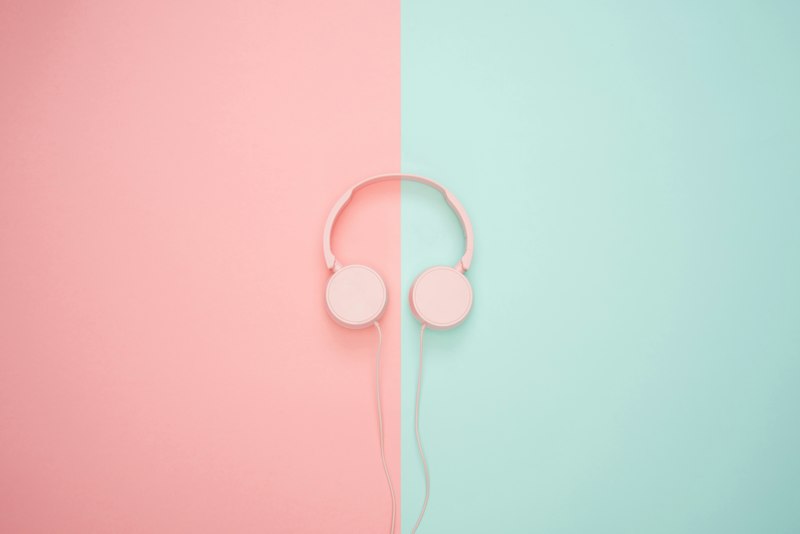
To illustrate MCL in a real-world scenario, consider an individual listening to music through headphones or a home stereo system. The listener seeks a specific volume setting that provides maximum enjoyment without leading to auditory fatigue or the perception of strain. If the volume is set too low, subtle instrumentation or quiet vocal passages may be lost, leading to dissatisfaction. If the volume is set too high, the music might become distorted, fatiguing, or even painful over time, necessitating frequent adjustments.
The process of finding the MCL for music is highly dynamic and involves several steps that demonstrate the psychological principle in action.
- Initial Assessment: The listener begins by setting the volume to an audible but moderate level.
- Ascending Adjustment: The listener gradually increases the volume, testing if the music gains richness and clarity. They are subconsciously searching for the point where the auditory signal provides the best balance of detail and intensity.
- Identification of Peak Comfort: As the volume increases, there is a specific moment where the sound feels “full” and satisfying—this peak is the MCL. At this point, the acoustic input is balanced against the neurological limits of the auditory system.
- Descending Check (Avoiding UCL): If the listener accidentally increases the volume beyond the MCL, they quickly encounter the boundary of discomfort or harshness, prompting them to reduce the volume slightly back into the comfortable zone. This quick adjustment confirms the boundaries of their dynamic range.
The final volume setting chosen, which allows the listener to fully engage with the music for an extended period without feeling the need to touch the controls, represents their most comfortable listening level for that specific acoustic environment and type of stimulus. This example highlights the difference between simply hearing a sound and experiencing it optimally.
Individual Variability and Influencing Factors
MCL is not a fixed, universal constant; it varies significantly between individuals and can fluctuate within the same person based on various factors. Factors contributing to this variability include physiological differences, psychological state, and the characteristics of the acoustic environment. Physiologically, the presence, type, and severity of hearing loss are the primary determinants. For instance, people suffering from sensorineural hearing loss often exhibit the phenomenon known as Recruitment, where a small increase in sound intensity leads to a disproportionately large and often uncomfortable increase in perceived loudness. This significantly lowers the UCL and narrows the dynamic range, impacting the MCL.
Environmental factors also play a critical role. If an individual is in a noisy setting, their MCL may temporarily increase as they attempt to overcome background competition (the Lombard effect), seeking a louder signal to achieve sufficient clarity. Conversely, in a quiet, relaxed setting, the preferred listening level will naturally be lower. Psychological factors such as attention, fatigue, stress, and anxiety can also shift the MCL measurement, often leading to a temporary hypersensitivity to sound.
Furthermore, the acoustic characteristics of the stimulus itself—whether it is speech, music, or white noise—will influence the result. Speech, which requires cognitive processing for linguistic interpretation, often has a higher MCL than pure tones. Awareness of these influencing variables is essential for the clinician, who must perform MCL testing in a controlled, low-stress environment and use standardized stimuli to obtain a stable and representative measure of the patient’s true comfortable listening level.
Clinical Significance in Audiology
The measurement of MCL is arguably one of the most critical steps in clinical audiology, particularly in the process of hearing aid fitting and diagnostic assessment. Without an accurate MCL, a hearing aid prescription risks either under-amplifying necessary sounds (leading to poor speech comprehension) or over-amplifying sounds (leading to rejection of the device due to discomfort). Prescriptive methods like the Desired Sensation Level (DSL) and NAL-NL2 specifically utilize the MCL, along with the UCL, to map the entire output of the hearing device into the patient’s residual auditory area.
Beyond amplification, MCL testing serves as a valuable diagnostic tool. A significantly depressed MCL or a very narrow dynamic range between the hearing threshold and the UCL is a strong indicator of auditory pathologies, most notably the aforementioned recruitment associated with cochlear damage. In cases of auditory processing disorders or sound tolerance issues like hyperacusis, the MCL may be very low, suggesting an abnormally high sensitivity to sound that requires specialized intervention, often involving sound therapy or desensitization protocols.
The consistent determination of MCL allows audiologists to set the parameters for output compression in hearing aids. Compression ensures that soft sounds are amplified to the comfortable level, but loud sounds are compressed to prevent them from exceeding the UCL. Thus, MCL acts as the primary target for mid-level sound inputs, guaranteeing that the vast majority of daily acoustic experiences fall within the patient’s comfort zone, maximizing compliance and long-term benefit from auditory rehabilitation.
Related Psychoacoustic Concepts
MCL exists within a comprehensive framework of psychoacoustic measurement, closely related to several other core concepts. Its most direct counterpart is the Uncomfortable Loudness Level (UCL), which defines the upper boundary of the listening continuum. The distance between the MCL and the UCL is particularly informative, offering insight into the patient’s tolerance margin. Another related concept is the threshold of hearing (or minimum audible pressure), which defines the lower boundary. The span between the threshold and the UCL defines the individual’s auditory Dynamic Range.
Furthermore, MCL relates intimately to concepts of loudness scaling and magnitude estimation. Loudness scaling aims to mathematically quantify the relationship between physical intensity (dB) and perceived loudness (sones). While MCL provides a single point of preferred comfort, scaling attempts to map the entire spectrum of perceived loudness, from barely audible to painfully loud. Pathologies like Recruitment directly impact the MCL by altering the rate at which loudness grows relative to intensity, forcing the comfortable level to be much lower than in a normal auditory system.
The study of MCL belongs fundamentally to the subfield of Psychoacoustics, which is the branch of psychology and acoustics dedicated to the scientific study of sound perception. Within the broader discipline of psychology, it falls under experimental and sensory psychology, often applied directly in clinical audiology and speech pathology. Understanding MCL requires integrating knowledge of physical acoustics (how sound travels), physiological acoustics (how the ear processes sound), and psychological responses (how the brain interprets and reacts to sound intensity).