Motor Aprosodia: When Your Tone Loses Its Emotion
Scientifically Reviewed · Dr. Marwa Abd-Alazim · October 23, 2026
Review Criteria & Clinical Standards
This content undergoes rigorous scientific peer-review and medical editorial standards at Arab Psychology Network to ensure clinical accuracy, validity, and compliance with evidence-based guidelines from leading psychological and healthcare authorities (APA / WHO).

Introduction and Core Definition
Motor Aprosodia, also known as expressive aprosodia, is a specific neurological condition characterized by the inability of an individual to effectively produce the normal melody, rhythm, and emotional pitch of speech. While the individual retains the ability to articulate words clearly and maintain grammatically correct sentence structure, their speech lacks the fundamental emotional coloring known as prosody. This deficit results in a monotonous, flat, or ‘robot-like’ vocal delivery, making it profoundly difficult for the speaker to convey subtle or overt emotional states such as joy, anger, sadness, or sarcasm through their voice alone. The core definition rests on the fact that this is a deficit of emotional expression via vocal tone, not a deficit in language content or comprehension.
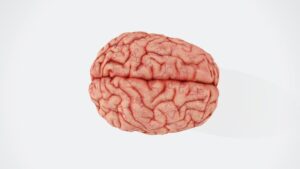
The fundamental mechanism behind Motor Aprosodia involves damage to specific areas within the right frontal lobe of the brain. The right hemisphere is predominantly responsible for processing and expressing the emotional, non-linguistic aspects of communication. Specifically, the damage often occurs in the right hemisphere’s homologue to Broca’s area—the critical region in the left hemisphere responsible for speech production. Because the structural language system remains intact (left hemisphere), the patient knows what they want to say, but the emotional overlay system (right hemisphere) is compromised, preventing them from modulating their pitch and rhythm to reflect their internal affective state.
This condition highlights the crucial distinction between linguistic communication and affective communication. Linguistic communication deals with semantics and syntax—the actual words used. Affective communication, governed by prosody, provides context, intent, and emotional meaning. Those diagnosed with expressive aprosodia are fully aware of their own emotions and can typically understand the emotions conveyed by others (sensory prosody is intact), but they are neurologically incapable of projecting those internal feelings into their vocal output. This discrepancy can lead to significant interpersonal and social difficulties, as listeners often misinterpret the speaker’s intentions or perceive them as cold, disinterested, or lacking in emotional depth.
The Mechanism of Prosody and Affective Communication
Prosody is a complex linguistic feature encompassing several elements, including stress (emphasis on certain syllables), intonation (the rise and fall of pitch), rhythm, and tempo. These elements collectively shape the meaning and emotional impact of an utterance. Neuroscientists generally divide prosody into two functional categories: linguistic prosody and emotional (or affective) prosody. Linguistic prosody helps differentiate between a statement and a question, or stress a particular word for emphasis. Affective prosody, conversely, is the primary mechanism for expressing emotions through the voice.
The right hemisphere’s dominance in processing and producing affective prosody is a cornerstone of modern neuropsychology. While the left hemisphere manages the rapid, sequential production of phonemes and words, the right hemisphere coordinates the broader, global parameters of the speech stream, such as overall volume, duration, and pitch range, to imbue the message with emotion. In patients with Motor Aprosodia, the neural pathways responsible for translating an intended emotion (e.g., excitement) into the necessary vocal modulations (e.g., increased pitch and volume) are damaged, resulting in a decoupling of feeling and vocal execution.
The specific mechanism involves the motor planning and execution centers of the right frontal cortex. When an emotion is experienced, the limbic system signals the need for vocal expression. This signal must then be processed by the right frontal lobe to generate the appropriate prosodic contour. In motor aprosodia, this generation process fails. The resulting speech is not merely quiet or slow, but specifically restricted in its tonal range, utilizing minimal frequency variation (pitch variability) and standardized, almost robotic rhythms, regardless of the emotional urgency or context of the conversation.
Historical Discovery and Localization
The recognition of separate neural mechanisms for language content (aphasia) and emotional tone (aprosodia) developed primarily in the latter half of the 20th century. For nearly a century following the seminal work of Paul Broca and Carl Wernicke, linguistic deficits dominated neurological study. However, clinicians began observing patients, typically those who had suffered strokes in the right hemisphere, whose speech was perfectly grammatical but emotionally vacant—a symptom that could not be explained by classic left-hemisphere aphasia models.
Key research, particularly that conducted by neurologist Elliott Ross in the 1970s and 1980s, established the framework for understanding aprosodia. Ross proposed that deficits in emotional communication could be classified according to the same structural principles used for classifying aphasias. He identified a cluster of symptoms analogous to Broca’s Aphasia—a production deficit—but located in the right hemisphere. This led to the formal naming and delineation of Motor Aprosodia, linking the expressive deficit to damage in the right frontal operculum, the functional counterpart to the expressive language center located in the left hemisphere.
This historical localization provided critical evidence for the concept of cerebral lateralization, confirming that the right brain is not merely a non-dominant side but rather specialized for crucial non-verbal functions, particularly those related to social and emotional processing. The discovery of Motor Aprosodia shifted the neurological understanding of speech from a purely linguistic phenomenon to a complex, bilateral process requiring coordinated activity between hemispheres for full, nuanced human communication.
Clinical Presentation and Symptoms
The clinical presentation of Motor Aprosodia is highly distinct, characterized by a lack of vocal variation, which is often misinterpreted by untrained observers as psychological indifference or a lack of motivation. The defining feature is the absence of natural shifts in pitch (intonation) and rhythm when speaking, leading to a monotonic delivery. The patient can read a script perfectly, but their voice will fail to reflect the punctuation, the grammatical structure, or the emotional content embedded within the text.
Specific symptoms that aid in diagnosis include diminished pitch variability, reduced volume modulation, and an overall flattening of the affective contours of the voice. Importantly, the language abilities (word finding, grammar, comprehension of linguistic meaning) remain largely intact. For instance, a patient might report feeling extremely happy, but their voice will sound identical to when they report feeling neutral or bored. This discrepancy between reported internal state and external vocal expression is the hallmark of the disorder.
Because the ability to perceive and understand the prosody of others is preserved in pure Motor Aprosodia, patients are often acutely aware of their communication deficit. They may report feeling frustrated or disconnected because their listeners constantly misunderstand their intentions. This retained insight distinguishes expressive aprosodia from conditions like severe depression, where a flat affect is psychological, or certain types of schizophrenia, where emotional comprehension is also impaired. The deficit is purely motoric—the machinery for emotional vocal execution is broken, not the understanding of emotion itself.
A Real-World Scenario: Practical Implications
To fully grasp the impact of Motor Aprosodia, consider a patient attempting to relate a highly stressful or exciting event that happened to them—for example, a near-miss car accident. Without the ability to convey the appropriate fear, surprise, or relief through pitch and volume, the listener is deprived of the emotional context necessary to appreciate the gravity of the situation.
In this scenario, the patient’s verbal report might be factually detailed, using appropriate words like “terrifying” and “shocking.” However, because of the aprosodia, the words are delivered in a neutral, calm, or even dull tone. The listener, relying heavily on vocal cues for emotional interpretation, might perceive the story as a trivial anecdote or believe the speaker is exaggerating, leading to confusion and a lack of empathy from the listener. This inability to appropriately modulate vocal output creates a profound barrier to genuine interpersonal connection.
The application of this principle can be broken down step-by-step to illustrate the communication failure:
- The speaker feels intense relief and shock (Internal Emotional State).
- The speaker formulates the linguistic content: “I almost crashed, it was terrifying” (Intact Left Hemisphere Function).
- The right frontal lobe attempts to initiate the prosodic plan (e.g., elevated pitch, faster tempo, increased volume) to match the intense feeling.
- Due to the neurological damage in the right hemisphere, the motor plan for emotional vocalization fails to execute properly.
- The resulting vocal output is monotone, slow, and low in volume, directly contradicting the semantic content.
- The listener receives factual information but perceives a lack of genuine emotion, leading to a mismatch between intended message and received message, often resulting in strained social interaction.
Significance in Neuropsychology and Its Application
The study of Motor Aprosodia holds immense significance for the field of neuropsychology and cognitive science. It provided undeniable evidence that the neural substrate for expressive emotion in speech is functionally and anatomically distinct from the neural substrate for linguistic expression. This separation helped refine models of brain function, emphasizing the right hemisphere’s specialized role in processing holistic, global, and socio-emotional information, which is critical for complex social cognition.
In clinical settings, understanding Motor Aprosodia is vital for accurate diagnosis following neurological events, such as a right hemisphere stroke or traumatic brain injury. The presence of expressive aprosodia, often coupled with hemiparesis on the left side of the body, serves as a strong indicator of localized right frontal lobe damage. This localization helps guide immediate medical interventions and prognostication regarding recovery.
The application of this knowledge extends directly into speech and language pathology, where treatment protocols are tailored specifically to address the motor deficit. Therapy for Motor Aprosodia focuses not on improving grammar or articulation (which are fine), but on retraining the patient to consciously imitate emotional vocal contours. This often involves techniques like melodic intonation therapy, practicing exaggerated pitch changes, and using visual feedback to help patients monitor their vocal output, thereby attempting to substitute conscious, compensatory strategies for the lost automatic, emotional expression.
Related Conditions and Subtypes of Aprosodia
Motor Aprosodia is one specific subtype within the broader classification of aprosodia, which encompasses several ways the ability to use or understand vocal tone can be impaired. The classification system, modeled after the classic aphasia types, helps precisely locate the neurological damage and predict associated symptoms. These related conditions help contextualize the specific nature of the expressive deficit observed in motor aprosodia.
The major subtypes of aprosodia include:
- Sensory (Receptive) Aprosodia: Characterized by the inability to understand or interpret the emotional tone of others’ speech, even though linguistic content is understood. This is often linked to damage in the right temporal or parietal lobes, the homologue to Wernicke’s area.
- Global Aprosodia: A severe condition involving the inability to both produce and comprehend emotional prosody. This results from extensive damage across the right hemisphere, affecting both the expressive and receptive centers.
- Conduction Aprosodia: A rare form where comprehension and production centers remain relatively intact, but the pathway connecting them (analogous to the arcuate fasciculus) is damaged. Patients can understand and express emotion, but they cannot effectively repeat or immediately imitate prosodic patterns.
The relationship between aprosodia and Aphasia is critical. While aphasia relates to the loss of language content (e.g., knowing the word “dog”), aprosodia relates to the loss of emotional tone (e.g., saying the word “dog” with fear). Motor aprosodia is analogous to Broca’s Aphasia (impaired production), while Sensory Aprosodia is analogous to Wernicke’s Aphasia (impaired comprehension). These parallel systems underscore the brain’s elegant organization, separating the “what” of communication (language) from the “how” (emotion and intent), with Motor Aprosodia being a specific failure of the expressive emotional circuit.