Motor Dominance: Master Your Brain’s Hidden Symmetry
Scientifically Reviewed · Dr. Marwa Abd-Alazim · October 16, 2026
Review Criteria & Clinical Standards
This content undergoes rigorous scientific peer-review and medical editorial standards at Arab Psychology Network to ensure clinical accuracy, validity, and compliance with evidence-based guidelines from leading psychological and healthcare authorities (APA / WHO).
The Core Definition of Motor Dominance
Motor dominance, at its core, refers to the consistent and observable preference an individual demonstrates for utilizing one side of their body—specifically one limb—over the other when executing complex or unilateral motor tasks. This preference is far more profound than mere habit; it represents a fundamental functional asymmetry within the nervous system, typically expressed most overtly through handedness, but extending to footedness, eyedness, and ear preference. While often simplified to the binary categories of “right-dominant” or “left-dominant,” researchers recognize that motor dominance exists along a broad spectrum of degrees, influencing everything from fine motor control tasks, such as writing and manipulating tools, to gross motor skills, like throwing and kicking. The underlying mechanism is widely believed to be rooted in genetic predisposition, which dictates the structural and functional organization of the brain, ultimately shaping the efficiency and precision with which one side of the body can perform movements compared to the other.
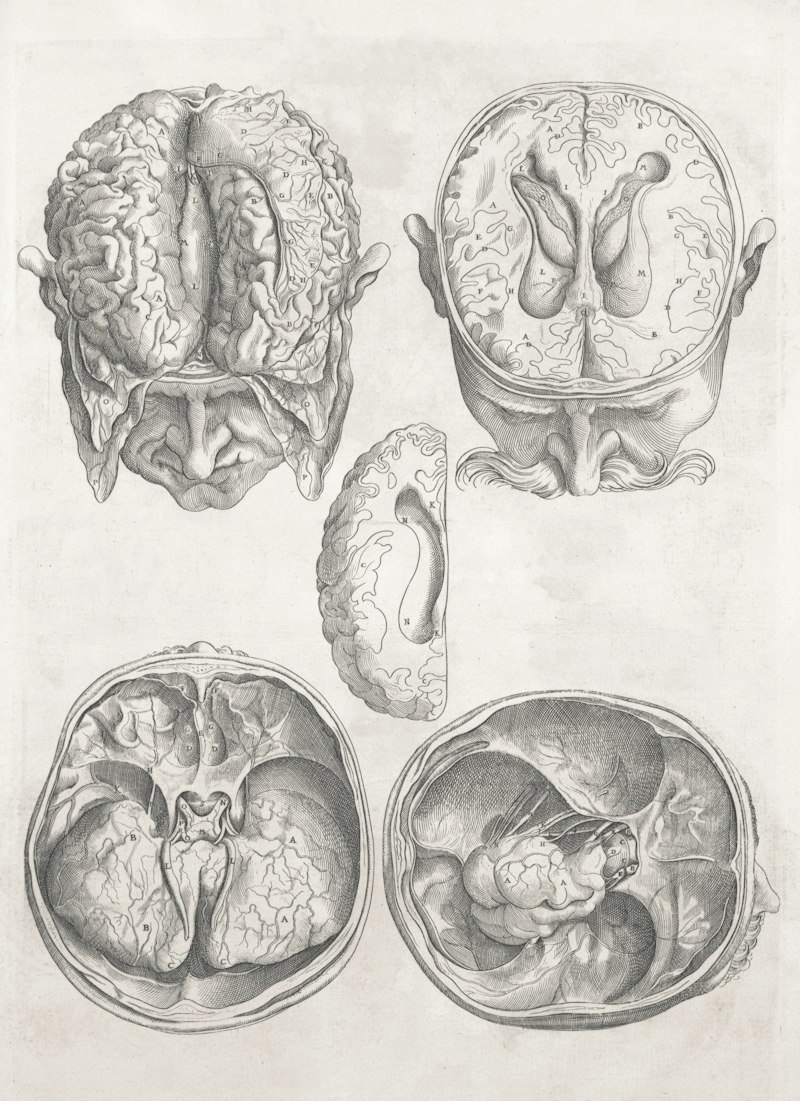
The fundamental principle driving this concept is the unequal distribution of neural resources and efficiency between the two cerebral hemispheres. When an individual is right-dominant, the left hemisphere typically assumes a more specialized role in controlling and planning the intricate sequences of movement required for skilled actions. This specialization leads to superior speed, strength, and coordination on the preferred side. Conversely, the non-dominant side, while fully capable of movement, often lacks the same degree of precision and automaticity. Understanding this intrinsic preference is vital, as it influences not only an individual’s innate abilities but also the optimal methods for acquiring new motor skills and recovering from neurological injury.
Historical Foundations and Early Theories
The formal investigation into motor dominance began in earnest in the early 20th century, seeking to bridge the gap between observed behavioral asymmetry and neurological structure. A pivotal figure in this exploration was the renowned psychologist Karl Lashley, who, in the 1930s, introduced the concept of the “dominant hemisphere.” Lashley posited that the brain possessed a distinct hemisphere that exerted primary control over complex movements, particularly those executed by the opposite side of the body. This early theory marked a significant step away from viewing the brain as two identical, interchangeable halves and acknowledged the functional specialization that underpins behavioral differences.
Lashley’s initial framework was later expanded and refined by subsequent researchers, notably D. O. Hebb and W. K. Estes in the late 1940s. These researchers began to view motor control not just as a simple hemispheric switch, but as a hierarchical system. They proposed the existence of a “motor dominance hierarchy,” suggesting that the degree of dominance varies among different muscle groups and body parts. In this model, certain motor units were inherently more dominant or better integrated into the preferred hemispheric control network than others, leading to differential proficiency across tasks—for example, an individual might be strongly right-handed but only mildly right-footed. This hierarchical view helped explain why even highly dominant individuals might show occasional or mild ambidextrous tendencies in specific, less complex movements, providing a more nuanced understanding of how motor tasks are organized and executed at the neural level.
Neurological Basis and Hemispheric Control
The neurological basis of motor dominance is intrinsically linked to the concept of cerebral lateralization, or the functional specialization of the brain’s two hemispheres. Movement control is primarily contralateral, meaning the left hemisphere governs movement on the right side of the body, and the right hemisphere controls the left. In approximately 90% of the population, the left hemisphere is dominant for language processing, and this linguistic dominance often correlates strongly with right-side motor dominance. This interconnectedness suggests that the neural structures that facilitate complex, sequential thought (like language) are often the same structures that optimize the planning and execution of complex, sequential movements (like writing or throwing).
Specific areas, such as the primary motor cortex, the premotor cortex, and supplementary motor area (SMA), exhibit structural and metabolic asymmetries that align with motor dominance. Studies using functional magnetic resonance imaging (fMRI) often show greater activation and more efficient neural pathways in the dominant hemisphere when an individual performs a complex task with their preferred limb. This efficiency allows for faster signal transmission, reduced latency in muscle activation, and superior feedback processing, all of which contribute to the speed and accuracy observed in dominant limb performance. The stability of motor dominance over time, as suggested by research, reflects the enduring nature of these underlying neural architectures, which are established early in development.
Manifestations and Measurement in Motor Tasks
Motor dominance manifests across a variety of human actions, extending beyond the commonly recognized handedness. It is routinely assessed through battery tests that measure performance differences between limbs in tasks requiring speed, strength, and accuracy. For example, measures of fine motor control include tasks like rapid finger tapping, peg placement, and tracing, while gross motor control is tested using activities such as throwing velocity, kicking accuracy, and sustained grip strength. The observed differences in performance provide a quantitative measure of the degree of laterality.
Research has consistently demonstrated that individuals with a strong, unambiguous motor preference tend to exhibit superior performance outcomes in specialized tasks compared to those who show mixed or weak dominance. This advantage is not merely due to practice; it is hypothesized to stem from the optimized neural programming within the dominant hemisphere, which reduces cognitive load during execution. Furthermore, the stability of motor dominance is a critical factor; individuals generally maintain the same dominant side throughout their lifespan, indicating that this trait is relatively impervious to environmental pressures, although practice can certainly improve the capabilities of the non-dominant limb. The challenge in measuring motor dominance lies in distinguishing between true innate preference and skills acquired through cultural practice (e.g., being forced to write with the right hand).
A Practical Example: The Throwing Task
To illustrate the operational impact of motor dominance, consider a simple, everyday scenario: a child learning to throw a baseball or softball with precision and velocity. Initially, a young child might attempt the throw using either arm, perhaps with awkward, uncoordinated movements. However, very early on, the child will naturally gravitate toward the arm controlled by their dominant hemisphere—let us assume the right arm.
The application of the dominance principle unfolds in several crucial steps.
- The Initial Preference: When presented with the ball, the child instinctually uses the right arm. Even if the left arm is initially attempted, the right arm feels “more natural” because the neural planning pathways originating in the specialized left hemisphere are more efficient and readily available for complex sequence generation.
- Rapid Skill Acquisition: As the child practices, the speed of motor learning for the dominant right arm significantly outpaces that of the non-dominant left arm. The motor cortex associated with the right limb quickly refines the trajectory, muscle firing patterns, and coordination required for a successful throw.
- Performance Asymmetry: After consistent practice, the difference becomes profound. The right arm will achieve greater throwing velocity, superior accuracy, and sustain less fatigue during repetitive throwing compared to the left arm. If the child were forced to use the left arm, the movements would likely remain slower, less coordinated, and require more conscious cognitive effort, highlighting the functional superiority conferred by motor dominance.
Significance for Learning and Performance
The concept of motor dominance holds profound significance for both clinical and performance psychology, particularly in the fields of rehabilitation, sports training, and pedagogy. In motor learning theory, it helps explain why certain skills are acquired more easily and quickly on one side of the body. Individuals with strong dominance are often at an advantage in sports requiring high levels of unilateral skill, such as racket sports or pitching, because the neural architecture is already optimized for precise, high-speed execution on the preferred side. This understanding guides coaches to prioritize training techniques that maximize the natural efficiency of the dominant limb while ensuring the non-dominant limb maintains adequate supporting function.
In clinical applications, particularly physical therapy and neurological rehabilitation, recognizing motor dominance is crucial. Following a stroke or injury, therapists must assess the residual function of the dominant versus non-dominant limbs, as the potential for recovery and the strategies employed for retraining may differ significantly based on the underlying hemispheric specialization. For instance, recovery of fine motor skills might be slower or require different therapeutic approaches if the dominant hemisphere was the area affected by the injury. Furthermore, awareness of dominance is essential in ergonomic design and educational settings, ensuring tools and learning materials are optimally presented to facilitate performance and reduce strain on the preferred side.
Related Concepts and Broader Context
Motor dominance is not an isolated phenomenon; it is closely interconnected with several other key concepts within psychology and neuroscience, primarily falling under the broad categories of Biopsychology, Motor Control, and Cognitive Psychology. The overarching theoretical framework it belongs to is called laterality, which encompasses all forms of functional asymmetry in the body.
Several related concepts help to define and contextualize motor dominance:
- Handedness: This is the most common and visible manifestation of motor dominance, referring specifically to the preferred use of one hand for tasks like writing, eating, and manipulating tools. While highly correlated, motor dominance is a broader term encompassing all limbs.
- Cerebral Lateralization: This is the neuroscientific principle detailing that specialized functions (like language, spatial awareness, and motor planning) are predominantly controlled by one hemisphere. Motor dominance is the behavioral output of cerebral lateralization applied to movement.
- Functional Asymmetry: This describes the general tendency for one side of a biological system to be functionally superior or specialized compared to the other. Motor dominance is a specific example of this general biological principle as applied to the musculoskeletal and nervous systems.
- Ambidexterity: The rare ability to use both sides of the body equally well. True ambidexterity is distinct from mixed dominance, where an individual might be dominant for different tasks (e.g., right-handed for writing, left-footed for kicking). Ambidextrous individuals often show less pronounced cerebral lateralization.