Motor Function: The Hidden Psychology of Every Move
Scientifically Reviewed · Dr. Marwa Abd-Alazim · October 23, 2026
Review Criteria & Clinical Standards
This content undergoes rigorous scientific peer-review and medical editorial standards at Arab Psychology Network to ensure clinical accuracy, validity, and compliance with evidence-based guidelines from leading psychological and healthcare authorities (APA / WHO).
The Core Definition of Motor Function
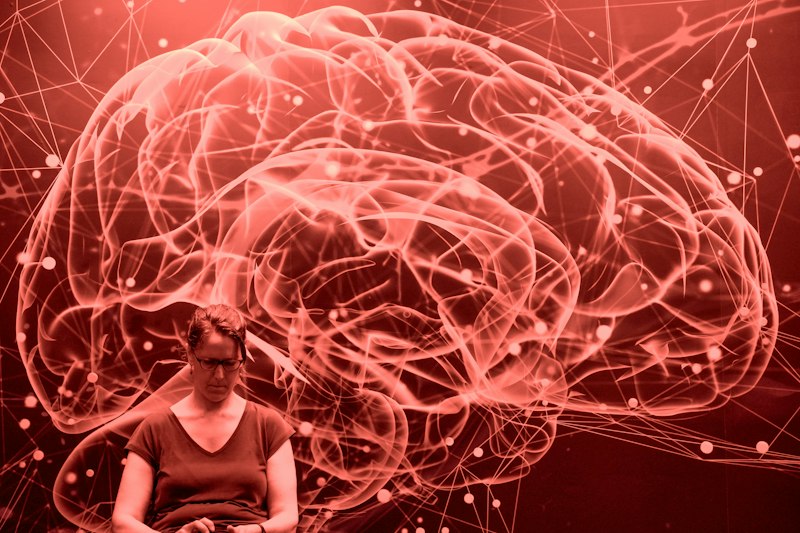
Motor function is a fundamental and complex umbrella term in psychology and neuroscience used to describe the entire scope of activities and mechanisms that facilitate purposeful movement in an organism. At its simplest, motor function encompasses any action, reflex, or coordinated movement that is executed through the activation of muscle tissue, primarily driven by the central nervous system. This process is crucial for survival, enabling us to interact dynamically with our environment, maintain balance, and perform complex tasks ranging from basic locomotion to highly refined motor skills required in artistry and sports. Understanding motor function requires examining the intricate interplay between sensory input, cognitive planning, and muscular output, highlighting its multifaceted nature that transcends simple physical response.
The fundamental mechanism underlying motor function is the action of specialized nerve cells known as motor neurons. These efferent neurons transmit signals from the central nervous system (CNS)—specifically the brain and spinal cord—outward to the muscles, glands, and organs. A complex movement begins with a decision or intention formulated in higher cortical areas, which is then refined and modulated by subcortical structures like the basal ganglia and cerebellum before the final command is routed through the primary motor cortex. This intricate system ensures that movements are not only initiated but are also precisely scaled, timed, and adapted to external conditions, transforming abstract thought into tangible, coordinated physical action. The efficiency and reliability of these neural pathways are paramount for healthy human movement and responsiveness.
Historical Development and Pioneers
The study of movement, while seemingly physical, has deep roots in early psychological and neurological inquiry. The foundation of modern understanding of motor control was laid by researchers in the late 19th and early 20th centuries who sought to explain the relationship between the nervous system and bodily response. Two of the most significant figures in this foundational period were the Russian physiologist Ivan Pavlov and the British neurophysiologist Sir Charles Sherrington. Pavlov, although primarily known for his work on learning and classical conditioning, provided critical insights into how simple reflexes could be adapted and integrated into complex, learned behaviors, suggesting that even involuntary motor responses are trainable and modifiable through experience and environment.
Sherrington’s work, particularly detailed in his seminal 1906 book, The Integrative Action of the Nervous System, revolutionized the understanding of reflexes and the fundamental unit of neural communication—the synapse. Sherrington mapped out the reflex arc, demonstrating that movement is often a result of inhibitory and excitatory processes working in concert within the spinal cord. His contributions were essential because they provided the structural and functional framework for understanding how the nervous system coordinates opposing muscle groups for seamless movement, establishing the physiological basis upon which all subsequent theories of motor control would be built. These early investigations transitioned the study of movement from simple anatomy to dynamic neurophysiology, paving the way for the emergence of modern cognitive neuroscience.
More recently, research has exploded thanks to advances in neuroimaging and cellular biology. A particularly noteworthy discovery was that of mirror neurons in the 1990s. These specialized brain cells, found primarily in the premotor cortex and inferior parietal lobe, activate both when an individual executes an action and when they observe another individual performing the same action. This finding has profound implications not only for motor learning—suggesting a neural mechanism for imitation and skill acquisition—but also for social cognition, empathy, and theory of mind, demonstrating the deep link between physical action and social understanding. The existence of mirror neurons highlights that motor function is not solely about execution but is intimately involved in perception and social interaction.
Key Components: Control, Learning, and Development
The broad field of motor function is traditionally segmented into three interconnected areas of study: motor control, motor learning, and motor development. Motor control is the study of the immediate mechanisms and processes that govern movement execution, focusing on the neural processes that regulate posture, balance, coordination, and timing during a specific action. This area investigates how the brain utilizes feedback (such as proprioception and visual input) to adjust ongoing movements in real-time, ensuring accuracy and stability. Researchers in motor control often examine the roles of the cerebellum, the basal ganglia, and the descending motor pathways originating from the primary motor cortex.
Motor learning, conversely, is concerned with the acquisition and refinement of novel motor skills over time. This involves the relatively permanent changes in the ability to perform a movement successfully, resulting from practice or experience. Psychologists study concepts like the stages of learning (cognitive, associative, autonomous) and the factors that optimize retention and transfer of skills, such as the type and frequency of feedback provided. Motor learning involves significant neural plasticity, where repeated practice leads to structural and functional reorganization within the motor cortex and associated pathways, improving the efficiency of the neural circuits responsible for the practiced movement.
Finally, motor development tracks the evolution and maturation of motor skills throughout the lifespan, from infancy through old age. This subfield focuses on the predictable sequence of milestones—such as grasping, crawling, and walking—and the genetic, environmental, and physiological factors that influence this timeline. Understanding motor development is critical for identifying potential delays or deficits early in life, and it provides a framework for understanding how physical capabilities constrain or enable cognitive and social growth. Together, these three components illustrate that motor function is a dynamic, lifelong process of coordination, adaptation, and refinement.
Applying Motor Function: A Real-World Scenario
To illustrate the integration of motor control and motor learning, consider the common, yet highly complex, task of learning to play a musical instrument, such as the piano. Initially, the process is effortful and clumsy, requiring intense cognitive attention. The novice pianist must consciously plan every finger movement, relying heavily on visual cues and explicit instruction—this represents the cognitive stage of motor learning. The brain is working hard to establish the appropriate sequence of commands necessary to activate the specific motor neurons that control the hand and finger muscles.
As the student practices, the task moves into the associative stage. Repetition allows the neural pathways to become more efficient, and the dependence on visual feedback diminishes. The student begins to rely more on proprioceptive feedback—the sense of limb position—and auditory feedback from the played notes. The basal ganglia and the cerebellum begin to take over regulatory roles, smoothing out the movements and coordinating the timing between the two hands. This practice strengthens the connections between the motor cortex and the muscles, reducing errors and increasing speed. The complex sequence of movements transitions from a series of individual conscious steps into integrated, automatic motor programs.
Ultimately, after extensive practice, the skill reaches the autonomous stage. The pianist can execute complex pieces without conscious thought dedicated to individual finger placement; the motor program runs automatically, freeing up cognitive resources for musical interpretation and emotional expression. If the pianist makes an error, the rapid sensory-motor loop allows for instantaneous correction without interrupting the flow—a hallmark of highly refined motor control. This transition from highly conscious, effortful movement to automatic, adaptable skill demonstrates the profound efficiency gains achieved through motor learning and the physical realization of neural plasticity.
Clinical Significance and Therapeutic Impact
The understanding of motor function is profoundly important to the field of clinical psychology, neurology, and physical rehabilitation. Motor deficits are often key symptoms of neurological disorders such as Parkinson’s disease, stroke, cerebral palsy, and multiple sclerosis. By meticulously analyzing which aspects of <a href="https://en.wikipedia.org/wiki/Motor_function—control, learning, or development—are impaired, clinicians can accurately localize brain damage and tailor targeted therapeutic interventions. For instance, difficulties in coordinating balance and fine movements often point toward cerebellar damage, while difficulties initiating movement (akinesia) are characteristic of basal ganglia dysfunction.
This knowledge is directly applied in physical and occupational therapy, where the goal is often to induce motor relearning following injury or disease. Techniques such as constraint-induced movement therapy (CIMT) for stroke patients, or repetitive practice protocols used in rehabilitation, are all grounded in principles derived from motor learning research. These therapies exploit the neuroplasticity of the brain, encouraging the formation of new neural pathways or strengthening existing ones to compensate for damaged areas. Understanding the role of feedback and motivation in the acquisition of movement skills allows therapists to design optimal environments for recovery, leading to significantly enhanced recovery outcomes and improved quality of life for patients struggling with motor impairments.
Furthermore, motor neurons and motor pathways are essential research targets for understanding developmental disorders. Developmental Coordination Disorder (DCD), for example, involves significant difficulty in coordinating movements that cannot be explained by general intellectual or physical impairment. Research into DCD relies heavily on understanding typical motor development trajectories to identify specific breakdowns in sensory integration or motor planning. Thus, the study of <a href="https://en.wikipedia.org/wiki/Motor_function provides the crucial diagnostic and therapeutic framework necessary for treating a vast array of physical and neurological conditions across the lifespan.
Related Concepts and Subfields of Study
Motor function is a central topic within the broader subfield of Biological Psychology (or behavioral neuroscience), as it relies heavily on understanding neurological structures and physiological processes. It also strongly intersects with Cognitive Psychology, particularly in areas related to motor planning, attention, and executive function, as movement initiation requires decision-making and goal setting. Key related concepts include Proprioception, which is the body’s unconscious sense of self-movement and position, providing the necessary sensory feedback loop for smooth motor control, and Kinesthesia, the awareness of body movement.
The concept of the Degrees of Freedom Problem is also fundamentally connected to motor function. Proposed by Russian neurophysiologist Nikolai Bernstein, this problem addresses the immense computational challenge the nervous system faces in coordinating the numerous joints, muscles, and motor units required to execute even a simple movement. The brain must select one effective solution out of countless possible combinations, effectively reducing the “degrees of freedom” to manage the complexity. Theories of motor control attempt to explain the organizational principles—such as motor synergies or internal models—that the nervous system employs to solve this critical problem efficiently.
Finally, as demonstrated by the discovery of mirror neurons and Pavlov’s work on classical conditioning, motor studies are deeply interwoven with Social Psychology and Learning Theory. The ability to imitate movements is crucial for social transmission of skills and culture, while the principles of operant and classical learning explain how motor responses are acquired, maintained, and modified throughout life. Therefore, motor function stands at the confluence of neuroscience, cognition, and behavioral science, serving as a critical bridge for understanding how the mind controls the body and interacts with the world.