Motor Imitation: How We Learn Through Action
Scientifically Reviewed · Dr. Marwa Abd-Alazim · October 14, 2026
Review Criteria & Clinical Standards
This content undergoes rigorous scientific peer-review and medical editorial standards at Arab Psychology Network to ensure clinical accuracy, validity, and compliance with evidence-based guidelines from leading psychological and healthcare authorities (APA / WHO).
The Core Definition of Motor Imitation
Motor Imitation is fundamentally defined as the ability to observe and subsequently reproduce the specific physical movements or gestures performed by another individual. This process is far more complex than a simple reflex; it requires an intricate cognitive translation where visual input is mapped onto corresponding motor output. At its simplest, motor imitation serves as a primary conduit for Social Learning, enabling the rapid and efficient acquisition of skills and cultural practices without reliance solely on lengthy trial-and-error methods. This mechanism is central to human development, facilitating everything from learning language cues to mastering athletic techniques and professional trades, thereby ensuring the transmission of complex knowledge across generations and within social groups.
The core principle driving successful imitation is Perceptual-Motor Matching, which posits a direct functional link between the sensory information gathered during observation (the perception of the action) and the motor system responsible for executing that action (the motor output). This matching system allows the observer to bypass purely verbal instruction, creating an internal simulation of the observed movement. This simulation is critical because it enables the brain to predict the outcome of the action before it is physically executed, drastically improving the efficiency and accuracy of the skill acquisition process. Without this sophisticated internal representation, imitation would be reduced to clumsy, disconnected attempts rather than the seamless, goal-oriented replication frequently observed in humans.
Cognitive Mechanisms Underlying Imitation
Successful motor imitation relies upon a coordinated sequence of high-level cognitive processes that move beyond basic observation. The first critical step involves Action Representation, where the observed movement is internally encoded not merely as a series of kinematic changes (e.g., changes in joint angles) but as a meaningful action directed toward a specific goal. This requires the observer to interpret the intent behind the movement, not just the movement itself. For instance, when watching someone reach for a cup, the cognitive system registers the goal (to drink) rather than just the muscle contractions used to achieve the reach.
Following representation, the brain engages in Action Planning. This phase involves translating the internal representation into a viable motor command set that can be executed by the observer’s own body. This planning must account for the observer’s unique physical constraints, ensuring that the movement, while mirroring the observed goal, is optimized for the individual’s physiology. Research suggests that various factors, including age, social context, and familiarity with the action, can influence the fidelity and speed of this planning process. For example, complex or novel motor skills require more extensive planning and cognitive load compared to simple, repetitive gestures.
These cognitive mechanisms—perceptual-motor matching, representation, and planning—work in conjunction to explain why human imitation is so flexible and powerful. The integration of these components allows individuals to perform movements that are highly accurate, even when they have never executed the precise action before, underscoring the foundational role of imitation in rapid behavioral adaptation and motor skill learning.
Neural Correlates: The Mirror Neuron System
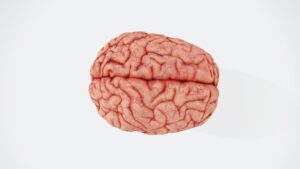
At the neural level, the mechanisms of motor imitation are strongly linked to the discovery of the Mirror Neuron System (MNS). Identified primarily in primate studies and later confirmed through neuroimaging in humans, mirror neurons are specialized visuomotor neurons that fire both when an individual performs an action and when the individual observes another performing the same action. This unique property provides the biological substrate necessary for perceptual-motor matching, creating a direct “mirror” between observation and execution in the brain. The MNS thus offers a compelling explanation for how we internally understand and replicate the actions of others.
Neuroscience studies utilizing functional Magnetic Resonance Imaging (fMRI) and other neuroimaging techniques have consistently implicated several key brain regions in the human motor imitation network. These regions form a distributed network crucial for translating visual input into motor plans. Specifically, activity is often observed in the Premotor Cortex and the Inferior Parietal Cortex, which are core components of the MNS. The premotor cortex is essential for planning and sequencing movements, while the inferior parietal cortex often integrates sensory information with motor intentions.
Furthermore, other cortical areas contribute significantly to the complex task of imitation. The superior temporal sulcus (STS) plays a critical role in analyzing the biological motion observed, determining the goal and intentionality of the action, which then feeds into the MNS for execution planning. Additionally, research suggests involvement from the anterior cingulate cortex and the dorsolateral prefrontal cortex, indicating that error monitoring, attention, and executive control are also necessary components when successfully attempting to copy a movement, particularly when the action is novel or difficult.
Historical Foundations and Early Research
The study of motor imitation gained significant traction in the late 20th century, challenging earlier behaviorist perspectives that largely viewed imitation as a learned chain of stimuli and responses. A pivotal moment occurred with the groundbreaking work of psychologists Meltzoff & Moore in 1977. Their research demonstrated that human neonates, some as young as two months old, were capable of imitating facial and manual gestures, such as tongue protrusion and mouth opening. This finding was revolutionary because it suggested that the capacity for imitation was innate and present at birth, rather than being a complex skill acquired much later through extensive social conditioning.
These early Infant Studies established motor imitation as a fundamental aspect of human development, integral to early social interaction and the development of self-other awareness. The immediate presence of imitation capabilities implies a pre-wired mechanism for linking the perception of others’ bodies to one’s own motor schema. This foundational research paved the way for modern neuroscience to investigate the neural architecture, eventually leading to the discovery and detailed mapping of the mirror neuron system, which provided the physiological basis for the behavioral observations of Meltzoff & Moore.
Practical Applications and Real-World Examples
Motor imitation is vividly demonstrated in everyday scenarios involving skill acquisition, such as sports training or learning a specialized craft. Consider the example of an individual learning to perform a complex golf swing. Simply reading instructions or listening to a coach describe the mechanics is often insufficient. Instead, the most effective method involves observing a skilled professional execute the swing repeatedly. This observation phase initiates the imitation process.
The process follows a distinct “how-to” sequence internally. First, the observer watches the expert (Perception) and the brain immediately begins to simulate the movement using the MNS (Representation). The observer does not just see a moving club; they feel, internally, the required weight shift, torque, and follow-through. Second, the individual attempts the swing (Execution), using the internal representation as a template. Third, the resulting movement is compared to the stored model (Feedback/Error Correction). If the executed swing does not match the observed goal (e.g., the ball slices), the internal simulation is adjusted, leading to improved planning for the next attempt. This cyclical process, underpinned by motor imitation, allows for much faster skill refinement than relying solely on verbal instruction or physical guidance.
Significance in Social and Clinical Psychology
The importance of motor imitation extends far beyond physical skill learning; it is a critical component of healthy social functioning. Research, notably by Rizzolatti and Sinigaglia, has highlighted how the very neural architecture that enables us to imitate movements also underpins our capacity for social cognition. By mirroring the actions of others, we gain an internal, embodied understanding of their intentions and emotional states. This process is intimately linked to the development of Empathy, as simulating another person’s actions helps us understand their subjective experience, bridging the gap between self and other.
In applied settings, motor imitation serves as a crucial tool in clinical and educational contexts. It is frequently employed in behavioral therapies, particularly those designed to teach complex social skills to individuals with developmental disorders, such as Autism Spectrum Disorder (ASD). By presenting models of appropriate behavior and asking the individual to imitate those actions, therapists can facilitate the acquisition of necessary skills for successful social interaction, including interpreting non-verbal cues and modulating Prosocial Behavior. The ability to copy actions is therefore foundational to both typical and atypical development of social competence.
Connections and Related Theoretical Frameworks
Motor imitation sits within a broader theoretical landscape that includes various concepts related to learning through observation. It is distinct from, yet closely related to, concepts like *mimicry*, which often refers to unconscious, automatic, and often low-level copying of gestures or posture, lacking the intentional, goal-directed nature of motor imitation. It is also a specific subset of Albert Bandura’s influential theory of *Observational Learning* (or Social Cognitive Theory), where imitation is the active mechanism by which observed behaviors are encoded and reproduced, leading to new knowledge.
Motor imitation is an interdisciplinary topic, drawing heavily from several major subfields of psychology. Its study of internal representations and planning falls squarely within Cognitive Psychology. Its focus on social interaction, empathy, and group cohesion places it firmly within Social Psychology. Finally, the investigation of how these abilities emerge and change over the lifespan is a central concern of Developmental Psychology. The neural basis provided by the MNS further cements its importance within the field of cognitive Neuroscience, making motor imitation a key bridge concept that unifies multiple psychological disciplines in the study of human behavior and interaction.