Motor Memory: How Your Brain Masters Physical Skills
Scientifically Reviewed · Dr. Marwa Abd-Alazim · August 21, 2026
Review Criteria & Clinical Standards
This content undergoes rigorous scientific peer-review and medical editorial standards at Arab Psychology Network to ensure clinical accuracy, validity, and compliance with evidence-based guidelines from leading psychological and healthcare authorities (APA / WHO).
The Core Definition of Motor Memory
Motor memory is fundamentally defined as the specialized capacity of an individual to acquire, retain, and subsequently retrieve previously executed motor sequences or skills. This form of memory is distinct because it involves physical actions rather than conscious facts or events. At its most basic level, motor memory allows us to remember specific movements, such as the steps of a complex dance routine, the precise grip needed to hold a tennis racket, or the intricate finger movements required to play a musical instrument, and then replicate them with efficiency and accuracy, often without requiring significant conscious thought. It represents the crucial link between learning a physical skill—a process known as motor learning—and the ability to automate that skill for long-term use.
The core mechanism underlying motor memory is the transformation of novel, effortful movements into automatic, effortless actions. When a skill is first attempted, it requires high cognitive load, demanding constant attention and correctional feedback. Through repetition and practice, the brain reorganizes the neural pathways responsible for that action. This consolidation process involves structural and functional changes in key brain regions, leading to the formation of a robust memory trace, often referred to as a motor engram. This engram, once established, ensures that the movement can be performed reliably, even after extended periods of inactivity, illustrating the powerful longevity and resilience characteristic of motor skills.
Fundamental Mechanisms and Neural Substrates
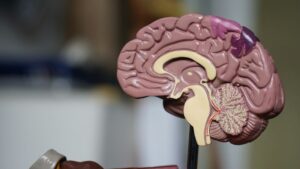
The neurological infrastructure supporting motor memory is highly complex and distributed across several critical brain regions, primarily involving the **cerebellum**, the **basal ganglia**, and the motor and premotor cortices. The cerebellum is often considered the principal locus for the fine-tuning, timing, and error correction essential for procedural learning. It compares the intended movement with the actual movement executed, generating prediction signals that allow for rapid adjustments and ultimately refining the motor program. Damage to the cerebellum typically impairs the ability to learn new motor skills and maintain smooth, coordinated movements, highlighting its critical role in the acquisition phase of memory.
In contrast, the basal ganglia are primarily associated with the selection, initiation, and sequencing of movements, playing a significant role in habit formation and the transition of a skill from conscious control to unconscious, automatic execution. As a movement becomes ingrained and transitions into long-term procedural memory, the dependency shifts increasingly toward the basal ganglia, reducing the reliance on the prefrontal cortex which handles conscious decision-making. This shift in neural control is the hallmark of the autonomous stage of motor skill acquisition, where execution becomes fast, accurate, and resistant to interference from secondary cognitive tasks.
Historical Context and Key Researchers
The study of motor memory traces its origins back to the late 19th and early 20th centuries, coinciding with the rise of experimental psychology and the study of human performance. Early investigations often focused on measuring the learning curves and retention rates of simple motor tasks, such as tracing figures or mastering telegraphy. Pioneer researchers like William Bryan and N. Harter, in their seminal 1899 work on telegraph operators, detailed the plateau and eventual breakthrough stages observed during the acquisition of complex skills, providing some of the earliest empirical evidence for the time-dependent nature of skill consolidation.
However, the modern theoretical framework for motor learning and memory gained significant traction in the mid-20th century with the development of information processing theories. Fitts and Posner’s influential three-stage model of skill acquisition (1967)—cognitive, associative, and autonomous—provided a crucial structure for understanding how motor skills transition from being rule-based and error-prone to being fluid and automatic. This model emphasized that memory for movement is not simply a passive record but an active, dynamic process involving continuous refinement and internal model updating. The subsequent advancements in cognitive neuroscience and functional brain imaging have allowed researchers to map these behavioral stages directly onto specific neural circuit reorganizations, greatly deepening our understanding of the physical basis of motor memory retention.
A Practical Example: Learning to Ride a Bicycle
A perfect illustration of motor memory in action is the process of learning to ride a bicycle, a skill often cited as unforgettable once mastered. Initially, the process is highly cognitive: the rider must consciously process balance, steering input, pedal timing, and environmental factors simultaneously. This stage requires immense mental effort, leading to frequent errors and high frustration. Over time, as practice continues, the brain begins to form and consolidate the necessary motor programs.
The transition from beginner to expert demonstrates the three-stage process of motor learning being encoded into motor memory. The initial conscious effort is slowly replaced by automaticity, allowing the rider to perform the fundamental actions—like maintaining balance and pedaling rhythm—without dedicating focused attention to them. This frees up cognitive resources for higher-level tasks, such as observing traffic or enjoying the scenery. The final, autonomous skill is stored as a robust motor schema, requiring little conscious retrieval effort, which is why the skill persists even after years of not riding.
The application of the motor principle in this scenario can be broken down into clear steps:
- Cognitive Stage: The rider consciously attends to instructions and external feedback (“Turn the handlebars slightly to the left to correct a lean to the right”). This stage heavily relies on declarative memory (facts and rules).
- Associative Stage: Through repeated practice, the rider links specific sensory inputs (feeling a lean) directly to corresponding motor outputs (a quick steering correction). Errors decrease, and the movement becomes smoother and more consistent. The neural pathways begin to consolidate.
- Autonomous Stage: The motor program is fully consolidated into motor memory. The rider executes the skill automatically; balancing is unconscious, and complex maneuvers are performed efficiently without verbal or internal dialogue. This highly consolidated skill is stored primarily within the subcortical structures like the cerebellum and basal ganglia.
Significance in Psychology and Neuroscience
The concept of motor memory holds profound significance within psychology because it provides crucial evidence for the distinction between different types of memory systems. Specifically, motor memory is a vital component of **implicit memory**, or non-declarative memory, which governs skills and habits that are not subject to conscious recall. This contrasts sharply with **explicit memory** (declarative memory), which handles facts (semantic memory) and events (episodic memory). The existence of motor memory allows researchers to study learning processes that occur outside of conscious awareness, offering insights into how the brain adapts and optimizes physical behavior.
Furthermore, the study of the neural mechanisms underpinning motor memory has provided key insights into brain plasticity. The long-term retention of complex motor skills demonstrates the remarkable ability of the brain to undergo sustained structural and functional changes in response to training and experience. The physiological changes—such as strengthening synaptic connections (Long-Term Potentiation) and reorganizing cortical maps—reveal that the adult brain is constantly remodeling itself to optimize performance. This understanding is foundational not only to theoretical neuroscience but also to practical fields like rehabilitation and sports performance optimization.
Clinical and Real-World Applications
Motor memory research has critical applications across various clinical and real-world settings. In **physical rehabilitation** and occupational therapy, understanding how motor memories are formed and retrieved is essential for helping patients regain lost function following neurological injuries, such as stroke or traumatic brain injury. Therapists utilize principles of repetition, feedback, and task-specific training to encourage the brain to reorganize damaged pathways or create new ones, a process known as neurorehabilitation. The success of therapy hinges on the patient’s ability to engage in new motor learning that can be consolidated into durable motor memory.
Beyond the clinical setting, the principles of motor memory are extensively applied in fields requiring high-level physical performance and training:
- Sports Psychology: Coaches use blocked practice (repetition of one skill) and random practice (mixing skills) based on knowledge of how these different methods affect the retention and transfer of motor skills.
- Education and Training: Vocational training programs, especially those requiring precise manual labor (e.g., surgery, welding, piloting), rely on simulators and repetitive drills to ensure the motor programs are consolidated under low-stress conditions before live execution.
- Human-Computer Interaction: Designing interfaces and devices that leverage existing motor memories (e.g., QWERTY keyboard layout) improves user efficiency and reduces the cognitive load associated with interacting with new technology.
Connections to Related Memory Systems
Motor memory is not an isolated phenomenon; it exists within the broader category of **procedural memory**, which encompasses all memories for “how to do” things, including cognitive skills (like reading) and simple conditioning. As such, motor memory is considered a primary subtype of procedural memory, emphasizing physical action. This relationship is crucial because procedural memory, including motor skills, is remarkably resilient to amnesia. Patients with severe damage to the hippocampus (the structure essential for forming new explicit memories) can often still learn and retain new motor skills, demonstrating that the two systems operate via distinct, parallel neural networks.
Furthermore, motor memory is intimately connected to **muscle memory**, a term often used colloquially to describe the retention of physical skills. While muscle memory suggests the memory resides in the muscle tissue itself, the scientific reality is that the memory is centrally stored in the nervous system—specifically, in the motor cortex, cerebellum, and basal ganglia. The sensation of the muscles “remembering” is simply the efficient, automated retrieval of the centrally stored motor program, reinforced by the peripheral nervous system. The longevity, robustness, and unconscious nature of motor memory are the definitive characteristics that link it inextricably to the broader domain of implicit learning and non-declarative knowledge.