Kinetic Psychology: How Movement Shapes Your Mind
Scientifically Reviewed · Dr. Marwa Abd-Alazim · September 11, 2026
Review Criteria & Clinical Standards
This content undergoes rigorous scientific peer-review and medical editorial standards at Arab Psychology Network to ensure clinical accuracy, validity, and compliance with evidence-based guidelines from leading psychological and healthcare authorities (APA / WHO).
Introduction and Definitional Scope
Movement, in the broadest context within psychology and physiology, is fundamentally defined as any activity of a muscle or body part that results in displacement, change in posture, or the execution of a task. This essential biological function serves as the primary mechanism through which organisms interact with their environment, perceive stimuli, and achieve goal-directed behavior. While the term encompasses complex motor skills like playing a musical instrument or surgical procedures, it also includes discrete, short-lasting actions requiring muscular engagement, such as the rapid contraction necessary for a reflex withdrawal or a brief adjustment of balance. The study of movement is inherently interdisciplinary, bridging neuroscience, biomechanics, cognitive psychology, and motor control theory to understand not only how actions are executed, but how they are planned, coordinated, and learned across the lifespan.
The psychological significance of movement extends beyond mere mechanics; it is inextricably linked to perception, cognition, and emotion. Our ability to move structures our understanding of spatial relationships, allows for non-verbal communication, and forms the basis of self-efficacy—the belief in one’s capacity to execute behaviors necessary to produce specific performance attainments. Therefore, understanding movement involves analyzing the efferent signals originating in the central nervous system (CNS) and tracing their journey through the peripheral nervous system to the muscle effectors, while simultaneously acknowledging the crucial role of afferent feedback loops that inform the system about the current state of the body and the environment. This continuous interplay between sensory input and motor output defines the dynamic nature of human action.
Distinctions are often made between movements based on their duration and complexity. A rapid, isolated muscular contraction, often categorized as a discrete movement, requires precise timing and immediate activation, often reflecting the original conceptualization of a short-lasting, muscle-dependent activity. Conversely, continuous movements, such as swimming or running, involve rhythmic and repetitive actions that persist over extended periods. Regardless of the type, the core requirement remains the coordinated activation of motor units—the functional link between a motor neuron and the muscle fibers it innervates—underscoring that all movement, whether conscious or reflexive, voluntary or involuntary, requires highly specific neurological and muscular orchestration.
Biological Basis of Movement: The Neuromuscular System
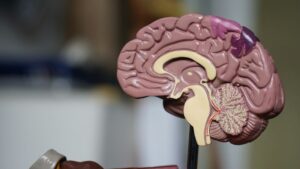
The initiation and execution of movement rely upon a highly integrated biological architecture known as the neuromuscular system. At the apex of this hierarchy lies the motor cortex, specifically the primary motor cortex (M1), which is responsible for generating the neural impulses that control voluntary movement. Adjacent areas, such as the premotor cortex (PMC) and the supplementary motor area (SMA), are critical for motor planning, sequencing complex movements, and coordinating bilateral actions. These cortical regions do not operate in isolation; they depend heavily on subcortical structures that refine, stabilize, and modulate the descending motor commands, ensuring that the intended action is smooth, accurate, and appropriately timed.
Two major subcortical structures are essential modulators of movement: the cerebellum and the basal ganglia. The cerebellum acts primarily as a comparator and error-correction mechanism. It receives extensive sensory input regarding the body’s position (proprioception) and the desired movement plan from the cortex. By comparing the intended movement with the actual movement being executed, the cerebellum rapidly adjusts motor output, ensuring coordination, balance, and precision. Damage to the cerebellum often results in ataxia—a lack of voluntary coordination—highlighting its vital role in refining motor programs. Conversely, the basal ganglia are crucial for the initiation and selection of appropriate movements, inhibiting unwanted movements, and regulating the scaling of force and amplitude. Deficits in the basal ganglia pathways, such as those seen in Parkinson’s disease, lead to characteristic movement disorders involving rigidity, tremor, and difficulty initiating action.
The final common pathway for movement involves the activation of alpha motor neurons in the spinal cord, which extend axons out to the skeletal muscles. The motor neuron and the specific muscle fibers it innervates constitute a motor unit. The force and duration of any movement are regulated by two mechanisms: the recruitment of additional motor units and the rate at which these units fire (rate coding). Furthermore, sensory feedback, particularly proprioception—the sense of the body’s position and movement—is continuously relayed back to the CNS via specialized receptors such as muscle spindles and Golgi tendon organs. This continuous afferent information is crucial for closed-loop control, allowing the nervous system to make ongoing, rapid adjustments to maintain accuracy and stability, especially during complex or unpredictable motor tasks.
Classification and Typology of Human Movement
Movement is categorized along several dimensions to facilitate analysis in psychology and kinesiology. One fundamental distinction is made between gross motor skills and fine motor skills. Gross motor skills involve large muscle groups and are responsible for large-scale body movements, such as locomotion (walking, running), balancing, and throwing. These skills are essential for mobility and stability. Fine motor skills, conversely, involve smaller muscle groups, particularly in the hands and fingers, and require high levels of dexterity and precision, exemplified by tasks like writing, buttoning a shirt, or using surgical instruments. The development and refinement of fine motor skills are critical indicators of neurological maturation and cognitive development throughout childhood.
Another critical classification revolves around the level of conscious control exerted over the action, differentiating between voluntary movement and involuntary movement. Voluntary movements are goal-directed, intentional, and initiated by the conscious decision-making centers of the cortex, ranging from simple reaching to complex serial tasks. These movements are flexible and adaptable, allowing humans to navigate novel environments effectively. In contrast, involuntary movements include spinal reflexes (e.g., the knee-jerk reflex), postural adjustments, and specific pathological tremors. These actions are rapid, stereotypic, and often mediated by lower brain centers or the spinal cord, serving primarily protective or homeostatic functions, although many voluntary skills, through extensive practice, transition into automatic, or highly optimized, forms of movement that require minimal conscious attention.
Motor control theorists also classify tasks based on their environmental stability, leading to the categories of open skills and closed skills. Closed skills are performed in stable, predictable environments where the performer determines when the action begins (e.g., shooting a free throw in basketball, gymnastics routine). These tasks allow for maximal planning and execution optimization. Open skills, however, are performed in dynamic and unpredictable environments that require the performer to constantly adapt their movement in response to external stimuli (e.g., catching a soccer ball, driving in heavy traffic). These tasks place a much higher demand on perceptual processes and rapid decision-making, emphasizing the fundamental link between perception and action in determining successful movement outcomes.
Movement, Cognition, and Motor Control Theories
The relationship between movement and cognition is profound, suggesting that movement is not merely the output of cognitive processes, but an integral component of perception and thought itself. Traditional motor control theories often posited the existence of motor programs—pre-structured sets of central commands capable of carrying out a movement sequence without relying on continuous sensory feedback. These programs are necessary to solve the “degrees of freedom problem,” which refers to the immense number of ways a joint or muscle can move. By organizing these variables into a cohesive, coordinated structure (the motor program), the CNS simplifies the control process, allowing for efficient, rapid movements that are less susceptible to delays inherent in feedback loops.
A significant shift in understanding movement control occurred with the development of dynamic systems theory and ecological psychology. Ecological approaches, championed by J.J. Gibson, emphasize the concept of the Perception-Action Cycle, asserting that perception is inherently linked to potential movement, and movement drives further perception. This perspective highlights the importance of affordances—the possibilities for action offered by the environment (e.g., a chair affords sitting, a handle affords grasping). In this view, movement is controlled not solely by internal mental representations but by the continuous, direct coupling between the organism and environmental information. Control emerges from the interaction of the organism, the task constraints, and the environment, rather than being dictated exclusively by a hierarchical command center.
Furthermore, cognitive psychology explores how higher-level executive functions are recruited during motor performance. Planning complex movements, especially those that are serial or novel, heavily involves working memory, attention, and inhibitory control. For instance, successfully executing a sequence of actions requires the suppression of irrelevant responses and the maintenance of the intended order of movements in short-term memory. The dual-task paradigm frequently utilized in cognitive motor research demonstrates that when attention is diverted from a motor task, performance often declines, especially in tasks requiring precision or balance, confirming that even seemingly automatic movements utilize cognitive resources when performed under challenging conditions or novel constraints.
Developmental Psychology and Motor Skill Acquisition
Motor skill acquisition is a central topic in developmental psychology, charting the progression from reflexive, uncoordinated movements in infancy to highly specialized, expert performance in adulthood. The process begins with basic, genetically encoded primitive reflexes (such as the rooting or grasping reflexes), which are gradually inhibited and replaced by voluntary, organized behaviors as the CNS matures. Key developmental milestones—including reaching, crawling, walking, and running—are achieved through a complex interplay of physical growth, neurological maturation, and environmental exploration.
The acquisition process is often modeled in stages, reflecting the cognitive demands placed on the learner. Fitts and Posner proposed a three-stage model: the Cognitive Stage, where the learner focuses on understanding the goal and the necessary actions, requiring high levels of conscious effort and attention; the Associative Stage, where the learner refines the movement, eliminating extraneous actions and establishing more efficient motor patterns; and finally, the Autonomous Stage, where the skill becomes highly automated, requiring minimal conscious thought, allowing attention to be directed toward strategic decision-making or environmental variables.
Practice and feedback are the cornerstone of motor learning. Deliberate practice, characterized by focused, challenging, and repetitive execution, is essential for strengthening neural pathways and optimizing movement efficiency. Feedback, particularly knowledge of results (KR) and knowledge of performance (KP), informs the learner about the success of their action and the quality of the movement executed. The structure and timing of feedback delivery are critical psychological variables; while immediate and frequent feedback is useful in the early cognitive stage, gradually reducing the frequency of feedback encourages the learner to rely on internal, intrinsic feedback mechanisms, fostering greater self-correction and long-term retention of the skill.
Psychological Dimensions: Emotion, Motivation, and Movement
Movement serves as a critical avenue for emotional expression and is deeply influenced by affective and motivational states. The field of kinesics studies non-verbal communication through body movements, gestures, and posture. Subtle shifts in gait, arm position, or facial micro-expressions communicate emotional states, intentions, and social dominance, often providing more honest signals than verbal language. For instance, reduced overall movement, a slumped posture, and a slow gait can be strong behavioral indicators of depression, while rapid, agitated movements may signal anxiety or high arousal.
Motivation is a powerful determinant of movement initiation and persistence. Theories of self-efficacy heavily rely on the capacity for successful movement execution. An individual’s belief in their ability to perform a specific motor task (e.g., running a marathon, learning a new dance) strongly predicts their willingness to initiate the behavior and persevere through difficulty. Conversely, learned helplessness or movement phobia can severely inhibit voluntary movement, even when physically capable. Furthermore, movement itself can be a regulatory mechanism for emotion; intentional movement, particularly physical exercise, is a well-documented psychological intervention for managing stress, improving mood, and enhancing overall psychological well-being through biochemical changes and cognitive distraction.
The experience of embodiment—the sense of being located within and controlling one’s body—is fundamentally reliant on the ability to move effectively. Disruptions to this sense, whether through injury, neurological disease, or psychological conditions like depersonalization, highlight the deep connection between motor control and self-perception. The study of phantom limb sensations, for example, illustrates how the CNS maintains a representation of the body and its potential for movement even after the physical limb is absent, underscoring that movement is rooted in cognitive mapping as much as in physical execution.
Clinical Implications and Disorders of Movement
Movement disorders fall into a wide spectrum, ranging from purely neurological etiologies to those with significant psychological components. Neurological movement disorders result from damage to the motor control centers, particularly the basal ganglia (leading to hypokinetic disorders like Parkinson’s disease, characterized by reduced movement, or hyperkinetic disorders like Huntington’s disease, characterized by excessive, involuntary movements), the cerebellum, or the descending motor pathways. These conditions create profound challenges for the individual, impacting independence, quality of life, and psychological adjustment.
Of particular interest to clinical psychology are psychogenic movement disorders (PMD), also known as functional movement disorders. These conditions involve abnormal movements (e.g., tremor, dystonia, gait disorders) that are not explained by organic neurological disease but are instead attributed to psychological distress or conversion symptoms. While these movements are involuntary in the sense that the patient cannot consciously suppress them, they are distinct from malingering and represent a genuine clinical phenomenon where psychological factors manifest as physical motor dysfunction. Treatment for PMDs often involves a multidisciplinary approach combining physical therapy with psychological interventions aimed at addressing underlying stress, anxiety, or trauma.
The psychological consequences of movement restriction, whether due to chronic pain, injury, or disease, are substantial. Limitations on movement often lead to feelings of frustration, loss of identity, and increased risk of clinical depression and anxiety. Rehabilitation psychology focuses on helping individuals adapt to and overcome these limitations, utilizing principles of motor learning to regain function, alongside cognitive behavioral techniques to manage the psychological distress associated with disability. Therapeutic movement, therefore, becomes both a physical process of retraining muscles and a psychological process of restoring self-efficacy and agency.
The Applied Psychology of Physical Activity and Exercise
In applied settings, the psychology of movement focuses heavily on intentional physical activity and exercise as health behaviors. Understanding the factors that influence adherence to exercise programs is a major area of study, drawing upon established models of health behavior change. Models such as the Theory of Planned Behavior (TPB) and the Health Belief Model (HBM) are utilized to predict the likelihood of an individual initiating or maintaining movement routines, emphasizing the roles of perceived behavioral control, subjective norms, and outcome expectations.
The psychological benefits derived from regular, intentional movement are extensive. Beyond the cognitive enhancements discussed earlier, physical exercise is a potent tool for mental health management. It is consistently linked to reductions in symptoms of anxiety and depression, improvements in sleep quality, and enhanced self-esteem. The mechanism is complex, involving the release of neurotransmitters (e.g., endorphins, dopamine), the structural adaptation of brain regions related to stress response, and the provision of mastery experiences that boost psychological resilience.
Applied movement psychology also addresses issues of performance optimization in high-stakes environments, such as athletics. Techniques like mental imagery (or visualization) involve the covert practice of movement sequences without overt physical action, enhancing motor learning and preparation. Similarly, arousal regulation techniques, such as focused breathing and attentional control, are used to optimize the psychological state necessary for peak motor performance, ensuring that movement execution is not hampered by excessive stress or distraction. Ultimately, the applied study of movement aims to leverage the physical capacity for action to maximize both physical health and psychological well-being across all populations.