Visual Perception: Why You See Floating Spots
Scientifically Reviewed · Dr. Marwa Abd-Alazim · September 28, 2026
Review Criteria & Clinical Standards
This content undergoes rigorous scientific peer-review and medical editorial standards at Arab Psychology Network to ensure clinical accuracy, validity, and compliance with evidence-based guidelines from leading psychological and healthcare authorities (APA / WHO).
Conceptual Framework and Etymological Origins of Muscae Volitantes
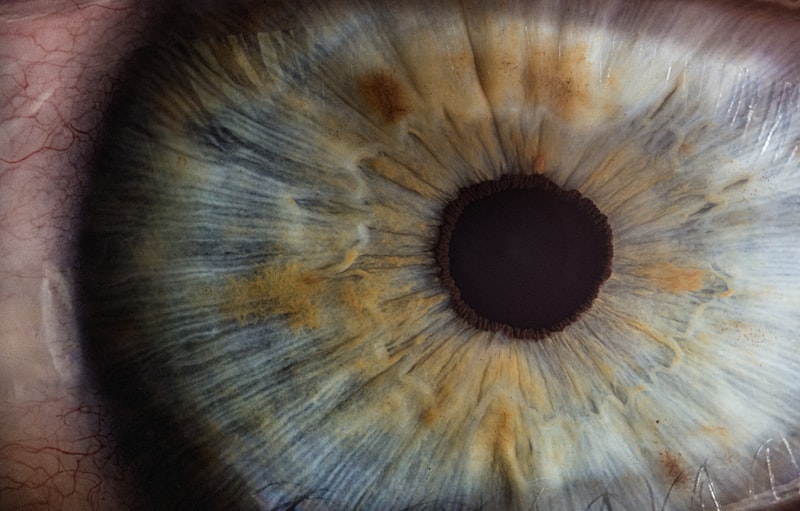
The term muscae volitantes is derived from the Latin phrase meaning “flying flies,” a nomenclature that accurately captures the subjective visual experience of individuals who perceive small, mobile spots within their field of vision. These occurrences are categorized as entoptic phenomena, which refers to visual effects whose source is within the eye itself rather than in the external environment. While the presence of these floaters is often considered a benign consequence of the natural aging process, their impact on an individual’s psychological well-being and visual comfort can be significant, particularly when the floaters are numerous or centrally located. Historically, these manifestations have been documented in medical literature for centuries, yet it is only with modern ophthalmic advancements that the precise mechanisms of vitreous degeneration and their subsequent visual artifacts have been fully elucidated.
In the context of clinical psychology and sensory perception, muscae volitantes represent a unique intersection between physiological reality and perceptual interpretation. Although the physical objects casting shadows on the retina are real, the way an individual attends to, reacts to, and eventually habituates to these spots is a matter of cognitive processing. For many, the initial discovery of floaters triggers a search for external causes, leading to a state of heightened sensory awareness that can border on obsessive monitoring. This phenomenon is particularly prevalent among individuals with a predisposition toward health anxiety or somatization, where the harmless drifting of collagen clumps is misinterpreted as a sign of impending visual loss or neurological dysfunction.
The prevalence of muscae volitantes in the general population is remarkably high, with studies suggesting that nearly everyone will experience some form of vitreous floaters at some point in their lifetime. Despite their ubiquity, the clinical significance of these floaters varies widely depending on their onset, size, and the associated symptoms. In a formal psychological entry, it is essential to distinguish between the physiological floaters caused by normal age-related changes and the pathological floaters that may signal acute ocular emergencies. Understanding this distinction is the first step in providing patient reassurance and determining the necessity of medical intervention, as the subjective distress reported by the patient does not always correlate with the objective severity of the vitreous changes.
The Pathophysiology of the Vitreous Humor and Syneresis
To understand the origin of muscae volitantes, one must examine the complex structure of the vitreous humor, a clear, gelatinous substance that fills the posterior four-fifths of the human eye. This substance is primarily composed of water (approximately 99%), with a scaffold of collagen fibrils and hyaluronic acid providing its structural integrity. During youth, the vitreous is perfectly transparent and firmly attached to the retinal surface. However, as the eye ages, it undergoes a process known as vitreous syneresis, characterized by the gradual liquefaction of the gel and the simultaneous aggregation of collagen fibers into thicker, visible strands. These strands, when suspended in the increasingly liquid center of the eye, cast shadows onto the retina, creating the perception of drifting specks or “flies.”
The biochemical degradation of the vitreous is an inevitable aspect of ocular senescence. As the hyaluronic acid molecules lose their ability to keep collagen fibrils separated, the fibrils begin to clump together, forming microscopic opacities. These opacities move freely within the liquefied pockets of the vitreous chamber. Because these clumps are located within the visual axis, they intercept incoming light, casting a shadow that the brain perceives as a dark spot or a translucent string. The refractive index of these clumps differs slightly from the surrounding fluid, which can also cause light to bend in a way that creates the appearance of “cobwebs” or “rings” in the visual field.
Another critical physiological event is the posterior vitreous detachment (PVD), which occurs when the vitreous gel shrinks to the point that it pulls away from the back of the eye. This process is a leading cause of a sudden increase in muscae volitantes. During a PVD, the Weiss ring—a circular opacity formed where the vitreous was once attached to the optic nerve head—may become visible to the patient. While PVD is generally a natural part of aging, the mechanical pull exerted on the retina during this transition can lead to retinal tears or hemorrhages, necessitating immediate clinical evaluation to prevent permanent vision loss. The physiological transition from a solid gel to a partially liquefied state is the primary driver of the entoptic experience.
Etiological Pathways and Predisposing Risk Factors
While aging is the primary driver of muscae volitantes, several predisposing factors can accelerate the degeneration of the vitreous humor or increase the likelihood of perceiving floaters. One of the most significant factors is myopia, or nearsightedness. Individuals with high myopia often have elongated eye globes, which puts additional mechanical stress on the vitreous and causes it to liquefy at a much younger age than in emmetropic (normal) eyes. Consequently, myopic patients may report the onset of floaters in their twenties or thirties, leading to prolonged periods of visual interference over their lifespan. The relationship between axial length and vitreous stability is a key area of study in ophthalmology.
In addition to refractive errors, intraocular inflammation, also known as uveitis, can lead to the formation of floaters. In these cases, the “spots” are often composed of inflammatory cells or debris suspended in the vitreous, rather than aggregated collagen. Similarly, diabetic retinopathy can cause small amounts of blood to leak into the vitreous chamber, resulting in the perception of dark, smoky floaters. Other risk factors include:
- Ocular trauma: Physical impact to the eye can displace vitreous fibers or cause immediate PVD.
- Post-surgical complications: Procedures such as cataract surgery or YAG laser capsulotomy can alter the pressure dynamics within the eye, leading to new or more prominent floaters.
- Genetic predisposition: Some individuals may have a biochemical makeup that favors earlier collagen clumping.
- Metabolic factors: Chronic dehydration or certain nutritional deficiencies may theoretically impact the hydration of the vitreous matrix.
The psychological impact of these risk factors is often compounded by the patient’s awareness of their underlying condition. For instance, a patient who has recently undergone intraocular surgery may be hyper-vigilant regarding any visual changes, leading them to notice pre-existing floaters that they had previously ignored. This attentional bias plays a critical role in how muscae volitantes are reported in clinical settings. Therefore, the etiology of floaters must be understood not just as a biological process, but as a catalyst for a complex behavioral response that varies depending on the individual’s risk profile and medical history.
The Phenomenology of Visual Disturbances and Entoptic Perception
The subjective experience of muscae volitantes is highly varied, with patients describing a wide array of shapes and movement patterns. Common descriptions include cobwebs, translucent strings, dark dots, or even “tadpole” shapes that appear to swim across the field of vision. These shapes are most visible when the individual gazes at a monochromatic background, such as a clear blue sky, a white wall, or a brightly lit computer screen. The phenomenon is characterized by a specific type of motion: when the eye moves, the floaters follow the direction of the gaze, but they continue to drift slightly after the eye has stopped, due to the inertia of the liquefied vitreous fluid.
The physics behind this perception involves the distance of the opacity from the retinal surface. Opacities that are located closer to the retina cast sharper, more defined shadows, whereas those located further away appear as blurred, indistinct clouds. This distinction is important because sharply defined floaters are often more distracting to the patient and are harder to ignore during tasks that require high visual focus, such as reading or driving. Furthermore, the diffraction of light around these microscopic particles can sometimes produce colors or halos, although most muscae volitantes are reported as shades of grey or black.
From a perceptual psychology perspective, muscae volitantes are fascinating because they demonstrate the limitations of the brain’s “noise-filtering” capabilities. Under normal circumstances, the brain is adept at ignoring consistent sensory input, such as the blood vessels overlying the retina (the Purkinje tree). However, because floaters move unpredictably and change position relative to the retina, they are often processed as “new” stimuli by the visual cortex. This prevents the brain from easily filtering them out, leading to the persistent annoyance that characterizes the clinical presentation of this condition. The phenomenological reality of the floater is thus a constant battle between the physical shadow and the brain’s attempt to maintain visual clarity.
Psychological Implications and the Impact on Mental Well-being
For the majority of individuals, muscae volitantes are a minor inconvenience that is eventually ignored through a process of habituation. However, for a subset of the population, the onset of floaters can trigger significant psychological distress, including anxiety disorders, depression, and a diminished quality of life. The persistent nature of the floaters can lead to a state of hyper-fixation, where the individual becomes unable to focus on anything else but the spots in their vision. This is often exacerbated by the fear that the floaters are a symptom of a serious, undiagnosed medical condition, creating a feedback loop of psychological stress and increased visual monitoring.
In cases of severe distress, patients may report that the floaters interfere with their ability to perform daily activities. For example, a professional writer or software engineer may find the drifting spots on a white screen so distracting that their productivity declines. This can lead to feelings of helplessness and frustration, especially if medical professionals dismiss the condition as “benign.” The term vision-related quality of life (VRQoL) is often used to measure this impact, and research has shown that for some, the psychological burden of floaters is comparable to that of much more serious ocular diseases like age-related macular degeneration.
The psychological management of muscae volitantes often involves cognitive-behavioral therapy (CBT) techniques aimed at reducing the patient’s emotional response to the visual stimuli. By addressing the catastrophic thinking associated with the floaters, therapists can help patients move toward habituation. It is crucial to acknowledge that while the floaters themselves are not a mental illness, the obsessive-compulsive patterns they can trigger are a valid clinical concern. The goal of treatment is not necessarily to remove the floaters, but to change the patient’s attentional allocation so that the spots are no longer perceived as a threat or a significant distraction.
Differential Diagnosis: Discerning Benign from Pathological
In clinical practice, it is vital to perform a differential diagnosis to ensure that the patient’s muscae volitantes are not indicative of a more serious underlying pathology. While most floaters are the result of vitreous syneresis, certain red flags must be screened for during the initial assessment. A sudden “shower” of new floaters, especially when accompanied by photopsia (flashes of light) or a “curtain” over the vision, is highly suggestive of a retinal detachment. This is a medical emergency that requires immediate surgical intervention to prevent permanent blindness. The clinician must differentiate these symptoms from the more gradual onset of typical age-related floaters.
Other conditions that can mimic or cause muscae volitantes include asteroid hyalosis, where calcium-lipid complexes form in the vitreous, appearing as small, white “stars.” While these are often more visible to the examining physician than to the patient, they can occasionally cause visual disturbances. Additionally, vitreous hemorrhage—often caused by diabetes or trauma—results in the perception of reddish or dark clouds that move with the eye. In rare cases, primary intraocular lymphoma can present with vitritis and floaters, making a thorough funduscopic examination essential for any patient presenting with new or changing symptoms.
The diagnostic process typically follows a structured protocol to rule out these risks:
- Patient History: Assessing the onset, duration, and nature of the visual disturbances.
- Visual Acuity Testing: Determining if the floaters are impacting the patient’s central or peripheral vision.
- Dilated Fundus Examination: Using an indirect ophthalmoscope to visualize the entire retina and vitreous chamber.
- Slit-Lamp Biomicroscopy: Checking for cells in the anterior chamber or vitreous that might indicate inflammation.
- B-scan Ultrasound: Utilized if the vitreous is too opaque (due to blood or dense cataracts) to see the retina clearly.
Therapeutic Strategies and Management Interventions
The management of muscae volitantes generally begins with conservative observation and patient education. Since the majority of floaters are harmless, the primary goal is to reassure the patient that their vision is not at risk and that their brain will likely learn to ignore the spots over time. This process of neuroadaptation can take anywhere from a few weeks to several months. Patients are often advised to wear sunglasses when outdoors to reduce the contrast of the shadows and to adjust their digital environments (such as using “dark mode” on computers) to make the floaters less noticeable during work.
For a small percentage of patients whose floaters are truly debilitating, more invasive therapeutic interventions may be considered. One option is YAG laser vitreolysis, a non-invasive procedure where a laser is used to vaporize or break apart the larger opacities into smaller, less visible fragments. While this can be effective for certain types of floaters, such as a Weiss ring, it carries risks of cataract formation or retinal damage and is not suitable for all patients. The efficacy of laser treatment remains a subject of debate in the ophthalmic community, with varying success rates reported in clinical trials.
The most definitive treatment for severe muscae volitantes is a pars plana vitrectomy (PPV). In this surgical procedure, the vitreous gel is removed and replaced with a balanced salt solution. While vitrectomy is highly effective at eliminating floaters, it is considered a major surgery with potential complications, including endophthalmitis (infection), retinal detachment, and the accelerated development of cataracts. Because of these risks, most surgeons only recommend vitrectomy for patients who have failed to habituate after a long period and whose functional vision is significantly impaired. The decision to proceed with surgery requires a careful weighing of the risk-benefit ratio.
Neurological Processing and Sensory Habituation
The concept of habituation is central to the psychological understanding of muscae volitantes. Habituation is a form of non-associative learning in which an innate response to a stimulus decreases after repeated or prolonged presentations. In the case of floaters, the “response” is the attentional capture by the drifting spot. For most people, the brain eventually classifies the floater as “background noise” and stops bringing it to the level of conscious awareness. This is similar to how we do not constantly feel the sensation of clothes against our skin or the bridge of our nose in our peripheral vision.
However, the process of habituation can be hindered by emotional arousal. If a person views the floaters as a sign of aging, illness, or loss of control, the brain will continue to prioritize the stimulus as a “threat.” This keeps the individual in a state of sensory vigilance, making it impossible for the neural filters to do their job. Neuroplasticity plays a role here; by consciously practicing “non-judgmental awareness” or shifting focus away from the floaters, individuals can actually retrain their neural pathways to suppress the visual signal of the entoptic phenomenon.
Research into the visual cortex suggests that our perception is not a direct “video feed” of the world, but a reconstructed model based on expectation and sensory input. When the brain expects to see a clear sky, it may “fill in” the gaps caused by small floaters. However, if the cognitive load is high or the individual is fatigued, these filtering mechanisms may weaken, causing the floaters to become more prominent. This explains why many patients report that their floaters are “worse” during times of high stress or exhaustion, even though the physical state of the vitreous has not changed.
Future Directions in Research and Long-term Prognosis
The future of managing muscae volitantes lies in the development of pharmacological treatments and less invasive surgical techniques. Researchers are investigating the use of enzymatic vitreolysis, which involves injecting substances into the eye to dissolve collagen clumps without the need for surgery. Additionally, studies into nutraceuticals—specifically combinations of antioxidants like lutein, zeaxanthin, and gold-standard vitamins—are exploring whether the biochemical environment of the vitreous can be stabilized to prevent further clumping and liquefaction. While early results are mixed, this represents a promising frontier for preventative care.
Another area of active research is the improvement of patient-reported outcome measures (PROMs). By developing better tools to quantify the psychological impact of floaters, clinicians can better identify which patients are likely to benefit from early psychological intervention versus those who require surgical consultation. This holistic approach recognizes that visual health is inextricably linked to mental health. The long-term prognosis for most individuals with muscae volitantes is excellent, as the vast majority will achieve a state of successful habituation and continue to lead normal lives without the need for medical intervention.
In summary, muscae volitantes serve as a profound example of the complexity of human perception. They are a physical manifestation of the eye’s aging process, yet their primary clinical challenge often lies in the psychological adaptation of the observer. By combining physiological knowledge with psychological support, healthcare providers can help patients navigate the transition from visual distress to perceptual acceptance. As our understanding of the vitreous humor and the brain’s filtering mechanisms continues to evolve, so too will our ability to manage this near-universal aspect of the human visual experience.