Near Point of Convergence: The Science of Focused Vision
Scientifically Reviewed · Dr. Marwa Abd-Alazim · September 9, 2026
Review Criteria & Clinical Standards
This content undergoes rigorous scientific peer-review and medical editorial standards at Arab Psychology Network to ensure clinical accuracy, validity, and compliance with evidence-based guidelines from leading psychological and healthcare authorities (APA / WHO).

Introduction and Definition of the Near Point of Convergence
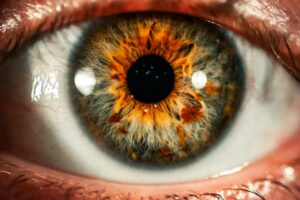
The Near Point of Convergence (NPC) is a critical concept within the fields of optometry, ophthalmology, and visual science, defining the closest distance at which an individual can maintain singular, clear, binocular vision of a target object. Stated precisely, the NPC represents the limit of the eyes’ ability to move inward—a process known as convergence—while simultaneously fusing the images perceived by each eye into a single, cohesive mental picture. If the object moves closer than this threshold, the visual system fails to sustain the necessary inward rotation of the eyes, resulting in a breakdown of binocularity. This failure manifests clinically as diplopia, or double vision, and the image will typically appear blurred because accommodation (focusing) and convergence are inherently linked physiological responses. Understanding the NPC is fundamental to diagnosing and managing various visual dysfunctions, particularly those related to reading, close work, and visual fatigue.
The physiological mechanism underlying the NPC is the coordinated action of the extraocular muscles, specifically the medial rectus muscles, which are responsible for adducting (turning inward) the eyes. This inward movement must be precisely balanced to ensure that the image of the object falls simultaneously upon the fovea—the central part of the retina—in both eyes. When an object is moved progressively closer to the observer, the demand for convergence increases exponentially. The NPC marks the maximum amplitude of this fusional vergence reserve. When this reserve is exhausted, the eyes naturally diverge slightly, causing the images to fall on non-corresponding retinal points, thus triggering the perception of two distinct images. Therefore, the NPC effectively measures the endpoint of the visual system’s capacity to execute and maintain binocular fusion under maximal stress.
Historically, the measurement of the Near Point of Convergence has been integral to clinical assessment, providing quantifiable data about the efficiency of the visual system’s motor function. According to standard clinical metrics, a typical, healthy NPC should be relatively close to the nose, often falling between 5 and 7 centimeters (cm) from the plane of the spectacles or the cornea. A measurement that is significantly farther away than this standard range, such as 10 cm or more, strongly suggests a condition known as Convergence Insufficiency (CI), a common and often debilitating disorder characterized by difficulty sustaining close focus and experiencing symptoms of visual stress. The definition provided in the original context—that object images before the NPC will not be in focus and will appear as a double image—perfectly encapsulates the dual failure of accommodation and convergence that occurs when this physiological limit is surpassed.
Anatomical and Neurological Basis of Convergence
The physical act of convergence relies primarily on the synchronized contraction of the medial rectus muscles in both eyes. These powerful muscles, situated on the nasal side of the orbit, are the prime movers responsible for pulling the globes inward. The precision required for high-demand close work, such as reading small print or threading a needle, necessitates exquisite control over these muscular movements. This control is orchestrated by the central nervous system, specifically involving intricate pathways originating in the midbrain. The primary neurological control center for convergence is the Edinger-Westphal nucleus, which is part of the oculomotor complex (Cranial Nerve III). The efferent signals travel via the oculomotor nerve to innervate the medial recti, initiating the necessary inward rotation to maintain alignment.
Convergence is not an isolated motor activity; it is intrinsically linked to two other vital visual responses, collectively forming the Near Triad or the accommodation-convergence synkinesis. These three components are convergence (inward rotation of the eyes), accommodation (change in the crystalline lens shape to maintain focus), and miosis (constriction of the pupils). When an individual shifts gaze from a distant object to a near object, these three reflexes are triggered simultaneously and proportionally. The brain uses the retinal defocus (blur) and disparity (the slight difference between the images received by the two eyes) as primary cues to drive both the accommodative response and the vergence response. A breakdown in the precise ratio between accommodation and convergence, often quantified clinically as the AC/A ratio, is frequently the root cause of symptoms related to a receded NPC, as the focusing system and the aiming system struggle to operate in harmony.
Furthermore, the neural pathways governing convergence are highly susceptible to fatigue and systemic influence. Unlike other eye movements which are primarily saccadic (fast, ballistic movements) or pursuit (smooth following movements), convergence is a type of vergence movement, characterized by slower, disjunctive rotation (eyes moving in opposite directions). The ability to sustain this movement is dependent on robust neurological signaling and muscular endurance. Conditions affecting the neuromuscular junction, such as myasthenia gravis, or generalized central nervous system fatigue, can severely compromise the ability to maintain a close NPC. The sustained effort required for prolonged near tasks places significant metabolic demand on the medial recti, and failure often occurs when the fatigue threshold is crossed, leading to the subjective experience of eyestrain and the objective finding of diplopia.
The Role of Binocular Vision and Fusional Reserves
The concept of the Near Point of Convergence is inseparable from the broader mechanism of binocular vision. Binocular vision is the ability of the brain to integrate the slightly different images received by the two eyes into a single three-dimensional percept, granting the observer depth perception, or stereopsis. For this fusion to occur, the eyes must be precisely aligned so that the object’s image falls on corresponding retinal points. As an object moves closer, the visual system must continuously adjust the angle of convergence to maintain this correspondence. This adjustment is driven by the fusional vergence system, which acts as a powerful motor buffer designed to overcome small misalignments, or phorias, that naturally occur during normal visual tasks.
The NPC directly assesses the limit of the positive fusional vergence (PFV) reserve. PFV is the maximum amount of inward eye turning the visual system can generate and sustain while still maintaining a single image. When measuring the NPC, the clinician is essentially pushing the patient’s PFV to its absolute maximum amplitude. A patient with robust PFV can maintain fusion even when the target is extremely close, resulting in a very proximal NPC. Conversely, an individual with weak PFV will experience fusion breakdown at a relatively far distance, indicating a high NPC measurement. The relationship between the habitual demand for convergence (based on the distance of the task) and the available fusional reserve is critical for visual comfort. If the demand consistently exceeds the available reserve, the patient will experience symptoms of asthenopia, including pain around the eyes, frontal headaches, and difficulty concentrating.
Moreover, the integrity of the NPC is a key indicator of the efficiency of sensory fusion. While the motor component (the muscles) provides the physical movement, the sensory component (the brain’s ability to combine the images) must be intact. If a patient possesses a condition like amblyopia (lazy eye) or a long-standing strabismus (eye turn), the sensory fusion capacity may be compromised or non-existent. In such cases, the measurement of the NPC may yield ambiguous results, as the patient might suppress the image from one eye rather than experiencing diplopia, or they may exhibit an erratic pattern of convergence and divergence. Therefore, the successful measurement and interpretation of the NPC require confirmation that the patient is indeed employing functional binocular vision and that the observed breakdown is a true reflection of the motor system’s limit, rather than a strategy of sensory avoidance.
Measurement Techniques and Clinical Significance
The accurate measurement of the Near Point of Convergence is a standard procedure in any comprehensive eye examination, typically performed using a technique known as the push-up test. The procedure involves the use of a small, detailed target (e.g., a small letter or picture printed on a fixation stick or ruler) which is slowly moved toward the patient’s nose along the midline. The clinical objective is to determine two distinct distances: the Break Point and the Recovery Point. The Break Point is the distance at which the patient first reports seeing the target double, or when the clinician objectively observes one eye turning outward (diverging). This point defines the NPC.
Following the determination of the Break Point, the clinician slowly moves the target away from the patient along the same path. The Recovery Point is the distance at which the patient reports that the double image merges back into a single, clear image, or when the clinician observes the diverging eye return to alignment. The relationship between the Break Point and the Recovery Point is highly significant. A large discrepancy between these two points (i.e., the eyes break convergence close but do not recover until the target is moved significantly farther away) suggests poor sustained convergence ability and reduced flexibility of the visual system, often correlating with severe symptoms of visual fatigue. For normative data, a healthy NPC Break Point is typically 5 to 7 cm, and the Recovery Point should be no more than 3 cm farther out than the Break Point.
The clinical significance of a receded, or high, NPC cannot be overstated, as it is the hallmark diagnostic finding for Convergence Insufficiency (CI), the most common non-strabismic binocular vision disorder. CI is frequently overlooked in routine screenings but is a primary cause of reading difficulties, avoidance of near tasks, and chronic headaches, especially in children and young adults. Beyond CI, the measurement of the NPC is also crucial in managing patients recovering from mild traumatic brain injury (mTBI) or concussion. Studies have repeatedly shown that a transient recession of the NPC is one of the most reliable objective indicators of post-concussive visual syndrome. Monitoring the NPC during recovery is essential, as the return to a normal range often coincides with the resolution of other post-concussive symptoms, highlighting the NPC’s utility as a biomarker for neurological recovery.
Factors Influencing the Near Point
The measurable distance of the Near Point of Convergence is dynamic and influenced by a variety of physiological, environmental, and pathological factors. One of the most significant influences is age. As individuals age, the lens of the eye naturally hardens and loses flexibility, a condition known as presbyopia, which impairs the ability to accommodate. Since convergence and accommodation are synkinetic, the weakening of the accommodative system can place undue stress on the vergence system, potentially causing the NPC to recede slightly, even if the muscular ability of the medial recti remains strong. However, the vergence system itself is generally more robust than the accommodative system and typically sustains functionality well into old age, provided no underlying pathology exists.
Systemic health and fatigue play a profound role in NPC performance. Any condition that compromises general muscular or neurological efficiency can temporarily or permanently elevate the NPC measurement. Examples include chronic fatigue syndrome, hormonal imbalances (such as thyroid disorders), and debilitating illnesses like multiple sclerosis. Even simple environmental factors, such as lack of sleep or prolonged computer use (digital eye strain), can temporarily weaken the fusional reserves, pushing the break point farther away. Clinicians must often take multiple measurements throughout the day or across several visits to differentiate between a stable, pathological convergence weakness and a temporary fatigue-related breakdown.
Refractive error also modifies the demands placed on the vergence system. Patients who are myopic (nearsighted) inherently require less accommodation for near tasks, as the focal point of the eye is naturally situated in front of the retina. Because of the accommodation-convergence link, less accommodative effort means less convergence drive is naturally stimulated, potentially making them more prone to developing convergence insufficiency. Conversely, patients who are hyperopic (farsighted) must exert constant accommodative effort, even for distance viewing. This constant drive for accommodation often triggers excessive convergence, potentially leading to convergence excess or latent hyperopia, though they usually maintain a very close NPC. Managing these refractive states appropriately with corrective lenses is essential to normalize the accommodative stimulus and thereby optimize the efficiency of the vergence system.
Convergence Insufficiency and Related Disorders
The primary clinical manifestation of an abnormally receded Near Point of Convergence is Convergence Insufficiency (CI). CI is defined by a consistent inability to converge the eyes adequately or to sustain convergence for extended periods, resulting in the NPC Break Point being significantly farther away than the expected 5–7 cm. CI is widely recognized as a major public health issue due to its high prevalence—affecting between 5% and 8% of the general population—and its profound impact on quality of life, particularly academic and professional performance. The symptoms associated with CI are collectively termed asthenopia and typically include chronic headaches, eye strain (especially after reading), blurred vision, diplopia during close work, and difficulty maintaining attention.
Diagnosis relies fundamentally on the measurement of the NPC alongside other tests of binocular function, such as the measurement of phorias (resting alignment) and fusional vergence amplitudes. It is crucial to distinguish CI from other related vergence disorders. While CI involves insufficient convergence, Convergence Excess describes a condition where the patient converges too much or too easily, often resulting in a very close NPC and excessive inward eye turn (esophoria or esotropia) at near distances. Another related condition is Divergence Insufficiency, which primarily affects distance vision, characterized by difficulty relaxing convergence for far viewing, though the near point itself may remain normal. The accurate differentiation among these disorders dictates the specific therapeutic intervention required.
The impact of CI extends beyond simple visual discomfort. Untreated CI can lead to reading avoidance, as the effort required to maintain fusion is perceived as too taxing or painful. Studies have demonstrated a strong correlation between symptomatic CI and difficulties with attention and executive function, sometimes mimicking symptoms of Attention Deficit Hyperactivity Disorder (ADHD). Because the visual system is constantly struggling to maintain clarity and singularity, cognitive resources are diverted away from processing the content of the text and toward simply maintaining the mechanical act of viewing. Therefore, treatment of the underlying convergence deficit can lead to marked improvements in reading speed, comprehension, and overall academic performance.
Treatment and Management Strategies
The management of a receded Near Point of Convergence, particularly in the context of Convergence Insufficiency, is highly effective and primarily involves non-surgical interventions. The gold standard treatment, supported by extensive clinical trials, is Office-Based Vision Therapy (OBVT) combined with home reinforcement exercises. Vision therapy is a structured program designed to improve the neuro-muscular control of the vergence system, teaching the patient to generate and sustain higher levels of positive fusional vergence. Key exercises focus on improving flexibility and amplitude.
Common therapeutic exercises include:
- Pencil Push-ups (PPTs): The patient focuses on a small target (e.g., the tip of a pencil) and slowly moves it toward the nose until diplopia occurs, attempting to push the break point closer over time.
- The Brock String: A specialized tool used to teach the patient awareness of convergence and divergence, helping them monitor whether their eyes are properly aligned on a specific bead.
- Computerized Vergence Training: Programs utilizing specialized software that requires the patient to rapidly converge and diverge targets, often incorporating therapeutic jumps and base-in/base-out prism flippers to stress the system.
These therapeutic approaches aim to fundamentally reorganize the visual motor control system, enabling the patient to achieve a stable NPC within the normal range and sustaining fusion effortlessly.
In cases where vision therapy is not immediately feasible or when symptoms are severe, prism correction may be prescribed. Base-in prisms are incorporated into spectacle lenses, acting to optically shift the image inward, thereby reducing the convergence demand required of the medial recti muscles. While prisms often provide immediate symptomatic relief by normalizing the alignment for habitual near work, they do not inherently cure the underlying motor deficit; they serve as an assistive device. Prisms are often used as a temporary measure or as a palliative treatment for older adults or individuals with systemic conditions that preclude intensive vision therapy.
Research Perspectives and Future Directions
Contemporary research continues to explore the complex relationship between the Near Point of Convergence and higher cortical functions. One area of intense investigation involves the link between convergence function and learning disabilities. While CI does not cause dyslexia, the visual strain and associated symptoms significantly impede reading acquisition and fluency, suggesting that routine NPC screening should be integrated into educational health assessments. Recent studies also focus on developing more objective and automated methods for measuring the NPC, moving away from subjective patient reports during the traditional push-up test.
Furthermore, the utility of the NPC as a diagnostic tool in sports vision and vestibular function is gaining recognition. Athletes, particularly those involved in high-speed or precision sports, require exceptionally rapid and accurate vergence control. A subtle convergence insufficiency can impair hand-eye coordination and reaction time. Similarly, because the visual system is closely integrated with the vestibular system (balance), monitoring the NPC is increasingly important in managing chronic dizziness and balance disorders, reinforcing its status as a critical marker of neurological integrity.
Future directions in NPC research include leveraging virtual reality (VR) and augmented reality (AR) platforms for both diagnosis and therapy. VR environments allow for precise control over visual stimuli and offer engaging, gamified exercises that may improve patient compliance and therapeutic outcomes compared to traditional methods. The goal of ongoing research is to establish universally agreed-upon objective biomarkers that correlate perfectly with the subjective symptoms of convergence dysfunction, thus ensuring earlier diagnosis and more efficient intervention for this prevalent and consequential visual disorder.