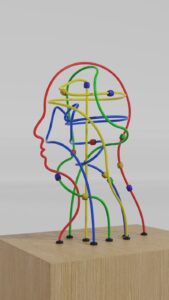
Neobehaviorism: Decoding the Link Between Thought and Action
Scientifically Reviewed · Dr. Marwa Abd-Alazim · September 14, 2026
Review Criteria & Clinical Standards
This content undergoes rigorous scientific peer-review and medical editorial standards at Arab Psychology Network to ensure clinical accuracy, validity, and compliance with evidence-based guidelines from leading psychological and healthcare authorities (APA / WHO).

Introduction and Definition of Neobehaviorism
Neobehaviorism represents a pivotal theoretical movement within psychology, bridging the strict empiricism of classical behaviorism with the burgeoning interest in internal mental processes characteristic of cognitive psychology. Defined primarily as a revised approach to understanding human and animal behavior, Neobehaviorism acknowledges the critical role of environmental stimuli and observable responses, yet crucially incorporates the concept of mediating variables or cognitive processes that intervene between stimulus and response (S-R). This synthesis allowed the discipline to move beyond the limitations of reductionist models, providing a more comprehensive framework for explaining complex learned behaviors and psychological phenomena that purely mechanistic views struggled to address.
The central premise of Neobehaviorism is that while behavior remains the primary object of scientific study, the explanation of that behavior requires referencing internal, non-observable states—often termed intervening variables or hypothetical constructs. These constructs might include concepts such as purpose, expectation, memory, and cognitive maps, which are systematically defined based on observable antecedents and consequences. Unlike radical behaviorists who dismissed all internal states as unscientific, Neobehaviorists utilized a rigorous, operational approach to define these mental constructs, thereby maintaining scientific rigor while expanding the scope of inquiry. This dual focus on both objective external factors and internal cognitive processing positioned Neobehaviorism as a transitional phase leading directly into the modern cognitive revolution.
Essentially, Neobehaviorism serves as a sophisticated evolution of the S-R paradigm into an S-O-R (Stimulus-Organism-Response) model. The ‘O’ factor—the organism—is where the cognitive processes reside, influencing how the environmental stimulus is perceived, interpreted, and ultimately translated into a behavioral response. This theoretical refinement provided a much-needed mechanism for explaining behaviors that appeared goal-directed or intentional, rather than merely reflexive or passively conditioned. The integration of cognitive elements, such as the anticipation of rewards or the formation of strategies, allowed Neobehaviorists to tackle complex learning problems, thereby significantly expanding the explanatory power of learning theory beyond simple classical and operant conditioning principles.
Historical Context and Antecedents
The emergence of Neobehaviorism in the 1930s and its subsequent flowering through the 1950s was a direct consequence of perceived shortcomings in the dominant psychological paradigm of the early 20th century: classical behaviorism, championed by figures like John B. Watson. Watson’s radical approach demanded that psychology restrict itself exclusively to observable phenomena, rejecting consciousness, introspection, and internal mental life as valid subjects for scientific investigation. While this methodology provided psychology with a much-needed empirical foundation, its strict limitations proved inadequate for explaining the intricacies of human and animal learning, especially concerning complex problem-solving or latent learning phenomena.
Key figures who pioneered the Neobehaviorist movement, such as Edward C. Tolman and Clark L. Hull, sought to preserve the methodological rigor of behaviorism—specifically its reliance on experimentation and operational definitions—while simultaneously introducing theoretical constructs necessary for a complete understanding of behavior. Tolman, particularly, noted that observed behavior often suggested an underlying purpose or goal-directedness, which could not be adequately captured by simple conditioning models. His work on cognitive maps in rats challenged the idea that learning was merely a series of reinforced habits, suggesting instead that organisms acquire structured knowledge about their environment.
The development of Neobehaviorism was thus less a rejection and more an intellectual refinement of its predecessor. It occurred during a period of intense methodological self-examination within psychology, often referred to as the ‘Age of Theory,’ where grand theories of learning were systematically tested and debated. The foundational principle of environmental determinism was maintained—emphasizing the importance of environmental influences such as rewards and punishments—but the mechanism through which the environment shaped behavior was now theorized to involve internal representational systems. This crucial historical shift paved the way for the eventual dominance of cognitive science by legitimizing the scientific study of internal psychological processes, provided they were anchored to observable evidence.
Core Principles and Key Tenets
Neobehaviorism is underpinned by several core theoretical tenets that distinguish it from classical S-R models. Fundamentally, it retains the commitment to empirical observation and experimental control, insisting that psychological theories must be testable and falsifiable. However, the theoretical structure is significantly enriched by the inclusion of mediating factors. One primary tenet is the acceptance and systematic use of Intervening Variables. These variables—such as Drive, Expectancy, or Habit Strength—are conceptual constructs that link the independent variable (stimulus/environment) to the dependent variable (response/behavior). They are not directly observable but are rigorously defined by the experimental operations that produce them and the behaviors they predict.
Another key principle is the recognition of purposive behavior. Tolman’s Purposive Behaviorism, often considered the most influential branch of Neobehaviorism, argued that behavior is inherently goal-directed. Organisms do not merely react mechanically to stimuli; rather, they act based on expectations and striving towards desired outcomes. This contrasts sharply with the purely reflexive view of classical conditioning. For example, a rat running a maze is not just performing a series of turns reinforced by food; it is actively seeking the goal location, utilizing a ‘cognitive map’ it has developed of the environment. This perspective places emphasis on the organism’s ability to predict and plan, moving the focus away from mere habit formation.
Furthermore, Neobehaviorism emphasized the importance of Learning Theory as the central pillar of psychology. Theorists like Clark L. Hull attempted to create comprehensive, mathematical systems of learning based on postulates and theorems, aiming for a unified, quantitative theory of behavior. Hull’s system, though ultimately proven too complex and rigid, exemplified the Neobehaviorist commitment to high-level theorizing and methodological precision. His concept of ‘Habit Strength’ (sHR) and ‘Reaction Potential’ (sER) quantified the influence of reinforcement history and motivational states (drive reduction) on the likelihood of a specific response, showcasing the movement’s dedication to developing formal, predictive models of learning.
Prominent Theorists and Contributions
The legacy of Neobehaviorism is intrinsically linked to the monumental contributions of several key figures who developed distinct, yet related, theoretical systems. Edward C. Tolman (1886–1959) is perhaps the most celebrated Neobehaviorist for his groundbreaking work in Purposive Behaviorism. Tolman introduced concepts like ‘cognitive maps,’ ‘latent learning,’ and ‘expectancy.’ His experiments demonstrated that learning could occur even without immediate reinforcement (latent learning), suggesting that organisms acquire knowledge about their environment (maps) rather than just a set of reinforced motor responses. Tolman’s focus on molar behavior—behavior viewed in large, integrated units—was crucial in shifting the field toward understanding intention.
Another foundational figure was Clark L. Hull (1884–1952), who developed a highly influential, systematic, and deductive theory of learning based on mechanistic principles. Hull aimed to establish a grand theory derived from a set of formalized postulates, using rigorous mathematical notation to quantify behavioral relationships. His key intervening variables included ‘Drive’ (D), ‘Incentive Motivation’ (K), and ‘Inhibition’ (I). Although Hull’s specific system eventually faced empirical challenges and proved difficult to apply universally, his commitment to establishing psychology as a rigorous, hypothetico-deductive science profoundly influenced experimental methodology for decades.
While B.F. Skinner is often classified separately as a Radical Behaviorist, focused primarily on operant conditioning and eschewing internal variables, his work often interacted critically with Neobehaviorist ideas. Later theorists, such as Kenneth Spence (a prominent proponent of Hull’s system) and various functionalists, continued the Neobehaviorist tradition by exploring complex relationships between motivation, reward schedules, and learning outcomes. Their contributions solidified the understanding that learning is a complex interaction involving environmental inputs, internal motivational states, and structured knowledge acquisition, setting the stage for the formal integration of cognitive structures into psychological theory.
The Integration of Cognition: Intervening Variables
The most significant theoretical innovation introduced by Neobehaviorism was the scientific justification and operationalization of cognitive processes, referred to generally as intervening variables. This mechanism allowed researchers to account for the complexity of behavior without sacrificing the objectivity required by the scientific method. Unlike vague mentalistic terms, intervening variables were defined strictly by the operations used to manipulate them (e.g., hours of deprivation defining ‘Drive’) and the measurable behavioral outcomes they predicted (e.g., speed or frequency of response). This rigorous approach ensured that the theoretical constructs remained anchored to empirical data.
Tolman’s model of intervening variables focused heavily on cognitive constructs. His concept of Expectancy, for instance, described the organism’s anticipation of a specific outcome given a particular environmental cue. If a rat expects food at the end of a maze segment, this expectation guides its behavior, even if the reward is temporarily removed. This internal state (expectancy) is the intervening variable, defined by previous reinforcement history and manifesting in observable behaviors such as faster running or goal-directed searching. This framework provided a powerful alternative to the simple associationist theories that dominated earlier behaviorism.
In contrast, Hull’s intervening variables, while equally rigorous, focused more on physiological and motivational states, such as the reduction of biological drives. Although Hull was initially viewed as more mechanistic, his complex equations required the postulation of highly abstract internal states (like reaction potential and inhibitory potential) that functioned to mediate the environmental input and the behavioral output. Both Tolman and Hull, despite their fundamental differences in emphasis—Tolman on cognitive organization and Hull on quantitative drive reduction—shared the common goal of creating a comprehensive theory of learning that required the insertion of theoretical structures between S and R, fundamentally altering the trajectory of behavioral science and fostering the eventual rise of Cognitive Psychology.
Methodological Approaches and Experimental Rigor
Neobehaviorism inherited and expanded the commitment of classical behaviorism to experimental control, rigorous measurement, and operational definitions. The methodological advancements during the Neobehaviorist period were critical in formalizing psychological research standards. Experiments were characterized by careful control over environmental stimuli, precise measurement of behavioral responses (such as latency, frequency, and amplitude), and the use of sophisticated apparatuses, including complex mazes and conditioning chambers. This methodological rigor was necessary to provide the empirical grounding for the complex theoretical constructs they were proposing.
The primary experimental domains for Neobehaviorists included complex maze learning, various schedules of reinforcement, and investigations into phenomena like extinction, spontaneous recovery, and generalization. Tolman’s famous experiments on latent learning, where rats demonstrated knowledge of the maze layout only when a reward was introduced later, were methodologically crucial. These studies required carefully controlled groups—some rewarded immediately, some delayed, and some never—to isolate the difference between learning (the acquisition of knowledge) and performance (the display of that knowledge), a distinction central to Neobehaviorist theory.
Furthermore, the Neobehaviorists, especially Hull and his followers, embraced a hypothetico-deductive methodology. This involved starting with a set of formal postulates (axioms), logically deriving testable theorems, and then designing experiments specifically to confirm or disconfirm those theorems. If the prediction failed, the theory required refinement. This iterative process, emphasizing deduction and empirical verification, set a new standard for scientific theory construction in psychology. While the specific theoretical models eventually shifted, this commitment to a mathematically precise, systematic, and experimentally verifiable approach remains a cornerstone of modern quantitative psychology and behavioral neuroscience, demonstrating the movement’s lasting impact on research methodology.
Distinctions from Classical Behaviorism
While Neobehaviorism maintains strong historical and methodological ties to classical behaviorism (e.g., Pavlov, Watson), the theoretical differences are profound and represent a crucial evolutionary step in the field. Classical behaviorism, often termed Radical Behaviorism, insisted on a direct, unmediated link between Stimulus (S) and Response (R). Mental events were considered irrelevant epiphenomena or simply outside the scope of scientific inquiry. The focus was exclusively on the establishment of habits through external reinforcement and association.
The fundamental distinction lies in the acceptance of internal mediating processes. Neobehaviorism transitioned the model from S-R to S-O-R. The ‘O’ (Organism) represents the cognitive and motivational processes (intervening variables) that filter and interpret the stimulus before a response is generated. For example, in classical behaviorism, a response occurs because it was reinforced in the past; in Neobehaviorism, a response occurs because the organism expects reinforcement based on its cognitive map or expectancy structure. This difference transforms the organism from a passive reactor to an active information processor.
Furthermore, Neobehaviorism, especially Tolman’s strain, introduced the concept of molar behavior, emphasizing holistic, goal-directed actions over molecular, isolated muscle movements. Classical behaviorists focused on the specific, discrete movements that constituted a behavior. Neobehaviorists, conversely, focused on the ultimate aim of the behavior (e.g., getting food) regardless of the specific muscle movements used to achieve it. This focus on purpose and global organization provided a far richer explanation for complex behaviors, allowing psychology to address phenomena such as navigation, planning, and sophisticated problem-solving which were inaccessible under the strictures of the classical behaviorist framework.
Applications and Modern Relevance
Although Neobehaviorism as a unified theoretical school declined following the rise of pure Cognitive Psychology in the 1970s, its principles and methodological contributions remain highly relevant and integrated into contemporary psychological science. The insistence on operationalizing internal states provided the intellectual toolkit necessary for the cognitive revolution; without Tolman and Hull legitimizing the systematic study of non-observable constructs, the transition to cognitive models would have been far more difficult.
In applied settings, Neobehaviorist principles inform current understanding across various domains. In education, the concept of latent learning emphasizes that effective instruction involves the acquisition of knowledge structures (like cognitive maps) rather than just rote memorization or immediate performance changes. In therapeutic settings, principles derived from the Neobehaviorist era, particularly those related to expectancy and goal-directed behavior, underpin modern cognitive-behavioral therapies (CBT), where modifying expectations and internal representations of the environment is crucial for behavioral change. The emphasis on quantitative modeling, championed by Hull, also heavily influenced the development of advanced computational models in cognitive science and neuroscience, where internal states are often modeled as complex mathematical functions.
In summary, the legacy of Neobehaviorism is not found in the persistence of its original grand theories, but in its successful transformation of psychological methodology. It provided the necessary synthesis—retaining the rigorous empirical foundation of behaviorism while introducing the concept of the active, thinking organism. This critical compromise ensured that the scientific study of learning and behavior could evolve to incorporate complex mental life, securing Neobehaviorism’s place as an indispensable bridge between traditional behavioral science and modern cognitive neuroscience.
Key Scholarly Resources
For readers seeking deeper insight into the foundational theories and empirical research underpinning the Neobehaviorist movement, the following scholarly resources offer essential reading and historical perspective:
-
Gormezano, I., & Kehoe, E. J. (Eds.). (1981). Neobehaviorism: Building on the foundations of behaviorism. New York, NY: Academic Press.
-
Holland, J. H., & Skinner, B. F. (1961). Some recent developments in neobehaviorism. Psychological Review, 68(3), 248-258.
-
Bower, G. H., & Hilgard, E. R. (1981). The neobehaviorist outlook: perspectives from learning theory. Psychological Review, 88(2), 143-164.
-
Lance, C. E., & Abelson, R. P. (1985). Some recent developments in neobehaviorism. Psychological Bulletin, 98(2), 216-231.
-
Kuhn, T. S. (1970). Neobehaviorism: A critical analysis. Psychological Review, 77(4), 431-445.
-
Tolman, E. C. (1932). Purposive Behavior in Animals and Men. New York: Century Co.
-
Hull, C. L. (1943). Principles of Behavior: An Introduction to Behavior Theory. New York: Appleton-Century-Crofts.