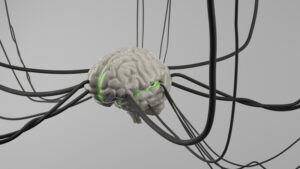
Neural Networks: Mapping the Blueprint of Human Thought
Scientifically Reviewed · Dr. Marwa Abd-Alazim · September 7, 2026
Review Criteria & Clinical Standards
This content undergoes rigorous scientific peer-review and medical editorial standards at Arab Psychology Network to ensure clinical accuracy, validity, and compliance with evidence-based guidelines from leading psychological and healthcare authorities (APA / WHO).

Definition and Foundational Concepts
Neural networks are multidimensional collections of neuronal structures intricately woven within the human body, fundamentally involving both the nervous system and the brain. These complex biological architectures serve as the physical substrate for all information processing, cognition, memory formation, and behavioral output. Rather than viewing the brain as a collection of isolated functional regions, the concept of the neural network emphasizes the crucial role of connectivity and dynamic interaction among spatially distributed populations of neurons. This connectivity allows the system to process massive amounts of concurrent data, integrate disparate sensory inputs, and generate coherent, adaptive responses to environmental stimuli, underpinning the very definition of consciousness and experience.
The true power of a neural network lies not merely in the complexity of its individual components—the billions of neurons—but in the staggering number and modifiability of their interconnections, known as synapses. A single neuron may communicate with thousands of other neurons, creating pathways that are inherently non-linear and highly redundant. This redundancy is critical for system resilience, allowing the brain to maintain function even after localized damage. Furthermore, the network operates on principles of distributed processing, meaning that a specific piece of information or a particular function is rarely localized to one tiny area; instead, it is represented across vast fields of interconnected neuronal assemblies that fire synchronously or asynchronously depending on the computational demands of the task at hand.
Understanding neural networks requires a shift in focus from cellular biology to systems neuroscience. The network dictates how electrical signals—action potentials—are generated, propagated, filtered, and transformed into meaning. These networks are not static; they are perpetually being reorganized and refined through experience, a process known as neuroplasticity. This dynamic quality ensures that the organism can learn from past interactions, anticipate future events, and modify its internal representations of the world, making the neural network the ultimate adaptive mechanism for survival and cognitive development throughout the lifespan.
Biological Architecture of Neural Networks
The foundational structure of any biological neural network begins with the neuron, the fundamental unit of communication. These cells utilize electrochemical gradients to transmit signals over long distances, but the effective function of the network relies heavily on the quality and density of synaptic connections. These connections are mediated by the release of neurotransmitters, chemical messengers that bridge the synaptic cleft and modulate the activity of the receiving neuron. The specific combination of excitatory and inhibitory inputs received by a neuron at any given moment determines whether it will reach its firing threshold, thereby transmitting the signal onward and continuing the computational process within the network.
Network architecture can be broadly classified based on its connectivity patterns. Feedforward networks are characterized by a unidirectional flow of information, such as the initial processing of visual data from the retina through the thalamus to the primary visual cortex. In contrast, feedback loops and recurrent networks, prevalent in areas involved in memory and decision-making, allow signals to travel back to previous processing stages. This recurrent connectivity is essential for sustaining activity, integrating contextual information, and maintaining short-term working memory, effectively enabling the system to remember recent events and influence current computation based on past outcomes.
Furthermore, the functional segregation of the brain manifests through the organization of these networks into specific circuits. Local circuits handle highly specialized, fine-grained operations, such as those found in the cerebellar granule cell layer responsible for precise motor timing. These local circuits then interface with large-scale networks, which span multiple cortical and subcortical regions. Examples of these large-scale systems include the Default Mode Network (DMN), active during internal introspection, and the Salience Network, responsible for detecting and orienting attention toward relevant external stimuli. The interaction and communication between these local and global systems are synchronized via rhythmic electrical oscillations, ensuring efficient information transfer across vast neural distances.
The Tripartite Layer Structure
While highly complex and varied, many fundamental biological neural networks adhere to a generalized organizational principle involving distinct processing stages, often conceptualized as layers. This layered structure facilitates hierarchical processing, where information is progressively refined, abstracted, and integrated at successive stages. This organizational scheme is vital for managing the complexity inherent in sensory processing and motor execution, enabling the network to move from raw data capture to sophisticated behavioral output in a structured and efficient manner, often mirroring the organization seen in cortical columns and sensory pathways.
The initial stage is defined by the input layer, which is the system’s interface with external or internal stimuli. In biological terms, this layer consists of sensory receptor neurons and the primary projection zones that receive their signals. For example, in the visual pathway, the input layer comprises the ganglion cells of the retina and the neurons in the lateral geniculate nucleus of the thalamus. Here, external properties, such as light intensity, sound frequency, or touch pressure, are transduced into electrical signals. The integrity and sensitivity of this layer are crucial because any distortion or attenuation of the signal at this initial stage will invariably compromise all subsequent processing and the accuracy of the eventual behavioral response.
Following the input stage are the middle processing layers, frequently referred to as hidden or intermediate layers in computational models. These layers constitute the bulk of the network’s processing capacity. Their primary function is the transformation and integration of the initial data, allowing for the extraction of complex features and the construction of high-level representations. For instance, in visual processing, while the input layer detects simple edges, the middle layers combine these features to recognize complex objects, faces, or scenes. This is the stage where information which has been input previously has then be output as a display within the network itself, meaning internal representations are formed, cross-referenced with memory, and contextualized before any final decision is made. These layers are the primary sites for synaptic modification and learning, facilitating the critical transformation from raw sensory data to meaningful perception.
Finally, the processing pipeline culminates in the output layer. This layer receives the highly processed, refined information from the middle layers and translates the internal computation into a physical command or a decision signal. The output layer typically reports the final response of the Central Nervous System (CNS) to the initiating stimulus. This response might manifest as a motor command sent to the muscles, resulting in movement; the secretion of a hormone; or the generation of a specific cognitive state, such as recognizing a threat. The accuracy and speed of the CNS response are directly dependent upon the efficiency and fidelity of signal propagation through the preceding input and middle processing stages.
Synaptic Plasticity and Learning Mechanisms
A defining characteristic of biological neural networks is their inherent capacity for synaptic plasticity, the ability of synaptic connections to strengthen or weaken over time in response to activity. This mechanism is the physical basis for learning and memory storage. The most widely studied forms of long-term plasticity are Long-Term Potentiation (LTP), which results in the lasting strengthening of synaptic transmission, and Long-Term Depression (LTD), which causes a persistent weakening. These changes are mediated by molecular mechanisms, including the insertion or removal of neurotransmitter receptors in the postsynaptic membrane, effectively altering the efficiency with which the receiving neuron responds to incoming signals.
The principle governing much of this synaptic modification is encapsulated by the Hebbian learning rule, often summarized as “neurons that fire together, wire together.” According to this principle, if Neuron A consistently participates in firing Neuron B, the connection between them will strengthen, making it easier for A to activate B in the future. Conversely, if inputs are consistently uncorrelated, those pathways may weaken via LTD. This mechanism allows the network to automatically extract statistical regularities from its environment. As an organism repeatedly encounters a stimulus or performs a task, the relevant neural pathways become physically reinforced, leading to the formation of stable memory traces and the automation of learned behaviors.
Beyond simple Hebbian rules, learning in complex networks involves intricate modulation by neuromodulators like dopamine and acetylcholine, which signal reward, novelty, or arousal. These modulatory inputs introduce a third factor into the learning equation, ensuring that changes in synaptic strength are not random but are selectively applied to relevant pathways—those associated with significant or rewarding outcomes. This supervised or reinforced learning mechanism allows the network to rapidly adjust its processing weights to minimize errors and maximize successful interaction with the environment, demonstrating the adaptive computational superiority of biological networks.
Types of Biological Neural Networks
Biological neural networks are heterogeneous, existing across multiple scales of organization. At the micro-scale, they form specialized microcircuits, such as those within the olfactory bulb or the layers of the cerebral cortex, which perform specific, localized computations. These microcircuits are characterized by highly stereotyped connectivity and often exhibit intrinsic properties, such as oscillatory behavior, that dictate their functional roles. For example, the precise inhibitory networks found in the hippocampus regulate the flow of information necessary for pattern separation and pattern completion during memory encoding and retrieval.
Moving to the macro-scale, the brain utilizes functional networks, which consist of spatially distributed regions that exhibit correlated activity even when the subject is at rest. Modern neuroimaging techniques, such as fMRI and EEG, have mapped several key large-scale networks crucial for high-level cognition. These include the Central Executive Network (CEN), which is engaged during demanding cognitive tasks requiring focus and decision-making; the Salience Network (SN), which monitors internal and external environments for significant events; and the aforementioned Default Mode Network (DMN), often involved in self-referential thought and planning.
The interaction between these macro-scale networks is crucial for integrated cognitive function. For instance, successful goal-directed behavior requires a coordinated switch between the DMN (internal focus) and the CEN (external focus), often mediated by the SN, which acts as a switchboard. Disruption in the functional connectivity between these major networks, rather than damage to a single location, is increasingly implicated in various neurological and psychological disorders, underscoring the importance of treating the brain as a dynamic, interconnected system rather than a collection of isolated modules.
Computational Modeling and Artificial Neural Networks (ANNs)
The architecture and functionality of biological neural networks have served as the primary inspiration for Artificial Neural Networks (ANNs), a cornerstone of modern machine learning and artificial intelligence. ANNs adopt the layered structure—input, hidden (middle), and output—to perform complex pattern recognition and prediction tasks. Early models, known as Perceptrons, demonstrated the basic ability to classify inputs, but the development of multi-layered networks capable of backpropagation revolutionized the field, allowing computational models to learn high-level representations in a manner analogous to biological hierarchical processing.
While ANNs are simplified abstractions of their biological counterparts, they offer invaluable tools for testing hypotheses about brain function. Models of Parallel Distributed Processing (PDP), for example, successfully demonstrated how cognitive functions like memory and language could arise from the simultaneous activity of interconnected, simple processing units, mirroring the brain’s ability to perform computations rapidly and robustly. Advanced architectures, such as Recurrent Neural Networks (RNNs) and Convolutional Neural Networks (CNNs), emulate specific biological processes—RNNs mimicking the brain’s temporal processing and memory loops, and CNNs replicating the hierarchical feature extraction observed in the visual cortex.
The ongoing dialogue between neuroscience and computer science continuously refines our understanding of both natural and artificial intelligence. Insights gained from observing the efficiency of biological networks—such as sparse coding or the reliance on oscillations for information transfer—are now being implemented in advanced ANNs to improve their efficiency and generalization capabilities. Conversely, the catastrophic forgetting observed in certain ANNs has prompted neuroscientists to investigate the biological mechanisms that prevent similar issues in human memory consolidation, reinforcing the mutual benefit derived from modeling these complex network structures.
Functional Roles in Cognition and Behavior
The functional repertoire of neural networks is exhaustive, encompassing every facet of cognitive and behavioral output. In the domain of memory and learning, specific hippocampal-cortical networks are activated during the encoding of new information, followed by processes of consolidation involving the repeated replay of network activity, ultimately leading to the stabilization of memory traces in the cerebral cortex. Retrieval involves the rapid, pattern-completion capabilities of these networks, where partial cues activate the entire stored representation.
In decision-making and executive function, networks involving the prefrontal cortex, anterior cingulate cortex, and basal ganglia play a crucial role. These networks integrate emotional valence, anticipated reward, and potential risk, allowing the organism to select optimal actions. The connectivity within these frontal-subcortical loops determines an individual’s capacity for impulse control, planning, and goal maintenance, demonstrating how network integrity translates directly into complex behavioral traits.
Furthermore, networks govern basic processes like perception and motor control. Sensory processing networks construct a cohesive reality from disparate stimuli, while motor networks orchestrate the smooth, coordinated movements necessary for interaction with the environment. The cerebellum, for instance, acts as a sophisticated neural network dedicated to error correction and predictive modeling, ensuring that ongoing movements are constantly adjusted based on anticipated sensory feedback, showcasing the fine-tuned control achieved through highly specialized network computation.
Dysfunction and Clinical Relevance
When the complex balance and connectivity within neural networks are disrupted, the result is often severe cognitive or behavioral pathology. Many major psychiatric and neurological disorders are now framed not as localized lesions but as network disorders, characterized by abnormal functional or structural connectivity. For example, in Schizophrenia, studies frequently reveal reduced functional connectivity within the Salience Network and abnormal integration between the DMN and CEN, leading to symptoms like hallucinations and disorganized thought processes.
Similarly, Alzheimer’s disease is characterized by the progressive degradation and decoupling of large-scale networks, particularly those critical for memory (medial temporal lobe systems) and executive function (frontal networks). The accumulation of amyloid plaques and tau tangles directly interferes with synaptic transmission and network synchronization, leading to widespread cognitive decline. Understanding which specific pathways are most vulnerable offers critical targets for therapeutic intervention aimed at restoring network integrity.
The clinical relevance of network theory extends to treatment strategies. Rather than relying solely on pharmacological agents that target individual neurotransmitters, emerging therapies are focused on modulating network activity directly. Techniques such as Deep Brain Stimulation (DBS) and Transcranial Magnetic Stimulation (TMS) aim to restore normative oscillatory patterns and enhance connectivity in specific impaired circuits. By treating the brain as an interconnected electrical system, clinicians can leverage the principles of network dynamics to develop more precise and effective interventions for conditions ranging from depression and Parkinson’s disease to chronic pain.