Nonaggressive Societies: Blueprint for a Peaceful World
Scientifically Reviewed · Dr. Marwa Abd-Alazim · October 11, 2026
Review Criteria & Clinical Standards
This content undergoes rigorous scientific peer-review and medical editorial standards at Arab Psychology Network to ensure clinical accuracy, validity, and compliance with evidence-based guidelines from leading psychological and healthcare authorities (APA / WHO).
Introduction
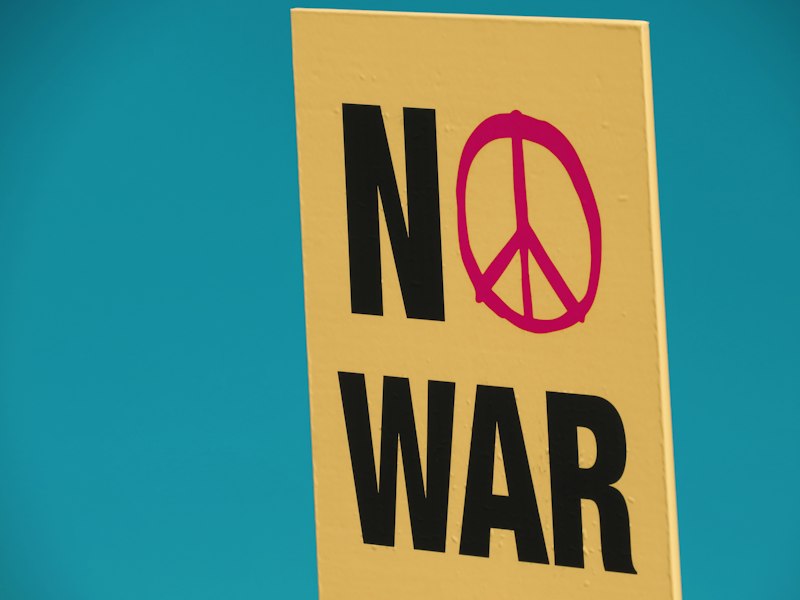
A nonaggressive society represents an aspirational social construct where individuals and groups predominantly interact without recourse to aggression or violence. This ideal encompasses a collective commitment to fostering a social environment characterized by mutual respect, understanding, and a proactive pursuit of peaceful behavior. For centuries, philosophers, sociologists, and psychologists have contemplated the possibility and mechanisms of such societies, recognizing that the minimization of hostility and conflict is paramount for collective well-being and sustained societal stability. This entry delves into the multifaceted concept of a nonaggressive society, exploring its foundational definitions, historical roots, underlying psychological mechanisms, practical applications, and profound implications for both individual flourishing and global harmony.
The pursuit of a society free from pervasive aggression is not merely an idealistic endeavor but a pragmatic one, driven by the observable negative consequences of conflict, ranging from interpersonal strife to large-scale warfare. Understanding the psychological underpinnings that either promote or inhibit aggressive tendencies is crucial for designing interventions and shaping cultural values that steer communities towards a more harmonious existence. This comprehensive exploration aims to elucidate how a nonaggressive ethos can be cultivated and sustained through a combination of individual psychological development and robust societal structures, ultimately contributing to improved quality of life for all members.
Core Definition and Foundational Principles
At its essence, a nonaggressive society is defined as a social milieu where acts of aggression and violence are systematically minimized, or ideally, entirely absent. This framework posits that constructive and peaceful behavior is fundamentally preferable to hostile interactions, which inherently carry the potential for detrimental outcomes such as physical harm, psychological distress, and widespread social disruption. The cornerstone of such a society is its unwavering emphasis on social cooperation, mutual respect, and a deep-seated understanding among its members, actively discouraging antagonism and fostering a sense of shared purpose and responsibility.
The fundamental principle underpinning a nonaggressive society is the belief in humanity’s capacity for prosociality and the malleability of human behavior. It moves beyond a purely punitive approach to aggression, instead focusing on preventative measures and the cultivation of positive social skills and attitudes. This involves recognizing that while aggressive impulses may arise, societal structures and individual psychological tools can effectively mediate these impulses, channeling them into constructive outlets or resolving them through non-confrontational means. The commitment to understanding and addressing the root causes of aggression, rather than merely suppressing its symptoms, is central to this paradigm.
Such societies invest heavily in mechanisms that promote empathy, effective communication, and robust conflict resolution strategies. They understand that disagreements are inevitable, but their transformation into violent confrontations is not. By prioritizing education, restorative justice, and inclusive decision-making processes, these societies aim to build a collective resilience against aggressive tendencies, fostering an environment where individuals feel secure, valued, and empowered to engage in constructive dialogue even amidst differences. This proactive approach cultivates a culture where peace is not merely the absence of war, but the vibrant presence of justice, equity, and well-being.
Historical Context and Theoretical Evolution
The concept of a society free from aggression has deep roots in philosophical thought, predating modern psychology. Thinkers like Jean-Jacques Rousseau, in contrast to Thomas Hobbes, posited that humans are naturally good and peaceful, and that societal corruption leads to aggression. This early philosophical debate laid groundwork for later psychological inquiries into the origins of aggression and the potential for its mitigation. However, systematic psychological research into the deliberate construction of nonaggressive environments began to gain traction in the 20th century, particularly in response to global conflicts and the rising awareness of human rights.
Key theoretical advancements emerged from disciplines such as social psychology and peace psychology. Researchers like Kroner and Goldstein (2008) explored the role of social norms in shaping behavior, suggesting that societal expectations and reinforcement of nonaggressive responses can significantly reduce hostile acts. Similarly, Huesmann and Guerra (1997) highlighted the importance of children’s normative beliefs about aggression, demonstrating how early exposure and learned social scripts influence the likelihood of aggressive behavior later in life. These studies underscored that aggression is not solely an innate drive but a complex interplay of biological predispositions, learned behaviors, and environmental influences.
The development of the idea of a nonaggressive society also intersects with the broader field of peace studies, which emerged post-World War II, focusing on the causes of war and the conditions for sustainable peace. While peace studies often examine macro-level conflicts, the psychological perspective brings an essential focus on individual and group dynamics, emphasizing how personal psychological states, interpersonal skills, and community structures contribute to or detract from collective nonaggression. This interdisciplinary approach highlights that achieving a nonaggressive society requires integrating insights from psychology, sociology, political science, and education.
Underlying Psychological Mechanisms
The cultivation of a nonaggressive society relies heavily on fostering specific psychological mechanisms within individuals and groups. One paramount mechanism is empathy, the capacity to understand or feel what another person is experiencing from within their frame of reference. When individuals possess high levels of empathy, they are less likely to inflict harm, as they can genuinely appreciate the pain or distress their aggressive actions might cause. Promoting empathy through education, literature, and real-world experiences is therefore a critical component in reducing interpersonal conflict and fostering prosocial attitudes.
Another crucial mechanism is effective emotion regulation. As highlighted by Gross (2013), the ability to manage and respond to emotional experiences, particularly intense feelings like anger, frustration, or fear, without resorting to impulsive or destructive actions, is vital for maintaining peaceful interactions. Individuals in nonaggressive societies are often taught strategies for identifying emotional triggers, understanding their own emotional responses, and employing constructive coping mechanisms such as cognitive reappraisal or relaxation techniques. This proactive management of emotions prevents them from escalating into aggressive outbursts.
Furthermore, the prevalence of strong prosocial behavior and effective conflict resolution skills serves as a bedrock for nonaggression. Prosocial behaviors encompass actions intended to benefit others, such as helping, sharing, and comforting, which naturally counteract aggressive impulses. Concurrently, equipping individuals with systematic approaches to resolving disagreements—ranging from active listening and negotiation to mediation and compromise—ensures that inevitable conflicts do not devolve into hostility. These learned skills, often reinforced through community practices and educational curricula, are indispensable tools for navigating social complexities without resorting to aggressive tactics.
Practical Applications: Cultivating Nonaggressive Environments
The principles of a nonaggressive society find tangible application in various real-world settings, notably within educational systems and community development initiatives. A prime example is the implementation of comprehensive Social and Emotional Learning (SEL) programs in schools, as advocated by researchers like Sugai and Horner (2009). These programs aim to equip students with crucial skills such as self-awareness, self-management, social awareness, relationship skills, and responsible decision-making, all of which are directly antithetical to aggressive tendencies and supportive of peaceful interactions.
Consider a practical scenario within a primary school setting: A child, feeling frustrated after a peer accidentally knocks over their tower of blocks, might typically react with anger or a retaliatory shove. In a school committed to fostering a nonaggressive environment through SEL, the response would be guided by learned principles.
- Recognize the Emotion: The child is taught to identify their feeling (“I’m angry/frustrated”).
- Pause and Self-Regulate: Instead of immediate reaction, they might use a learned calming strategy (e.g., deep breaths, counting to ten).
- Perspective-Taking (Empathy): They are encouraged to consider the peer’s intent (“Was it an accident?”).
- Communicate Needs/Feelings: They learn to express their feelings verbally (“I feel upset that my tower was knocked over”) rather than physically.
- Problem-Solve: They engage with the peer and a mediator (teacher) to find a solution (e.g., rebuild together, apology).
This step-by-step approach systematically replaces aggressive impulses with constructive, socially competent responses.
Beyond schools, these principles extend to community-wide efforts such as restorative justice programs, which focus on repairing harm caused by conflict rather than merely punishing offenders. By facilitating dialogue between victims and perpetrators, and involving community members in the resolution process, these programs aim to foster understanding, accountability, and reconciliation. Such applications demonstrate how the theoretical underpinnings of nonaggression can be translated into actionable strategies that build more resilient, empathetic, and ultimately, peaceful communities.
Significance and Contemporary Impact
The concept of a nonaggressive society holds immense significance for the field of psychology, shifting focus from solely understanding psychopathology to actively promoting psychological well-being and societal health. It underscores that psychology is not just about treating disorders but also about cultivating optimal human functioning and designing environments that support positive human interactions. This perspective has broadened the scope of psychological inquiry, inspiring research into resilience, prosocial development, and the mechanisms of peacebuilding. It highlights psychology’s vital role in addressing some of humanity’s most pressing challenges, from interpersonal violence to global conflicts.
Today, the principles derived from studying nonaggressive societies are widely applied across various domains. In public health, understanding factors that promote nonaggression informs violence prevention programs, aiming to reduce domestic abuse, bullying, and community violence. In education, the integration of Social and Emotional Learning (SEL) curricula is a direct application, fostering skills that prevent conflict and build positive relationships among students. Furthermore, in clinical and counseling psychology, therapeutic approaches often incorporate strategies for anger management, empathy building, and assertive communication, all of which are crucial for individuals striving to mitigate their own aggressive tendencies and contribute to a more peaceful social fabric.
Moreover, the impact extends into policy-making and international relations. Insights from peace psychology and social psychology contribute to frameworks for conflict resolution, negotiation, and humanitarian aid. Urban planning and community design can also implicitly support nonaggression by creating spaces that encourage positive social interaction and reduce opportunities for isolated or confrontational behaviors. Thus, the pursuit of a nonaggressive society transcends academic discourse, manifesting as a guiding principle for practical interventions and systemic changes aimed at fostering a more harmonious world.
Benefits for Individuals and Society
The establishment and maintenance of a nonaggressive society yield profound and multifaceted benefits, enhancing the well-being of individuals and strengthening the fabric of the community as a whole. On an individual level, living within an environment where aggression and violence are rare significantly contributes to improved mental health. Individuals are less likely to experience chronic stress, fear, or anxiety associated with potential threats, leading to higher levels of psychological security and emotional stability. This reduction in exposure to hostility fosters a sense of trust and belonging, essential components for personal growth and flourishing.
For society at large, a nonaggressive ethos translates into a more stable, secure, and productive collective. The minimization of conflicts and disputes directly reduces crime rates and the need for extensive punitive measures, allowing resources to be redirected towards constructive endeavors such like education, healthcare, and infrastructure development. Furthermore, when communities are characterized by cooperation and mutual understanding rather than competition and hostility, communication between individuals and groups improves dramatically. This enhanced dialogue facilitates more effective problem-solving, fosters innovation, and strengthens social cohesion, leading to a more resilient and adaptable society capable of navigating complex challenges collaboratively.
Ultimately, a nonaggressive society cultivates a virtuous cycle of positive reinforcement. As individuals experience the benefits of peaceful interactions, their inclination towards prosocial behavior is strengthened, further solidifying the collective commitment to nonaggression. This creates an environment where trust flourishes, diversity is celebrated, and shared values of respect and dignity become deeply ingrained in the cultural identity. Such a society is not merely free from conflict but actively vibrant with positive human connection and collective progress, demonstrating the immense potential for human civilization to evolve beyond destructive patterns.
Connections to Related Psychological Concepts
The concept of a nonaggressive society is intrinsically linked to several other pivotal psychological theories and subfields, forming a rich tapestry of understanding regarding human behavior and social dynamics. It draws heavily from social psychology, which examines how individuals’ thoughts, feelings, and behaviors are influenced by the actual, imagined, or implied presence of others. Within this framework, phenomena like conformity to social norms, obedience to authority, and group dynamics play critical roles in either perpetuating or mitigating aggressive behaviors within a community. Understanding these influences is essential for engineering environments that favor nonaggression.
Furthermore, it shares significant conceptual overlap with developmental psychology, particularly in understanding how aggressive or prosocial tendencies are learned and reinforced from childhood. Theories such as social learning theory, championed by Albert Bandura, explain how individuals acquire behaviors, including aggression, through observation, imitation, and reinforcement. Conversely, this theory also provides a roadmap for how nonaggressive behaviors, empathy, and conflict resolution skills can be effectively taught and modeled, particularly in early developmental stages, laying the groundwork for a more peaceful adulthood and societal contribution.
The broader category of psychology to which a nonaggressive society belongs is multifaceted, encompassing not only social and developmental psychology but also positive psychology and peace psychology. Positive psychology focuses on strengths, well-being, and optimal functioning, aligning with the goal of creating environments that foster human flourishing rather than merely alleviating distress. Peace psychology, an interdisciplinary field, specifically applies psychological principles to the study of war, peace, and conflict, offering insights into how nonaggressive societies can be built and sustained at both micro and macro levels. These interconnected fields collectively provide the theoretical and empirical foundations for understanding and promoting nonaggression.
Conclusion
The aspiration for a nonaggressive society represents a profound and enduring goal, driven by the compelling vision of a world where peaceful behavior and constructive engagement supersede destructive aggression. This comprehensive entry has elucidated that such a society is not a utopian fantasy but a tangible objective, achievable through a deliberate and systematic application of psychological principles and social strategies. From establishing clear definitions and understanding historical antecedents to nurturing empathy, promoting effective emotion regulation, and teaching robust conflict resolution skills, the pathway to nonaggression is paved with intentional efforts at both individual and collective levels.
The benefits of cultivating a nonaggressive society are far-reaching, encompassing enhanced individual mental health, greater societal stability, reduced violence, and improved collective well-being. By fostering cultures of cooperation and mutual understanding, communities can transcend cycles of hostility and build resilient social fabrics where differences are navigated with respect and shared purpose. The ongoing integration of insights from social psychology, developmental psychology, and peace psychology continues to inform and strengthen the practical applications of these principles in education, public health, and policy. Ultimately, striving towards a nonaggressive society is a testament to humanity’s capacity for progress, offering a hopeful blueprint for a more harmonious and flourishing future for all.