Nonconscious Processes: The Hidden Drivers of Your Mind
Scientifically Reviewed · Dr. Marwa Abd-Alazim · October 5, 2026
Review Criteria & Clinical Standards
This content undergoes rigorous scientific peer-review and medical editorial standards at Arab Psychology Network to ensure clinical accuracy, validity, and compliance with evidence-based guidelines from leading psychological and healthcare authorities (APA / WHO).
The Core Definition of Nonconscious Processes
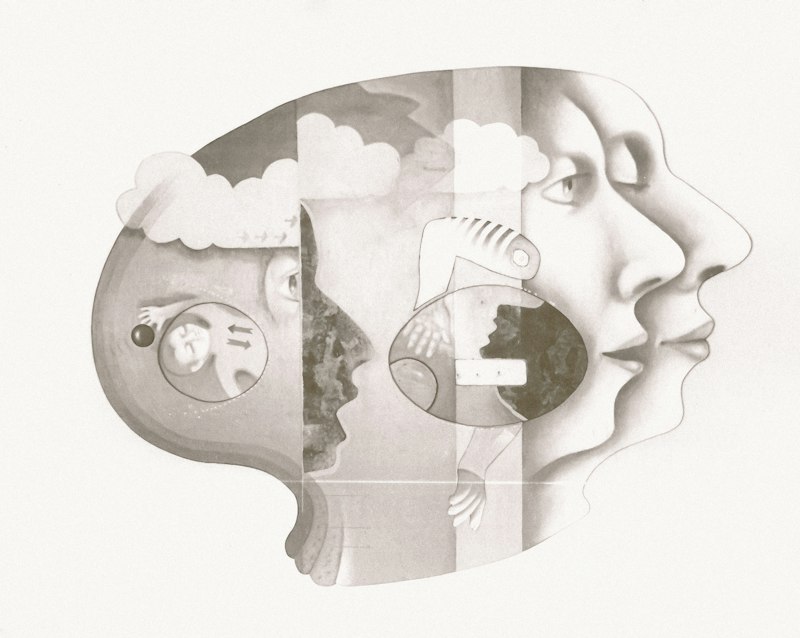
Nonconscious processes are a fundamental aspect of human cognition, referring to mental operations that occur outside the realm of direct conscious awareness or deliberate effort. These processes are inherently automatic, often implicit, and can significantly influence an individual’s thoughts, feelings, and actions without their explicit knowledge. Unlike conscious thought, which is typically slow, serial, and requires mental resources, nonconscious processes are characterized by their speed, efficiency, and parallel processing capabilities, operating in the background of our minds to manage a vast array of information and tasks. They represent a substantial portion of our mental activity, quietly shaping our perceptions, judgments, and behaviors in countless ways.
This broad definition encompasses a diverse spectrum of phenomena, including but not limited to implicit learning, the development of habit formation, the execution of skilled actions through automaticity, and forms of unconscious reasoning. While the term “nonconscious” often overlaps with “unconscious,” particularly in Freudian psychology, in contemporary cognitive and social psychology, it broadly refers to any mental activity that is not currently within an individual’s conscious focus. These processes are critical for enabling us to navigate complex environments efficiently, conserve cognitive resources, and respond rapidly to stimuli, thereby facilitating survival and adaptation. Their pervasive influence underscores the intricate interplay between the explicit and implicit layers of our mental lives.
The fundamental mechanism underpinning nonconscious processes lies in their capacity to operate without the need for volitional control or attentional focus. This allows the brain to process multiple streams of information concurrently, making rapid assessments and initiating responses far quicker than would be possible if every mental step required conscious deliberation. For instance, when an individual encounters a familiar face, recognition often occurs instantaneously and effortlessly, without a conscious retrieval of specific features or memories. This efficiency is achieved through neural pathways that have been strengthened by repeated exposure and experience, allowing for a streamlined and automatic execution of cognitive operations. Understanding these mechanisms is pivotal for appreciating how our minds handle the vast influx of sensory data and internal states that characterize daily experience.
Historical Roots and Early Explorations
The concept of mental processes operating beyond conscious awareness has a rich and complex history, with roots tracing back to early philosophical inquiries into the nature of the mind. However, its systematic study within psychology gained significant traction in the late 19th and early 20th centuries. Sigmund Freud’s groundbreaking work on the unconscious mind, though distinct from the modern cognitive definition of nonconscious processes, undeniably paved the way by emphasizing the profound influence of hidden mental states on behavior. Freud’s psychodynamic theories introduced the revolutionary idea that much of human motivation and conflict originates from an inaccessible reservoir of desires, memories, and fears, thereby challenging the prevailing view that the mind was solely a domain of conscious thought.
In the mid-20th century, as cognitive psychology emerged, the focus shifted from psychodynamic interpretations to information processing models. Researchers began to explore how information could be perceived, processed, and stored without explicit awareness. Key contributions came from figures like Richard Shiffrin and Walter Schneider, whose 1977 work on “Controlled and Automatic Human Information Processing” provided a foundational framework for distinguishing between effortful, controlled processes and effortless, automatic processes. This research highlighted how extensive practice could transform initially conscious, effortful tasks into highly efficient, nonconscious routines, thereby reducing cognitive load and freeing up attentional resources for other activities. Their model was crucial in demonstrating the practical and theoretical implications of automaticity in various cognitive tasks.
Further advancements in social psychology in the late 20th century brought the study of nonconscious processes into the mainstream, particularly through the work of researchers like John Bargh. Bargh and his colleagues demonstrated how environmental cues could automatically activate goals, attitudes, and behaviors without conscious intent, profoundly influencing social interactions and decision-making. Their seminal work, such as “The Unbearable Automaticity of Being” (1999) with Tanya Chartrand, provided compelling empirical evidence for the pervasive and powerful effects of nonconscious influences on everyday life. This era marked a significant turning point, cementing nonconscious processes as a legitimate and critical area of scientific inquiry across various subfields of psychology, moving beyond philosophical speculation to empirical investigation.
Mechanisms of Nonconscious Processing
The mechanisms underlying nonconscious processes are diverse and operate at multiple levels of cognitive function. One prominent mechanism is priming, where exposure to a stimulus (the prime) influences a response to a subsequent stimulus (the target) without conscious awareness of the connection. For instance, briefly showing someone a picture of a library might nonconsciously prime them to speak more quietly in a subsequent interaction. This effect demonstrates how prior experiences, even when not explicitly remembered, can subtly guide our cognitive and behavioral phenomena, highlighting the brain’s ability to create associative links that operate below the threshold of consciousness.
Another critical mechanism is implicit memory, which refers to memory that is expressed through performance rather than conscious recollection. Skills, habits, and classical conditioning are all forms of implicit memory. For example, riding a bicycle or typing on a keyboard are actions performed largely without conscious recall of how to execute each individual movement; instead, the body “remembers” the sequence through repeated practice. This type of memory is distinct from explicit memory, which involves the conscious recall of facts and events, and underscores the brain’s capacity to store and utilize information without the need for intentional retrieval.
Subliminal perception represents another fascinating aspect of nonconscious processing, involving the processing of stimuli that are presented below the absolute threshold of conscious awareness. While early claims about the power of subliminal messages to control behavior were largely debunked, modern research has shown that subliminal stimuli can indeed influence affective states, attitudes, and even simple decisions, albeit typically in subtle ways. This demonstrates that sensory information does not always need to reach conscious perception to be processed by the brain and exert an effect, further illustrating the intricate and often hidden workings of our cognitive architecture.
A Practical Illustration: Everyday Automaticity
To truly grasp the concept of nonconscious processes, consider the everyday act of driving a car, particularly for an experienced driver. When a person first learns to drive, every action—checking mirrors, pressing the brake, steering, changing gears—requires intense conscious attention and deliberate effort. The learner driver must consciously think about each step, often feeling overwhelmed by the sheer volume of information and tasks. This is a clear example of controlled, conscious processing, where cognitive resources are heavily engaged in executing each individual component of the complex skill.
However, with years of practice, driving becomes largely automatic, a prime example of how nonconscious processes take over. An experienced driver can navigate familiar routes, change lanes, and respond to traffic signals while simultaneously engaging in a conversation, listening to music, or contemplating their day. The intricate sequence of motor movements, perceptual judgments, and decision-making required for driving now occurs largely without conscious deliberation. The driver’s foot automatically finds the brake pedal when a car ahead slows down, their hands instinctively adjust the steering wheel to maintain lane position, and their eyes effortlessly scan the road for potential hazards—all without the need for explicit thought about each individual action.
This transformation from conscious effort to nonconscious automaticity illustrates several key aspects of nonconscious processing. Firstly, it demonstrates how repeated exposure and practice lead to the establishment of efficient neural pathways that bypass conscious control. Secondly, it highlights the resource-saving nature of nonconscious processes; by offloading routine tasks, the driver’s conscious mind is freed to attend to higher-level planning or other activities. Finally, it underscores the reliability and speed of these processes, allowing for rapid and adaptive responses in dynamic environments. The ability to drive “on autopilot” is a testament to the pervasive and indispensable role of nonconscious processes in our daily lives, enabling us to perform complex tasks with remarkable ease and efficiency.
Profound Significance and Broad Impact
The study of nonconscious processes holds profound significance for the field of psychology, fundamentally altering our understanding of human behavior and cognition. It challenges the traditional view that humans are purely rational agents making deliberate choices, revealing instead that much of our mental life and decision-making occurs beyond conscious awareness. This realization has expanded the scope of psychological inquiry, prompting researchers to investigate the hidden forces that shape our perceptions, attitudes, and interactions. By acknowledging the pervasive influence of nonconscious mechanisms, psychology gains a more complete and nuanced picture of the human mind, moving beyond introspective accounts to embrace empirical evidence of implicit influences.
One of the most critical impacts of understanding nonconscious processes lies in explaining why individuals might behave in ways that seem irrational or inconsistent with their stated conscious beliefs. For instance, research into unconscious biases has revealed how subtle, automatic associations can influence judgments and behaviors related to social groups, often leading to discriminatory outcomes despite conscious intentions to be fair. These biases, operating nonconsciously, can affect everything from hiring decisions to medical diagnoses. By understanding the mechanisms of these implicit biases, psychologists can develop targeted interventions to mitigate their negative effects, promoting more equitable and just social outcomes.
Furthermore, nonconscious processes are crucial for understanding various aspects of learning and skill acquisition. The ability to acquire complex skills, from playing a musical instrument to mastering a sport, often involves a transition from conscious effort to nonconscious expertise. This understanding helps in designing more effective training programs that account for both explicit instruction and the gradual development of implicit knowledge and automaticity. Ultimately, the exploration of nonconscious processes provides a powerful lens through which to examine the intricate workings of the mind, revealing the complexity and efficiency of mental operations that largely operate outside our direct control, yet profoundly shape who we are and how we interact with the world.
Diverse Applications Across Disciplines
The insights gleaned from the study of nonconscious processes have a wide range of practical applications across various disciplines, offering innovative approaches to address real-world challenges. In the field of education, understanding how implicit learning and automaticity occur can revolutionize teaching methodologies. Educators can design learning strategies that leverage nonconscious processes to facilitate skill acquisition and knowledge retention. For example, creating environments rich in relevant stimuli or using spaced repetition techniques can foster implicit learning, making the acquisition of new concepts or languages more efficient and less effortful. By recognizing that learning is not solely a conscious endeavor, pedagogical approaches can be tailored to tap into the mind’s automatic processing capabilities, leading to more robust and long-lasting educational outcomes.
In healthcare, the application of nonconscious process research is particularly vital for improving patient care and addressing systemic issues. A deeper understanding of unconscious biases among healthcare practitioners can lead to more equitable diagnosis and treatment decisions. Training programs designed to raise awareness of these implicit biases, combined with strategies to counteract their influence, can help medical professionals make more objective judgments, reducing disparities in care. Furthermore, insights into nonconscious processes can inform the design of health interventions, such as using subtle environmental cues to encourage healthier behaviors or developing therapeutic techniques that target implicit emotional responses, thereby enhancing patient well-being and public health initiatives.
Within the realm of business and marketing, the principles of nonconscious processing are extensively applied to understand consumer behavior and influence decision-making. Marketers utilize techniques like priming, framing effects, and subtle environmental cues to shape consumer preferences and purchasing habits without explicit awareness. For instance, the strategic placement of products or the use of specific colors and scents in retail environments can nonconsciously affect a shopper’s mood and willingness to buy. Similarly, in organizational settings, understanding how unconscious biases influence hiring, promotion, and team dynamics can lead to the development of fairer workplace practices, fostering a more inclusive and productive environment. This application underscores how nonconscious insights can drive both ethical improvements and strategic advantages in the commercial world.
Interconnections with Related Psychological Concepts
Nonconscious processes do not operate in isolation but are intricately woven into the fabric of many other psychological theories and concepts, forming a cohesive understanding of mental functioning. They are a cornerstone of cognitive psychology, particularly in models of attention, memory, and perception, where the brain’s ability to process information without conscious effort is paramount. For instance, in models of attention, nonconscious filtering mechanisms allow us to focus on relevant stimuli while processing irrelevant information in the background, only bringing it to conscious awareness if it becomes significant. This integration highlights how automatic processing is essential for managing the vast sensory input we encounter daily.
Furthermore, nonconscious processes are central to dual-process theories, which posit that human cognition is governed by two distinct systems: an intuitive, fast, automatic, and nonconscious system (often referred to as System 1) and a reflective, slow, effortful, and conscious system (System 2). This framework, popularized by psychologists like Daniel Kahneman, illustrates how many of our judgments and decisions, even seemingly rational ones, are initially influenced by rapid, nonconscious evaluations before conscious deliberation may or may not intervene. Understanding this interplay is crucial for explaining cognitive biases, heuristics, and the subtleties of human decision-making.
The concept also has strong ties to behaviorism, particularly in the study of classical and operant conditioning, where learning often occurs without conscious awareness of the associative links being formed. While behaviorism primarily focused on observable behaviors, the underlying mechanisms often involve nonconscious associations and automatic responses. More broadly, nonconscious processes fall under the umbrella of cognitive science and neuroscience, as researchers explore the neural correlates of implicit memory, automaticity, and subliminal perception, mapping these mental operations to specific brain regions and pathways. This interdisciplinary connection enriches our understanding by providing biological underpinnings for psychological phenomena.
Conclusion: The Pervasive Influence of the Nonconscious
In summation, nonconscious processes represent a vast and influential domain of mental activity that operates without conscious awareness or deliberate effort, fundamentally shaping our perceptions, thoughts, and behaviors. From the automatic execution of learned skills to the subtle influence of implicit biases and subliminal cues, these processes underscore the intricate complexity and remarkable efficiency of the human mind. They are not merely ancillary to conscious thought but constitute a pervasive and indispensable component of our cognitive architecture, enabling us to navigate the world with efficiency and adaptiveness.
The historical journey from philosophical speculation to empirical investigation has solidified the scientific understanding of nonconscious phenomena, thanks to pioneering work in cognitive and social psychology. This robust body of knowledge has led to a profound appreciation of how our brains manage an immense amount of information, perform complex tasks, and form judgments, often behind the scenes of our conscious experience. The implications of this research are far-reaching, offering critical insights into how we learn, make decisions, and interact with our social environment.
Furthermore, the practical applications of understanding nonconscious processes are diverse and impactful, extending across education, healthcare, business, and beyond. By recognizing and harnessing the power of these automatic mental operations, we can design more effective learning strategies, foster more equitable practices, and gain deeper insights into consumer behavior. Ultimately, the study of nonconscious processes continues to enrich our comprehension of the human condition, revealing the hidden forces that mold our experiences and offering pathways to optimize human potential and address societal challenges.