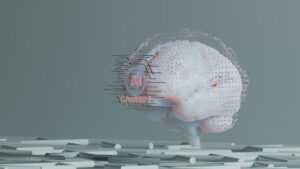
Nonverbal Learning: Decoding the Silent Language of Thought
Scientifically Reviewed · Dr. Marwa Abd-Alazim · September 8, 2026
Review Criteria & Clinical Standards
This content undergoes rigorous scientific peer-review and medical editorial standards at Arab Psychology Network to ensure clinical accuracy, validity, and compliance with evidence-based guidelines from leading psychological and healthcare authorities (APA / WHO).

Defining Nonverbal Learning
Nonverbal learning refers fundamentally to the cognitive procedure of acquisition, processing, and retention of information that is not mediated or explicitly conveyed through linguistic structures. This expansive domain encompasses the understanding of materials such as drawings, pictures, environmental sounds, musical patterns, and sensory inputs like scents or textures. It is the mechanism by which individuals interpret the world’s structure, relationships, and implicit meanings independent of formal language systems. While verbal learning relies heavily on symbolic representation and sequential decoding, nonverbal learning engages mechanisms dedicated to pattern recognition, spatial orientation, and holistic processing, often involving the rapid assessment of complex, multi-modal stimuli to derive meaning and context.
The materials involved in nonverbal learning are diverse and permeate everyday experience, including visual-spatial information (maps, geometry), auditory non-language inputs (tone of voice, rhythm, pitch), and somatosensory data (balance, kinesthesia). Crucially, nonverbal learning is not merely the absence of language; rather, it is a dedicated cognitive pathway focused on context, intuition, and procedural knowledge. This type of learning allows the individual to navigate social environments by decoding subtle cues—such as body language, facial expressions, and prosody—that carry significant emotional and relational information, enabling effective interaction and prediction of others’ behaviors.
Furthermore, understanding nonverbal learning requires recognizing its intrinsic link to implicit memory systems. Much of the knowledge acquired nonverbally is procedural or perceptual, meaning it is often demonstrated through performance rather than through conscious recollection or articulation. For instance, learning to ride a bicycle or recognizing the subtle shift in an acquaintance’s mood based on slight changes in posture are complex forms of nonverbal acquisition that operate beneath the threshold of conscious verbal processing. This foundational capacity establishes the groundwork for later, more complex cognitive operations, integrating sensory input into a coherent, usable model of reality.
The Developmental Primacy of Nonverbal Learning
A cornerstone principle in developmental psychology is that nonverbal learning occurs for most children prior to them ever entering a school or learning institution, establishing itself as the primary mode of knowledge acquisition during infancy and early childhood. Before an infant can speak or comprehend formal linguistic instruction, they are intensively engaged in nonverbal learning, mastering critical skills such as object permanence, depth perception, motor control, and recognition of primary caregivers. This early developmental period is characterized by rapid assimilation of sensory data, where the child learns fundamental physical laws—gravity, momentum, spatial boundaries—through direct interaction and experimentation with their environment, forming robust schemas independent of verbal labeling.
The crucial nature of this primacy lies in its role as a scaffold for subsequent linguistic and conceptual development. The ability to categorize shapes, recognize recurring auditory patterns, and coordinate hand-eye movements are all results of nonverbal learning that prepare the brain for the symbolic manipulation required by language. For example, understanding the concept of “near” or “far” is first established through kinesthetic and visual experience (nonverbal learning) before those concepts are assigned linguistic labels (verbal learning). Deficits in this early nonverbal domain, therefore, can have cascading negative effects on later academic achievements, particularly those requiring spatial reasoning or complex motor execution.
Infants utilize highly developed social nonverbal learning capabilities to bond and communicate needs. They swiftly learn to decode the emotional state of caregivers through variations in touch, vocal tone (non-language noises), and facial expressions. This early socio-emotional learning is essential for attachment formation and the development of self-regulation. The child learns the rules of social interaction—turn-taking, joint attention, and emotional reciprocity—long before they can articulate these rules, highlighting that the fundamental blueprints for social functioning are laid down through purely nonverbal means, emphasizing its foundational importance throughout the lifespan.
Sensory Modalities in Nonverbal Acquisition
Nonverbal learning operates across all sensory modalities, each contributing uniquely to the individual’s comprehensive understanding of the environment. The visual modality is perhaps the most heavily studied, encompassing the acquisition of information from visual materials such as pictures, maps, facial configurations, and environmental layouts. Visual-spatial learning involves the ability to perceive, analyze, and mentally manipulate geometric forms and spatial relationships. Deficits in this area can impair navigation, understanding diagrams, and performance in subjects like geometry, where mental rotation and spatial transformation are necessary skills. This modality is crucial for pattern detection, allowing the brain to quickly differentiate between novel and familiar stimuli based on visual input.
The auditory modality, when decoupled from language, focuses on the processing of non-language noises. This includes the subtle variations in pitch, rhythm, intensity, and timbre that make up prosody—the emotional coloring of speech—as well as environmental sounds (e.g., recognizing the sound of a specific car engine or a distant alarm). Nonverbal auditory learning allows humans to quickly assess threat, emotional valence, and physical proximity based solely on sound characteristics. Furthermore, musicality, which involves the acquisition of complex rhythmic and harmonic patterns, is a highly refined form of nonverbal auditory learning that relies on temporal processing and sequencing abilities.
Beyond sight and sound, olfactory and haptic/kinesthetic modalities play indispensable roles. The sense of smell often triggers powerful, rapid nonverbal associations; the acquisition of information related to scents allows for immediate categorization (e.g., palatable vs. dangerous) and is deeply connected to memory and emotion due to its direct pathway to the limbic system. Kinesthetic learning involves the acquisition of motor skills and the internal representation of body position, balance, and movement (proprioception). This procedural learning, essential for sports, complex tool use, and even handwriting, is stored implicitly and is continually refined through nonverbal feedback mechanisms, highlighting the holistic, embodied nature of nonverbal acquisition.
Mechanisms of Nonverbal Learning
The neurological mechanisms underlying nonverbal learning are often localized in the right cerebral hemisphere, which is traditionally associated with holistic, synthetic, and spatial processing, contrasting with the left hemisphere’s specialization in analytic, sequential, and linguistic processing. Key mechanisms include pattern recognition, which allows the learner to extract regularities and invariants from complex streams of sensory data, enabling prediction and rapid categorization. This mechanism is vital for tasks ranging from facial recognition to understanding the underlying structure of a musical piece, relying on parallel processing to integrate simultaneous inputs.
Another primary mechanism is implicit learning, which involves the acquisition of complex knowledge without conscious awareness of what has been learned or how the knowledge was acquired. Many nonverbal skills, such as grammar acquisition in a native language or the precise motor adjustments needed during skilled performance, fall under this category. Implicit learning often results in knowledge that is robust and resistant to forgetting, stored primarily in procedural memory circuits involving the basal ganglia and cerebellum, rather than the explicit, declarative memory systems linked to verbal recall.
Furthermore, visuospatial working memory plays a critical mechanistic role, allowing the temporary storage and manipulation of spatial and visual information necessary for real-time problem-solving, such as following directions on a map or mentally rotating an object to determine how it fits into a given space. The efficiency of this system dictates the learner’s ability to handle complex, multi-step nonverbal tasks. These mechanisms collectively demonstrate that nonverbal learning is not merely passive reception but an active, integrated process of constructing spatial, temporal, and social representations necessary for effective functioning in a complex world.
Types of Nonverbal Learning
Nonverbal learning can be broadly categorized into several distinct types, reflecting the diverse applications of non-linguistic cognitive processing. The first major category is Perceptual Learning, which involves the long-term changes in the perceptual system that result from experience. This includes refining sensory discrimination abilities, such as learning to distinguish subtle differences in shades of color, differentiating complex textures, or quickly identifying a camouflaged object. Perceptual learning is generally highly domain-specific and enhances the efficiency with which sensory information is encoded and interpreted.
The second critical type is Motor or Procedural Learning. This involves the acquisition of skilled movements and action sequences. It is the learning system responsible for acquiring abilities like playing a musical instrument, driving a vehicle, or mastering athletic maneuvers. This type of learning is characterized by a shift from conscious, effortful execution to automatic, non-conscious performance, heavily relying on feedback loops and repetition. The resulting knowledge is stored in procedural memory and is often extremely difficult to articulate verbally, underscoring its nonverbal nature.
Finally, Socio-Emotional Learning (SEL) represents a complex, high-level form of nonverbal acquisition. SEL involves learning to accurately decode and respond to the nonverbal communication of others, including interpreting facial microexpressions, body posture, gestures, and vocal tone (prosody). This type of learning is essential for developing empathy, maintaining social relationships, and navigating complex group dynamics. Deficits in socio-emotional nonverbal learning severely impair social competence, leading to misunderstandings and difficulties in forming reciprocal relationships, demonstrating the crucial link between nonverbal skills and psychological well-being.
Nonverbal Learning and Cognitive Development
Nonverbal abilities are intrinsically linked to higher-order cognitive functions and academic achievement, particularly in fields that require spatial and holistic reasoning. In mathematics, for instance, nonverbal skills are paramount for success in geometry, calculus, and advanced physics, where visualization, spatial manipulation, and understanding diagrams are necessary. A strong foundation in nonverbal learning enables the student to mentally model complex systems and solve problems that cannot be easily reduced to sequential algebraic steps, thereby extending cognitive reach beyond purely linguistic frameworks.
Furthermore, nonverbal learning heavily influences executive functioning, the set of cognitive processes necessary for controlling behavior, planning, and achieving goals. Skills such as organizational planning, temporal sequencing (understanding the flow of time and events), and mental flexibility often rely on the ability to visually or spatially represent complex information. Individuals with strong nonverbal skills are often better at judging time intervals, managing physical space, and organizing materials, as these tasks benefit significantly from a well-developed internal spatial map of the world and their actions within it.
The development of problem-solving skills is also deeply rooted in nonverbal acquisition. Many real-world problems—fixing a broken machine, assembling furniture, or finding a route through a crowded city—are solved through trial-and-error, pattern matching, and spatial reasoning rather than explicit verbal instruction. This demonstrates the power of nonverbal knowledge to facilitate adaptive behavior. The capacity to integrate disparate pieces of sensory information into a unified, actionable understanding is a hallmark of robust nonverbal learning and a key predictor of practical intelligence.
Nonverbal Learning Disorder (NLD)
A significant clinical application of nonverbal learning research is the identification and study of Nonverbal Learning Disorder (NLD), also known as Nonverbal Learning Disability. NLD is a neurodevelopmental condition characterized by a specific profile of assets and deficits. Individuals with NLD typically exhibit strong verbal abilities, including advanced vocabulary and excellent rote memory (left-hemisphere strengths), but display significant impairments in nonverbal domains (right-hemisphere weaknesses). This discrepancy creates substantial challenges in academic, social, and motor functioning.
The core deficits associated with NLD cluster into three main areas. Firstly, severe difficulties are observed in visuospatial organization, including poor performance on tasks requiring understanding maps, reading diagrams, judging distances, and manipulating objects in space. Secondly, individuals often exhibit profound impairments in social perception and interaction, struggling to interpret nonverbal cues such as facial expressions, body language, and vocal prosody, leading to misinterpretation of social contexts and difficulty forming peer relationships. Thirdly, consistent problems with fine and gross motor coordination (clumsiness, poor handwriting) are common, reflecting underlying difficulties in integrating proprioceptive and spatial information necessary for smooth motor execution.
Diagnosing NLD requires a comprehensive assessment that highlights the qualitative difference between verbal and nonverbal cognitive performance, often utilizing standardized neuropsychological batteries. Understanding NLD is critical because the individual’s high verbal intelligence often masks the underlying nonverbal deficits, leading to misidentification or assumptions of laziness or deliberate non-compliance. Effective intervention relies on recognizing that the learning challenge is rooted in a specific neurological processing difficulty rather than a generalized lack of intelligence or effort.
Clinical Implications and Intervention
The recognition of nonverbal learning as a distinct cognitive function carries profound implications for educational and clinical intervention, particularly for individuals struggling with NLD or generalized spatial weaknesses. Since nonverbal information is inherently challenging for these individuals to process implicitly, intervention often focuses on translating nonverbal tasks into explicit, verbal, sequential steps, a strategy known as verbal mediation. For example, instead of relying on spatial intuition to organize a locker, the individual is taught to verbally articulate a step-by-step organizational plan.
In the educational setting, addressing nonverbal weaknesses requires modifying instructional delivery. Teachers must reduce reliance on purely visual-spatial materials (such as complex graphs or dense maps) and instead provide clear, linear verbal explanations and written outlines. Intervention for motor coordination often involves direct instruction in motor skills, focusing on repetitive, structured practice to build procedural memory, such as occupational therapy targeting fine motor dexterity or physical therapy addressing balance and gross motor planning.
Intervention for social deficits is perhaps the most crucial area for long-term success. This involves explicit, structured training in social skills, where nonverbal cues that neurotypical individuals acquire automatically are taught conceptually. This training uses verbal labels and rules to define facial expressions, body language, and prosody, effectively teaching the ‘grammar’ of social interaction that the individual cannot acquire through typical nonverbal exposure. This comprehensive, multi-modal approach acknowledges the specific nature of the nonverbal deficit and leverages the individual’s existing verbal strengths to build compensatory strategies.