Noology: Unlock Your Mind’s Hidden Potential
Scientifically Reviewed · Dr. Marwa Abd-Alazim · October 12, 2026
Review Criteria & Clinical Standards
This content undergoes rigorous scientific peer-review and medical editorial standards at Arab Psychology Network to ensure clinical accuracy, validity, and compliance with evidence-based guidelines from leading psychological and healthcare authorities (APA / WHO).
The Core Definition of Noology
Noology, a term derived from the ancient Greek word nous, meaning “mind” or “intellect,” represents a distinct field of study dedicated to the comprehensive understanding of human intelligence, particularly focusing on its dynamic development across the entire lifespan. Unlike traditional cognitive science, which often dissects intelligence into its constituent components and mechanisms at specific points in time, noology adopts a more holistic and longitudinal perspective. It posits that intelligence is not merely a collection of isolated cognitive abilities but rather an intricate, evolving system cultivated through continuous interaction and maturation.
At its fundamental core, noology seeks to explore how intelligence emerges, transforms, and adapts from infancy through old age, considering the multifaceted influences that shape its trajectory. This includes the interplay of biological predispositions, environmental stimuli, educational experiences, and individual volitional efforts. The field endeavors to move beyond a static measurement of intellectual capacity, instead emphasizing the processes of intellectual growth, refinement, and the qualitative changes that occur in an individual’s cognitive landscape over many decades. It is concerned with the cultivation of intelligence as a cohesive whole, acknowledging that its elements are interdependent and contribute to a larger, integrated mental framework.
This perspective underscores the notion that intelligence is a complex, dynamic, and profoundly personal process. It is not simply a set of skills or abilities that can be quantified in isolation, but rather an ongoing journey involving the intricate interplay of various cognitive abilities, deeply held beliefs, personal values, and a lifetime of accumulated experiences. Noology asserts that the development of intelligence is highly individualized, reflecting each person’s unique life narrative and the specific challenges and opportunities they encounter. Consequently, a central tenet of noology is the imperative to understand each individual’s distinct developmental path of intelligence, recognizing that a one-size-fits-all approach to studying or fostering intellect is inherently limited.
Historical Context and Origins
The term noology, in its modern psychological context, was notably coined and advanced by the distinguished psychologist and philosopher Paul Vitz. Vitz introduced this concept as a deliberate counterpoint or complementary perspective to the prevailing paradigms within cognitive science during the late 20th and early 21st centuries. His work aimed to address what he perceived as a significant gap in the study of the mind: the lack of a dedicated framework for understanding the developmental arc of human intelligence in its entirety, rather than merely analyzing its discrete operational components or computational aspects.
Vitz’s conceptualization emerged from a broader philosophical tradition that emphasized the integral nature of the human intellect and its qualitative dimensions, often overlooked by more reductionist approaches. The context of its development can be traced to a growing recognition within psychological discourse that while cognitive science excelled at mapping the mechanisms of perception, memory, and problem-solving, it sometimes struggled to articulate a comprehensive view of how these mechanisms coalesce and mature into a coherent, adaptive intelligence throughout a person’s life. Vitz sought to provide a theoretical lens through which the cultivation of wisdom, understanding, and integrated intellectual capacity could be systematically examined.
The origin of noology, therefore, lies in an effort to bridge the analytical rigor of cognitive research with a more synthetic and developmental understanding of the human mind. It reflects a desire to re-incorporate aspects of classical philosophy, particularly the concept of nous, which often encompassed intuitive understanding, spiritual insight, and practical wisdom, into contemporary psychological inquiry. By rooting the study of intelligence in its developmental continuum, Vitz provided a framework that encourages psychologists and educators to consider not just what intelligence is at a given moment, but how it becomes what it is, and how it can be fostered to reach its fullest potential across the lifespan.
Fundamental Principles Guiding Noological Inquiry
The guiding principles of noology are centered on a profound appreciation for the multifaceted and evolving nature of human intelligence. One of its main thrusts is the assertion that intelligence is far more than a fixed entity or a collection of isolated cognitive skills; it is conceptualized as a complex, dynamic, and fundamentally holistic process. This means that noologist researchers look beyond mere scores on intelligence tests, seeking instead to understand the intricate interplay of various mental faculties and how they adapt and integrate over time. The emphasis is on understanding intelligence as a system in constant flux, shaped by both internal cognitive processes and external environmental interactions.
Furthermore, noology posits that intelligence is profoundly shaped by an individual’s broader psychological and experiential landscape. It integrates the view that intelligence development is not solely a function of innate abilities or purely cognitive mechanisms. Instead, it involves a crucial interaction with an individual’s deeply held beliefs, personal values, and cumulative experiences. These non-cognitive factors are considered integral to how intelligence is formed, expressed, and utilized in real-world contexts. For instance, a person’s belief in their own capacity to learn (self-efficacy) or their values regarding perseverance can significantly impact their intellectual development and application of cognitive skills.
A cornerstone of noological thinking is the recognition of intelligence as an inherently individualized process. While there may be universal patterns in cognitive development, the specific trajectory, manifestations, and strengths of intelligence are unique to each person. Vitz, among others, argues that intelligence develops through the continuous interaction of these diverse abilities and influences over the entire lifespan, and critically, that it is not identical for everyone. This perspective necessitates an approach that values individual differences, seeking to understand the unique developmental story of each person’s intelligence rather than attempting to fit all individuals into a standardized model.
Distinction from Cognitive Science
One of the most salient features defining noology is its deliberate divergence from the methodological and conceptual frameworks often associated with mainstream cognitive science. While both disciplines are concerned with the study of the mind and intellect, their primary foci and underlying assumptions create a clear demarcation. Cognitive science typically employs a reductionist approach, breaking down mental processes into discrete components such as attention, memory, perception, language, and problem-solving. Its strength lies in dissecting these elements, often using computational models or experimental psychology to understand how they function individually and interact in specific cognitive tasks. The emphasis is frequently on understanding the ‘how’ of mental operations at a given point in time.
In contrast, noology distinguishes itself by placing paramount importance on the longitudinal development of intelligence across the entire lifespan. Rather than focusing on understanding the isolated components of intelligence, noology is centered on the dynamic evolution and integration of these cognitive abilities from childhood through adulthood and into old age. It is concerned not just with what intelligence is at any single moment, but how it becomes what it is, how it matures, adapts, and is cultivated over time. This developmental lens is what provides noology with its unique perspective, pushing beyond static analyses to explore the continuous processes of intellectual growth and change.
Given that intelligence is widely acknowledged as a multidimensional construct composed of various cognitive abilities, noology specifically investigates how these diverse abilities interact, influence one another, and develop synergistically throughout an individual’s life. For example, while cognitive science might study the mechanisms of working memory, noology would explore how working memory capacity develops, how it integrates with executive functions and long-term knowledge, and how its application changes in complexity and effectiveness as a person ages and accumulates experience. This holistic and developmental integration is the hallmark that sets noology apart, offering a complementary but distinct approach to understanding human intellect.
A Practical Example: Cultivating Critical Thinking Skills
To illustrate the practical application of noological principles, consider the development and cultivation of critical thinking skills, a crucial aspect of advanced human intelligence. Traditional educational approaches might focus on teaching specific logical fallacies or problem-solving algorithms. A noological perspective, however, would delve much deeper, examining how these skills emerge, evolve, and are integrated within an individual’s broader intellectual framework throughout their lifespan, rather than just in a single course or academic year.
The “How-To” from a noological standpoint begins by acknowledging that critical thinking is not merely a set of techniques but a complex disposition shaped by an individual’s cognitive abilities, their beliefs about knowledge, and their accumulated experiences.
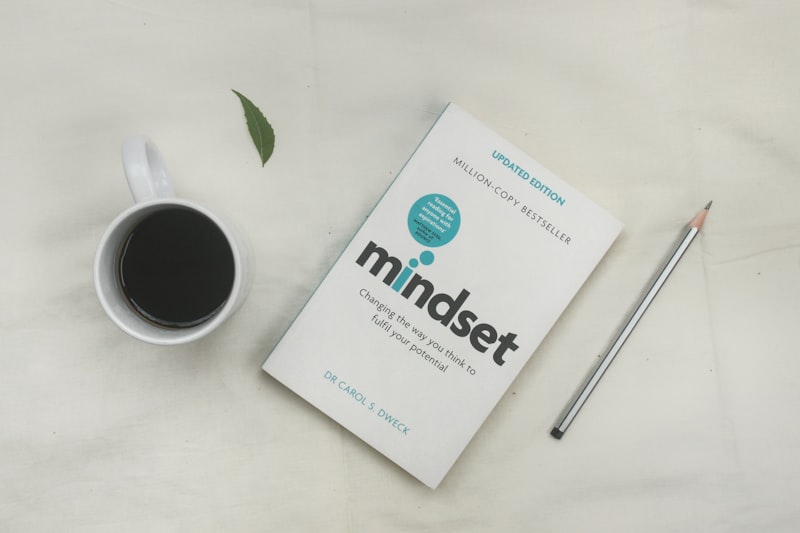
- Early Foundations (Childhood/Adolescence): In early education, noology would suggest fostering foundational cognitive abilities like attention, memory, and basic reasoning through engaging activities that encourage questioning and exploration. It would also emphasize cultivating a “growth mindset”—a belief that intelligence can be developed—as a crucial non-cognitive factor influencing intellectual perseverance. This approach ensures that the groundwork for complex thought is laid through active engagement and a positive self-perception of learning capabilities.
- Progressive Complexity (Adolescence/Early Adulthood): As individuals mature, noology encourages educators to introduce increasingly complex problems that require analytical reasoning, synthesis of information, and evaluation of evidence from multiple perspectives. The focus would be on demonstrating how different cognitive abilities (e.g., abstract thinking, divergent thinking, logical reasoning) interact to form a more robust critical faculty. Furthermore, incorporating diverse viewpoints and discussions that challenge existing beliefs can help refine an individual’s capacity for nuanced judgment, fostering intellectual flexibility and open-mindedness.
- Lifelong Refinement (Adulthood/Later Life): For adults, noology highlights the ongoing development of critical thinking through continuous learning, reflection on real-world experiences, and engagement with complex social and ethical dilemmas. It acknowledges that life experience itself becomes a powerful teacher, refining one’s ability to assess situations, anticipate consequences, and make informed decisions, integrating practical wisdom with formal knowledge. This stage emphasizes the interrelationship between cognitive maturity, emotional intelligence, and ethical reasoning in forming a truly cultivated intellect.
Thus, noology provides a deeper understanding of the developmental trajectory of critical thinking, moving beyond a simple skill acquisition model to encompass the holistic growth of an individual’s intellectual character. It informs educational interventions by suggesting that fostering intelligence requires a sustained, integrated approach that considers cognitive, affective, and experiential dimensions across the entire arc of a person’s life, rather than isolated training modules.
Significance and Impact in Psychology and Education
The emergence of noology carries significant implications for both the field of psychology and the broader domain of education. Its emphasis on the holistic and developmental nature of intelligence offers a crucial corrective to more fragmented or static models of intellectual functioning. By shifting the focus from merely measuring intelligence to understanding its cultivation and lifelong evolution, noology encourages researchers and practitioners to adopt a more dynamic and optimistic view of human potential. This perspective underscores that intellectual growth is not confined to early life but is an ongoing process amenable to influence and enhancement at any age, fostering a more inclusive and empowering approach to understanding human cognition.
In contemporary psychology, noology provides a theoretical framework for integrating disparate findings from developmental psychology, cognitive psychology, and even fields like personality psychology and positive psychology. It encourages researchers to explore how personality traits, motivational factors, and emotional regulation contribute to the overall development and expression of intellectual abilities throughout the lifespan. This integrative approach can lead to a more nuanced understanding of individual differences in intellectual trajectories, moving beyond simple genetic or environmental determinism to a more complex interactionist model. Furthermore, it highlights the importance of fostering not just cognitive skills, but also the broader intellectual virtues such as curiosity, intellectual humility, and perseverance.
The practical applications of noology are particularly evident in the realm of education and therapeutic interventions. In education, it can profoundly reshape pedagogical strategies by emphasizing continuous intellectual cultivation over rote memorization or skill drills. For instance, noological insights can inform the design of curricula that progressively challenge students, encouraging deeper engagement with complex topics and fostering the integrated development of critical thinking, problem-solving, and creative abilities across all educational stages. In clinical psychology and special education, noology can provide a deeper understanding of the developmental pathways of individuals with cognitive deficits or learning disabilities. By examining the unique developmental trajectories of these individuals, it can guide the creation of more tailored and effective interventions that support their holistic intellectual growth, rather than merely targeting isolated symptoms.
Connections and Related Concepts
Noology, while a distinct field, shares significant conceptual territory and forms crucial connections with several other established areas within psychology and related disciplines. Its primary focus on the lifespan_development of intelligence naturally places it in close dialogue with developmental psychology, particularly theories that emphasize cognitive growth and change across different stages of life, such as those proposed by Jean Piaget or Erik Erikson, albeit with a more explicit focus on the integrative nature of intelligence. It can be seen as providing a unifying framework for understanding how cognitive, emotional, and social developments coalesce to shape intellectual capacity.
Furthermore, noology maintains a strong relationship with the philosophy of mind, especially those traditions that explore the nature of consciousness, intellect, and wisdom. Its emphasis on the nous connects it to ancient philosophical inquiries into the higher faculties of the soul and the pursuit of truth and understanding. In a more contemporary context, it intersects with theories of wisdom, which often conceptualize wisdom not just as accumulated knowledge, but as an integrated understanding that combines intellectual capacity with moral discernment and practical judgment—a holistic view that resonates strongly with noological principles. It also touches upon educational psychology, particularly in its implications for pedagogy that aims at fostering comprehensive intellectual development rather than just specific skills.
The broader category to which noology belongs could be described as an interdisciplinary approach situated at the confluence of developmental psychology, cognitive psychology, and the philosophy of mind. It offers a unique lens that complements the analytical strengths of cognitive science by providing a synthetic, developmental, and holistic perspective on human intellect. By emphasizing the continuous cultivation of intelligence as an integrated system influenced by personal values and experiences, noology provides a framework that can enrich our understanding of human intellectual potential and guide efforts to foster it across all stages of life.
Future Directions and Research Opportunities
As a relatively nascent but increasingly relevant field, noology presents numerous avenues for future research and theoretical development, promising to significantly deepen our understanding of human intelligence. One critical area for future inquiry involves developing robust empirical methodologies capable of capturing the dynamic and holistic nature of intelligence across the lifespan. This might involve longitudinal studies that track individuals’ cognitive, emotional, and experiential development over decades, employing sophisticated analytical techniques to model the complex interactions between various factors contributing to intellectual growth. Such research could move beyond traditional psychometric assessments to incorporate qualitative insights into personal narratives of intellectual cultivation.
Another significant direction for noological research lies in its application to diverse populations and contexts. Exploring how intelligence develops in different cultural settings, across various socio-economic strata, or in individuals with specific neurological conditions could provide invaluable insights into the universality and variability of noological principles. This could lead to a more nuanced understanding of how environmental affordances and constraints interact with individual predispositions to shape intellectual trajectories. Furthermore, the integration of neuroscientific findings, especially regarding brain plasticity and neural network development over the lifespan, could offer biological correlates and mechanisms for the holistic intellectual growth that noology describes, bridging the gap between mind and brain at a developmental level.
Ultimately, as research into noology continues to mature, it is poised to become an increasingly vital field for understanding the intricate development and cultivation of intelligence. Its unique emphasis on the entire lifespan, the holistic integration of cognitive and non-cognitive factors, and the individualized nature of intellectual growth offers a powerful framework for both theoretical advancement and practical application. By consistently challenging reductionist views and advocating for a more comprehensive understanding of the human intellect, noology can inform more effective educational practices, therapeutic interventions, and societal approaches to fostering intellectual flourishing in all individuals.