Genetic Determinism: Unlocking the Code of Your Mind
Scientifically Reviewed · Dr. Marwa Abd-Alazim · September 14, 2026
Review Criteria & Clinical Standards
This content undergoes rigorous scientific peer-review and medical editorial standards at Arab Psychology Network to ensure clinical accuracy, validity, and compliance with evidence-based guidelines from leading psychological and healthcare authorities (APA / WHO).
Introduction: Defining Nucleic Acids and Their Biological Imperative
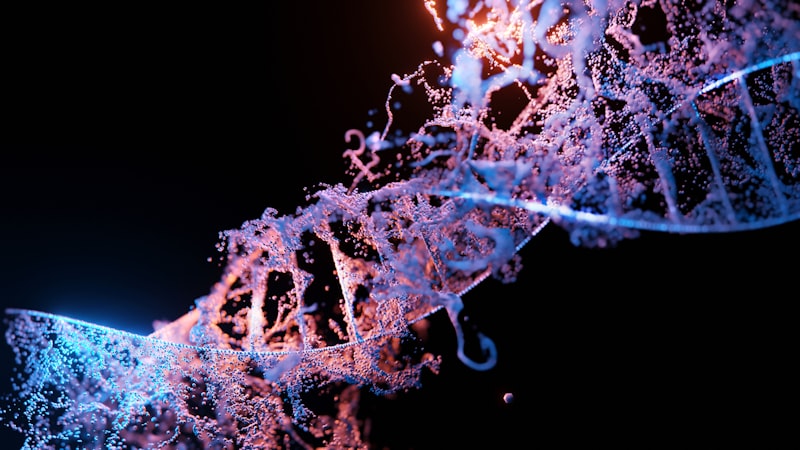
Nucleic acid is universally recognized as the foundational biopolymer responsible for the storage, transmission, and expression of genetic information across all known life forms. These highly complex macromolecules are absolutely essential for biological function, driving processes from cellular growth and differentiation to heredity. Together with proteins, nucleic acids form the core machinery of life, dictating the blueprint and the execution of all cellular activities. The immense complexity encoded within these molecules allows for the diversity and continuity observed throughout the biological world, highlighting their primary role as the chemical basis of heredity. Understanding nucleic acids requires delving into their fundamental structure: they are polymers constructed from repeating monomer units called nucleotides, linked together in long chains that define the genetic code.
The crucial functional distinction of nucleic acids lies in their ability to self-replicate and to direct the synthesis of proteins. This duality—information storage and information processing—is central to the concept of the Central Dogma of Molecular Biology. The two primary types of naturally occurring nucleic acids are deoxyribonucleic acid (DNA) and ribonucleic acid (RNA). While DNA primarily serves as the long-term archive of genetic instructions, RNA performs diverse roles, acting as a temporary messenger, a structural component of ribosomes, or an enzymatic catalyst. The efficiency and fidelity with which nucleic acids manage genetic data underscore their role as the master control molecules of the cell, governing its identity and its interactions with the environment.
The structural integrity of nucleic acids ensures the stability required for the faithful transfer of genetic traits across generations. The unique chemical properties inherent in their building blocks allow nucleic acids to form highly stable, yet dynamic, secondary and tertiary structures. These structures are integral not only to the reliable replication of the entire genome but also to the precise regulation of gene expression. Furthermore, the capacity for complementary base pairing via hydrogen bonds enables the formation of double-stranded molecules, a feature critical for error-checking and repair mechanisms that protect the genetic heritage from degradation or mutation.
The Fundamental Architecture: Nucleotide Monomers
The basic building block of any nucleic acid is the nucleotide. Each nucleotide is a highly structured molecule composed of three distinct chemical components covalently bonded together. These components are a phosphate group, a five-carbon sugar molecule (known as a pentose sugar), and a nitrogenous base. It is the specific arrangement and sequence of these nucleotides that determines the genetic information carried by the entire nucleic acid strand. The covalent bond linking the sugar of one nucleotide to the phosphate group of the next creates the strong, invariant sugar-phosphate backbone of the nucleic acid polymer, providing structural stability to the entire molecule.
The pentose sugar component is critical in defining the type of nucleic acid. In DNA, the sugar is deoxyribose, characterized by the absence of a hydroxyl (-OH) group at the 2′ carbon position; this structural modification makes DNA inherently more stable than RNA, suitable for its role as the permanent genetic archive. Conversely, in RNA, the sugar is ribose, which retains the hydroxyl group at the 2′ position. This presence of the 2′-OH group makes RNA susceptible to hydrolysis, contributing to its generally shorter lifespan and greater conformational flexibility within the cell, which is necessary for its diverse functional roles. The phosphate group, typically attached to the 5′ carbon of the sugar, provides the molecule with its negative charge and facilitates the formation of the phosphodiester bonds that link adjacent monomers.
The third and most functionally variant component is the nitrogenous base. These bases are heterocyclic ring structures that project inward from the sugar-phosphate backbone and are responsible for encoding information through specific pairing rules. These bases fall into two main categories: the larger, double-ring structures known as purines (Adenine (A) and Guanine (G)), and the smaller, single-ring structures known as pyrimidines (Cytosine (C), Thymine (T), and Uracil (U)). DNA utilizes Adenine, Guanine, Cytosine, and Thymine. RNA substitutes Thymine with Uracil. The specific pairing of a purine with a pyrimidine (A with T/U, and G with C) via weak hydrogen bonds forms the basis of the secondary structure and the mechanism for genetic replication and transcription.
Historical Milestones in Nucleic Acid Discovery
The study of nucleic acids traces its origins back to the mid-19th century, marking the initial steps toward understanding the chemical basis of heredity. The first successful isolation of a nucleic acid was achieved in 1869 by the Swiss physician and chemist, Friedrich Miescher. Working with white blood cells (leukocytes) extracted from surgical bandages, Miescher isolated a substance rich in phosphorus and resistant to protein digestion from the cell nuclei. He initially named this substance “nuclein,” recognizing it as a unique class of biomolecule distinct from fats and proteins. This groundbreaking work laid the chemical foundation for all subsequent nucleic acid research, although its biological significance remained unrecognized for decades.
The early 20th century saw intense research focused on clarifying the chemical composition and structure of DNA and RNA. Researchers like Phoebus Levene contributed significantly by identifying the specific components of the nucleotide—the sugar, phosphate, and base—and proposing the basic structure of the nucleic acid chain. However, it was not until the landmark experiments of the 1940s that the functional role of DNA in heredity was conclusively established. In 1944, Oswald Avery, Colin MacLeod, and Maclyn McCarty published their pivotal findings demonstrating that DNA, and not protein, was the material responsible for the “transformation” of bacterial characteristics, providing definitive evidence that DNA carries genetic information.
The pinnacle of early nucleic acid research occurred in the 1950s with the elucidation of DNA’s three-dimensional structure. Building upon the X-ray diffraction data generated by Rosalind Franklin and Maurice Wilkins, James Watson and Francis Crick proposed the now-iconic double helix model in 1953. This model revealed that DNA consists of two antiparallel polynucleotide strands coiled around a central axis, held together by hydrogen bonds between complementary base pairs (A-T and G-C). The profound implication of this structure was that it immediately suggested the mechanism for genetic replication: the two strands could separate, and each could serve as a template for synthesizing a new, complementary strand, thus ensuring the faithful transmission of genetic information.
Structural Complexity and Functional Roles
The function of nucleic acids is intricately linked to their structural hierarchy, which progresses from primary sequence to complex tertiary folds. The primary structure is simply the linear sequence of nucleotides linked by phosphodiester bonds, which constitutes the genetic code itself. The sequence determines the identity and order of amino acids in a protein and is the fundamental level of information storage. However, it is the secondary structure—the three-dimensional arrangement formed by interactions within or between strands—that enables biological activity. The most famous secondary structure is the DNA double helix, which is stabilized by the precise geometry of complementary base pairing.
The phenomenon of complementary base pairing is the defining characteristic of nucleic acid function. Adenine always pairs with Thymine (or Uracil in RNA) via two hydrogen bonds, and Guanine always pairs with Cytosine via three hydrogen bonds. This strict pairing rule ensures that the width of the double helix remains constant and that the genetic information on one strand is perfectly mirrored on the other. This complementarity is absolutely essential for key cellular processes, most notably DNA replication, where the double-stranded molecule unwinds and separates. Each exposed parent strand then acts as a template for the assembly of a new, complementary daughter strand, resulting in two identical DNA molecules with exceptional fidelity.
Beyond the double helix, nucleic acids, particularly RNA, are capable of forming complex tertiary structures. Unlike DNA, which is generally restricted to the double helix, single-stranded RNA can fold back upon itself, creating intricate shapes often stabilized by internal base pairing, loops, and junctions. Examples include the cloverleaf structure of transfer RNA (tRNA) and the highly convoluted structures of ribosomal RNA (rRNA) and various catalytic RNA molecules known as ribozymes. These complex tertiary structures are crucial because they enable RNA molecules to interact specifically with proteins, bind substrates, and even catalyze biochemical reactions, demonstrating that nucleic acids are not merely passive information carriers but active participants in cellular metabolism.
The Major Classes: DNA and RNA
While both deoxyribonucleic acid (DNA) and ribonucleic acid (RNA) share the fundamental structure of a polynucleotide chain, they exhibit profound differences in their chemical composition, structural organization, cellular location, and biological function. These distinctions reflect their respective specialized roles within the cell. DNA is primarily localized within the nucleus (or nucleoid region in prokaryotes) and serves as the long-term, stable repository of the entire genetic instruction set required for the development, function, growth, and reproduction of all organisms. Its double-stranded nature and use of deoxyribose sugar contribute directly to its superior chemical stability and resistance to enzymatic degradation.
RNA, conversely, is generally single-stranded, although it often forms localized double-stranded regions through internal base pairing. Its use of the ribose sugar and the pyrimidine base Uracil (instead of Thymine) render it chemically less stable than DNA. This relative instability is functional, as RNA molecules, such as messenger RNA (mRNA), are often designed to be transient messengers, carrying instructions from the DNA archive to the protein synthesis machinery before being rapidly degraded. RNA exists in multiple functional forms, each playing a critical role in the expression of the genetic code.
The major functional classes of RNA include messenger RNA (mRNA), which carries the transcribed genetic message from the DNA template to the ribosome; transfer RNA (tRNA), which acts as the adaptor molecule, bringing specific amino acids to the ribosome during protein synthesis; and ribosomal RNA (rRNA), which forms the core structural and catalytic component of the ribosome, the cellular machine responsible for translating mRNA into protein. Furthermore, numerous non-coding RNAs (ncRNAs), such as microRNAs (miRNAs) and small interfering RNAs (siRNAs), have been discovered, demonstrating roles in regulating gene expression, often by silencing or modulating the activity of mRNA transcripts.
Mechanisms of Genetic Information Flow
The core purpose of nucleic acids is to manage the flow of genetic information, a process classically described by the Central Dogma of Molecular Biology. This dogma defines the three primary steps: replication, where DNA is copied; transcription, where DNA is used as a template to synthesize RNA; and translation, where RNA is used to synthesize proteins. Replication is fundamental to cell division and inheritance, ensuring that every daughter cell receives an identical copy of the genetic material. This process relies heavily on the complementary nature of the double helix, ensuring high fidelity during the copying mechanism carried out by DNA polymerases.
Transcription is the initial step in gene expression, where specific segments of DNA (genes) are copied into messenger RNA (mRNA) by enzymes known as RNA polymerases. Unlike replication, which copies the entire genome, transcription is highly regulated, occurring only when the protein product of a specific gene is required by the cell. The resulting mRNA molecule carries the genetic instructions out of the nucleus and into the cytoplasm. This selective process is crucial for cellular differentiation, allowing different cells in a multicellular organism to express different sets of genes despite possessing the same underlying DNA sequence.
The final stage is translation, which occurs on the ribosomes. Here, the sequence of nucleotides in the mRNA is decoded in sets of three (codons) into a sequence of amino acids, forming a polypeptide chain. This process involves the complex interplay of mRNA, the ribosomal machinery (rRNA and associated proteins), and tRNA molecules, each carrying a specific amino acid matched to a specific codon. The accurate execution of translation is paramount, as errors can lead to the production of non-functional or harmful proteins. Thus, the entire genetic information flow mechanism, driven by the structure and interaction of DNA and various forms of RNA, constitutes the engine of cellular life.
Advanced Applications in Modern Biotechnology
Nucleic acid research remains one of the most dynamic and rapidly evolving fields in modern science, constantly yielding new discoveries and technological innovations. Recent advances in synthetic nucleic acid chemistry have allowed scientists to engineer and synthesize novel nucleic acid-based molecules with precise functional capabilities far beyond their naturally occurring counterparts. These synthetic molecules are revolutionizing fields such as medicine, diagnostics, and materials science, demonstrating the remarkable versatility of the nucleotide structure when manipulated by human design.
One area of significant progress is the development of aptamers. These are short, single-stranded nucleic acid molecules (either DNA or RNA) that can fold into unique three-dimensional shapes, allowing them to bind with high specificity and affinity to target molecules, including proteins, small molecules, or even whole cells. Aptamers are often described as “chemical antibodies” and are being investigated for use in drug delivery, targeted therapy, and advanced biosensing applications where traditional antibodies might be impractical due to cost or stability issues. Their ability to be chemically synthesized and easily modified makes them highly customizable research tools and potential therapeutic agents.
Furthermore, the precise rules of complementary base pairing have been harnessed in the field of DNA nanotechnology. Scientists can design synthetic DNA strands that self-assemble into intricate, predefined two-dimensional and three-dimensional structures, such as nanostructures, cages, and molecular machines. These structures have applications ranging from serving as scaffolds for molecular electronics to acting as sophisticated drug delivery vehicles capable of encapsulating therapeutic agents and releasing them only in response to specific biological signals within the body. This level of molecular engineering promises highly targeted and efficient delivery systems for challenging medical treatments, including cancer therapy and gene therapy.
The therapeutic potential of nucleic acids extends deeply into gene therapy and targeted genome editing. Techniques such as CRISPR-Cas9, which uses an RNA guide molecule to target specific DNA sequences for cutting and modification, have transformed molecular biology, offering unprecedented precision in editing the genetic code to correct disease-causing mutations. Additionally, nucleic acid-based medicines, including antisense oligonucleotides and small interfering RNAs (siRNAs), are now used clinically to silence specific genes responsible for various diseases, confirming the transition of nucleic acid technology from the laboratory bench to bedside applications.
Conclusion and Future Directions
Nucleic acids stand as the undisputed cornerstone of molecular biology, serving as the essential macromolecules composed of nucleotide monomers that dictate the fundamental processes of life. The unique structural features of nucleic acids—including the invariant sugar-phosphate backbone, the strict rules of complementary base pairing, and the capacity to form complex tertiary structures—enable them to perform a diverse array of biological functions, from stable long-term information storage in DNA to dynamic, catalytic roles performed by various RNA species. The elucidation of the DNA double helix structure by Watson and Crick marked a profound turning point, launching the age of molecular genetics.
The history of nucleic acid research is long and distinguished, spanning from Miescher’s initial isolation of nuclein to the revolutionary genome editing technologies of today. This field continues to be an intensely active area of scientific inquiry, characterized by continuous discovery and technological innovation. Exciting advances in synthetic biology and nanotechnology, involving the creation of aptamers, ribozymes, and complex DNA nanostructures, are pushing the boundaries of what is possible, offering new avenues for therapeutic intervention, advanced diagnostics, and fundamental biological understanding.
As research continues to uncover the full spectrum of non-coding RNA roles and perfect precise genome manipulation techniques, the impact of nucleic acid science on human health and biotechnology will only continue to grow. Future directions focus heavily on refining drug delivery systems using nucleic acid scaffolds and developing personalized medicine approaches based on individual genetic blueprints, confirming that the study of these vital biopolymers remains central to unlocking the deepest secrets of life itself.
References and Further Reading
The following sources were foundational in establishing the chemical nature and structural significance of nucleic acids:
- Avery, O. T., MacLeod, C. M., & McCarty, M. (1944). Studies on the chemical nature of the substance inducing transformation of pneumococcal types. The Journal of Experimental Medicine, 79(2), 137-158.
- Miescher, F. (1871). Über körper, welche im thierischen organismus als stoffwechselprodukte vorkommen. Hoppe-Seyler’s Zeitschrift für Physiologische Chemie, 2(4), 375-394.
- Villegas, G., & Walde, P. (2020). DNA Nanostructures: From Design to Biomedical Applications. Advanced Functional Materials, 30(14), 1901546.
- Watson, J. D., & Crick, F. H. (1953). Molecular structure of nucleic acids; a structure for deoxyribose nucleic acid. Nature, 171(4356), 737-738.