Ocular Psychology: Unmasking Involuntary Eye Movements
Scientifically Reviewed · Dr. Marwa Abd-Alazim · September 9, 2026
Review Criteria & Clinical Standards
This content undergoes rigorous scientific peer-review and medical editorial standards at Arab Psychology Network to ensure clinical accuracy, validity, and compliance with evidence-based guidelines from leading psychological and healthcare authorities (APA / WHO).
Introduction and Definition of Nystagmus
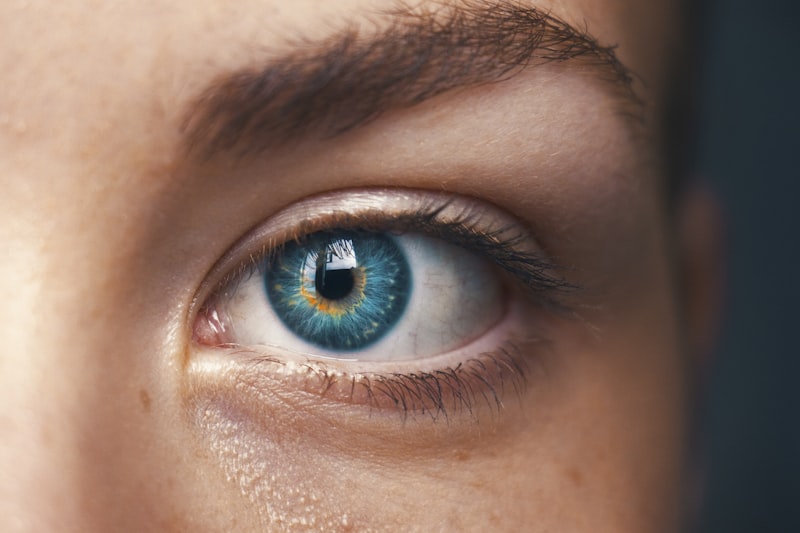
Nystagmus is defined fundamentally as a rhythmic, involuntary oscillation of the eyes. This condition involves rapid, uncontrolled movements that are typically bilateral, though they may vary in amplitude and frequency between the two eyes. Unlike purposeful saccadic movements or smooth pursuit, nystagmus represents a disruption in the finely tuned systems responsible for maintaining stable visual fixation and gaze holding. The oscillation is characterized by a slow phase, where the eye drifts away from the target, and often a quick, corrective phase that snaps the eye back towards the original point of fixation, defining the direction of the nystagmus. Understanding nystagmus is crucial not only in ophthalmology but also in neurology and psychology, as it frequently serves as a critical indicator of underlying vestibular or central nervous system pathology.
The core challenge posed by nystagmus is the resulting instability of the retinal image. When the eyes are constantly moving, the brain struggles to process clear, coherent visual information, leading to reduced visual acuity and a subjective sensation known as oscillopsia—the illusion that the external world is moving. The severity of these functional deficits depends heavily on the amplitude and frequency of the oscillation, as well as whether the nystagmus dampens or intensifies when the patient attempts to fixate on a target. Because the movements are non-voluntary, the individual has little to no conscious control over the eye movements, often leading to significant emotional and functional distress, particularly when the condition is acquired later in life.
While often categorized simply as eye shaking, the exact characteristics of nystagmus—its direction, amplitude, frequency, and whether it changes with head position or gaze direction—provide essential diagnostic clues. The movement pattern can manifest in several distinct ways, reflecting the complexity of the oculomotor system failure. These patterns, which include horizontal, vertical, torsional, or combinations thereof, necessitate careful observation and measurement, often utilizing specialized video recording equipment to precisely characterize the abnormal eye movements that disrupt normal visual functioning and balance.
Classification and Phenomenology of Movement
The classification of nystagmus is highly dependent on the observed kinematics of the eye movement. The most basic and clinically relevant distinction separates nystagmus into two primary forms: pendular and jerk. Pendular nystagmus is characterized by movements that are equal in velocity in both directions, resembling the swing of a pendulum. There is no clear slow drift phase followed by a rapid corrective phase; instead, the movement is sinusoidal. This type is frequently associated with early visual deprivation or congenital conditions, and while the movement is constant, the functional impact often relates to the inability to sustain steady gaze, leading to chronic visual blur and reduced reading speed.
Conversely, jerk nystagmus is the more common form, defined by two unequal phases: a slow drift away from the point of fixation (the pathological component) and a fast, corrective saccade that brings the eye back (the compensatory component). The direction of the jerk nystagmus is clinically defined by the direction of the fast phase, as this is the visually dominant movement. This distinction is critical because jerk nystagmus almost always indicates a failure in the neural mechanisms responsible for gaze stabilization, often involving the vestibular system or specific brainstem pathways. The precise direction and characteristics of the fast phase—whether it is horizontal, vertical, or torsional—are paramount in localizing the central or peripheral lesion responsible for the disorder.
The directionality of the movement itself offers further sub-classification. The nystagmus may be purely unidirectional or multidirectional, significantly influencing diagnosis. The principal directions observed are:
- Horizontal Nystagmus: Movement occurring side-to-side (back and forth). This is the most common presentation and is often linked to peripheral vestibular dysfunction or lesions affecting the brainstem gaze centers.
- Vertical Nystagmus: Movement occurring up and down. This form is typically associated with serious central nervous system pathology, particularly involving the brainstem, cerebellum, or specific toxic exposures.
- Torsional (Circular) Nystagmus: Rotational movement around the visual axis. Torsional components often accompany vertical or horizontal nystagmus, providing complex mixed patterns that point toward specific vestibular nuclei involvement.
- Mixed Patterns: Combinations of the above, such as oblique or vertical-torsional movements, which indicate involvement of multiple, overlapping neural pathways.
A key characteristic of many forms of nystagmus is that their intensity changes depending on the direction of gaze. For instance, gaze-evoked nystagmus only appears when the patient attempts to hold their gaze eccentrically (away from the center). This type is particularly common and often results from a failure in the neural integrator mechanism, which is responsible for converting velocity commands into position commands necessary for stable eye holding. When the neural integrator “leaks,” the eye slowly drifts back toward the center, triggering the corrective fast phase.
Etiology and Underlying Causes
The causes of nystagmus are highly varied, stemming from congenital defects, acquired neurological diseases, pharmacological effects, or peripheral sensory disturbances. Etiological classification is often broken down into two major groups: sensory nystagmus and motor nystagmus. Sensory nystagmus arises from profound, early-onset visual impairment (e.g., congenital cataracts or albinism), where the lack of clear visual feedback prevents the development of stable fixation mechanisms. Motor nystagmus, conversely, results from defects in the central or peripheral neural apparatus that controls eye movement stability.
The vestibular system is a primary source of acquired nystagmus. The inner ear provides crucial information about head position and motion, which is integrated by the Vestibulo-Ocular Reflex (VOR) to keep the eyes stable during head movements. Dysfunction in the peripheral vestibular organs (such as in Meniere’s disease or vestibular neuritis) or the central vestibular nuclei in the brainstem can generate strong jerk nystagmus. Peripheral vestibular nystagmus is typically horizontal or horizontal-torsional, suppresses when the patient fixates visually, and is almost always associated with severe vertigo. In contrast, central vestibular nystagmus, arising from lesions like stroke, demyelination, or tumors in the cerebellum or brainstem, is often purely vertical or purely torsional, tends not to suppress with fixation, and may or may not be accompanied by vertigo.
Central nervous system pathology accounts for many of the more complex and debilitating forms of nystagmus. Conditions such as multiple sclerosis, brainstem ischemia, cerebellar degeneration, and trauma can damage the specific pathways responsible for gaze holding, smooth pursuit, and the internal regulation of the VOR. For example, downbeat nystagmus, characterized by fast phases beating downwards, is strongly indicative of lesions at the craniocervical junction (e.g., Chiari malformation). Conversely, upbeat nystagmus, beating upwards, points toward lesions in the medulla or midbrain. The precise anatomical location of the neurological insult can often be inferred solely through careful analysis of the nystagmus characteristics, making it an invaluable clinical sign.
Furthermore, various exogenous factors, including medications and recreational substances, can induce temporary or chronic nystagmus. Certain anticonvulsants (like phenytoin and carbamazepine), sedatives, alcohol, and high doses of recreational drugs often impair cerebellar and brainstem function, leading to dose-dependent gaze-evoked nystagmus. This drug-induced nystagmus is typically horizontal and symmetrical, serving as a reliable clinical marker for intoxication or therapeutic drug level monitoring. Understanding the pharmacological etiology is vital, as simply adjusting or withdrawing the offending agent can lead to complete resolution of the ocular instability.
Mechanisms of Ocular Motor Control
Stable vision relies on three highly integrated control systems: the Vestibulo-Ocular Reflex (VOR), the Optokinetic System (OKS), and the gaze-holding mechanism, often referred to as the neural integrator. Nystagmus results when one or more of these systems fail. The VOR is arguably the most rapid system, designed to generate compensatory eye movements equal in speed and opposite in direction to head movements, ensuring image stability during movement. If the vestibular input is unbalanced (e.g., due to unilateral inner ear damage), the brainstem receives conflicting signals, causing the eyes to drift slowly toward the side of the perceived deficit, resulting in vestibular nystagmus.
The neural integrator, located primarily within the brainstem and cerebellum, is responsible for maintaining eccentric eye position against the natural elastic recoil forces of the eye muscles. When a saccade moves the eye to a new position, the neural integrator must fire continuously to hold that position. Damage or dysfunction to this integrator, particularly lesions in the cerebellum or medial vestibular nucleus, causes the eye position signal to decay exponentially. This decay results in the slow drift back toward the center, which, when corrected by the fast saccade, manifests as gaze-evoked nystagmus. The inability to sustain position is a common mechanism in many acquired central nystagmus disorders.
Finally, the visual feedback systems, including smooth pursuit and the OKS, work to track moving objects and stabilize the visual field. Dysfunction in these pathways, often due to cerebellar or parietal lobe lesions, can lead to inadequate compensation for small drifts, sometimes generating pendular oscillations or contributing to the slow phases of jerk nystagmus. The intricate interplay between these velocity and position control systems highlights why nystagmus is such a sensitive marker for widespread neurological impairment. Any disruption to the feedback loops, the central processing nuclei, or the efferent motor pathways can cascade into rhythmic instability.
Clinical Assessment and Diagnosis
Accurate diagnosis of nystagmus relies on meticulous clinical observation and specialized testing designed to unmask or measure the oscillations. Initial assessment involves observing the patient’s eyes under various conditions: with visual fixation allowed, with visual fixation removed, and in different directions of gaze. The crucial distinction is whether the nystagmus is present spontaneously or only when evoked by a specific maneuver or gaze direction. A key tool in this assessment is the use of Frenzel goggles, which are high-powered magnifying lenses that prevent visual fixation by the patient while allowing the examiner to observe the eyes in darkness. Removing fixation often dramatically increases the intensity of peripheral vestibular nystagmus, confirming its origin.
Advanced diagnostic procedures are necessary for objective measurement and classification. Videonystagmography (VNG) or electronystagmography (ENG) utilize infrared cameras or electrodes, respectively, to record and quantify eye movements in response to standardized tests, such as caloric irrigation (introducing warm or cold air/water into the ear canal to stimulate the VOR) or positional changes. These tests provide quantifiable metrics of the nystagmus—amplitude, frequency, and slow-phase velocity—which are essential for tracking the condition over time and differentiating between central and peripheral causes. For example, a purely horizontal nystagmus that decreases when the patient looks toward the direction of the fast phase and is suppressed by visual fixation points strongly to a peripheral lesion.
Further diagnostic steps often include neuroimaging, specifically Magnetic Resonance Imaging (MRI), particularly when central nervous system involvement is suspected due to the presence of vertical or torsional nystagmus, or if other neurological signs accompany the eye movement disorder. Identifying the underlying structural lesion—be it a tumor, stroke, or degenerative plaque—is vital for determining prognosis and treatment strategy. The clinical assessment thus moves systematically from simple observation to complex physiological testing and, finally, to detailed structural imaging to pinpoint the exact origin of the oculomotor instability.
Specific Clinical Presentations
Nystagmus is not a single entity but a constellation of disorders, each with unique clinical features. Congenital Nystagmus (CN), often noticed in infancy, is typically benign in terms of neurological health but significantly impacts visual function. CN is usually horizontal, pendular or jerk (with an accelerating slow phase), and often exhibits a characteristic “null point”—a specific gaze direction where the nystagmus intensity is minimal or absent. Patients with CN instinctively adopt an abnormal head posture (torticollis) to utilize this null point, maximizing their visual acuity. Unlike acquired forms, CN rarely causes oscillopsia because the brain adapts early to the constant movement.
In contrast, Acquired Nystagmus (AN) often causes profound oscillopsia and is nearly always indicative of underlying pathology. One notable type is Periodic Alternating Nystagmus (PAN), a rare but highly specific central disorder where the horizontal jerk nystagmus spontaneously reverses direction every 90 to 120 seconds. PAN is almost exclusively caused by lesions in the nodulus and uvula of the cerebellum. Another highly clinically relevant type is Spasmus Nutans, a transient disorder of infancy characterized by the triad of nystagmus (often disconjugate and asymmetric), head nodding, and torticollis. While usually self-limiting, it requires careful differentiation from more serious neurological conditions.
Furthermore, conditions related to convergence and divergence often produce specific forms of nystagmus. Convergence Retraction Nystagmus, for example, is a classic sign of Parinaud’s syndrome (dorsal midbrain lesion). When the patient attempts to look up, the eyes retract into the orbit and converge rapidly. Understanding these specific presentation patterns allows clinicians to narrow the diagnostic focus immediately upon observation, linking the specific oscillation pattern directly to a defined neuroanatomical structure.
Management and Treatment Strategies
The management of nystagmus is complex and multifaceted, aiming to reduce the amplitude of the oscillation, minimize oscillopsia, and improve visual function. Treatment strategies vary dramatically depending on whether the nystagmus is congenital or acquired, and whether the underlying cause is treatable. For acquired nystagmus, the primary goal must always be to treat the underlying etiology, such as managing a tumor, controlling inflammation, or eliminating drug toxicity.
Pharmacological intervention plays a critical role, particularly in acquired central nystagmus. Certain medications can dampen the slow-phase drift by enhancing neural integrator function or modifying neurotransmitter balance in the oculomotor pathways. Specific drugs commonly used include GABAergic agents (like baclofen and gabapentin), which are effective for treating Periodic Alternating Nystagmus (PAN) and certain forms of downbeat nystagmus. Other medications, such as 4-aminopyridine, have shown success in treating specific central types, particularly downbeat nystagmus, by affecting potassium channel conductivity and improving cerebellar integration. As referenced in the original clinical context, the administration of intravenous medication, such as certain antiepileptic drugs or benzodiazepines, can sometimes be used acutely in hospital settings to suppress severe, debilitating nystagmus associated with acute intoxication or seizures, demonstrating that rapid pharmacological stabilization is sometimes necessary when the oscillation poses an immediate threat to patient function or stability.
In cases of congenital nystagmus where a stable null point is identified, surgical correction may be considered. The goal of surgery, typically involving moving the insertion points of the horizontal rectus muscles (known as the Kestenbaum procedure or variations thereof), is not to eliminate the nystagmus entirely but to shift the null point from an eccentric gaze position (requiring an abnormal head posture) to the primary straight-ahead gaze position. This allows the patient to maintain a normal head posture while utilizing their best visual acuity zone. Optical aids, including specialized contact lenses or prism spectacles, can also be employed to shift the visual image toward the null zone, providing a non-invasive method for improving visual function and reducing the effects of head tilt.
Finally, visual rehabilitation and low-vision training are essential components of long-term management, especially for individuals with chronic congenital nystagmus. Techniques focusing on eccentric viewing, maximizing the use of the null zone, and utilizing specialized reading aids help patients cope with reduced visual acuity and the demands of daily life. While a complete cure for many forms of nystagmus remains elusive, the combination of targeted pharmacological treatments, surgical intervention where appropriate, and supportive rehabilitation offers significant opportunities to improve stability and functional vision.