Paramnesia: Why Your Mind Invents False Memories
Scientifically Reviewed · Dr. Marwa Abd-Alazim · September 7, 2026
Review Criteria & Clinical Standards
This content undergoes rigorous scientific peer-review and medical editorial standards at Arab Psychology Network to ensure clinical accuracy, validity, and compliance with evidence-based guidelines from leading psychological and healthcare authorities (APA / WHO).
Definition and Scope of Paramnesia
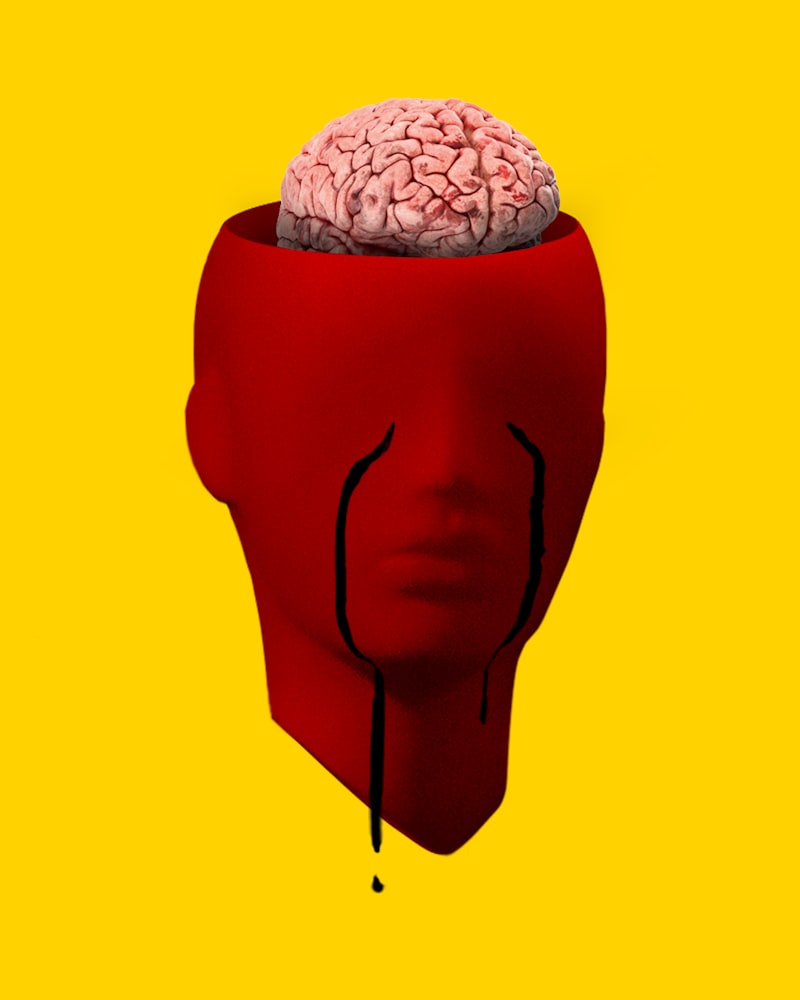
Paramnesia is formally defined within psychology as a significant falsification or distortion of memory, characterized by a fundamental confusion between objective fact and subjective fantasy during the process of recalling past events. This phenomenon highlights the inherently reconstructive nature of human memory, demonstrating that recollections are not always faithful recordings of reality but can be subject to various forms of unintentional alteration. While severe forms are often associated with clinical disorders, instances of paramnesia are common in everyday life, manifesting as those familiar “tricks” memory plays, leading individuals to believe they have personally witnessed or experienced events that were merely encountered through secondary sources or imagined contexts. The spectrum of paramnesia ranges from minor, fleeting errors of recall to profound, pervasive systemic distortions that impact personal identity and understanding of history.
The core mechanism underlying paramnesia involves a disconnect between the source of the information and the affective registration of that information. For example, a person may encounter a highly dramatic or emotionally resonant description of an event—perhaps reading a vivid newspaper account or viewing a powerful newsreel—and subsequently integrate this external input into their personal memory schema as if it were a direct, autobiographical experience. This process illustrates how emotional impact can override the cognitive mechanism responsible for source monitoring, causing the individual to misattribute the origin of the memory. Understanding paramnesia is crucial for appreciating the fallibility of eyewitness testimony and the malleability of self-perception, emphasizing that intensity of belief does not necessarily correlate with historical accuracy.
Furthermore, many deeply held “memories” of very early childhood often fall into the category of paramnesia. These recollections are frequently not direct, self-generated memories, but rather internalized narratives provided by caregivers or elders detailing the individual’s behavior, personality, or specific events that occurred when they were too young to form lasting explicit memories. As these stories are repeated and integrated into the family lore, the individual adopts them as their own, creating a powerful, yet entirely borrowed, memory trace. These adopted narratives become foundational to the person’s perceived history, demonstrating how social reinforcement and narrative construction contribute significantly to the development of memory distortion.
Simple Paramnesia: Mechanisms of Distortion
Simple paramnesia, often considered the most common form of memory distortion, arises fundamentally through a faulty linkage of events. This process involves the unconscious fusion of two or more distinct mental contents that originally stemmed from different times, contexts, or emotional states. Instead of maintaining separate records for each piece of information, the memory system mistakenly merges them into a unified, fabricated recollection. This unintentional conflation results in a memory that feels authentic and complete, but which is historically inaccurate because it combines disparate elements into a singular, misleading event narrative. The reasons for this faulty linkage are complex and multifaceted, often rooted in the brain’s attempt to create coherent, continuous narratives out of fragmented information.
The emotional state surrounding the processing of information plays a significant role in triggering simple paramnesia. If a secondary account, such as a news report of an accident, possesses a high emotional valence—perhaps because it taps into pre-existing anxieties, latent fears, or personal concerns—the intensity of the reaction can cause the memory of reading the report to be mistakenly re-encoded as a memory of witnessing the event directly. The strong affective response becomes the dominant feature of the memory, overriding the weaker source tag (“read about it”). Consequently, the individual genuinely believes they were present, driven by the profound psychological impact the event had upon them, regardless of their actual physical distance from the scene.
A particularly potent mechanism driving simple paramnesia involves the reinforcement and repetition of narratives. When individuals adopt secondhand stories, especially those concerning their early life, and subsequently repeat these stories to others, the act of verbalizing and retelling solidifies the memory trace. Each repetition serves as a form of self-suggestion, increasing the perceived familiarity and authenticity of the memory. Furthermore, during the course of such repetition, another subtle but powerful form of memory distortion often occurs: the individual unconsciously edits or alters the details of the story. These changes are typically designed to make the narrative more entertaining, more dramatic, or more flattering to the storyteller, further distancing the final recollection from the original factual basis and embedding the distortion more deeply into the personal history.
The Phenomenon of Déjà Vu
The déjà vu experience, literally translating to “already seen,” represents a highly common and frequently mystifying form of paramnesia characterized by an illusion of recognition or identification. When experiencing déjà vu, an entirely new event, place, or situation is encountered with an overwhelming and strong feeling of familiarity, as if the moment has been lived through before. This sensation is often accompanied by an unsettling or peculiar feeling of knowing exactly what is about to happen next, even though cognitively, the individual is aware that the current situation is novel. For instance, a person visiting a remote, previously unvisited town might suddenly be overcome by the odd conviction that they have been there at some undisclosed time in the past.
The sense of familiarity inherent in déjà vu is so compelling that it frequently prompts individuals to search for rational explanations, often leading them to conclude that they must have dreamt the scene or briefly visited the location previously. Like other forms of paramnesia, the underlying psychological mechanism involves a convergence or fusion of experiences, but the nature of this convergence remains highly debated. The brain is processing the incoming stimuli in a way that bypasses the normal sequence of recognition, potentially due to minor temporal processing errors or the rapid matching of current sensory input against stored, often vague, memory fragments.
This phenomenon is not always purely visual; while the term implies “already seen,” other sensory inputs can contribute significantly to the experience. In certain cases, similar sounds, smells, or even tastes encountered in a novel setting might inadvertently trigger or bolster the feeling that the entire experience has been gone through before. A specific scent associated with a distant childhood memory, when encountered in a new place, might activate a powerful sense of familiarity that then permeates the entire environment, leading to the overall illusion of déjà vu. The combined action of multiple sensory triggers can amplify the feeling of past recognition, demonstrating the holistic nature of this memory illusion.
Explanations and Theories of Déjà Vu
Multiple theories have been proposed to explain the unsettling nature of déjà vu, often centering on various forms of misprocessing or fragmented memory recall. One common explanation suggests that the current scene or situation strongly resembles a setting previously encountered, perhaps a town passed through briefly years ago that possessed strikingly similar architectural features or general geographic characteristics. Alternatively, the current experience might trigger a memory of having seen a photograph, a detailed drawing, or a motion picture of a remarkably similar location. In these instances, the feeling of familiarity is not entirely false, but the recognition is incorrectly attributed to a direct, conscious past experience rather than a mediated or analogous one.
A second possible explanation involves subtle temporal processing errors within the brain. It is hypothesized that the sense of familiarity might be due to a momentary, quick glance at the scene that occurred just seconds before the individual began to closely inspect it. If the brain registers the initial glance but then experiences a slight delay in the cognitive processing or storage of that initial input, the subsequent, detailed viewing of the scene might be perceived as a separate, later event. This small lag causes the detailed inspection to feel like a repetition or a recollection of the immediate past, thus generating the illusion of recognition.
Psychoanalytic perspectives, notably those put forward by Sigmund Freud, suggest that the déjà vu experience sometimes arises through the actualization of a daydream. Prior to arriving at a new location, an individual may have consciously or unconsciously attempted to picture or fantasize about how the destination would appear. If this mental image or daydream—or even a small fragment of it—turns out to be accurate enough to match the reality upon arrival, it can induce the powerful feeling that the scene has been previously encountered. Furthermore, the present scene might serve as a powerful reminder of a night dream in which a similar location was pictured. This linkage to the subconscious activities of dreaming often helps explain the characteristic air of mystery and unreality that frequently surrounds these experiences, making them feel like the echo of a forgotten dream instead of a tangible past event.
Historical and Philosophical Views on False Recognition
The powerful and often spiritual nature of déjà vu has ensured its documentation since antiquity, extending its significance beyond mere psychological curiosity into philosophical and theological realms. The experience played a particularly important role in ancient doctrines concerning reincarnation, or rebirth after death. In this context, the phenomenon was often referred to as “déjà vécu” (already lived). Followers of these doctrines, such as the Hindus, believed that when individuals experienced strong feelings of familiarity in entirely novel situations, they were in fact conjuring up genuine experiences or memories carried over from a previous life or incarnation. These recurring sensations were therefore interpreted not as memory errors, but as spiritual evidence of the continuity of the soul.
The classical Greek philosopher Plato offered a somewhat similar, though more intellectualized, theory regarding recognition and familiarity. Plato posited that human souls had the opportunity to view the fundamental, eternal Ideas or Forms in a heavenly realm between physical incarnations. According to this theory, all true knowledge gained during earthly life is essentially a “reminiscence” or recollection of these fundamental truths already imprinted upon the soul’s mind before birth. Thus, when a person encounters a new concept or situation that feels immediately familiar, it is because their soul is remembering the ideal Form of that concept, suggesting that the illusion of familiarity is tied to latent, innate knowledge.
These ancient interpretations underscore the profound psychological impact of déjà vu. Because the experience feels so genuine and often lacks a clear, immediate explanation, it has historically been attributed to sources beyond the individual’s current lifetime. Whether viewed as memories of past incarnations or innate knowledge, these philosophical interpretations highlight the human tendency to seek deeper, often mystical, meaning when the standard mechanisms of memory and recognition fail to provide a satisfactory account for the overwhelming sense of having “been there before.”
Déjà Raconté and the Therapeutic Context
A related but distinct form of paramnesia is déjà raconté, which translates to the illusion of “already told.” This phenomenon occurs when an individual begins to relate a story, describe an incident, or share a piece of personal information with a friend or listener, only to be struck by the distinct and powerful feeling that they have previously recounted this exact same material to that specific person. This memory distortion focuses not on the event itself, but on the communicative act of sharing the memory, creating a sense of redundancy in the narrative process.
This particular form of paramnesia is considered especially significant within the context of psychotherapy and clinical analysis. When a patient experiences déjà raconté during a session, it is often interpreted by the therapist as a strong indication that the material being discussed, while perhaps new to the explicit conversational record, was actually very close to being verbalized for some time. The powerful feeling of having “already told” the story suggests that the memory or conflict had been struggling against repression, existing in a state of high psychological readiness or near-consciousness.
Therapists pay special attention to such disclosures because they often provide a crucial clue to the patient’s underlying difficulties or the location of repressed content. The illusion of having already shared the material signals that the psychic defenses surrounding the memory are weakening, and the material is finally breaking through the threshold into conscious verbalization. Recognizing and exploring the content associated with déjà raconté can therefore accelerate the therapeutic process by highlighting areas that require immediate attention and deeper exploration.
The Role of Suggestion and Legal Implications
Paramnesia can also be artificially induced or exacerbated through the powerful influence of suggestion. If an external party, particularly an authority figure or someone trusted, insists repeatedly that an individual made a certain statement, performed a specific action, or witnessed a particular event, the recipient may begin to doubt the veracity of their own internal recollections. This persistent external pressure can lead to a gradual undermining of the individual’s source monitoring abilities, culminating in the formation of a false memory, where they genuinely believe they remember the suggested event or action. This illustrates how easily memory can be constructed or altered by social and interpersonal dynamics.
This susceptibility to suggestion poses serious challenges in forensic and legal settings, particularly concerning eyewitness testimony. In legal proceedings, the integrity of memory is paramount, and the possibility of suggestibility necessitates strict rules regarding questioning techniques. This is the fundamental reason why leading questions are frequently ruled inadmissible in court. A question phrased as a statement seeking confirmation, such as, “Wasn’t Mr. Smith walking with you at the time of the incident?” implicitly suggests the desired answer and can easily implant or solidify a false memory in the witness’s mind, thereby compromising the accuracy of the evidence.
To mitigate the risk of suggestibility and ensure the reliability of testimony, legal standards require that questions be phrased neutrally and openly. The appropriate questioning technique avoids planting information; for example, the proper question would be, “Where was Mr. Smith walking at the time?” This approach seeks unbiased information rather than confirmation of a pre-established narrative, protecting the witness’s memory from inadvertent contamination and ensuring that the evidence presented is based on genuine recollection rather than induced paramnesia.
Paramnesia in Clinical and Psychiatric Settings
While many forms of paramnesia are experienced by otherwise healthy individuals, distortions of memory frequently occur and are often amplified in various psychiatric disorders and neurological conditions. For instance, the déjà vu experience, while common in the general population, is also found with increased frequency or intensity in individuals suffering from schizophrenia, states of extreme fatigue or intoxication, and during the dreamlike “twilight state” that sometimes characterizes psychomotor epilepsy. In epilepsy, the temporal lobe is often implicated, and seizures originating in this region can trigger vivid, powerful feelings of past experience or recognition as part of the ictal or post-ictal phenomena.
Patients with specific neurological conditions, such as certain forms of epilepsy or individuals who have experienced near-death events like drowning, may undergo the highly unusual phenomenon known as panoramic memory. This involves a rapid, comprehensive, and vivid recollection where the patient feels they are suddenly remembering vast, forgotten stretches of their entire life history in rapid sequence. This intense, accelerated life review is a type of paramnesia because the memories are often experienced with heightened emotion and sometimes distorted detail, suggesting an abnormal, rapid activation of memory retrieval pathways in response to stress or physiological trauma.
Furthermore, clinical populations, particularly schizophrenic patients, sometimes experience the exact opposite of déjà vu: jamais vu. This phenomenon involves a false feeling of unfamiliarity in situations which the individual has undeniably gone through, sometimes repeatedly. A patient might look at a loved one or enter their own home and experience an unsettling sense that the person or place is completely novel and unknown. This profound derealization and false lack of recognition highlights a severe breakdown in the memory system’s ability to correctly tag familiar input, resulting in an unnerving disconnection from known reality.
Related Memory Distortions
Beyond the illusions of familiarity (déjà vu) and misattributed source (simple paramnesia), other severe forms of memory distortion are categorized separately but share mechanisms with paramnesia. One critical example is confabulation, a process in which a patient fabricates events or details to fill in genuine gaps in their memory. Confabulation is particularly characteristic of patients suffering from Korsakoff’s syndrome, often resulting from chronic alcoholism, or severe senile dementia. These patients do not intend to deceive; rather, when prompted to recall an event they cannot access, their brains spontaneously generate plausible, yet entirely fictional, narratives to maintain a continuous, coherent personal history. The fabricated events are treated by the patient as absolutely real, underscoring the severity of the memory impairment.
Another significant distortion is retrospective falsification. In this form of paramnesia, existing memories are not merely forgotten but are actively embroidered with imaginary or exaggerated details specifically crafted to meet current unconscious psychological needs or desires. The original memory serves as a foundation, but the details are altered over time to fit a desired self-image or narrative structure. For example, an individual might unconsciously amplify their role in a past success or minimize their responsibility in a failure.
Retrospective falsification occurs in its most extreme and systematic form among paranoid patients, who may use highly detailed, elaborated false memories to support their fixed delusional systems. They construct intricate, historically inaccurate narratives that justify their feelings of persecution or grandiosity. However, it is essential to recognize that, like other kinds of paramnesia, retrospective falsification is not exclusive to pathological states; minor degrees of this distortion are frequently found in normal, healthy people attempting to curate their personal histories or enhance the dramatic quality of their storytelling.