The Percept: How Your Mind Constructs Reality
Scientifically Reviewed · Dr. Marwa Abd-Alazim · August 30, 2026
Review Criteria & Clinical Standards
This content undergoes rigorous scientific peer-review and medical editorial standards at Arab Psychology Network to ensure clinical accuracy, validity, and compliance with evidence-based guidelines from leading psychological and healthcare authorities (APA / WHO).
Definition and Core Conceptualization of the Percept
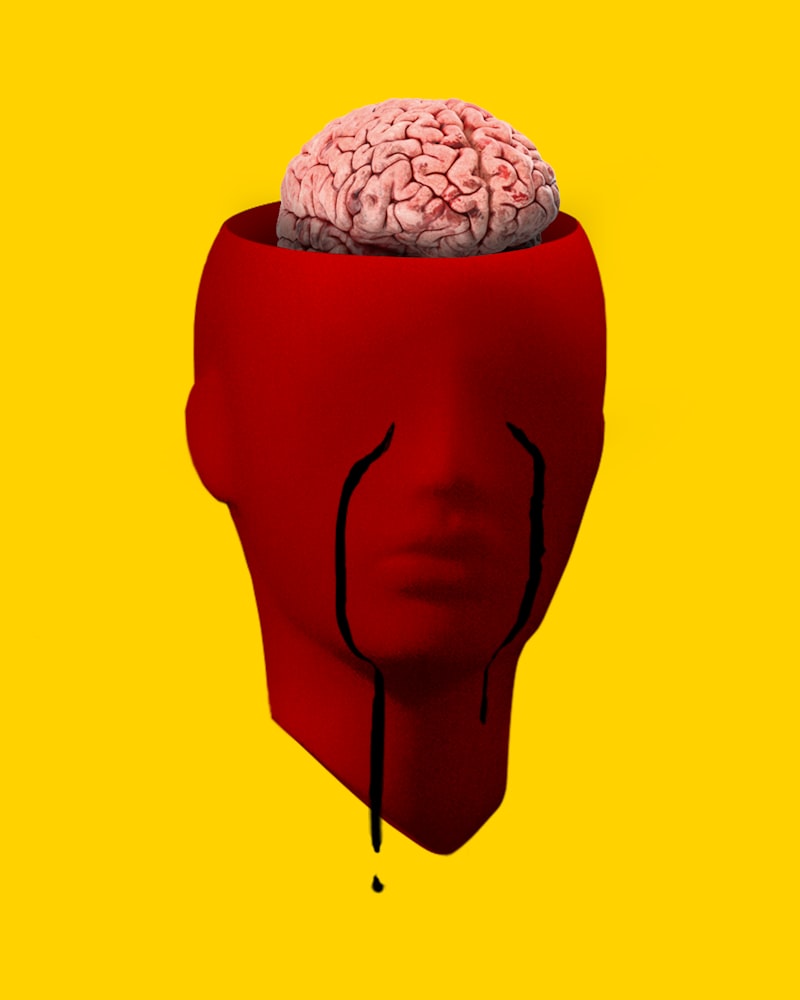
The term percept, derived from the Latin perceptus, meaning “perceived,” occupies a foundational position within the fields of psychology, philosophy, and cognitive neuroscience. Fundamentally, the percept is defined as the immediate, subjective outcome of comprehension; it is the internal, mental representation of a stimulus item or event as actively encountered and interpreted by an individual. It stands as the integrated result of sensory input that has undergone processing, filtering, and organization by the nervous system. Unlike raw sensory data, which are merely electrical signals corresponding to physical energy, the percept is a structured, meaningful entity—the recognition of a pattern, the identification of an object, or the understanding of a spoken word. The core function of the perceptual system is to convert the bombardment of environmental energy into stable, usable, and recognized percepts that form the basis of subjective reality.
The formation of a percept is the crucial intermediate step linking sensation to cognition. Sensation refers strictly to the passive detection of physical energy (light, pressure, sound waves) by sensory receptors. The percept, conversely, is the active construction achieved when these raw inputs are interpreted in light of existing knowledge, expectations, and context. For instance, while the retina registers a two-dimensional arrangement of light and shadow (sensation), the resulting percept is a three-dimensional object with perceived depth, texture, and identity (e.g., a wooden table). This process ensures that the vast, complex, and often ambiguous sensory world is rendered into a cohesive and coherent experience, allowing for adaptive behavior and decision-making. The integrity of the percept is therefore vital, as all subsequent cognitive operations—memory encoding, linguistic processing, and motor planning—rely upon this constructed representation of the immediate environment.
A key characteristic of the percept is its holistic nature. It is not merely the sum total of its component parts (e.g., color + shape + texture), but rather the emergent property that results from the synthesis of these features. This principle highlights why a percept can often remain stable even when the underlying sensory data are incomplete or noisy. The brain employs powerful top-down mechanisms, drawing upon internal models and memory schemas, to ‘fill in the gaps’ and stabilize the interpretation, ensuring perceptual constancy across varying conditions. This ability to construct a stable percept from variable input is central to human functioning, exemplified by the rapid recognition of complex stimuli, such as a familiar face seen under poor lighting or from an unusual angle. Consequently, the percept is the ultimate psychological entity that the nervous system presents to conscious awareness for action and reflection.
Historical Context and Theoretical Foundations
The philosophical exploration of the percept has deep roots, particularly within British Empiricism, where thinkers grappled with the distinction between external reality and internal experience. Early psychological models, particularly those associated with structuralism in the late 19th century, attempted to analyze the percept by breaking it down into its elemental sensory components, or “atoms” of experience. Proponents of structuralism sought to identify the basic sensations that, when combined, gave rise to complex percepts. However, this analytic approach ultimately proved inadequate to explain the dynamic and interpretive nature of perception, struggling particularly with phenomena where the whole clearly differed from the sum of its parts.
A pivotal theoretical shift occurred with the rise of Gestalt psychology in the early 20th century. Gestalt theorists rejected the reductionist view, arguing that the percept is inherently organized and structured from the outset. Their fundamental tenet, “the whole is different from the sum of its parts,” directly addressed the complexity of percept formation. They proposed universal laws of organization (e.g., proximity, similarity, closure, and continuity) that dictate how the sensory field is automatically grouped into meaningful configurations, or percepts. For example, the percept of a melody is not merely the individual notes but the integrated pattern and rhythm. The Gestalt focus firmly established the percept as a product of active cognitive organization rather than passive reception.
Contemporary cognitive psychology treats the percept as the output of sophisticated information processing systems. Modern models integrate both bottom-up and top-down influences. Bottom-up processing involves the initial sensory analysis that extracts features from the stimulus, while top-down processing involves the use of context, expectation, memory, and learned knowledge to interpret and disambiguate the incoming data. Theories such as Constructivism emphasize that the percept is literally constructed by the observer through a dynamic hypothesis-testing process, where the brain constantly seeks the most probable interpretation of the ambiguous sensory input. This view validates the subjective nature of the percept, acknowledging that individual experience significantly modulates the final outcome of perception.
The Percept vs. Stimulus: A Critical Distinction
The most crucial conceptual clarification necessary for understanding the percept is the differentiation between the physical stimulus and the psychological percept. The stimulus is the objective, measurable physical energy that originates in the environment—a specific wavelength of light, a decibel level of sound, or a pressure gradient. It exists independently of the observer. The percept, conversely, is the internal, subjective experience resulting from the brain’s processing of that stimulus. This distinction underscores that perception is not a mirror of reality but a unique, internal model of it.
The transformation from stimulus to percept involves a series of complex biological processes, beginning with transduction, where physical energy is converted into electrochemical signals readable by the nervous system. The signals then travel along specific neural pathways, undergoing progressive analysis and comparison with existing neural templates. The final percept emerges only after this extensive processing sequence. A practical illustration of this difference is found in sensory adaptation: a constant stimulus (e.g., the pressure of a watch strap) quickly ceases to produce a noticeable percept, even though the physical stimulus energy remains unchanged. This demonstrates that the percept is a dynamic internal state, responsive to change and relevance, rather than a static echo of the external world.
Furthermore, the relationship between stimulus and percept is often non-linear, as demonstrated by concepts in psychophysics, such as Weber’s Law and Fechner’s Law, which quantify the relationship between changes in the physical intensity of a stimulus and the perceived intensity (the magnitude of the percept). Crucially, the same physical stimulus can give rise to multiple percepts, and conversely, different stimuli can sometimes yield the same percept. This inherent ambiguity confirms that the percept is a cognitive construction designed for utility and survival, rather than perfect objective accuracy. When psychologists discuss the number of percepts in a trial—as in the original definition—they are referring to the distinct, stable interpretations the observer is able to generate from the presented physical data.
Mechanisms of Perceptual Formation
The formation of a stable percept is a rapid and highly coordinated neural feat involving multiple cortical areas. The initial stage involves feature extraction, where primary sensory cortices analyze basic elements such as edges, orientation, frequency, and motion. This bottom-up analysis provides the raw components necessary for higher-level integration. These features are then relayed to association areas, particularly in the temporal and parietal lobes, where the critical process of perceptual binding occurs. Binding refers to the mechanism by which separate features—for example, the color, shape, and movement registered by different specialized neural modules—are unified into a single, cohesive object percept.
Attention plays a critical gating role in percept formation. Selective attention determines which subset of the massive incoming sensory stream receives the necessary resources for comprehensive processing and entry into awareness as a stable percept. Unattended stimuli may activate early sensory pathways, but they typically fail to achieve the integrated representation required to become a conscious percept. This filtering mechanism is essential because the brain has limited processing capacity; attention ensures that the resources are allocated to the most salient or behaviorally relevant stimuli, enhancing the clarity and stability of the resulting percepts.
In advanced neurocognitive models, the formation of a percept is often framed within a predictive coding framework. According to this theory, the brain constantly generates internal hypotheses or predictions about the nature of the external world based on past experience. Sensory input acts not merely as data to be interpreted, but as error signals. When the input matches the prediction, the percept is confirmed and stabilized efficiently. When a mismatch occurs, the prediction is updated, leading to a revised percept. This dynamic, error-driven loop suggests that the percept is not simply a reaction to the environment, but the brain’s best, most refined hypothesis about the current state of affairs, minimizing uncertainty and maximizing predictive accuracy.
Types of Percepts: Simple, Complex, and Multimodal
Percepts can be categorized based on their structural complexity and the degree of integration required for their formation. Simple percepts are those requiring minimal cognitive elaboration, often corresponding directly to basic sensory qualities, such as the perception of a pure, singular color, a specific loudness level, or a localized touch. These elemental percepts are highly dependent on the integrity of the primary sensory pathways. They form the building blocks upon which higher-order representations are constructed.
In contrast, complex percepts require significant integration of multiple features, spatial relationships, and temporal sequences, often engaging extensive memory retrieval. Examples include perceiving a detailed landscape, recognizing a specific musical composition, or understanding the emotional state conveyed by a person’s posture and facial expression. The formation of complex percepts often involves sequential processing through specialized cortical hierarchies, such as the ventral “what” pathway for object identification and the dorsal “where” pathway for spatial location, with the final integrated percept achieved in higher association areas. Complex percepts rely heavily on top-down knowledge to provide structure and meaning to the diverse sensory inputs.
The modern understanding of perception heavily emphasizes multimodal percepts, which arise from the simultaneous integration of information across two or more sensory modalities. In natural environments, stimuli rarely occur in isolation; we see, hear, and feel events concurrently. The brain possesses sophisticated mechanisms to bind these disparate sensory signals into a single, unified percept (e.g., the perception of a bouncing ball involves the synchronized sight and sound of the impact). This integration often leads to superadditive effects, where the combined percept is clearer or more robust than the sum of the individual unimodal percepts. For instance, the perception of speech is significantly enhanced when visual cues (lip movements) are integrated with auditory inputs, as dramatically demonstrated by classic cross-modal phenomena like the McGurk effect, where incompatible auditory and visual information results in a novel, fused percept that was not present in either stimulus alone.
Perceptual Errors and Illusions
The study of perceptual illusions provides critical insight into the generative rules underlying percept formation. An illusion occurs when the percept generated by the cognitive system deviates reliably and systematically from the objective physical stimulus. These errors are not random mistakes but predictable consequences of the brain’s interpretive strategies, revealing the heuristics and shortcuts the perceptual system employs to achieve rapid comprehension. Because the system prioritizes speed and stability, it sometimes sacrifices absolute accuracy.
Classic visual illusions illustrate this principle vividly. For example, the Ponzo illusion demonstrates how depth cues embedded in a two-dimensional image (converging lines implying distance) override the actual length of objects placed within that context, leading to the percept that distant objects are larger than nearby objects of the same physical size. Similarly, the simultaneous contrast illusion shows how the perceived color or brightness of a region is dramatically affected by the adjacent surround, proving that the brain does not process features in isolation but interprets them relative to the contextual field. These phenomena underscore that the percept is a relational structure, interpreted within its perceived environment rather than based solely on the localized input.
Beyond common illusions, the breakdown of perceptual mechanisms can lead to pathological percepts, such as hallucinations. A hallucination is a percept experienced in the absence of an external stimulus, suggesting an internal generation of the representation itself. These conditions, often associated with neurological disorders or altered states of consciousness, indicate a failure in the regulatory mechanisms that typically require sensory input to initiate and stabilize a percept. Conversely, delusions involve misinterpretations of existing stimuli, where the individual forms a factually incorrect but subjectively stable percept based on faulty top-down schemas or beliefs, further highlighting the deep influence of cognitive context on perceptual outcomes.
The Role of Context and Experience
The formation of a percept is profoundly influenced by top-down factors, meaning that the individual’s prior experience, learning history, emotional state, and immediate environmental context significantly shape the final interpretation of sensory data. Experience cultivates perceptual learning, which allows for the refinement of perceptual abilities, enabling experts to extract features and form stable percepts where novices fail (e.g., distinguishing subtle shades of color, identifying complex patterns in medical scans).
The immediate context acts as a powerful disambiguating factor. Many stimuli in the world are inherently ambiguous, and the perceptual system relies heavily on context to select the most probable interpretation. For instance, the percept generated by an identical physical shape might be “the letter B” when surrounded by letters, but “the number 13” when surrounded by numbers. This phenomenon, known as the perceptual set, demonstrates that expectations derived from the context prepare the brain to favor certain interpretations, accelerating and stabilizing the resulting percept. Context thus serves as a constraint, reducing the vast number of potential interpretations to a manageable, behaviorally relevant few.
Cultural factors also modulate percepts. Research shows that cultural background influences attentional styles (e.g., tendency toward holistic versus analytic processing) which, in turn, affects how sensory features are grouped and interpreted into complex percepts. Furthermore, language provides labels that organize perceptual space, influencing the discrimination of colors, sounds, and tastes. This underscores the highly plastic nature of the perceptual system: while the fundamental sensory apparatus remains constant, the meaning and structure assigned to the sensory input—the percept—is dynamically shaped by individual and cultural learning throughout the lifespan.
Percepts in Cognitive Psychology and Neuroscience
Within the hierarchy of cognitive operations, the percept serves as the indispensable input for all higher-level thought. It is the processed, meaningful representation of the environment that is subsequently used for encoding into short-term and long-term memory, for executing motor commands, and for making complex judgments. Without a stable and accurate percept, effective interaction with the environment is impossible. Therefore, cognitive models often map the trajectory from sensory registration through feature extraction to the formation of the integrated percept before information enters working memory.
Neuroscience continues to unravel the neural correlates of the percept, specifically addressing the difficult binding problem—the mystery of how distributed neural activity across various brain regions is unified into a single, seamless, and conscious experience. Current hypotheses suggest that synchronized neural oscillations (e.g., gamma band activity) across different cortical areas may be the mechanism by which disparate features are transiently bound together to form a cohesive percept. The duration and stability of this synchronous activity correlate directly with the strength and clarity of the conscious percept.
Finally, research into disorders of perception, such as agnosias (inability to recognize objects despite intact sensory ability), confirms the functional separation between sensation and percept formation. Different types of agnosia demonstrate selective deficits in forming specific types of percepts—for example, prosopagnosia involves a failure to form the complex percept of a known face, even though the raw visual data are perfectly registered. These clinical observations reinforce the psychological definition of the percept as the essential, constructed meaning assigned to sensory input, serving as the necessary interface between the objective physical world and the subjective machinery of human consciousness.
The core components defining the percept can be summarized as follows:
- Outcome of Comprehension: The percept is the result of sensory data having been fully processed and understood.
- Subjective Representation: It is the individual’s unique interpretation, distinct from the objective stimulus.
- Holistic Structure: It involves the binding of features into a recognized whole (e.g., an object, an event).
- Foundation for Cognition: The percept serves as the primary input upon which memory, decision-making, and action are based.