Perceptual Filtering: How Your Brain Edits Reality
Scientifically Reviewed · Dr. Marwa Abd-Alazim · August 28, 2026
Review Criteria & Clinical Standards
This content undergoes rigorous scientific peer-review and medical editorial standards at Arab Psychology Network to ensure clinical accuracy, validity, and compliance with evidence-based guidelines from leading psychological and healthcare authorities (APA / WHO).
Defining Perceptual Filtering
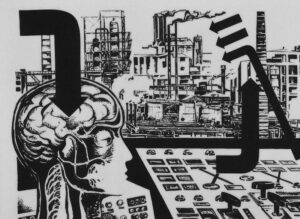
Perceptual filtering refers to the fundamental cognitive procedure regarding centering attention upon a chosen subset of the vast number of sensory stimulants which exist in the external and internal environment at any one time. This mechanism is mandatory for the operational success of the human brain, which is constantly bombarded by auditory, visual, tactile, olfactory, and gustatory data streams. The filtering process acts as a crucial bottleneck, ensuring that only the most salient or goal-relevant information progresses from the stage of raw sensation to conscious perception and subsequent processing. Without this inherent selective capability, the cognitive system would be instantly overwhelmed by meaningless noise, rendering effective thought and action impossible.
This process is not merely a passive rejection of irrelevant data; rather, it is an active, dynamic mechanism involving both the enhancement of target signals and the simultaneous inhibition of distracting elements. The effectiveness of perceptual filtering dictates the clarity and specificity of an individual’s conscious experience. For instance, in a complex environment such as a crowded market or a busy office, the individual’s ability to maintain focus on a single conversation or task relies entirely upon the efficient operation of this filter, allowing the processing of critical acoustic or visual information while suppressing competitive input that threatens to disrupt cognitive flow.
The concept of perceptual filtering underpins numerous classical theories within cognitive psychology, most notably models of selective attention. These models seek to delineate precisely at which stage of processing—early, intermediate, or late—the overwhelming stream of sensory information is attenuated or rejected. Regardless of the precise theoretical framework employed, the core consensus remains: successful human interaction with the environment is predicated on the capacity to finely tune the input channels, thereby isolating the signal from the noise and dedicating limited cognitive resources exclusively to necessary data points.
The Cognitive Necessity of Filtering
Perceptual filtering is essential because the physical and mental ability of someone to handle and react to many sources of data is restricted. The sheer quantity of sensory input received by the nervous system is staggering, estimated to be in the range of millions of bits of information per second across all modalities. In stark contrast, the capacity for conscious, effortful processing—that which enters working memory and informs decision-making—is highly constrained, often estimated to be capable of handling only a minuscule fraction of this input, perhaps 40 to 60 bits per second. This profound discrepancy necessitates an immediate and rigorous selection mechanism that operates largely outside of conscious awareness.
Without such stringent constraints imposed by the perceptual filter, the central nervous system would immediately succumb to cognitive overload, a state characterized by processing delays, catastrophic errors, and an inability to formulate coherent responses. The brain’s operational efficiency depends on minimizing metabolic expenditure and maximizing the speed of response to critical environmental changes. By proactively selecting a chosen subset of sensory stimuli, the system avoids wasting valuable computational power on stimuli that hold no immediate relevance to current goals, survival, or well-being. This efficiency ensures that when a threat or a crucial piece of information emerges, the system is prepared to dedicate its full resources to rapid analysis and response formulation.
The necessity of filtering is closely tied to the concept of limited attentional resources. Attention is not an infinite supply; rather, it is a finite pool of resources that must be strategically allocated. Perceptual filtering serves as the gatekeeper determining the allocation priority. For example, if an individual is navigating a complex intersection, the filter prioritizes visual data (traffic signs, car movements) and auditory input (horns, sirens) while suppressing irrelevant internal stimuli (minor aches, unrelated thoughts) and peripheral environmental noise (distant conversation, building architecture). This rigorous prioritization confirms that filtering is fundamentally a survival mechanism adapted to manage the scarcity of cognitive capacity in a world of sensory abundance.
Mechanisms of Selective Attention
The operationalization of perceptual filtering is achieved through complex mechanisms of selective attention, which are broadly categorized into models focusing on the stage at which selection occurs. Early selection models, such as those proposed by Broadbent, hypothesize that filtering occurs very early in the sensory processing stream, based primarily on physical characteristics of the stimulus—such as location, pitch, or color—before any semantic or meaning-based analysis takes place. In this view, non-selected information is essentially discarded immediately upon arrival, preventing further resource drain.
Conversely, late selection models suggest that all or most sensory information receives a degree of semantic analysis before the crucial decision to admit or reject it is made. According to this perspective, filtering operates closer to the stage of working memory and response generation, meaning that even information deemed irrelevant has been processed for meaning, though it may not reach conscious awareness. The ongoing debate between these models highlights the complexity of the filter; the most comprehensive current view suggests that the locus of filtering is flexible, adjusting dynamically based on the cognitive load and the nature of the task being performed.
Specific mechanisms employed by the filter include signal enhancement and inhibitory control. Signal enhancement involves boosting the neural representation of the target stimulus, effectively making it louder or clearer relative to the background noise. Inhibitory control involves actively suppressing the representation of distractors, pushing them below the threshold of conscious perception. These two mechanisms work in concert: when focusing on a specific item, the visual cortex may increase its sensitivity to the target’s features, while simultaneously, inhibitory signals originating from frontal executive areas actively dampen the processing of competing stimuli located in the visual periphery.
Bottom-Up vs. Top-Down Processing
Perceptual filtering is dynamically guided by two distinct, yet interacting, modes of processing: bottom-up and top-down attention. Bottom-up processing is stimulus-driven, relying on the inherent physical salience of the sensory input to capture attention automatically. Highly salient features, such as sudden movement, abrupt changes in light intensity, or loud, unexpected noises, automatically bypass or override the default filtering mechanism because they often signal immediate threats or opportunities that require instantaneous attention, irrespective of the individual’s current goals.
In contrast, top-down processing is goal-directed and intentional, reflecting the conscious choice of the individual to focus on a particular subset of information relevant to a current task, expectation, or internal state. When searching for a specific book on a crowded shelf, the individual employs top-down filtering, using prior knowledge of color, size, or title to guide the attentional spotlight. This mode represents the deliberate selection process described in the definition of perceptual filtering and involves executive control functions emanating primarily from the prefrontal cortex.
The efficiency of the perceptual filter hinges on the seamless integration and arbitration between these two modes. For successful filtering, the top-down goals must be robust enough to maintain focus against moderately distracting bottom-up stimuli. However, the system must also retain enough flexibility for critical bottom-up signals (like a sudden emergency alarm) to override the top-down focus instantly. The balance ensures that individuals can sustain concentration on long-term goals while remaining responsive to critical, immediate changes in their sensory environment, demonstrating the adaptive complexity of human attentional mechanisms.
The Role of Working Memory and Capacity Limits
The operational efficiency of perceptual filtering is inextricably linked to the severe capacity constraints inherent to working memory (WM). Working memory is the system responsible for temporarily holding and manipulating information necessary for complex tasks such as reasoning, comprehension, and learning. Because WM can only manage a very limited number of discrete items—typically four or fewer—at any given time, the perceptual filter must operate with extreme prejudice, admitting only the highest priority information into this valuable, yet highly restricted, cognitive space.
The physical and mental limitations on handling data are profoundly evident in the metabolic costs associated with processing information. Sustaining attention and filtering irrelevant stimuli requires continuous executive control, a process highly dependent on energy expenditure in frontal and parietal brain regions. If the filter were to allow excessive information through, the resulting cognitive burden would quickly deplete neural resources, leading to rapid fatigue and a dramatic decline in performance on concurrent or subsequent tasks, illustrating the critical resource management function of the filter.
Furthermore, effective filtering is essential for the successful encoding of information into long-term memory. Data that successfully passes the perceptual filter and is actively manipulated in working memory has a far greater chance of being consolidated for later retrieval. Conversely, information that is filtered out, or information that enters the system but is immediately displaced due to WM overload, is effectively lost to the individual’s memory repertoire. Thus, the filter acts as the primary determinant of what sensory input will ultimately shape the individual’s knowledge base and behavioral patterns.
Neural Correlates and Biological Substrates
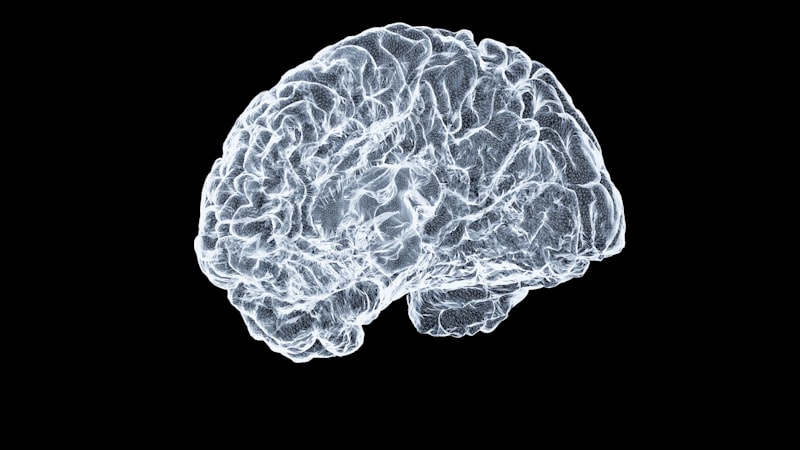
The biological substrate of perceptual filtering involves a distributed network of brain regions that cooperate to regulate attentional flow. The Prefrontal Cortex (PFC), particularly in the dorsolateral and medial regions, serves as the executive control center, initiating top-down goals and maintaining the attentional set necessary for sustained filtering. The PFC communicates extensively with sensory cortices, sending inhibitory or enhancing signals to modulate the early processing of stimuli in the visual, auditory, and somatosensory pathways.
The posterior parietal cortex plays a crucial role in spatial attention and the orientation component of filtering, helping to determine the spatial location of relevant stimuli and shifting the “attentional spotlight” to the required area of the sensory field. The anterior cingulate cortex (ACC) is involved in monitoring conflicts that arise when irrelevant information strongly competes with the target, signaling the need for increased filtering effort or resource allocation when the filter begins to fail.
Neurochemically, the efficiency of perceptual filtering is heavily influenced by neuromodulators such as dopamine and norepinephrine. Dopamine systems are critical for maintaining the stability of the attentional set and suppressing distractors, while norepinephrine systems, often linked to arousal and vigilance, help regulate the overall gain and sensitivity of the attentional networks. Deficits or imbalances in these neurotransmitter systems can significantly compromise the ability to effectively filter stimuli, leading to the clinical manifestations observed in various cognitive disorders.
Failure Modes and Cognitive Disorders
While perceptual filtering is typically robust, it is susceptible to failure, manifesting either as an overly rigid filter that excludes necessary information or, more commonly, as an overly porous filter that allows excessive, irrelevant stimuli to flood the cognitive system. Some researchers believe that perceptual filtering could be further limited in individuals afflicted by disorders such as ADHD (Attention-Deficit/Hyperactivity Disorder). In ADHD, individuals often exhibit impaired inhibitory control, suggesting a failure in the mechanism responsible for suppressing distractions. This compromised filtering capability results in difficulty sustaining attention on tasks requiring effortful selection, leading to increased distractibility and challenges in goal maintenance.
Beyond ADHD, atypical filtering mechanisms are implicated in several other neuropsychological conditions. In schizophrenia, for example, difficulties in early-stage filtering are sometimes observed, leading to sensory overload and fragmented perception, often theorized to contribute to difficulties distinguishing between internally generated thoughts and external reality. Similarly, individuals on the Autism Spectrum Disorder (ASD) frequently report heightened sensory sensitivity (hyper- or hypo-sensitivities), which can be interpreted as an atypical setting of the perceptual filter, either admitting too much detailed sensory information or selectively ignoring salient social cues.
These clinical observations underscore the fact that optimal cognitive function requires a finely tuned filter capable of dynamic adjustment. When the biological or neurochemical systems supporting the filter are disrupted, the result is a cascade of cognitive consequences, ranging from simple distractibility to severe perceptual fragmentation, reinforcing the central role of this mechanism in maintaining mental stability and effective interaction with the complex world.
Implications for Learning and Decision Making
The efficacy of perceptual filtering holds profound implications for human learning and the quality of decision-making. In the context of learning, effective filtering is paramount for academic and professional success, as it allows the learner to segregate essential instructional content from environmental and internal distractors, ensuring that limited resources are dedicated to encoding relevant knowledge structures. A learner with a compromised filter will expend significant cognitive effort merely trying to maintain focus, drastically reducing the resources available for deep processing and memory consolidation.
Regarding decision-making, the perceptual filter acts as a crucial pre-screening tool for the influx of data relevant to a choice. In complex situations, effective decision-making requires the ability to analyze a chosen subset of variables while ignoring a multitude of irrelevant or misleading data points. A failure in filtering can lead to analysis paralysis, where the decision-maker is overwhelmed by too much detail, or to poor choices based on irrelevant but highly salient emotional or sensory distractors that managed to bypass the filter.
Ultimately, the ability to selectively allocate attention—the core function of perceptual filtering—is a critical determinant of cognitive performance across the lifespan. The increasing complexity and density of information characterizing modern environments places ever-greater demands on this innate filtering capacity. Understanding and potentially training these mechanisms is vital for enhancing human cognitive resilience and optimizing performance in contexts requiring sustained concentration and high-stakes decision-making.