Persuasion: Master the Art of Influence
Scientifically Reviewed · Dr. Marwa Abd-Alazim · August 29, 2026
Review Criteria & Clinical Standards
This content undergoes rigorous scientific peer-review and medical editorial standards at Arab Psychology Network to ensure clinical accuracy, validity, and compliance with evidence-based guidelines from leading psychological and healthcare authorities (APA / WHO).
Definition and Scope of Persuasion
Persuasion is formally defined within the psychological and communication sciences as an active process of social influence wherein one individual, group, or entity attempts to guide the attitudes, beliefs, intentions, motivations, or behaviors of another towards a predetermined end. Crucially, persuasion relies exclusively on communication, reasoning, and emotional appeal, distinguishing it fundamentally from coercion, which employs force or threat. The essence of persuasion lies in the voluntary acceptance of the message by the recipient, even if that acceptance is influenced by subtle psychological mechanisms. This concept acknowledges the profound statement that the power of persuasion is not something that should be underestimated, as it forms the bedrock of social order, commerce, and political discourse.
The scope of persuasive efforts is vast, encompassing both immediate behavioral compliance and long-term attitudinal restructuring. A successful persuasive act results in a change that is internalized to some degree, meaning the recipient adopts the new viewpoint or behavior as their own, rather than merely complying outwardly to avoid conflict. Therefore, researchers often differentiate between mere compliance, which is temporary and situational, and genuine attitude change, which is enduring and resistant to counter-arguments. Understanding this dichotomy is essential for analyzing the efficacy of various persuasive strategies across diverse contexts, ranging from interpersonal negotiations to large-scale public health campaigns.
Contemporary models of persuasion emphasize that the process is dynamic and transactional, involving complex interactions between the source of the message, the content of the message itself, the channel through which it is delivered, and the cognitive state of the receiver. Unlike simple information transmission, persuasion inherently seeks to resolve cognitive dissonance or exploit existing psychological needs, driving the individual toward a specific conclusion or action. This active strife to alter another individual’s psychological landscape highlights persuasion as one of the most powerful and ubiquitous forces governing social interaction and decision-making in human experience.
Historical and Theoretical Foundations
The systematic study of persuasion dates back to classical antiquity, where it was primarily codified under the discipline of Rhetoric. Aristotle, in particular, provided the foundational framework still utilized today, defining the three primary means of appeal available to the persuader: Ethos, Pathos, and Logos. Ethos refers to the credibility, character, and expertise of the speaker, establishing trust and authority. Pathos engages the emotional state of the audience, utilizing appeals to feelings such as fear, anger, or compassion to motivate acceptance. Finally, Logos involves the logical structure and rational content of the argument, relying on facts, evidence, and coherent reasoning. These three pillars remain indispensable tools for analyzing and constructing effective persuasive communication, demonstrating the enduring relevance of classical thought on contemporary psychological models.
The modern scientific approach to persuasion began in earnest during the mid-20th century, particularly through the pioneering work of the Yale Communication Research Program, led by Carl Hovland. This research focused empirically on identifying the specific factors that make communication effective in changing attitudes. The Yale model established the essential parameters of persuasive research, often summarized as “Who says what to whom, through what channel, and with what effect.” This systematic exploration generated numerous findings regarding the importance of source credibility, the optimal structure of messages (e.g., one-sided vs. two-sided arguments), and the role of receiver characteristics, providing the empirical foundation upon which more complex cognitive processing models would later be built.
Following the foundational Yale studies, researchers began to incorporate deeper cognitive psychology, moving beyond simple input-output models. Early theories, such as those related to Cognitive Dissonance (Festinger, 1957), demonstrated that attitude change often occurs not through direct external pressure, but through an internal drive to maintain consistency between one’s beliefs, feelings, and behaviors. When a persuasive message successfully highlights an inconsistency, the resulting psychological discomfort—dissonance—motivates the individual to adjust their attitude to align with the new behavior or information, thereby restoring cognitive equilibrium. This internal mechanism represents a critical leap in understanding how persuasion works by focusing on the active role of the receiver in processing and accepting or rejecting the message.
The Elaboration Likelihood Model (ELM) and Dual-Process Theories
A cornerstone of modern persuasion research is the Elaboration Likelihood Model (ELM), proposed by Petty and Cacioppo. ELM is a dual-process theory positing that individuals process persuasive information via two distinct routes depending on their motivation and ability to scrutinize the message. These routes are the Central Route and the Peripheral Route. The Central Route involves high elaboration, meaning the recipient carefully and critically considers the quality of the arguments and the factual evidence presented. Attitude changes resulting from central processing are typically strong, long-lasting, and highly resistant to subsequent counter-persuasion. This thorough analytical path is generally utilized when the topic is personally relevant and the receiver possesses the cognitive resources (e.g., time, intelligence) necessary for deep engagement.
Conversely, the Peripheral Route involves low elaboration. When motivation or ability is low, the recipient relies on simple heuristic cues or surface features of the message rather than deep cognitive analysis. These peripheral cues include factors such as the attractiveness or perceived expertise of the source, the sheer number of arguments presented (regardless of quality), or positive emotional associations linked to the message. Attitude changes resulting from peripheral processing are generally weaker, temporary, and highly susceptible to decay or subsequent persuasive attempts. The key insight of the ELM is that the route taken determines the durability of the persuasive outcome, making it essential for persuaders to gauge the likelihood of elaboration among their target audience.
The crucial determinants governing which route is taken are motivation and ability. Motivation refers primarily to personal relevance—how much the outcome matters to the individual, often measured by “need for cognition.” Ability encompasses factors like distraction, prior knowledge of the topic, and the complexity of the message itself. If either motivation or ability is compromised, individuals default to the peripheral route, relying on shortcuts to make a decision. Understanding this interaction allows persuaders to deliberately design messages that either maximize central route processing (by providing strong, compelling evidence for a highly engaged audience) or optimize peripheral cues (by using celebrity endorsements or powerful imagery for a disengaged audience).
Key Components: Source, Message, Channel, and Receiver
The effectiveness of any persuasive appeal is heavily dependent on the four interrelated components of the communication process. The Source refers to the origin of the message, and its characteristics are paramount. Source credibility is typically decomposed into two primary dimensions: expertise, which is the extent to which the source is perceived as knowing the correct answer or having relevant knowledge, and trustworthiness, which reflects the perception that the source is honest and unbiased in presenting the information. High credibility sources are significantly more persuasive, especially when the audience is processing peripherally or when the topic is ambiguous. Other source attributes, such as physical attractiveness and similarity to the receiver, also function as powerful peripheral cues, enhancing initial attention and liking.
The Message component concerns the structure and content of the appeal. Research on message factors reveals several strategies that influence effectiveness. One critical factor is whether the argument is one-sided or two-sided. Generally, a two-sided message that acknowledges and refutes opposing viewpoints is more persuasive, particularly for highly educated or initially resistant audiences, as it enhances the source’s credibility. Furthermore, the use of emotional appeals, such as fear appeals, can be highly effective, but only when coupled with specific, actionable recommendations (efficacy information) on how to avoid the threat. Messages that induce high fear without offering a clear solution often lead to defensive avoidance rather than attitude change.
The Channel through which the message is delivered—whether it is face-to-face, print, audio, or digital media—also mediates persuasive impact. Complex messages requiring high comprehension are often best delivered in writing, allowing the receiver to process the information at their own pace. Conversely, simple messages or those heavily reliant on peripheral cues, such as source attractiveness, often thrive in video or face-to-face formats. The rise of digital media has introduced unique channel dynamics, including rapid dissemination and the creation of echo chambers, which intensify the persuasive influence of peer groups and personalized content algorithms.
Finally, the Receiver component addresses the individual characteristics of the target audience. Demographic variables, such as age and education level, influence susceptibility, but psychological variables are often more predictive. The Need for Cognition (NFC), for instance, measures the extent to which individuals enjoy effortful cognitive activities; high-NFC individuals are more likely to process centrally and are thus persuaded by strong arguments, while low-NFC individuals rely heavily on peripheral cues. Additionally, factors like self-monitoring, intelligence, and pre-existing attitudes contribute significantly to how a persuasive message is interpreted and accepted.
The interaction among these four elements is complex and non-linear. A highly credible source delivering a weak, peripheral message through a video channel to a high-NFC receiver, for example, is unlikely to achieve lasting persuasion. Effective persuasion requires a holistic strategy that aligns the characteristics of the source and message content with the cognitive capabilities and motivations of the intended audience, ensuring that the appropriate processing route—central or peripheral—is activated for maximum desired impact and durability of attitude change.
Techniques and Strategies of Persuasion
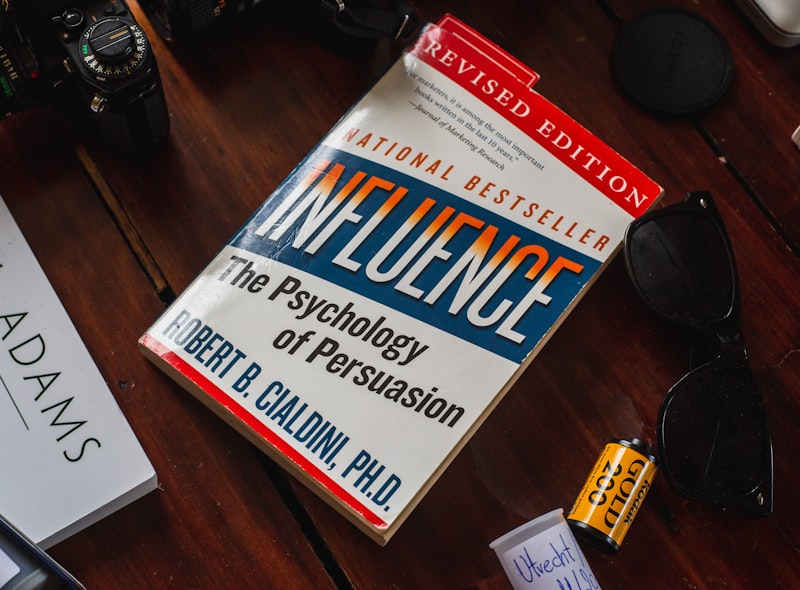
Persuasive techniques are often categorized according to the underlying psychological principles they exploit. Dr. Robert Cialdini’s seminal work identified six fundamental principles of influence that guide effective persuasive strategies, primarily rooted in the exploitation of mental shortcuts (heuristics) that people use to navigate complex social decisions. These principles are utilized extensively in marketing, sales, and political campaigning because they leverage deeply ingrained human tendencies toward social reciprocity and consistency.
The Cialdini principles provide a practical framework for constructing persuasive appeals:
- Reciprocity: People feel obligated to repay favors or gifts. This principle is exploited by offering a small, unrequested gift or concession before making a request (e.g., the “free sample” technique).
- Commitment and Consistency: Once a person makes a commitment, especially publicly, they are motivated to behave consistently with that commitment. Techniques like the Foot-in-the-Door (gaining compliance to a small request first to increase compliance to a larger subsequent request) utilize this principle.
- Social Proof: Individuals determine what is correct by finding out what other people think is correct. Persuaders use testimonials, popularity metrics (“best-selling”), or demonstrations of peer behavior to validate a course of action.
- Authority: People are more likely to comply with requests made by figures perceived as legitimate authorities, often signaled through titles, uniforms, or professional credentials.
- Liking: People are more easily persuaded by individuals they know and like. Strategies focus on increasing likability through physical attractiveness, similarity, compliments, and cooperation.
- Scarcity: Opportunities seem more valuable when their availability is limited. Creating a perception of urgency (“limited time offer”) or exclusive access leverages the fear of missing out.
Beyond these core heuristics, specific structural techniques are employed to manage the flow of information and decision-making. The Door-in-the-Face technique is the inverse of Foot-in-the-Door, involving an initial, extreme request that is certain to be rejected, followed by a smaller, more reasonable request (the true target). The initial rejection acts as a concession by the persuader, activating the principle of reciprocity in the target, who feels compelled to reciprocate the concession by accepting the second request. These manipulative sequences demonstrate the nuanced application of psychological principles to secure behavioral compliance.
Resistance to Persuasion and Inoculation Theory
Persuasion is not a unidirectional process; individuals possess numerous psychological defenses against attempts to alter their attitudes or behaviors. Resistance to persuasion is a crucial area of study, focusing on why some individuals remain resolute despite effective communication. One powerful mechanism of resistance is Psychological Reactance, a theory positing that when people perceive that their freedom to choose is being threatened, they experience a negative emotional state (reactance) which motivates them to restore that freedom, often by doing the opposite of what is requested. Overly aggressive or demanding persuasive attempts frequently trigger reactance, undermining the intended effect.
Another significant defense mechanism is forewarning. When individuals are alerted that a persuasive attack on their beliefs is imminent, they have time to mentally prepare counter-arguments and shore up their existing attitudes, making them less susceptible to the ensuing message. Building upon this concept, William McGuire developed Inoculation Theory, which suggests that resistance to persuasion can be fostered by exposing individuals to a weak dose of counter-attitudinal arguments, much like a medical vaccine. This weak exposure stimulates the creation of cognitive “antibodies”—refutational defenses—which protect the original attitude from a stronger subsequent attack.
Inoculation typically involves two components: a threat component (a warning that a belief will be attacked) and a refutational preemption (providing the receiver with weak arguments against their position and then immediately refuting those arguments). For example, a public health campaign might preemptively expose teenagers to weak attempts to persuade them to smoke and then show them how to dismantle those arguments logically. Research has demonstrated that individuals who have been inoculated are significantly more resistant to later, full-strength persuasive messages, highlighting that effective defense requires proactively strengthening existing attitudes rather than simply reacting to attacks.
Ethical Dimensions and the Dark Side of Persuasion
The power inherent in persuasive communication necessitates careful consideration of its ethical dimensions. While persuasion is essential for beneficial outcomes such as public health campaigns and democratic debate, it can quickly devolve into manipulation when the intent is self-serving and the methods involve deception or exploitation of vulnerability. The ethical boundary is often judged based on three main criteria: the intent of the persuader, the methods used, and the benefit or detriment to the receiver. Persuasion is generally deemed ethical when the communication is truthful, transparent, and empowers the receiver to make an informed, free choice that serves their own best interest.
The “dark side” of persuasion encompasses strategies that deliberately obscure the truth or exploit cognitive biases and emotional weaknesses. Techniques such as gaslighting, which attempts to make the target doubt their own reality or memory, represent extreme unethical persuasion. Likewise, using highly sophisticated psychological profiling (e.g., microtargeting in political campaigns) to exploit specific, known vulnerabilities of individuals without their awareness raises serious ethical concerns regarding autonomy and consent. When the persuader prioritizes their outcome above the well-being and free will of the recipient, the act shifts from influence to exploitation.
Ethical scrutiny is particularly important in areas involving vulnerable populations, such as children, the elderly, or those suffering from psychological distress. Persuasive attempts directed at these groups must adhere to stricter standards of honesty and informational completeness. Furthermore, the ethical use of technology, particularly algorithms that filter and present information to maximize emotional engagement and minimize critical thinking (enhancing peripheral processing), is a growing concern that requires regulatory oversight and public education regarding media literacy and digital resistance.
Applications of Persuasion in Modern Society
Persuasion is inextricably woven into the fabric of modern life, driving key sectors of the economy and governance. In marketing and advertising, persuasive strategies are used to create demand, shape brand loyalty, and differentiate products in saturated markets. This application is heavily reliant on peripheral cues, utilizing celebrity endorsements, emotionally resonant imagery, and the creation of artificial scarcity to motivate consumer behavior, often appealing to deep-seated psychological needs for status, belonging, and self-esteem.
In the realm of politics and public policy, persuasion is the engine of democracy. Political campaigns rely on complex persuasive messaging to secure votes, mobilize supporters, and frame narratives around complex issues. Modern political persuasion utilizes sophisticated data analytics to tailor messages to specific demographic segments, maximizing the personal relevance (motivation) of the message and thus influencing the processing route taken by the voter. Effective policy implementation often requires persuasive public health campaigns (e.g., promoting vaccination or discouraging smoking) that leverage authority (medical experts), social proof, and fear appeals combined with high-efficacy instructions.
Finally, persuasion is a vital skill in interpersonal relations and professional settings, including negotiation, leadership, and conflict resolution. Leaders who successfully persuade their teams to adopt a vision or strategy, rather than relying solely on formal authority, foster greater commitment and higher performance. Understanding the principles of ethos, pathos, and logos allows professionals to construct communications that are not only logically sound but also emotionally compelling and credible, ensuring that their active strife to alter the intentions of colleagues or clients results in mutually beneficial outcomes.