The Phallus: Beyond Anatomy into Symbolic Power
Scientifically Reviewed · Dr. Marwa Abd-Alazim · August 27, 2026
Review Criteria & Clinical Standards
This content undergoes rigorous scientific peer-review and medical editorial standards at Arab Psychology Network to ensure clinical accuracy, validity, and compliance with evidence-based guidelines from leading psychological and healthcare authorities (APA / WHO).
Defining the Phallus: Anatomy vs. Symbolism
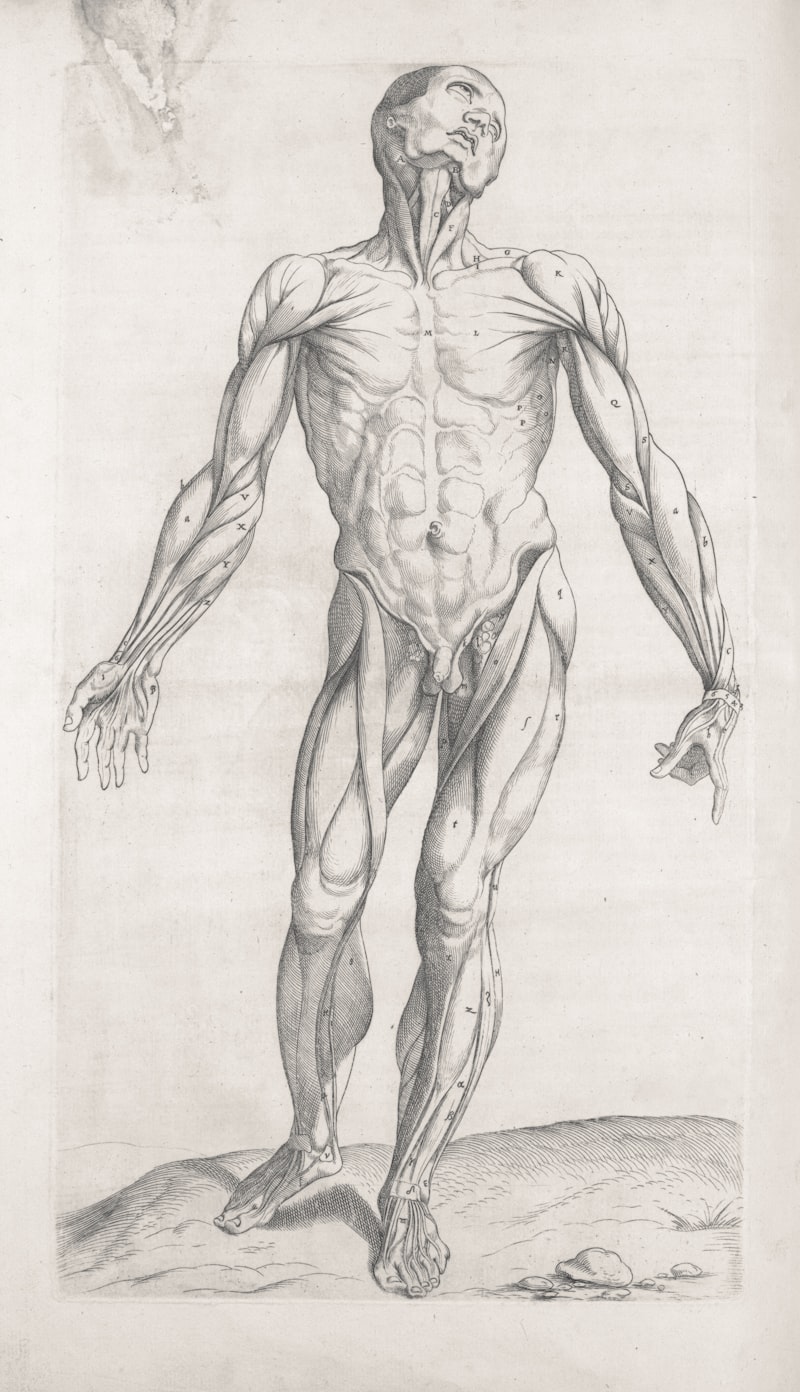
The term phallus possesses a dual meaning that requires careful delineation when used within psychological, anthropological, or critical discourse. On the one hand, the term is used as a formal, sometimes euphemistic, synonym for the anatomical male reproductive organ, the penis. However, it is the second, symbolic dimension that confers upon the phallus its profound significance as a concept. In this capacity, the phallus refers not merely to the organ itself, but to its image, shape, or representation, functioning as a powerful cultural and psychological symbol that organizes desire, power, and societal law, often represented by any object that exhibits a clear resemblance to the penile form, such as obelisks, pillars, or certain weapons.
In symbolic systems across history, the phallus universally signifies concepts related to generative life force and inherent authority. The most prominent associated meanings are potency, generative capacity, and fertility. This symbolic phallus is fundamentally linked to the ability to create, to assert dominance, and to perpetuate life, positioning it as a signifier of completeness and vital energy. This symbolic role elevates the phallus far beyond the limits of the physical organ, transforming it into a metaphysical concept that can be wielded, revered, or sought after, regardless of the physical characteristics of the individual subject, thereby making it a central axis around which the understanding of sexual difference and social hierarchy often revolves.
The distinction between the physical penis and the symbolic phallus is paramount for understanding modern psychoanalytic theory, particularly in the work of Jacques Lacan, who insisted that the phallus must be treated exclusively as a signifier within the linguistic and cultural structure. The anatomical penis is a tangible organ (an imaginary object), whereas the phallus is an abstract concept that represents the ultimate desire or the structure of prohibition—the law that governs access to satisfaction. This dissociation allows the symbol to operate universally, structuring the human subject’s entry into the social world and defining their sense of identity relative to the presence or absence of this perceived source of power and completeness.
Historical and Cross-Cultural Manifestations
Throughout human history, the phallus has served as a widely recognized and often worshipped icon, demonstrating its deep roots in human consciousness concerning life and death. Ancient cultures frequently integrated phallic symbols into religious rites centered on agricultural success, warfare, and human reproduction. For instance, in Ancient Greece, the cult of Dionysus heavily featured phallic processions, while the figure of Priapus, a minor fertility god, was depicted with an oversized and permanently erect penis, serving as a powerful guardian against evil and a symbol ensuring plentiful harvests and robust procreation within the community. These explicit representations highlight the reverence given to the generative power symbolized by the phallus.
Furthermore, the phallus frequently assumed an apotropaic function—the power to ward off harm or evil influence. In Roman culture, the fascinum, an image of the phallus, was commonly worn as an amulet, particularly by children and soldiers, intended to deflect the evil eye (malocchio) through its overt display of strength and vitality. Similarly, Egyptian deities like Min, god of fertility and successful harvest, were consistently represented in a state of erection, underscoring the universal belief that the phallic symbol contained a potent, active force capable of ensuring protection and prosperity. This historical prevalence confirms that the symbolic weight of the phallus is intrinsically tied to fundamental human concerns regarding survival and security.
Beyond explicit depictions, the symbolic phallus permeates architectural and monumental design. Structures that exhibit verticality, rigidity, and singular dominance—such as obelisks, towering skyscrapers, or military missiles—often carry an unconscious phallic symbolism, representing assertion, dominance, and penetrating power over the landscape or rivals. This unconscious association demonstrates the enduring cultural link between the symbolic phallus and societal structures designed to manifest or project authority and control. Thus, the phallus is not restricted to obvious anatomical likenesses but extends its influence into abstract representations of mastery and civilization.
The Phallus in Freudian Psychoanalytic Theory
Sigmund Freud placed the phallus at the epicenter of psychosexual development, particularly during the critical phallic stage (roughly ages three to six). It is during this period that the child organizes their understanding of sexual difference and their relationship to the parental figures based on the perceived presence or absence of the penis, which is equated with the symbolic phallus. The central drama of this stage revolves around the Oedipus complex, where the phallus functions as the key signifier of potential gain or terrifying loss, fundamentally shaping the developing ego and superego.
For the male child, the possession of the penis leads to the development of castration anxiety—the fear that the powerful father figure will retaliate by removing the organ, thus eliminating the source of symbolic power. This anxiety drives the resolution of the Oedipus complex, forcing the boy to identify with the father and internalize societal law (the superego). Conversely, Freud theorized that the female child experiences penis envy, recognizing her lack of the organ, which is interpreted as having already suffered castration. This lack is theorized to influence her subsequent development, driving her shift of love object from the mother to the father and her eventual desire for a child (a symbolic substitute for the missing phallus).
The influence of the phallus extends into adult personality structure, leading to the designation of the “phallic character.” Individuals exhibiting this character trait often demonstrate an exaggerated need for affirmation of their potency and power, manifesting as excessive ambition, competitiveness, and vanity. This drive is understood psychoanalytically as an attempt to overcome or deny unresolved anxieties relating to castration, perpetually seeking to prove that they “have” the phallus by accumulating symbols of strength, wealth, or sexual conquest. Freud’s framework, though heavily criticized, establishes the phallus as the primary symbol defining gender identity, sexual orientation, and the structure of neurosis.
Lacanian Reinterpretation: The Symbolic Phallus
Jacques Lacan rigorously separated the phallus from the anatomical penis, arguing that the phallus (Φ) is the ultimate signifier of difference within the Symbolic Order—the realm of language, law, and culture. For Lacan, the phallus is not an imaginary object that can be possessed physically, nor is it merely a representation of the penis; rather, it is a pure signifier representing that which is lost but eternally desired: the mythical completeness enjoyed before entry into language. It is the measure by which all subjects are defined in relation to desire and lack.
In Lacanian theory, the Phallus serves to structure the subject’s relationship to the universal prohibition established by the Name-of-the-Father. The Name-of-the-Father imposes the law (the prohibition against incest) and dictates that desire must be mediated and channeled through cultural norms rather than satisfied directly. By accepting this law, the subject gains access to the Symbolic Order, but simultaneously internalizes the foundational sense of lack, because the absolute satisfaction symbolized by the Phallus is unattainable. Thus, desire is defined as the desire for the Phallus, which is fundamentally the desire for recognition within the symbolic structure.
Crucially, Lacan maintained that both men and women must position themselves relative to the Phallus, which means that neither gender actually “has” the Phallus. A man may be said to “have” the penis, but he is fundamentally oriented toward “being” the Phallus for the Other (the object of desire), a position that is always precarious and ultimately impossible. A woman is oriented toward “having” the Phallus (as the object of desire, or as the signifier that mediates her desire). This complex structural relationship shifts the focus from biological determinism to the way in which subjects are positioned within a linguistic network defined by this primary signifier of power and lack, transforming the phallus into a purely abstract, structural concept.
Feminist and Critical Perspectives on Phallocentrism
The prominence given to the phallus in psychoanalytic theory, particularly the Freudian emphasis on penis envy and the male as the norm, led to powerful critiques from feminist scholars and critical theorists. The concept of phallocentrism emerged as a central term to describe a cultural and theoretical framework that tacitly or explicitly elevates the phallus—and by extension, the male experience—as the universal standard of value, power, and meaning. This critique asserts that phallocentrism systematically marginalizes female subjectivity by defining it primarily through its relation to the perceived lack of the phallic symbol.
Thinkers of French feminism, such as Luce Irigaray and Hélène Cixous, challenged the foundational assumption that the phallus must be the exclusive signifier of power. Irigaray argued that psychoanalytic theory, being phallocentric, fails to account for a truly female imaginary or symbolic, instead trapping women within a framework where their identity is defined only by negation (not-male). Cixous sought to articulate a concept of écriture féminine (feminine writing) that would bypass the phallic structure entirely, allowing for a form of expression rooted in the female body and experience, thereby breaking the monopoly of the phallic signifier on meaning.
In a broader cultural context, critical theory utilizes the concept of phallocentrism to analyze societal power dynamics. It highlights how institutions—including law, governance, science, and the military—are often constructed around phallic principles of hierarchy, penetration, and rigid control. The critique holds that this structure reinforces patriarchy not simply through explicit oppression, but through the unconscious organization of meaning, where traits historically associated with the symbolic phallus (e.g., aggression, rationality, singular focus) are universally privileged over those traits traditionally associated with the feminine (e.g., fluidity, relationality, receptivity).
The Phallus and Concepts of Power and Lack
The enduring power of the phallus as a psychological concept lies in its representation of both absolute presence and the ultimate source of human dissatisfaction, framing the essential tension between power and lack. As a symbol, the phallus represents fullness, completeness, and mastery—the mythical state of unity and self-sufficiency that precedes the subject’s entry into the restrictive Symbolic Order. Conversely, its function as a signifier establishes the impossibility of ever truly possessing that state of completeness, thereby instituting lack as the engine of human desire.
The concept of castration, therefore, is not merely a physical threat but a symbolic operation; it is the fundamental recognition that the subject is perpetually separated from the Phallus (the absolute object of satisfaction). This realization of lack is what compels the subject to participate in the cultural world, driving the relentless pursuit of symbolic substitutes that might momentarily mitigate this foundational dissatisfaction. Societal achievements, such as the accumulation of wealth, the attainment of high political office, or the command of significant knowledge, can be interpreted as attempts by the subject to symbolically “be” or “have” the Phallus, thereby repairing the symbolic injury of castration and asserting power over the surrounding world.
The disjunction between the symbolic Phallus and the anatomical penis highlights a profound irony: the physical organ is inherently vulnerable and subject to the limitations of the body, whereas the symbol it generates is transcendent and absolute. The symbolic Phallus must remain abstract and unattainable for the system of desire and social hierarchy to function. If the Phallus were reducible to the physical penis, it would lose its power to structure the Symbolic Order, as the physical organ is inherently imperfect, leading to a collapse of the very system of cultural meaning and prohibition it is intended to uphold.
Contemporary Applications and Cultural Legacy
Despite its complex theoretical history, the symbolic phallus remains highly relevant in contemporary cultural analysis, particularly in fields examining gender performance, media representation, and consumer culture. Modern advertising, for instance, frequently deploys phallic symbolism—subtly or overtly—in marketing products associated with speed, technological dominance, or financial prowess, continuing the ancient association of the phallus with inherent potency and mastery. Tall, sleek product designs and aggressive branding often tap into the unconscious cultural resonance of this primal signifier.
Furthermore, understanding the phallus is essential for navigating discussions around gender identity and queer theory. Contemporary critiques often seek to destabilize the binary system inherited from classical psychoanalysis, which rigidly defined subjects relative to the Phallus. By acknowledging the phallus as a signifier of power rather than a biological reality, space is created to explore gender and sexual identities that operate outside or in playful defiance of the traditional phallic economy, allowing for a more fluid and inclusive understanding of identity and desire that moves beyond the simple presence or absence of the physical organ.
In summation, the phallus transcends its anatomical referent to become one of the most fundamental and heavily theorized concepts in the humanities. Its journey from a religious idol of fertility to the central signifier of power and lack in psychoanalysis demonstrates its enduring ability to capture and organize human anxieties regarding creation, societal law, and sexual difference. As long as human culture is structured around concepts of desire, prohibition, and the differential distribution of power, the symbolic phallus will remain an indispensable tool for critical analysis.