Phenocopy: Nature’s Deceptive Genetic Illusion
Scientifically Reviewed · Dr. Marwa Abd-Alazim · August 29, 2026
Review Criteria & Clinical Standards
This content undergoes rigorous scientific peer-review and medical editorial standards at Arab Psychology Network to ensure clinical accuracy, validity, and compliance with evidence-based guidelines from leading psychological and healthcare authorities (APA / WHO).
Introduction and Core Definition
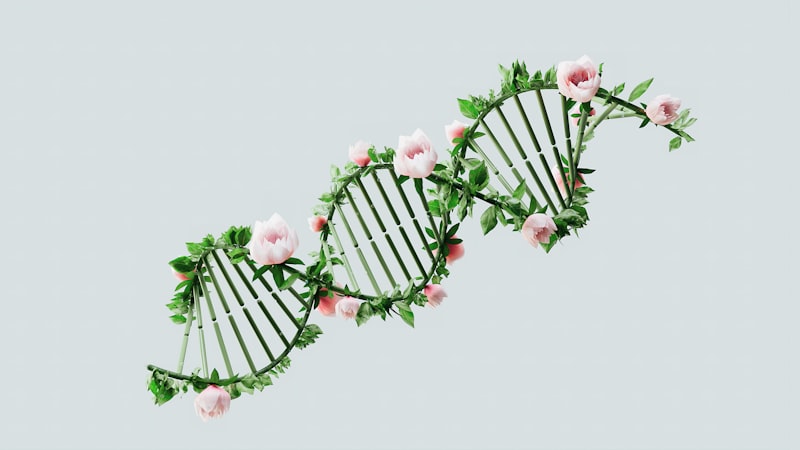
The term phenocopy refers to a non-heritable alteration of an organism’s phenotype that is induced by environmental factors, yet mimics a trait typically caused by a specific genetic mutation. Essentially, it represents an imitation of a genetically determined characteristic, achieved solely through the interaction between the individual’s genotype and external, often adverse, environmental elements. This concept is fundamental to understanding the interplay between nature and nurture, illustrating that the final physical and physiological manifestation—the phenotype—is not solely dictated by the inherited genetic code. While the organism possesses a normal genotype for a specific trait, the environmental stressor acts during a critical developmental period to produce a result indistinguishable, or nearly indistinguishable, from the outcome of a true genetic mutation. This phenomenon underscores the profound influence of context on biological expression, a cornerstone of modern developmental biology and genetics courses.
A crucial distinction of the phenocopy is its non-heritable nature. Unlike true genetic mutations, which are encoded in the germline and passed to subsequent generations, a phenocopy affects only the individual exposed to the specific environmental trigger. If the external factor is removed, future generations developing under normal conditions will express the wild-type phenotype, provided their inherent genotype is normal. This characteristic establishes the phenocopy as a somatic developmental anomaly rather than a permanent evolutionary change. The environmental elements responsible are highly varied, ranging from temperature extremes, nutritional deficiencies, chemical exposures (such as teratogens), or radiation. The timing of exposure is equally vital; the environmental insult must occur during a phase of high developmental sensitivity, often early embryogenesis, for the phenocopy to be successfully induced.
In formal biological nomenclature, the phenocopy serves as a potent demonstration of developmental plasticity, showcasing the capacity of a single genotype to produce multiple phenotypes depending on the specific conditions encountered during development. This principle challenges a purely deterministic view of genetics, compelling researchers to consider environmental variables as co-determinants of biological outcomes. The study of phenocopies provides invaluable insights into how specific environmental stressors interact with conserved developmental pathways, revealing vulnerabilities within the system that, when perturbed, lead to predictable, mutation-mimicking outcomes. The investigation into these mechanisms is pivotal for toxicology, clinical genetics, and evolutionary biology, offering models for understanding complex diseases and congenital abnormalities that may have non-genetic etiologies.
The Relationship Between Genotype and Phenotype
The classic biological dogma posits that the genotype—the complete set of inherited genetic instructions—determines the phenotype—the observable characteristics of an organism. However, the phenomenon of the phenocopy necessitates a more nuanced understanding of this relationship, recognizing that the environment acts as a crucial filter and modifier of genetic potential. A phenocopy arises when an environmental stimulus essentially bypasses the typical genetic signaling cascade, forcing the developmental machinery into an alternative pathway that culminates in a phenotypic outcome identical to one produced by a known genetic deficiency or alteration. This outcome is not due to a change in the DNA sequence itself, but rather a modification of how the existing genetic information is expressed or utilized during critical periods of differentiation and growth. Therefore, the phenocopy highlights the inherent flexibility and redundancy within developmental systems, where multiple inputs (genetic mutation versus environmental stress) can converge on a single, shared endpoint.
To fully appreciate the mechanism, it is necessary to consider the role of regulatory networks. Development is orchestrated by complex, interconnected genetic circuits that control cell fate, tissue differentiation, and organogenesis. A specific gene mutation might disrupt one node in this network, leading to a visible phenotypic defect. Conversely, an environmental agent, such as a chemical inhibitor or a severe thermal shock, can interfere with the function of a downstream protein or enzyme that is essential for the pathway’s completion. If the environmental interference mimics the functional consequence of the genetic mutation—for instance, by inactivating the protein product of the mutated gene—the resulting phenotype will be identical. This mechanism confirms that the environment does not simply shade the genetic effect; it can functionally replace the effect of the mutation entirely, achieving a form of functional mimicry within the developmental timeline.
The genotype, in the context of phenocopy studies, is often referred to as the “wild-type” or “normal” genotype for the trait in question. This means the organism possesses all the necessary genetic information to develop the expected, non-mutant phenotype. The susceptibility to phenocopy induction is, however, often dependent on the background genotype. Not all individuals exposed to the same environmental stressor will develop the phenocopy; variations in genetic background may influence the efficiency of compensatory mechanisms or the sensitivity of the developmental pathway to the external insult. This subtle interaction implies a continuous spectrum where the environment and pre-existing genetic resilience collaboratively determine the likelihood and severity of the phenocopy, further blurring the simplistic boundary between purely genetic and purely environmental causation.
Historical Context and Early Studies
The concept of the phenocopy was formalized and rigorously investigated primarily by the German-American geneticist Richard Goldschmidt in the mid-20th century. Goldschmidt conducted extensive experimental work, particularly utilizing the fruit fly, Drosophila melanogaster, a critical model organism in genetic studies. His experiments involved subjecting developing fly pupae and larvae to controlled environmental stresses, such as high temperatures or chemical exposure, at precise developmental stages. He observed that these external stresses could induce phenotypic alterations—such as changes in wing shape, body color, or bristle patterns—that were morphologically indistinguishable from known, specific mutations that had been mapped to the Drosophila genome. For instance, he could induce a temperature-shocked fly to develop a “bithorax-like” phenotype, mimicking the effect of the naturally occurring bithorax mutation.
Goldschmidt’s work provided the empirical foundation for the phenocopy concept, demonstrating that the environmental perturbation must be timed exactly to the moment the corresponding genetic locus would normally exert its action. If the temperature shock was applied too early or too late relative to the gene’s critical period of expression, the phenocopy often failed to materialize or appeared in a different, non-specific form. This precision led Goldschmidt to propose the “rate-gene” theory, suggesting that genes primarily controlled the rate of developmental processes. While the rate-gene theory itself has been superseded by molecular genetics, the experimental evidence for phenocopy induction remains robust. His findings revolutionized the field by providing tangible proof that genetically determined traits could be reproduced environmentally, suggesting shared, bottlenecked pathways for developmental outcomes.
The historical significance of Goldschmidt’s findings lies in their challenge to strict Mendelian determinism. By showing that the external environment could hijack the developmental process to mimic a specific genetic outcome, phenocopy research compelled geneticists to acknowledge the environment not merely as a background factor but as an active participant in shaping morphology. Subsequent research built upon this foundation, utilizing phenocopy models to map developmental timelines and identify the environmental factors that can influence specific gene expression pathways, thereby establishing phenocopy induction as a valuable experimental tool in mapping gene function.
Mechanisms of Phenocopy Induction
The mechanisms underlying phenocopy induction are highly specific and often relate to the disruption of macromolecular synthesis or the inhibition of crucial enzymatic activity during rapid cell differentiation. A common mechanism involves the environmental agent, often termed a teratogen when discussing congenital human defects, interfering with the metabolic pathway regulated by the gene it mimics. For example, if a genetic mutation causes a structural defect by inhibiting the production of a specific protein, the phenocopy-inducing agent might chemically bind to and neutralize the existing, wild-type version of that protein, leading to the same functional deficiency and the resulting structural defect. The key requirement is that the environmental agent must target the same developmental process or substrate that the mutated gene normally controls.
Another significant mechanism involves the disruption of critical temporal processes, such as cell cycle regulation or programmed cell death (apoptosis). Many complex structures, like limbs or facial features, require precisely coordinated timing of cell proliferation and apoptosis. A genetic mutation might accelerate cell death in a specific region, leading to a shortened limb. An environmental shock, such as exposure to certain heavy metals or high doses of radiation at a sensitive stage, can similarly induce premature apoptosis in the same cell population, resulting in a phenocopy of the mutant phenotype. This highly localized and time-dependent interference confirms that phenocopy agents do not cause generalized damage but rather selectively disrupt specific components of the highly conserved developmental program.
Furthermore, phenocopies can be induced through systemic mechanisms, particularly nutritional deficiencies or hormonal imbalances. Certain genetic conditions result from the inability to synthesize or utilize a crucial nutrient or hormone. If an organism with a normal genotype is deprived of that essential factor through the environment—for instance, a severe lack of Vitamin D or iodine—it may display the symptoms characteristic of the genetic deficiency. This is a powerful demonstration of how environmental input can substitute for the function of a wild-type allele. The ability to induce a genetic-mimicking trait via nutritional manipulation provides critical insights into the environmental management and potential prevention strategies for certain congenital disorders that share phenotypic similarities with true genetic diseases.
Distinction from Genetic Mutations and Epigenetics
While a phenocopy visually resembles a genetically determined trait, it is imperative to distinguish it clearly from both true genetic mutations and epigenetic changes. The fundamental difference lies in the source of the alteration and its transmissibility. A genetic mutation involves a permanent change in the DNA sequence (e.g., substitution, deletion, or insertion) that is potentially heritable if present in the germline. The phenocopy, conversely, results from a transient environmental disturbance that affects gene expression or protein function during development but leaves the underlying DNA sequence unaltered. The distinction is critical for diagnosis and genetic counseling: a phenocopy carries no risk of transmission to offspring, whereas a genetic mutation, depending on its dominance and location, often does.
The differentiation between phenocopies and epigenetic changes is often more subtle but equally necessary. Epigenetics refers to heritable changes in gene expression that occur without altering the underlying DNA sequence, typically involving DNA methylation or histone modification. While epigenetic marks can be influenced by the environment and, crucially, can sometimes be passed down through mitosis or even meiosis (transgenerational epigenetic inheritance), phenocopies are strictly non-heritable in the germline sense. A phenocopy is a direct consequence of a developmental insult that manifests somatically in the exposed individual. If the environmental stimulus is removed, the ability to induce the trait ceases immediately. While the environmental stressor that causes a phenocopy might also induce epigenetic changes, the resultant phenocopy trait itself is defined by the developmental mimicry, not necessarily by the heritable persistence of the regulatory alteration.
The three concepts—mutation, epigenetics, and phenocopy—represent a spectrum of biological causality. Mutation is structural and potentially permanent; epigenetics is regulatory and potentially heritable; and the phenocopy is developmental, functional, and strictly temporary across generations. Understanding these distinctions is vital in clinical settings, particularly when diagnosing congenital abnormalities. If a child presents with a trait known to be caused by a mutation, determining whether the cause is truly genetic (requiring family screening) or a phenocopy (caused by prenatal exposure to a drug or toxin) dictates the course of medical management and risk assessment for future pregnancies. The inability to transmit the trait remains the defining characteristic of the phenocopy.
Clinical and Human Relevance
Phenocopy research holds profound clinical relevance, particularly in the study of human congenital anomalies and drug side effects. Many human birth defects that share phenotypic similarity with known genetic syndromes are, in fact, phenocopies induced by maternal exposure to teratogenic agents during pregnancy. The most classic and tragic example is the effect of the drug Thalidomide. When pregnant women ingested Thalidomide, particularly during the first trimester, their children often developed phocomelia—severe limb reduction defects. This phenotype closely mimics certain rare genetic syndromes, such as Roberts Syndrome. Because the drug exposure occurred somatically and did not alter the germline, the resulting phocomelia was a phenocopy; the affected individuals did not pass the condition to their own children.
Beyond pharmacological agents, environmental toxins and maternal health issues frequently induce phenocopies. Exposure to high levels of alcohol during pregnancy, leading to Fetal Alcohol Syndrome (FAS), can produce craniofacial and neurodevelopmental defects that overlap substantially with features of several chromosomal or monogenic disorders. Similarly, maternal deficiencies, such as iodine deficiency leading to cretinism (a form of congenital hypothyroidism), creates a phenocopy of genetic disorders that impair thyroid hormone synthesis. Identifying these environmentally induced mimics is crucial because intervention—such as nutritional supplementation or avoidance of the toxin—can prevent recurrence in future pregnancies, a luxury not afforded by true genetic conditions.
Furthermore, the study of phenocopies aids in differential diagnosis. When a physician encounters a patient exhibiting a rare syndrome, the primary diagnostic challenge is determining the etiology. Is it a novel, spontaneous mutation, an inherited genetic disorder, or an environmentally induced phenocopy? Detailed patient history regarding maternal exposures, diet, and illness during gestation is paramount. Successful identification of a phenocopy not only leads to appropriate counseling but also contributes valuable epidemiological data regarding the safety and toxicity thresholds of environmental agents, ensuring better public health standards and preventative medicine protocols.
Significance in Developmental Biology and Evolutionary Theory
In developmental biology, phenocopies serve as powerful experimental tools for dissecting the critical periods and robust pathways of ontogeny. By inducing a phenocopy, researchers can precisely pinpoint the moment in development when a specific gene or developmental cascade is most sensitive to perturbation. This temporal mapping helps to confirm the function of genes identified through mutation screens. If a chemical agent induces a phenocopy of a specific mutant, it strongly suggests that the chemical targets the same protein product or regulatory step controlled by the wild-type version of the mutated gene. This reverse engineering of developmental pathways provides fundamental knowledge about the interconnectedness and resilience of biological systems, demonstrating how external inputs can override genetically programmed outcomes under duress.
The concept of phenocopy also intersects critically with evolutionary theory, particularly in the context of developmental plasticity and genetic assimilation, a hypothesis championed by C.H. Waddington. Waddington proposed that an environmentally induced phenotype (a phenocopy) could potentially become genetically fixed over evolutionary time. If a population is exposed to a chronic environmental stressor that consistently induces a beneficial or neutral phenocopy, natural selection might favor individuals whose genetic background makes them highly sensitive or predisposed to developing that trait. Over generations, mutations that stabilize the environmentally induced phenotype, even in the absence of the stressor, may accumulate. This process, known as genetic assimilation, effectively converts a temporary, environmentally triggered trait (a phenocopy) into a permanent, genetically encoded one, offering a potential mechanism for how novel phenotypes can become canalized and integrated into the genome.
In conclusion, the phenocopy is far more than a simple biological curiosity. It is a profound demonstration of the complex interaction between the genome and the environment, highlighting the plasticity inherent in life. Its study offers essential diagnostic insight in medicine, provides precise mapping tools for developmental biologists, and contributes a critical conceptual link in evolutionary biology regarding how environmental pressures can shape and ultimately stabilize genetic traits. The investigation of phenocopies reinforces the principle that biological outcomes are rarely the result of singular factors but emerge from a dynamic, sensitive interplay of internal genetic instructions and external ecological context.